Artwork
The Phoenix or the Statue Overthrown
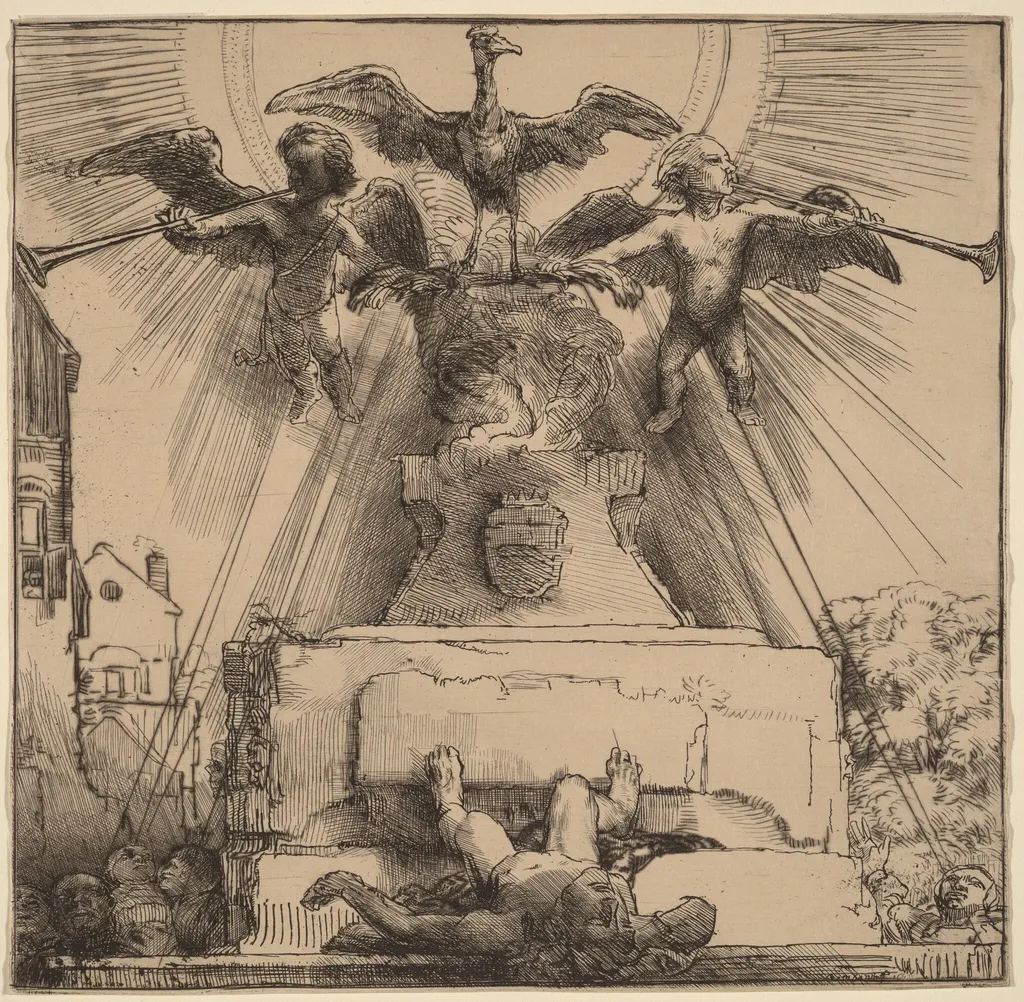
The Phoenix or the Statue Overthrown is an ink print by the Baroque artist Rembrandt van Rijn. It dates from 1658 and is held in the collection of the National Gallery of Art.
About this work
Overview
The drypoint technique produces rich, velvety blacks and allows for expressive, burr-laden lines that convey the weight and pressure of the marks.
The Phoenix or the Statue Overthrown is an etching and drypoint created by Rembrandt van Rijn in 1658. The composition depicts two figures within a dimly lit interior, centered around a crumbling classical statue. One figure leans against the broken monument, while the other stands holding a long staff or stick.
Rembrandt employs dramatic chiaroscuro, illuminating the faces and hands of the figures against a deep, shadowed background to create a sense of psychological intensity and mystery. The artist utilized a combination of etching and drypoint, scratching lines directly into the copper plate to achieve varied textures. The drypoint technique produces rich, velvety blacks and allows for expressive, burr-laden lines that convey the weight and pressure of the marks.
This work is part of Rembrandt's late period, a time characterized by profound experimentation with printmaking techniques and a move toward more introspective, allegorical subjects. The piece reflects his mature style, where technical mastery serves to explore themes of transience, ruin, and human resilience. The title 'The Phoenix' suggests a symbolic reading of rebirth or endurance amidst destruction, though the specific narrative remains open to interpretation, a common trait in Rembrandt's later prints.
Subject & Meaning
In the composition, a man leans against a deteriorating statue while another figure holds a long rod, both bathed in a luminous glow that highlights their faces. The setting, a dim, cramped room, suggests a narrative of decay and renewal, evoked by the title’s reference to a phoenix rising from ruins.
Technique & Style
Rembrandt employed traditional etching alongside drypoint, incising lines directly into a copper plate. The drypoint marks produce a characteristic soft, fuzzy edge that mimics the diffusion of shadows, while the etched lines retain crispness. The contrast between the precise incisions and the velvety tonal areas enhances the dramatic lighting that pulls the figures forward.
Context
This print belongs to a series of works in which Rembrandt explored the interplay of light and darkness, a hallmark of his graphic oeuvre. The use of a confined space and stark illumination aligns with his broader experimentation in the 1650s, when he frequently combined multiple intaglio techniques to achieve depth and atmosphere.
Own this work as a print
Artist & collection

Artist
Rembrandt Harmenszoon van Rijn, known mononymously as Rembrandt, was a Dutch Golden Age painter, printmaker, and draughtsman.

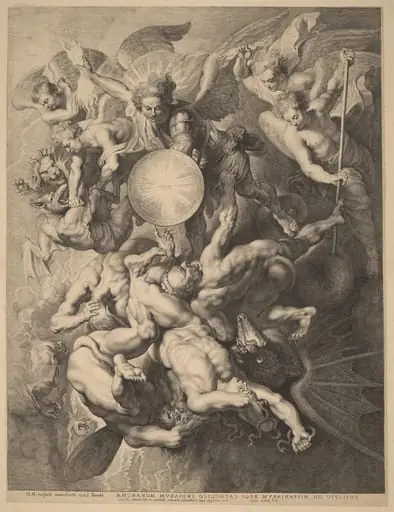 The Fall of the Rebel Angels
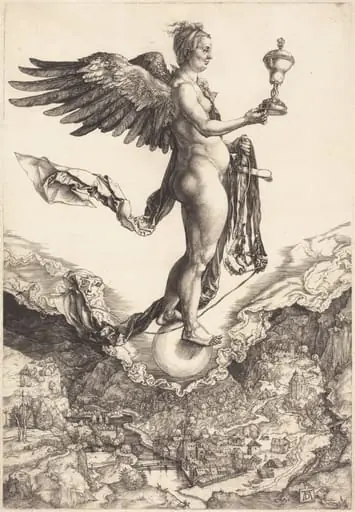 Nemesis (The Great Fortune)
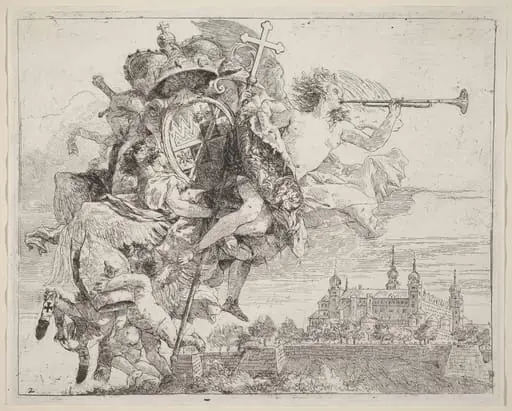 Arms of Karl Philip von Greiffenklau, Prince-Bishop of Wurzburg
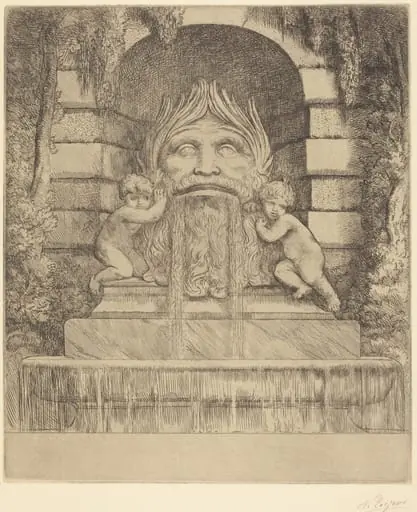 Fountain: Grotesque, Children and Basin (Une fountaine: Masque, enfants et bassin)
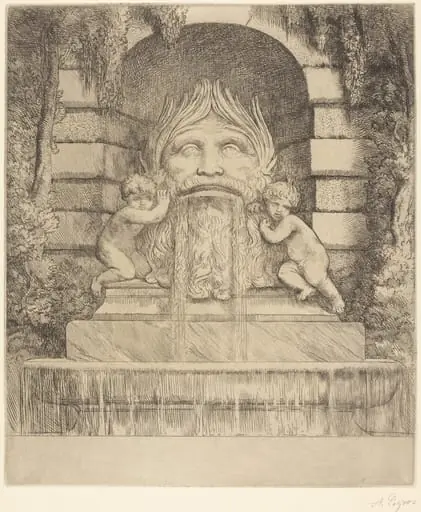 Fountain: Grotesque, Children and Basin (Une fountaine: Masque, enfants et bassin)
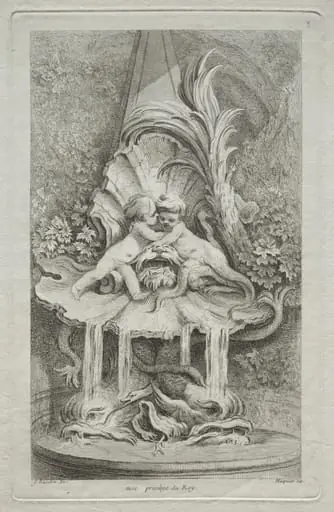 Book of Fountains: No. 3
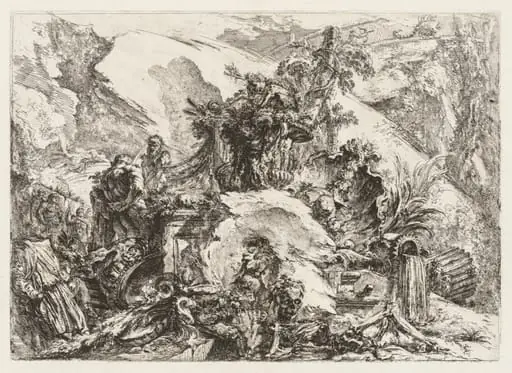 The Skeletons
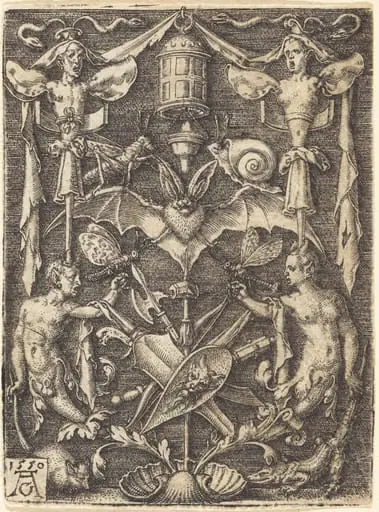 Ornament with Trophy of Arms
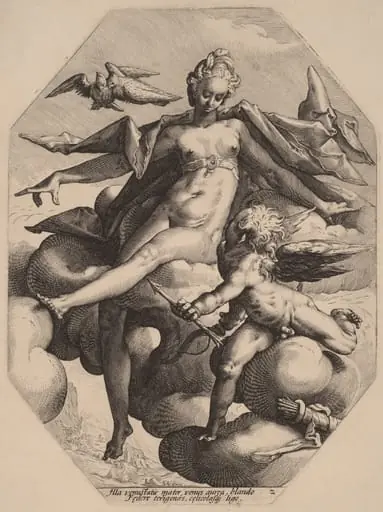 Venus and Cupid
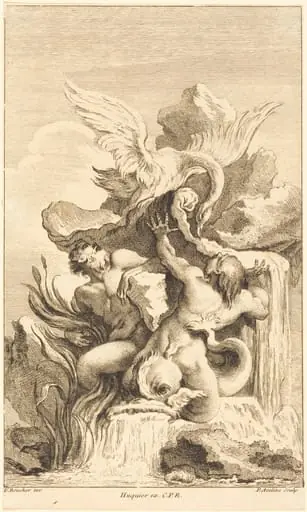 Two Tritons and a Swan
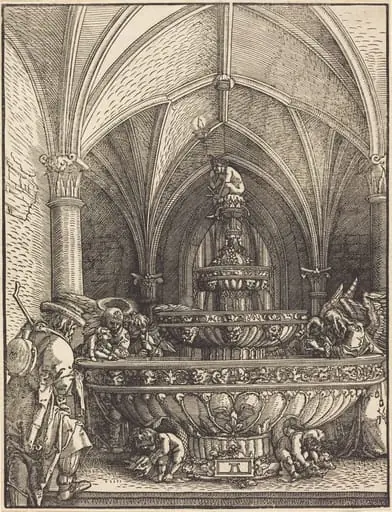 The Rest on the Flight into Egypt at a Fountain
- Hercules Killing the Hydra