Artwork
Young woman with earrings
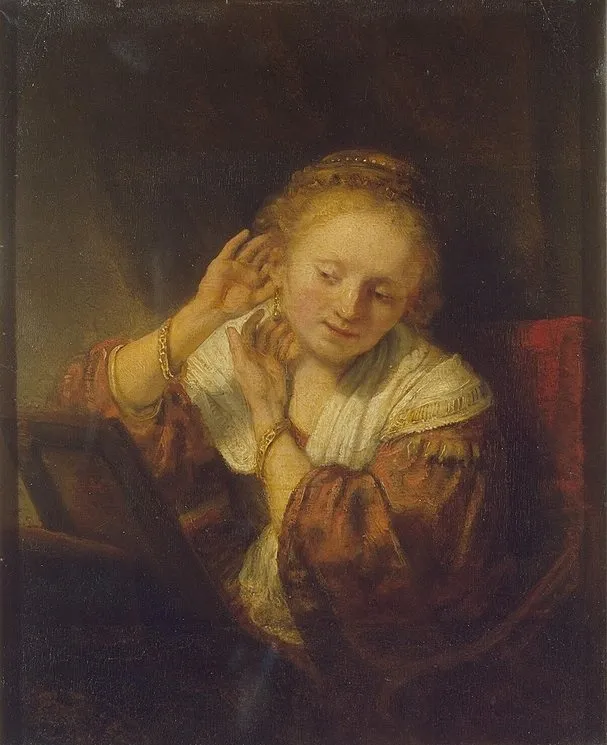
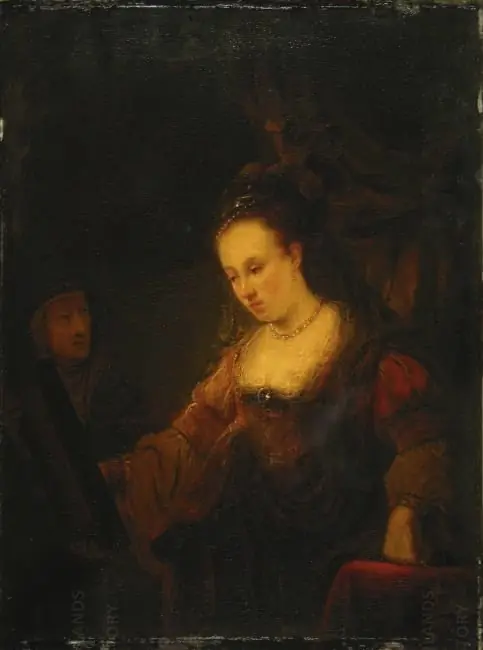
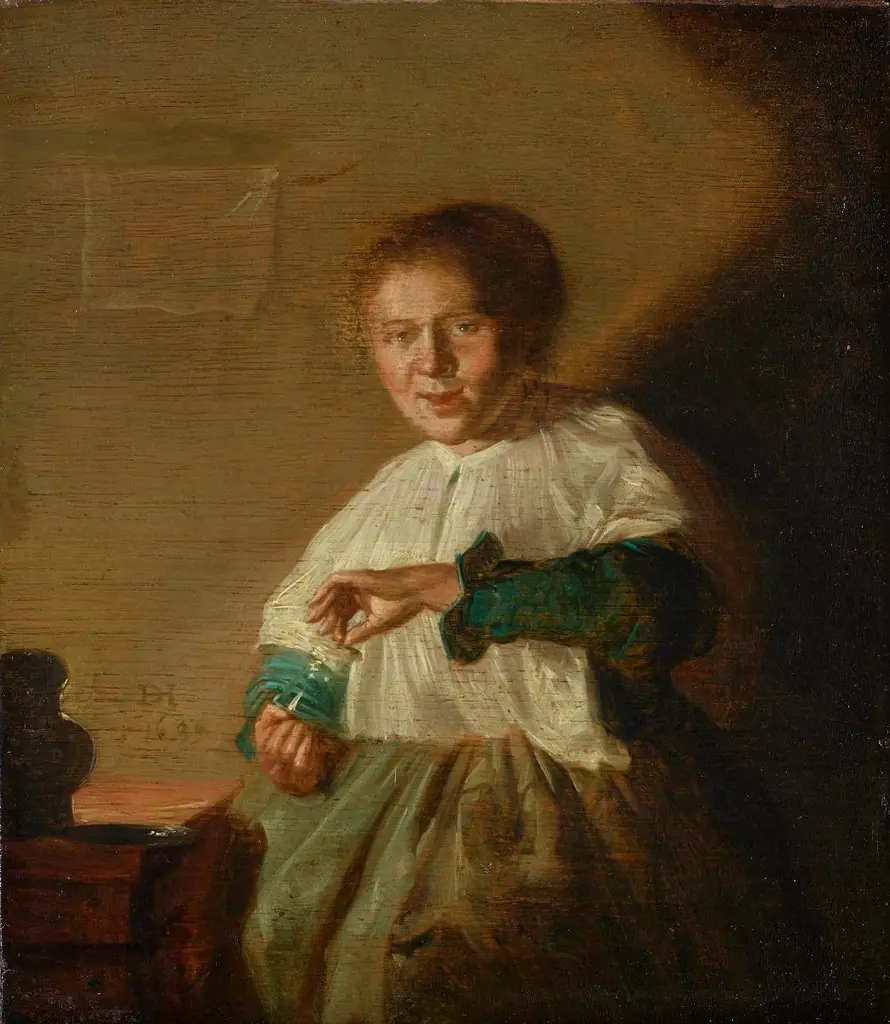
Young woman with earrings is an oil painting by the Dutch Golden Age artist Rembrandt van Rijn. It dates from 1638 and is held in the collection of the Hermitage Museum. Created in 1657, this oil painting by Rembrandt depicts a young woman adjusting an earring.
About this work
Subject & Meaning
The painting shows a young woman seated before a chest with an open mirror, examining herself while holding a pearl earring (source 2,4).
The painting shows a young woman seated before a chest with an open mirror, examining herself while holding a pearl earring (source 2,4). The scene is described as a woman at her toilet, a subject common in Dutch genre painting (source 4). The title derives from a 1656 inventory that possibly labels the work ‘Een Cortisana haer pallerende vanden selven’, though scholars remain uncertain whether the figure actually represents a courtesan (source 4). Consequently, the work’s meaning is ambiguous, inviting reflection on femininity, self-presentation, and the transient nature of beauty, while its domestic setting and focus on personal adornment reflect contemporary interests in private, intimate scenes.
History & Provenance
Young Woman with Earrings is held in the Hermitage Museum in Saint Petersburg, where it has resided since 1781. The painting entered the museum's collection when Catherine II of Russia acquired it via Melchior Grimm from the Paris-based collector Sylvain-Raphaël de Baudouin. Prior to this acquisition, the work passed through the hands of Coenraad Droste and Charles Godefroy, appearing in their respective estate sales in 1734 and 1748. The Hermitage lists the work in its digital collection under inventory number 43544. The museum has featured the painting in exhibitions such as "Dutch masters from the Hermitage."
Context
Young Woman with Earrings, painted by Rembrandt in 1638, exemplifies Dutch Golden Age portraiture through its meticulous rendering of light and texture on oil paint laid over wood panel. The Hermitage Museum holds the work, which entered its collection via Catherine II of Russia in 1781 after being sold by Parisian dealer Sylvain-Raphaël de Baudouin. Historical inventories, including Rembrandt’s 1656 estate list, reference the painting under variant titles such as 'Een Cortisana haer pallerende vanden selven', though its exact subject, possibly a courtesan or idealized sitter, remains debated. Attribution is confirmed by Rembrandt’s signature 'Rembrandt f. 165.' in the lower left, though dating varies between 1654 and 1657 in scholarly records. The work’s provenance traces from hypothetical inclusion in Rembrandt’s 1656 inventory to sales in 1734 and 1748 before its acquisition by Catherine the Great, establishing its significance within the artist’s oeuvre and the evolution of European collecting practices.
Artist & collection

Artist
Rembrandt Harmenszoon van Rijn, known mononymously as Rembrandt, was a Dutch Golden Age painter, printmaker, and draughtsman.