Artwork
Mars Being Disarmed by Venus
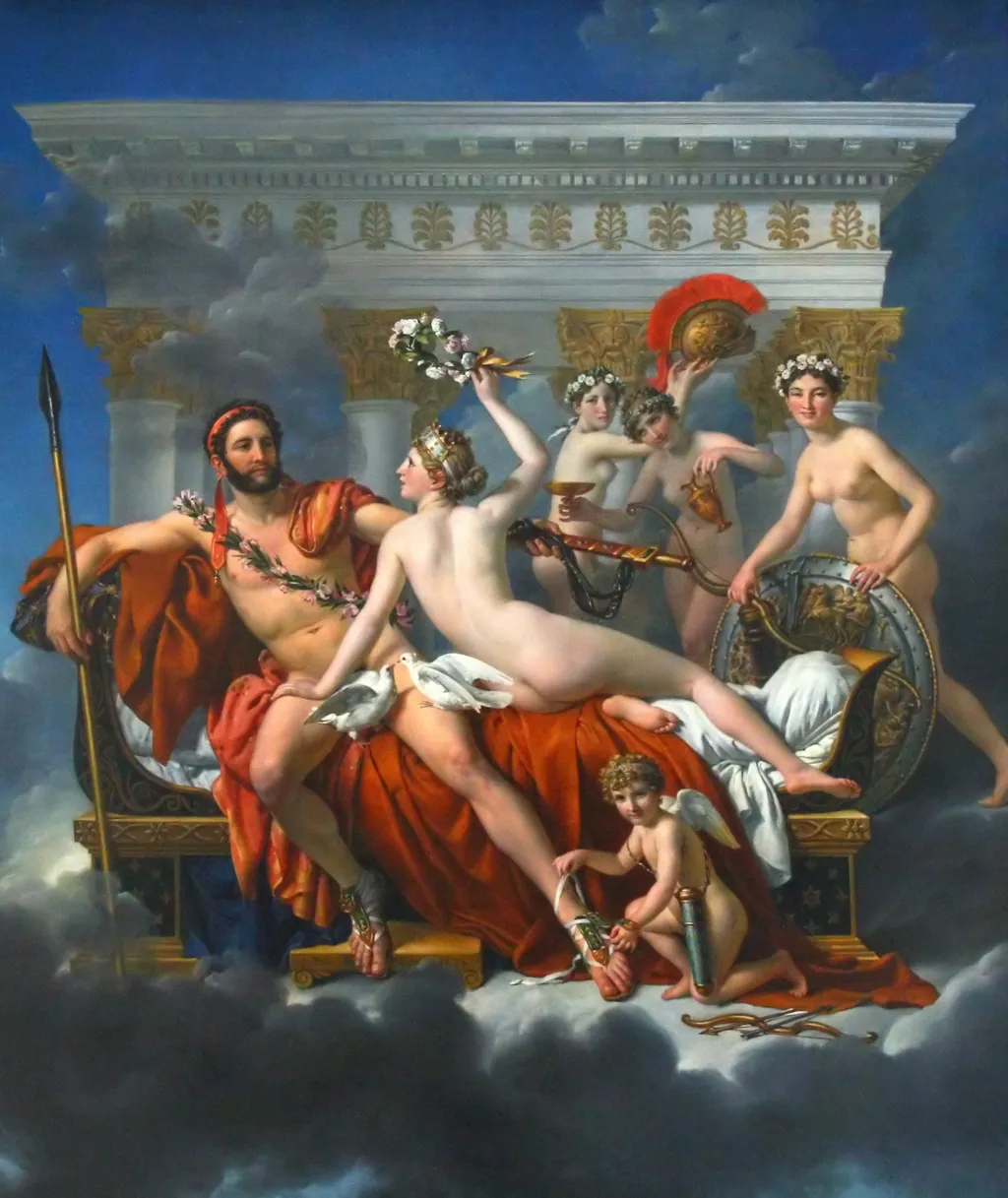
Mars Being Disarmed by Venus is an oil painting by the Neoclassicist artist Jacques-Louis David. It dates from 1824 and is held in the collection of the Royal Museums of Fine Arts of Belgium.
About this work
Subject & Meaning
Mars complacently allows himself to be disarmed, succumbing to Venus's charms and symbolically abandoning his warrior role for love.
Set before a temple floating in the clouds, the painting depicts Venus, the goddess of love, and her followers, the three Graces and Cupid, disarming Mars, the god of war, of his weapons, helmet, shield, and armor. Mars complacently allows himself to be disarmed, succumbing to Venus's charms and symbolically abandoning his warrior role for love. Venus, shown from the back, gazes passionately at Mars and offers him a crown of flowers, while Cupid unties Mars's shoe, perhaps symbolizing a future sexual encounter. Two kissing doves further symbolize pure and future love.
Art historians interpret the scene as a broader commentary on gender and politics, where femininity, emotionality, and pleasure conquer masculine strength and determination. This triumph of Venus over Mars diverges from the Neoclassical glorification of masculine virtue that David previously embraced. By combining idealized forms with realist details, the work also reflects the conflict between the Ancients and the Moderns, with one scholar arguing that David shatters and disarms his once-authoritative artistic language.
Technique & Style
The painting is executed in oil on canvas, a conventional medium for large-scale history painting in the Neoclassical tradition. The surface is smooth and highly finished, reflecting David's academic technique of blending idealized forms with meticulous detail. Venus is depicted in a softly modeled, almost sculptural manner, her flesh rendered with subtle gradations of tone, while Mars's armor is rendered with crisp, linear precision, emphasizing the contrast between the fluidity of femininity and the rigidity of martial authority.
The composition is structured around a central vertical axis, with Venus and the three Graces forming a triangular grouping that guides the viewer's eye toward the disarmed Mars, whose pose combines surrender with a lingering, almost erotic tension. The handling of light is even and diffused, lacking dramatic chiaroscuro, which reinforces the painting's formal balance and its emphasis on narrative clarity over emotional intensity.
History & Provenance
Mars Being Disarmed by Venus is the final painting by Jacques-Louis David, created as his last major work during exile in Brussels. He began the oil on canvas in 1822 at age 73 and completed it in 1825, shortly before his death. The work was commissioned for exhibition in Paris and sent ahead of the 1824 Salon, where Romanticism was rising.
It was later acquired by the Royal Museums of Fine Arts of Belgium and has remained in their collection, displayed in the Oldmasters Museum. The painting measures 308 cm by 265 cm and was not officially commissioned by a patron, but rather produced for public exhibition. Its creation history is tied to David's political exile following the Bourbon Restoration, and it reflects his synthesis of Neoclassical ideals with emerging Romantic sensibilities.
Mars Being Disarmed by Venus is held by the Royal Museums of Fine Arts of Belgium in Brussels, specifically within the Old Masters Museum. The work entered the collection after being bequeathed in 1886 by the artist's grandson, Jules David-Chassagnol, and was formally accessioned into the museum's holdings in 1893 alongside two other works by David. The painting was first exhibited at the Paris Salon of 1824, sent from Brussels by the artist during his exile.
Decades later, it was displayed in the main hall of the Royal Museums of Fine Arts of Belgium in 2007, positioned near the entrance.
Legacy
As David's final painting, completed shortly before his death in 1825, Mars Being Disarmed by Venus has come to be regarded as a culminating statement of his career, synthesizing antiquity, idealism, and realism in a single monumental canvas. Its reputation has grown considerably since its muted critical reception at the Paris Salon of 1824, and it is now a centerpiece of the Royal Museums of Fine Arts of Belgium in Brussels. Art historians have read the work as a departure from the masculine Neoclassical heroism of David's mid-career, with scholars such as Philippe Bordes and Satish Padiyar interpreting it as a self-conscious dismantling of his earlier authoritative style.
The painting has also been discussed as a reinvention of mythological painting, pairing relatively unidealized figures with exaggerated poses, and as a return to themes David had explored decades earlier in works such as Antiochus and Stratonica and Minerva Fighting Mars. Bequeathed by David's grandson in 1886 and formally accessioned in 1893, the canvas remains a touchstone for discussions of late Neoclassicism and the transition toward Romanticism.
Overview
Jacques‑Louis David’s final canvas, Mars Being Disarmed by Venus, is an oil painting completed in 1825. Executed during his exile in Brussels, the work portrays the Roman god of war surrendering his armor to the goddess of love. Measuring a substantial size, it reflects David’s late‑career synthesis of classical narrative and meticulous observation.
Context
Created during a period of political displacement, the painting reflects David’s personal sense of loss and his enduring commitment to classical themes. While the neoclassical movement emphasized moralizing narratives, this late work incorporates a more intimate, humanized portrayal, signalling a subtle shift toward realism that anticipates later 19th‑century developments.
Own this work as a print
Artist & collection

Artist
Jacques-Louis David was born in Paris on 30 August 1748 into a bourgeois family; his father died in a duel when the boy was nine, and a maternal uncle guided his education.

Museum
Royal Museums of Fine Arts of Belgium
Continue through works from the same source collection.
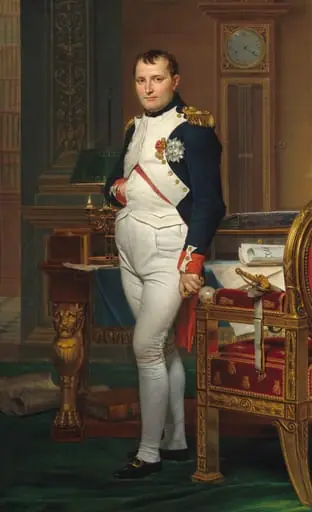 The Emperor Napoleon in His Study at the Tuileries
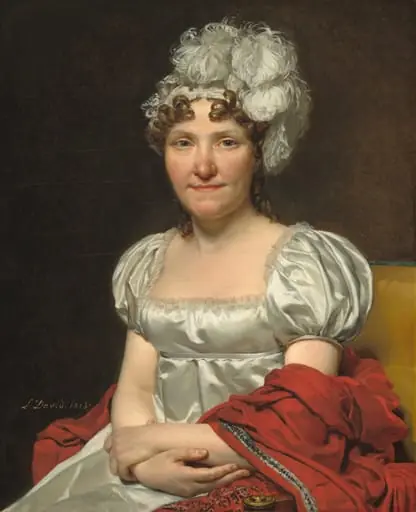 Madame David
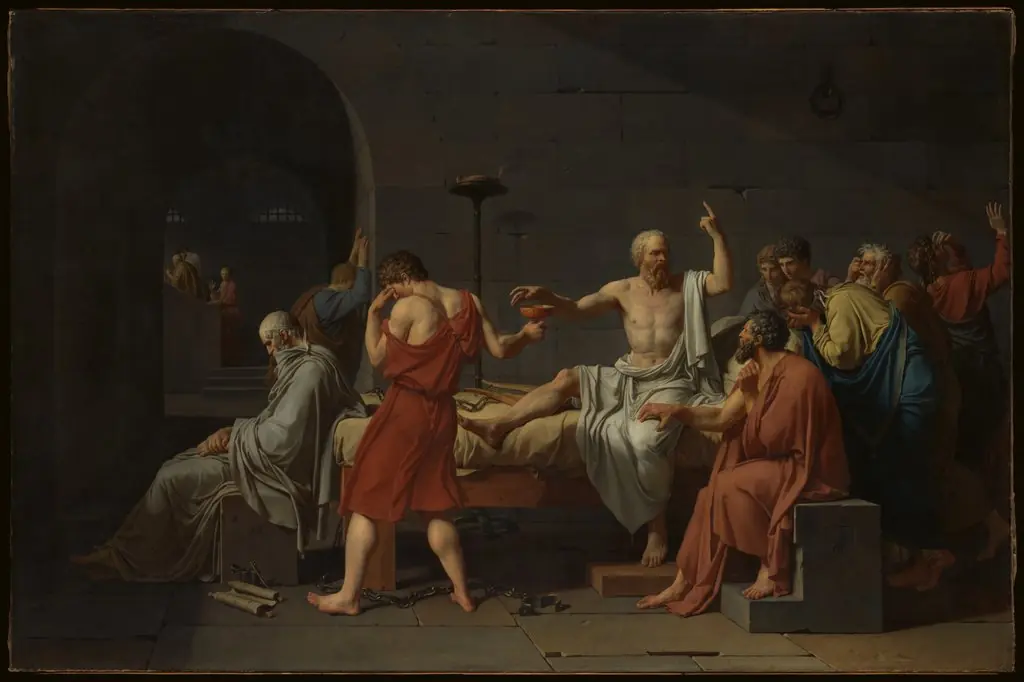 The Death of Socrates
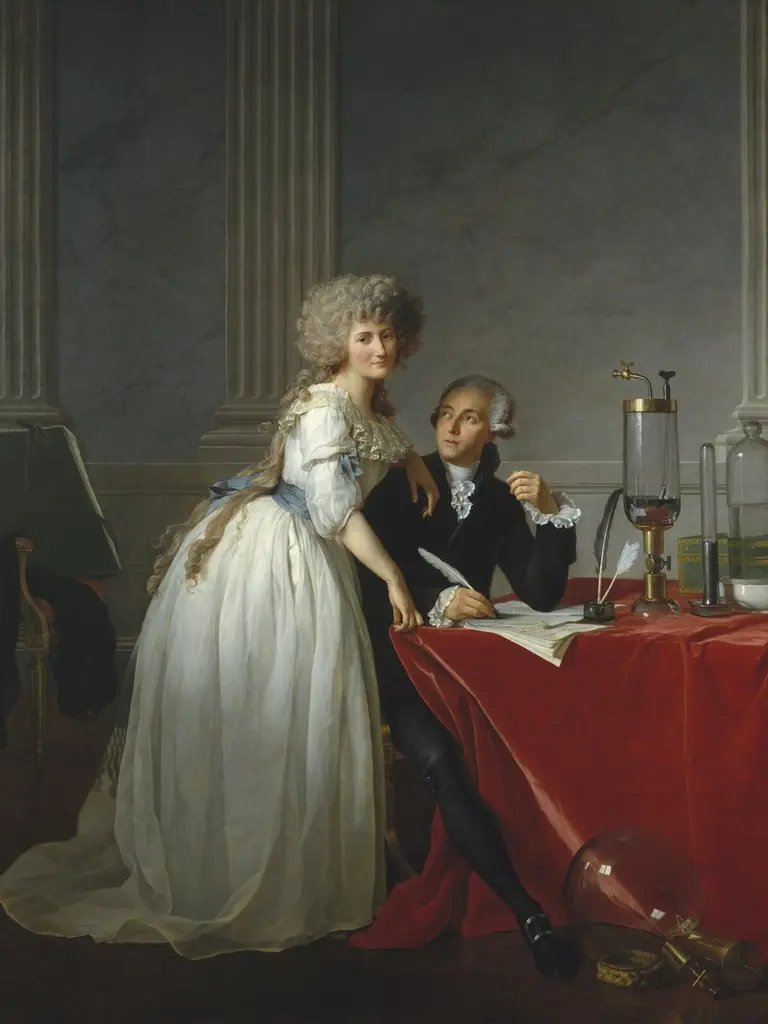 Portrait of Antoine-Laurent Lavoisier and his wife
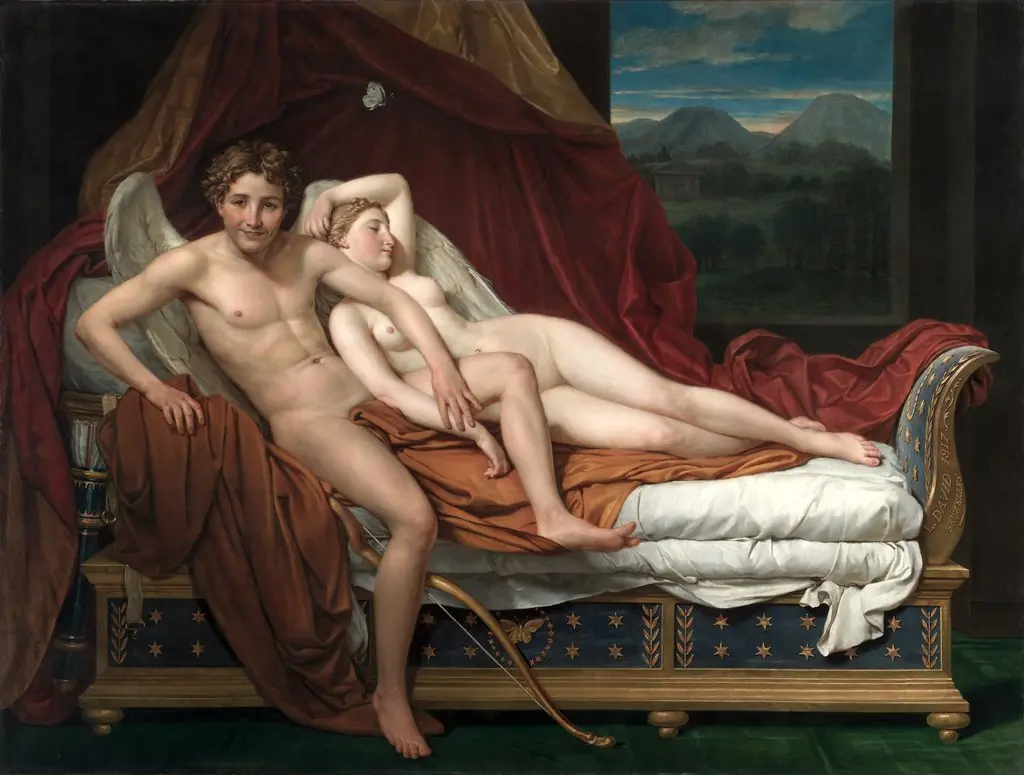 Cupid and Psyche
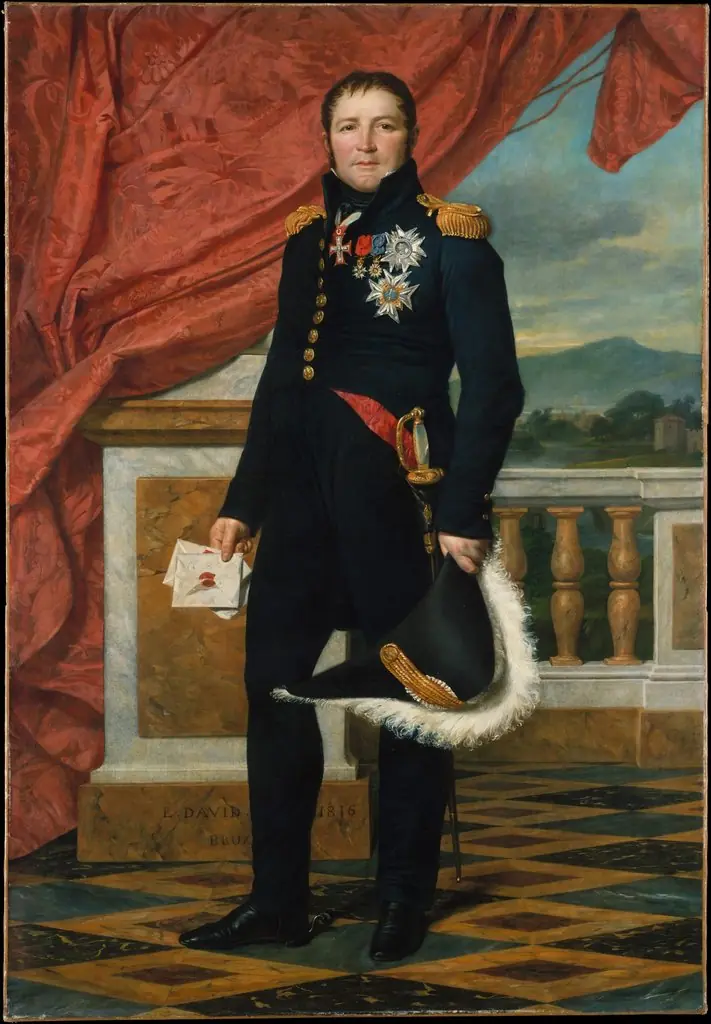 General Étienne-Maurice Gérard (1773–1852), Marshal of France
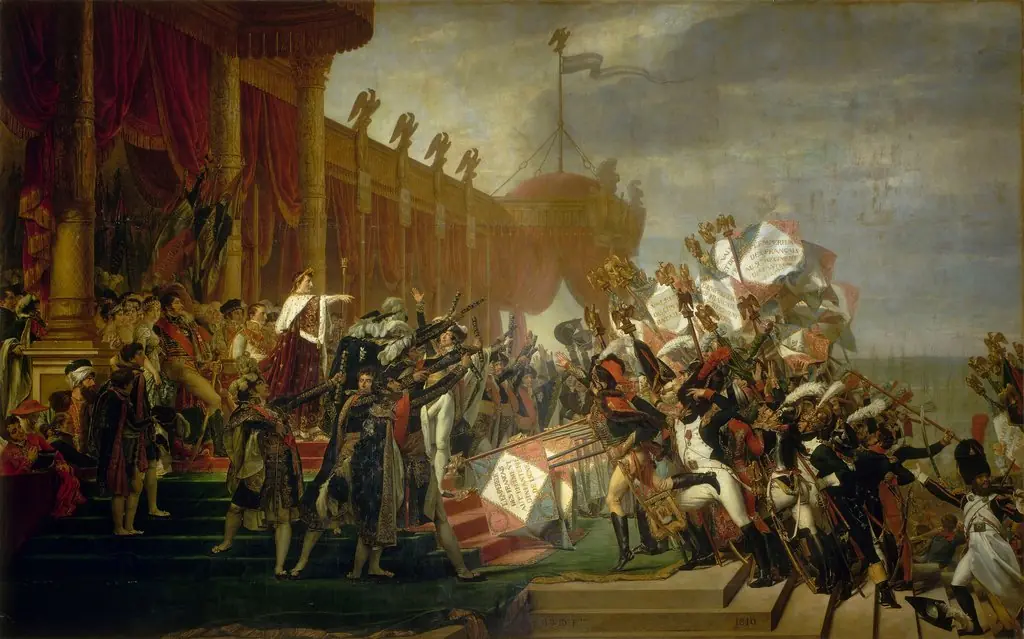 The Distribution of the Eagle Standards
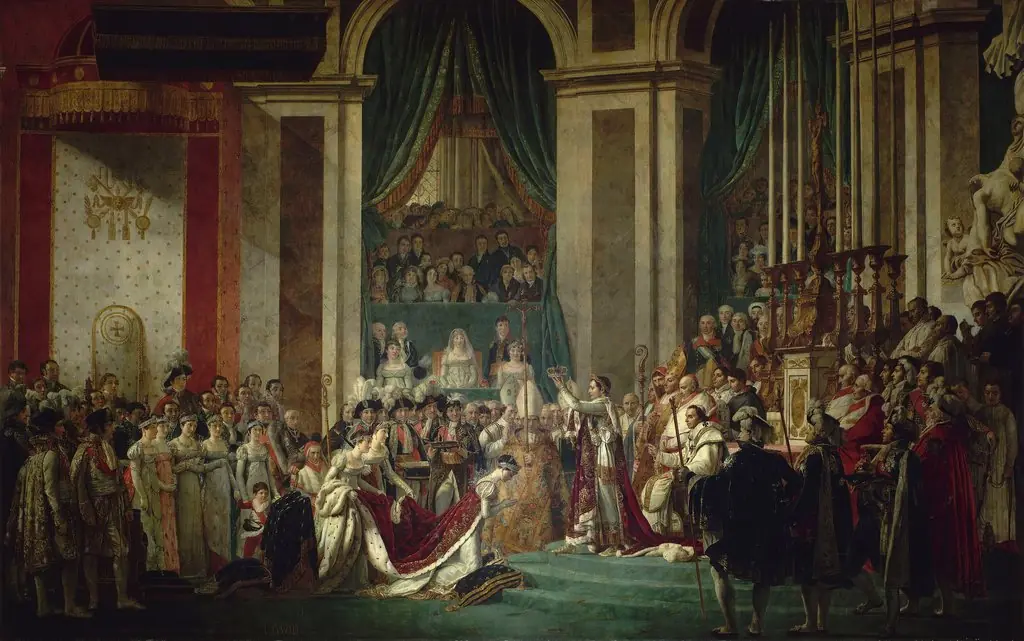 Coronation of Emperor Napoleon I and Coronation of the Empress Josephine
- The Birth of Minerva
 Bacchanalia
 Dispute between Minerva and Neptune over the Naming of the City of Athens
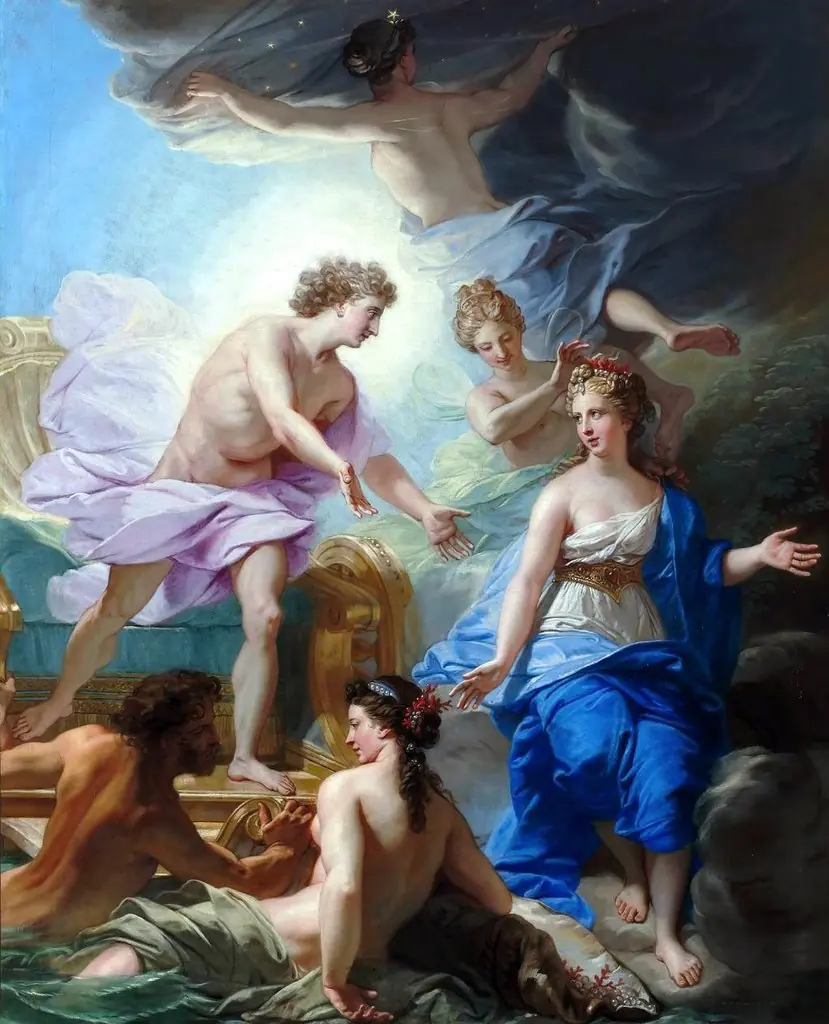 Apollo and Thetis
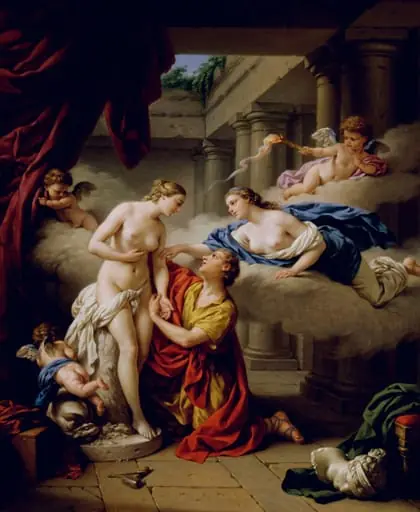 Pygmalion ja hänen veistoksensa
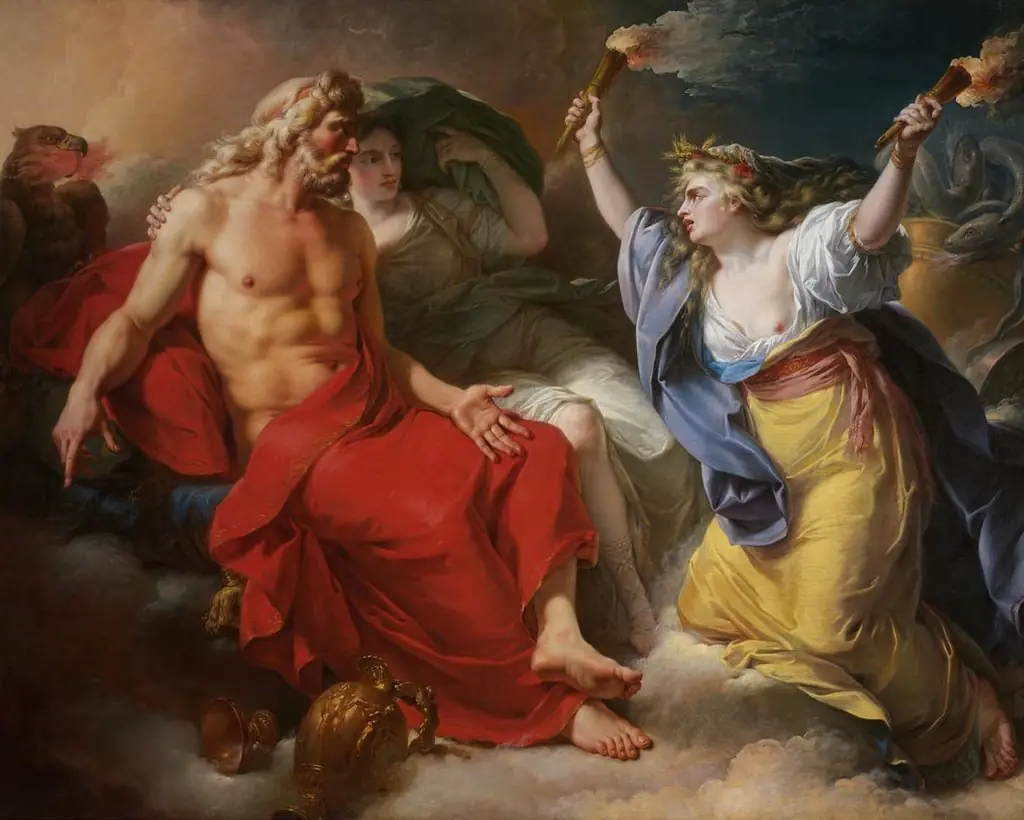 Ceres Begging for Jupiter's Thunderbolt after the Kidnapping of Her Daughter Proserpine
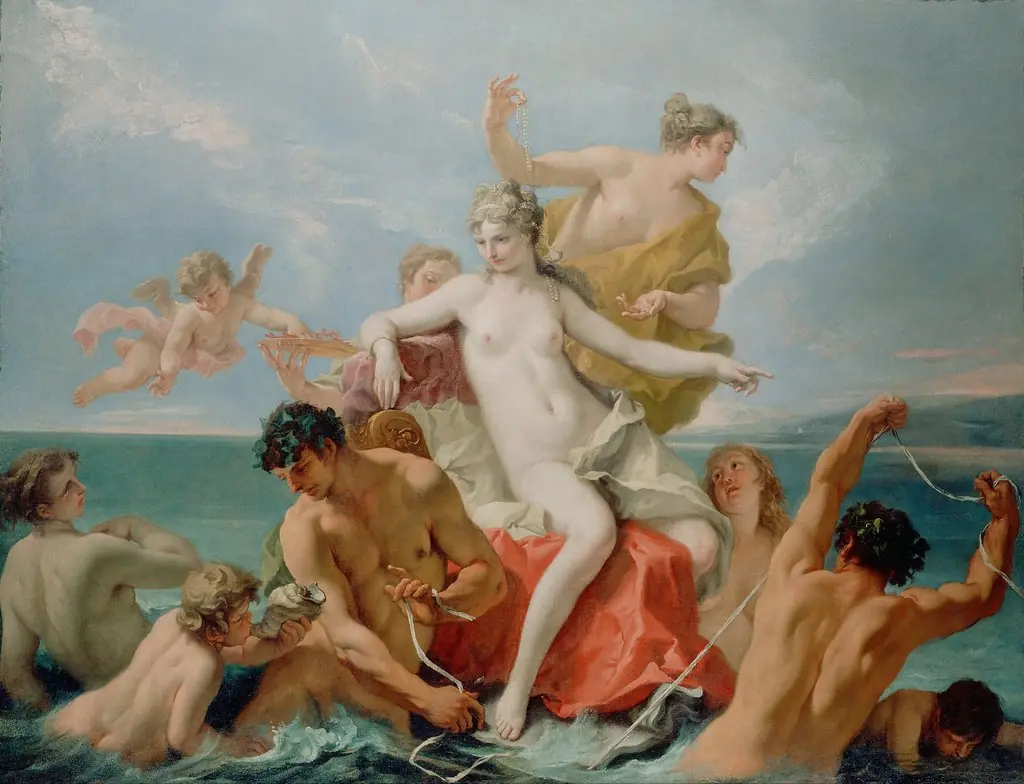 Triumph of the Marine Venus
 Bacchus and Ariadne
 Zeus and Hera on Mount Ida
 Juno Asking Aeolus to Release the Winds
 Medor și Angelica
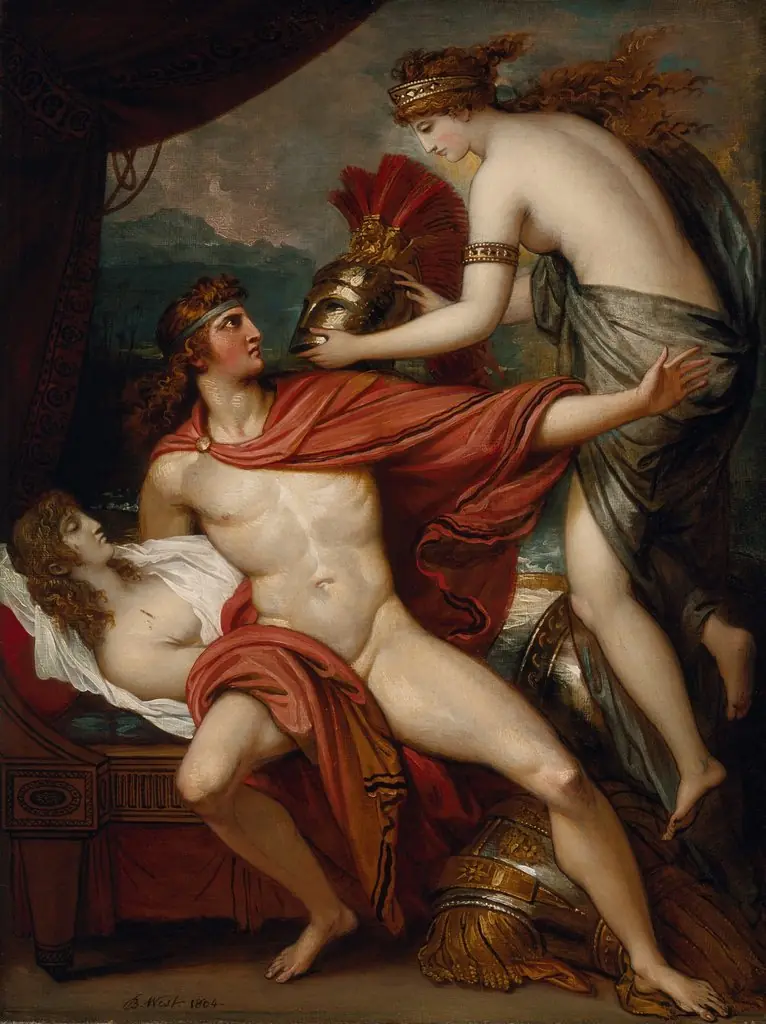 Thetis Bringing the Armor to Achilles