Artwork
The Blue River
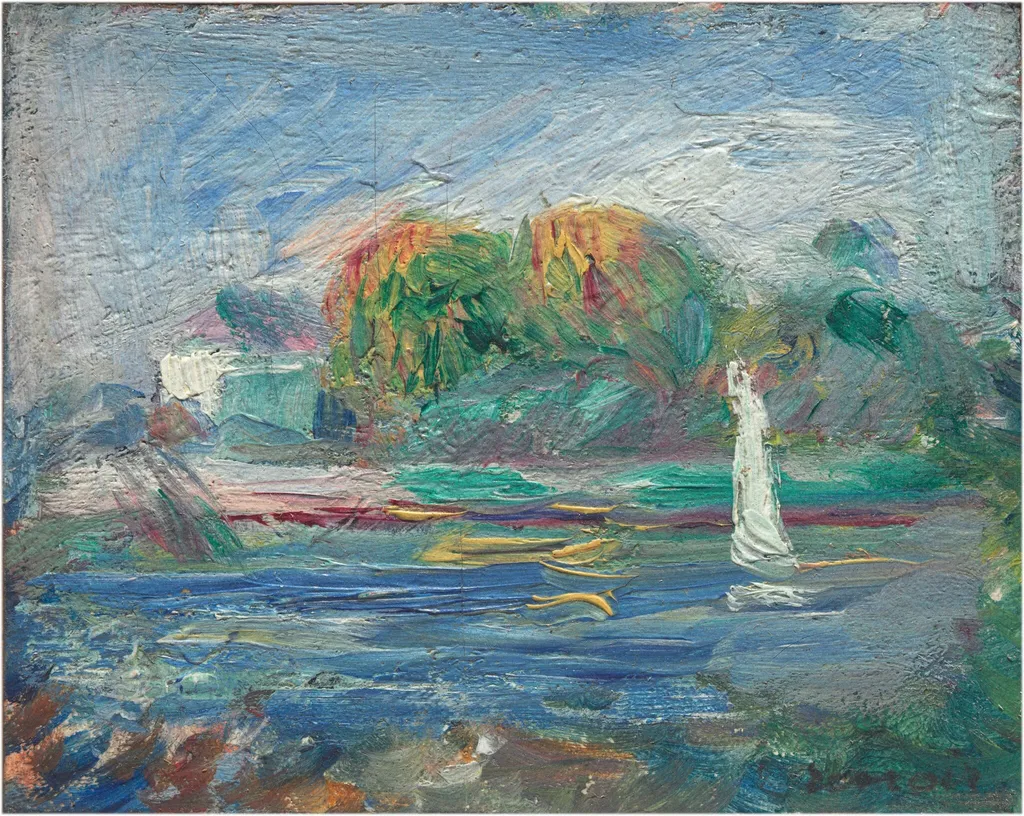
The Blue River is an oil painting by the Impressionist artist Pierre-Auguste Renoir. It dates from 1895 and is held in the collection of the National Gallery of Art.
- Inscription
- Inscribed:lower right: renoir
About this work
Technique & Style
The painting’s materials consist of traditional oil pigments applied to a primed canvas substrate, consistent with late 19th-century easel painting practice.
The Blue River is an oil painting on canvas created in 1890 by Pierre-Auguste Renoir. The work depicts a tranquil river scene rendered with loose brushwork and naturalistic color modulation characteristic of Impressionist landscape treatment. Its surface shows typical oil paint layering on stretched canvas support, with no noted structural concerns in current condition reports.
Formal qualities emphasize atmospheric perspective and fluid compositional lines that guide the viewer’s eye across the waterway, reflecting the artist’s mature approach to plein-air effects within the studio.
The painting’s materials consist of traditional oil pigments applied to a primed canvas substrate, consistent with late 19th-century easel painting practice. Handling and technical examination have not revealed significant condition issues, and its present display at the National Gallery of Art maintains stable environmental controls.
History & Provenance
The painting was created in 1890 by Pierre-Auguste Renoir. It entered the collection of Capt. Edward H. Molyneux in Paris by 1952, was exhibited from that collection at the National Gallery of Art in 1952, and was sold on 15 August 1955 to Ailsa Mellon Bruce in New York. Bruce subsequently bequeathed the work to the National Gallery of Art in Washington, D.C., where it remains in the permanent collection.
The Blue River is held in the collection of the National Gallery of Art in Washington, D.C. The work entered the museum's holdings in 1970 as a bequest from Ailsa Mellon Bruce, who had acquired it at a sale in 1955 from Capt. Edward H. Molyneux. Prior to its acquisition by Bruce, the painting was associated with the Molyneux collection in Paris and was exhibited there in 1952 at the National Gallery of Art. While specific accession numbers are not provided in the available records, the provenance chain is documented from Molyneux through Bruce to the National Gallery.
Overview
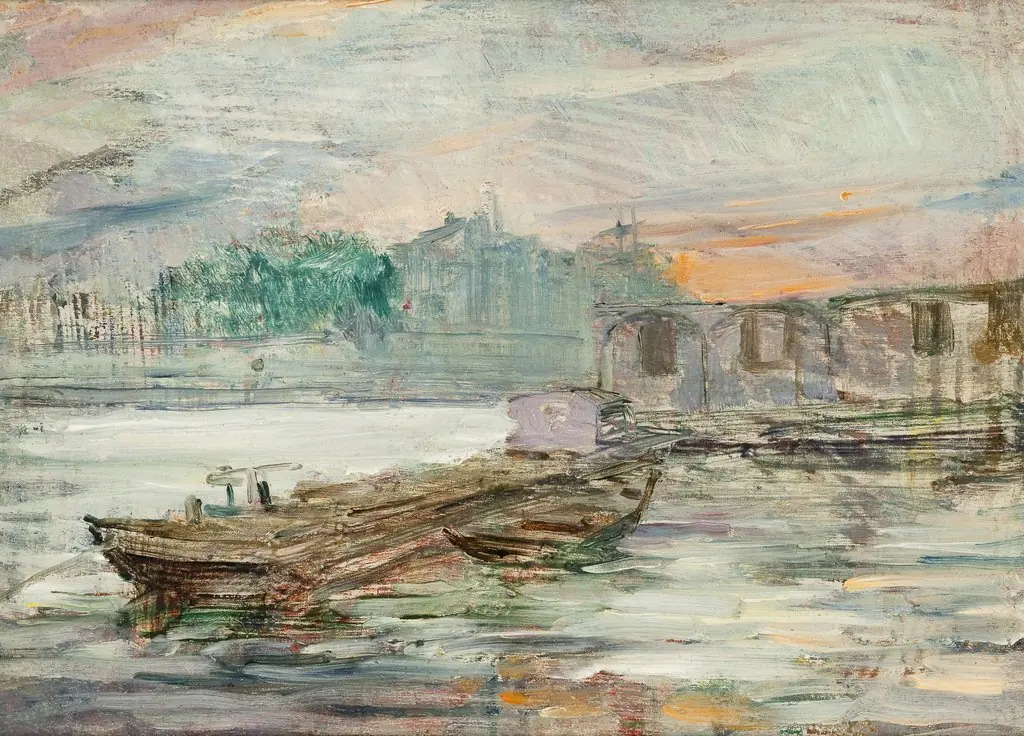
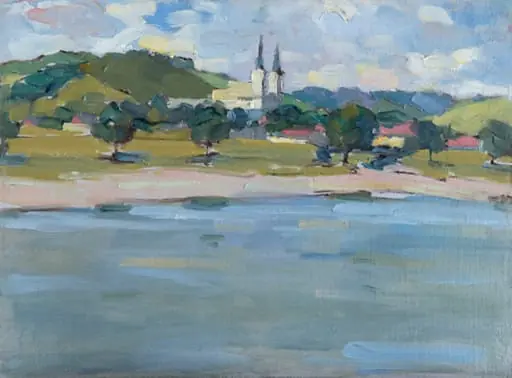
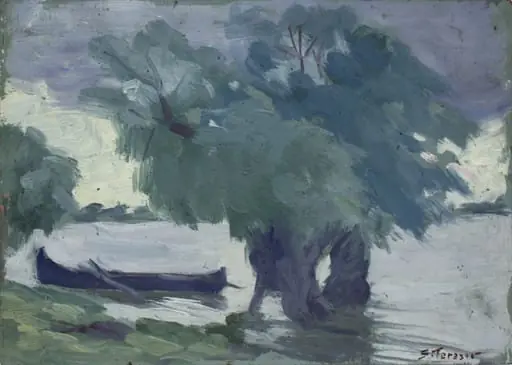
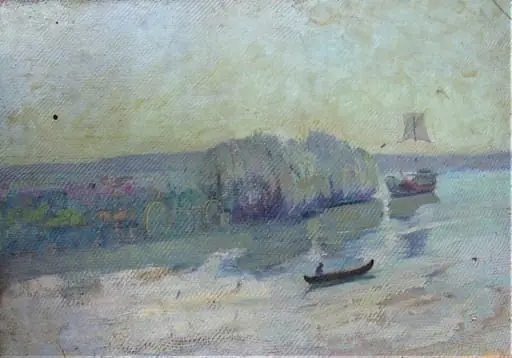
"The Blue River" is an oil on canvas landscape painted by Auguste Renoir around 1895. The work portrays a peaceful river scene, where a few small boats drift on water rendered in multiple shades of blue. Lush green foliage frames the water, while distant trees and hills emerge through loose, atmospheric brushwork, creating a sense of calm.
Subject & Meaning
The composition focuses on the tranquil interaction between water and land, emphasizing the quiet rhythm of a riverine environment. The modest presence of boats suggests everyday activity, while the expansive sky and gentle horizon convey a contemplative mood, inviting viewers to pause and absorb the serenity of the natural setting.
Context
Created in the mid-1890s, the work belongs to Renoir’s later period when he turned increasingly toward landscape subjects after years of figure painting. Though rooted in Impressionism, the piece hints at a more relaxed, almost lyrical treatment of nature that anticipates the softer tonalities seen in his subsequent works.
Own this work as a print
Artist & collection

Artist
Pierre-Auguste Renoir was a French artist who was a leading painter in the development of the Impressionist style.