Artwork
View on the Grounds of a Villa near Florence
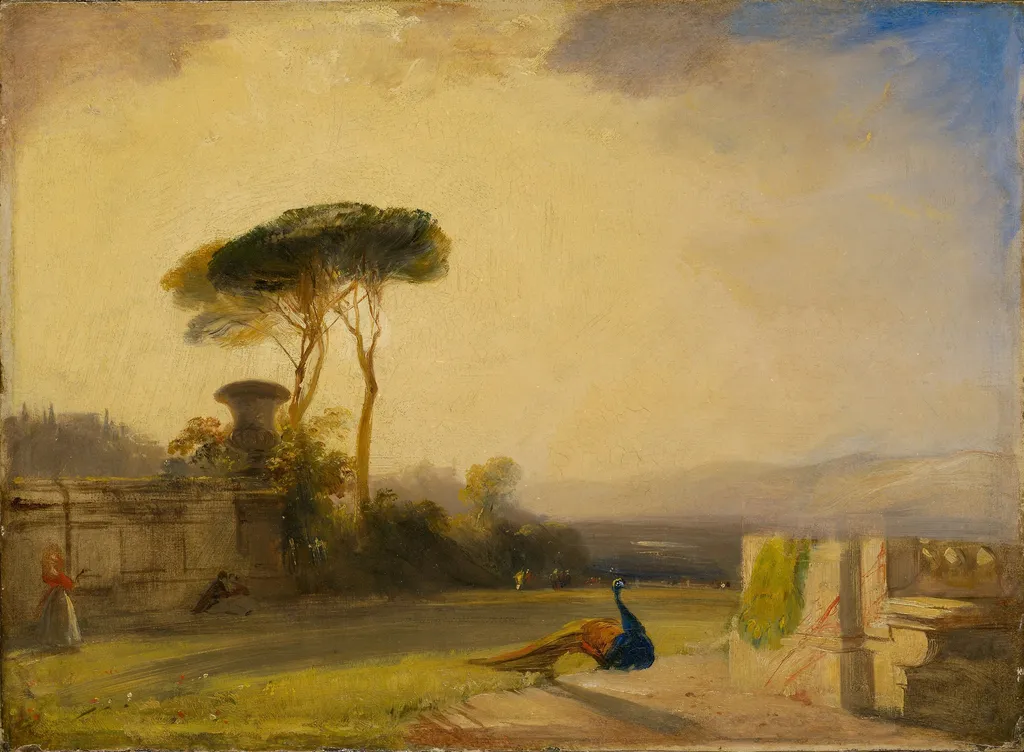
View on the Grounds of a Villa near Florence is an unspecified painting by Richard Parkes Bonington. It dates from 1826 and is held in the collection of the Art Institute of Chicago.
About this work
Overview
The scene avoids dramatic narrative, instead offering a contemplative moment in an Italian landscape, rendered with delicate precision and a restrained palette.
Painted in 1826 by Richard Parkes Bonington, this work captures a quiet corner of a villa’s grounds near Florence. Though British, Bonington was deeply immersed in French Romantic painting traditions, and this piece reflects his sensitivity to natural light and spatial harmony. The scene avoids dramatic narrative, instead offering a contemplative moment in an Italian landscape, rendered with delicate precision and a restrained palette.
Subject & Meaning
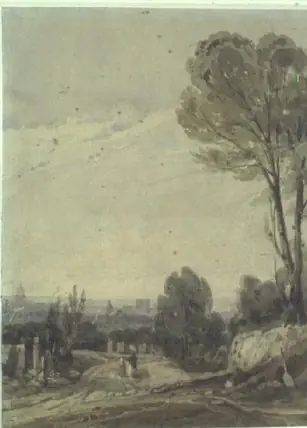
The composition centers on a mature tree, its form anchoring a tranquil garden setting framed by a low stone wall and distant buildings. A peacock in the foreground introduces a subtle note of exoticism, while a solitary figure near the wall suggests quiet observation rather than activity. The scene conveys stillness and private leisure, evoking the idealized retreats favored by 19th-century travelers and artists seeking respite from urban life.
Technique & Style
Bonington employed thin, layered washes to achieve a luminous, atmospheric effect. The warm, golden light filters through the sky, softly modeling the tree and architecture without harsh shadows. The peacock’s feathers are rendered with precise, cool hues that contrast gently against the muted earth tones.
His brushwork is light yet deliberate, blending the precision of Old Master studies with the immediacy of plein air observation.
History & Provenance
Created during Bonington’s time in Italy, the painting reflects his travels through Tuscany in the mid-1820s. It was likely painted on-site, as part of a series of landscape studies he made while absorbing Italian light and topography. The work remained in private collections in Europe before entering a public museum, where it continues to exemplify his contribution to Romantic landscape painting beyond British shores.
Context
In the 1820s, British artists increasingly traveled to Italy, drawn by its classical ruins and pastoral scenery. Bonington’s approach diverged from grand historical landscapes, favoring intimate, everyday views. His work aligned with a growing interest in naturalism and emotional tone over narrative, influencing later generations who sought to capture atmosphere rather than monumentality in landscape painting.
Legacy
Bonington’s subtle handling of light and his focus on quiet, unidealized nature helped shift landscape painting toward greater psychological nuance. Though less celebrated than some contemporaries, his influence endured in the work of French and English artists who valued atmospheric precision and restrained composition. This painting stands as a quiet testament to his ability to transform a modest scene into a resonant visual experience.
Own this work as a print
Artist & collection
Artist
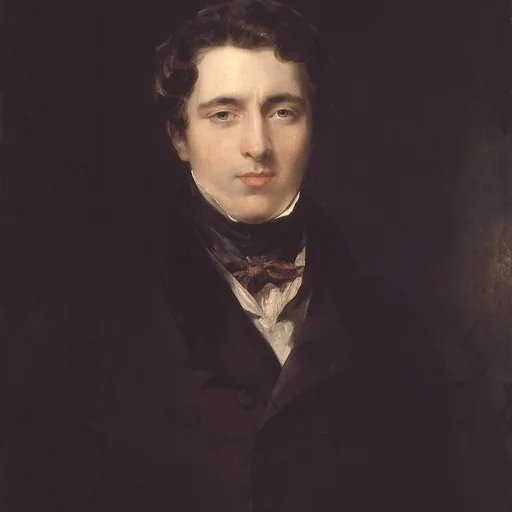
Richard Parkes Bonington (25 October 1802 – 23 September 1828) was an English Romantic landscape painter.

 The Good Samaritan
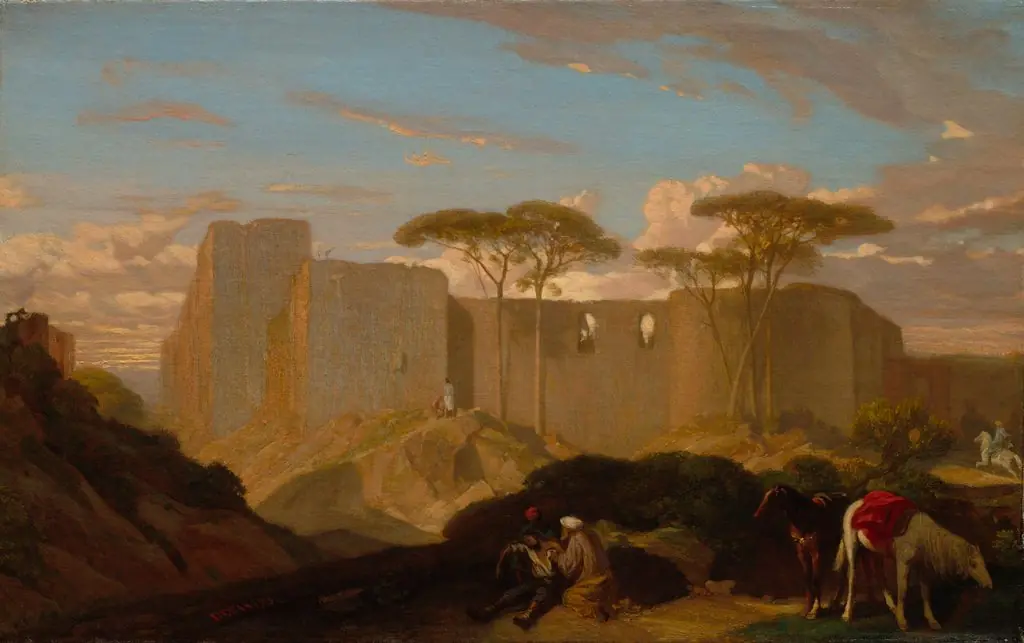 The Good Samaritan
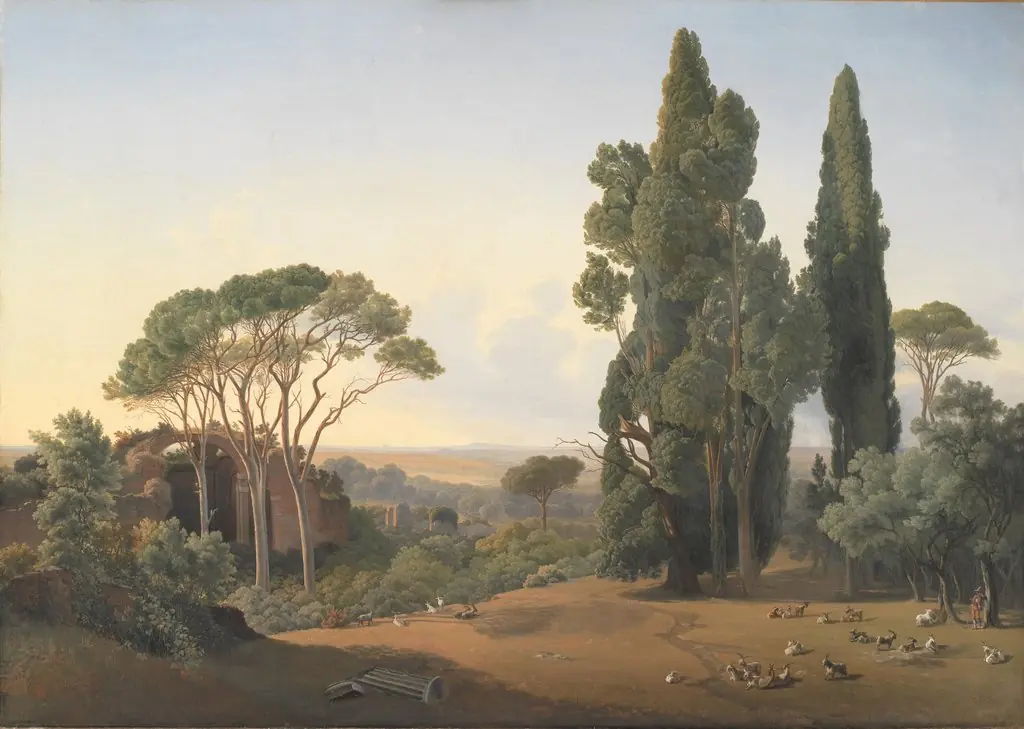 A View from Hadrian's Villa, Tivoli
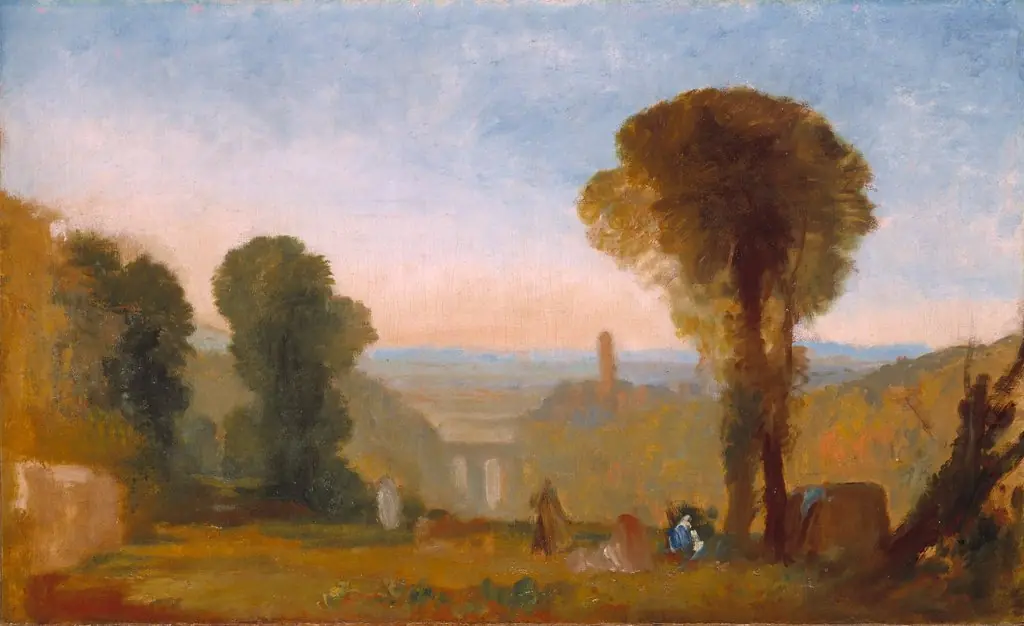 Italian Landscape with Bridge and Tower
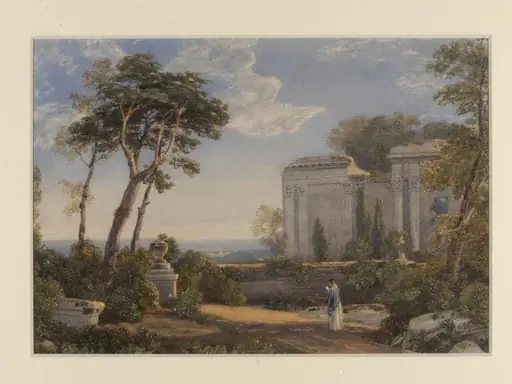 Ruins: A Classical Composition
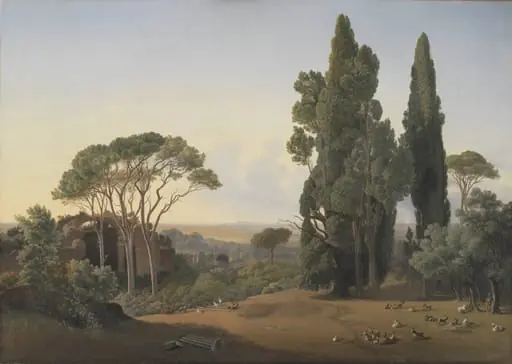 A View from Hadrian's Villa, Tivoli
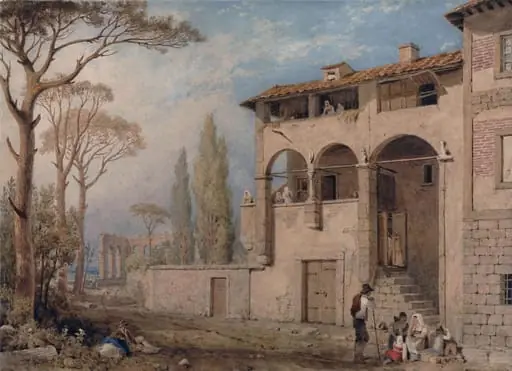 Buildings near Rome
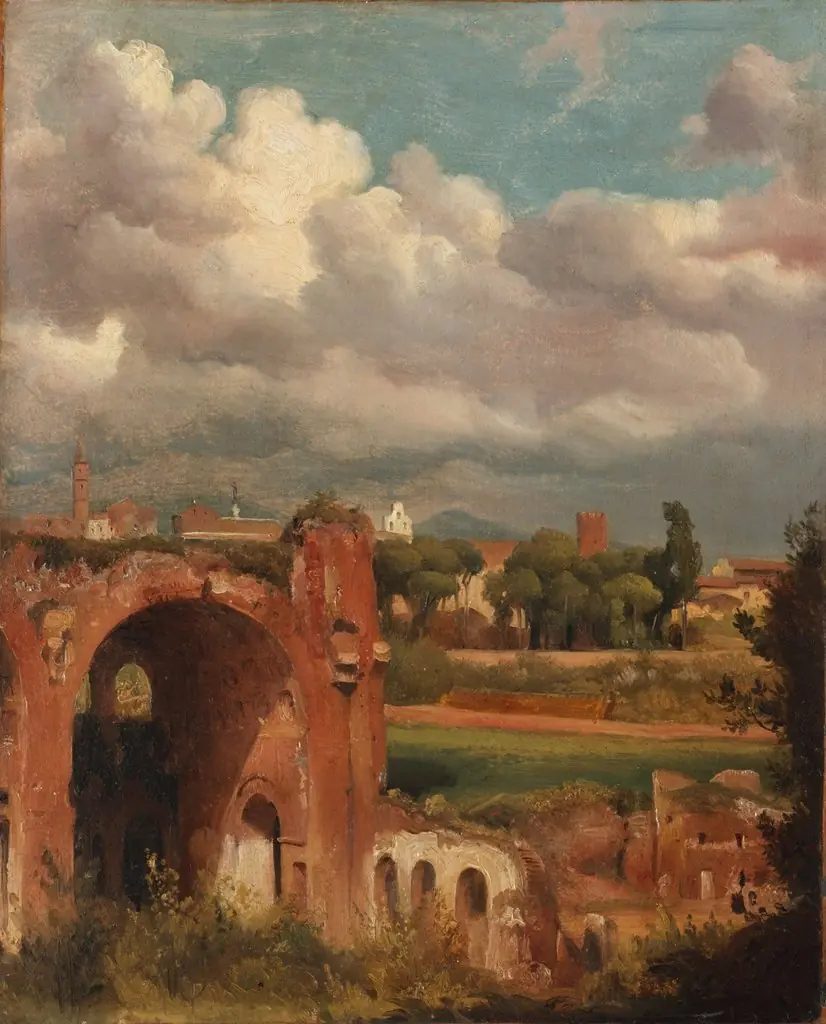 View of the Basilica of Constantine from the Palatine, Rome
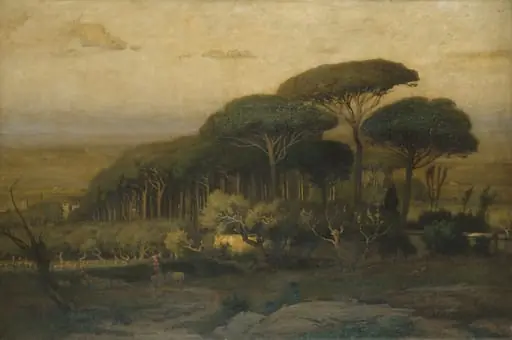 Pine Grove of the Barberini Villa
 The Spring of léri in Chassagne
 Landscape with Cottages
- View on the Grounds of a Villa near Florence