Artwork
John Brown
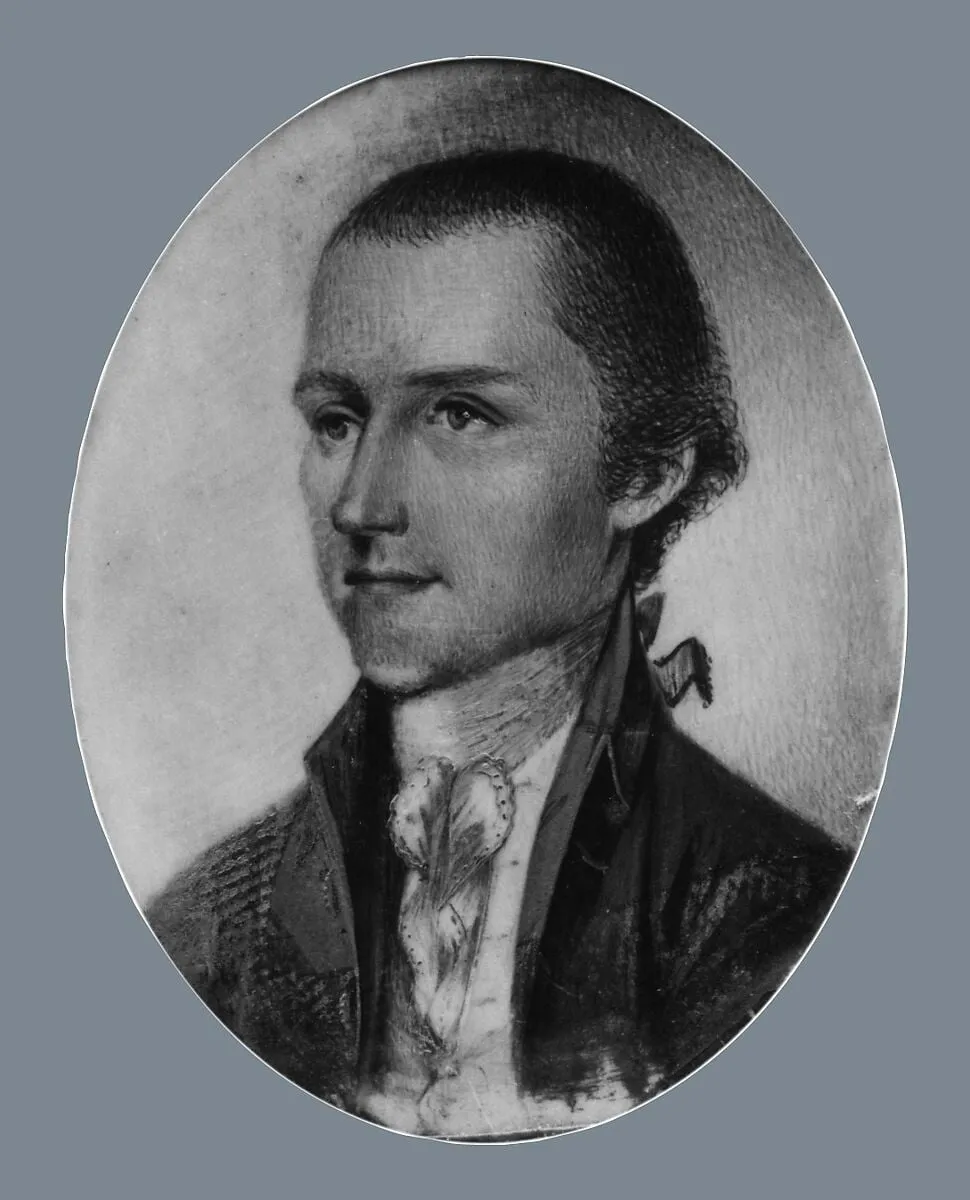
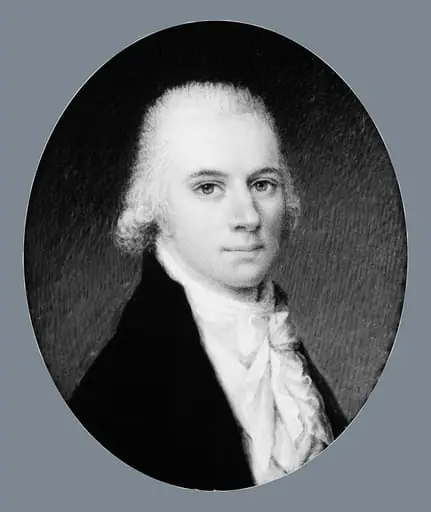
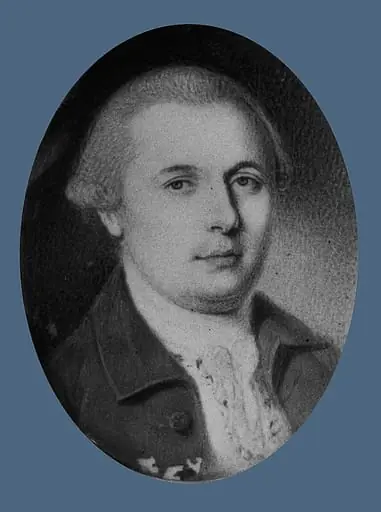
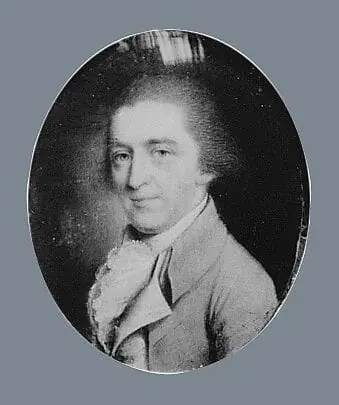
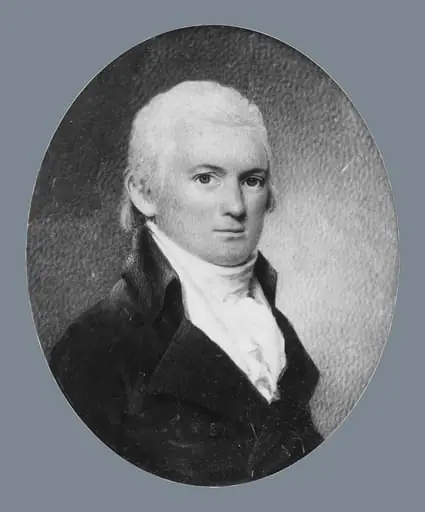
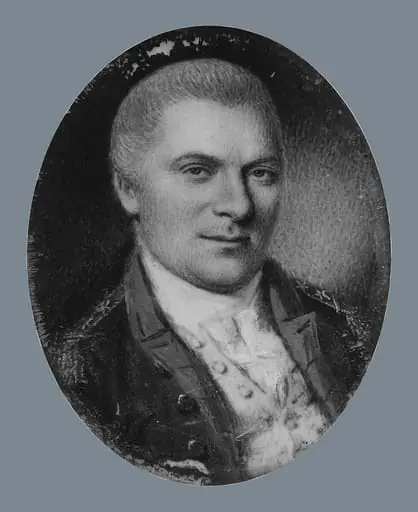
John Brown is a watercolor painting by the Rococo painting artist Robert Fulton. It dates from 1786 and is held in the collection of the Metropolitan Museum of Art.
- Accession no.
- 36.34
- Credit line
- Morris K. Jesup Fund, 1936
About this work
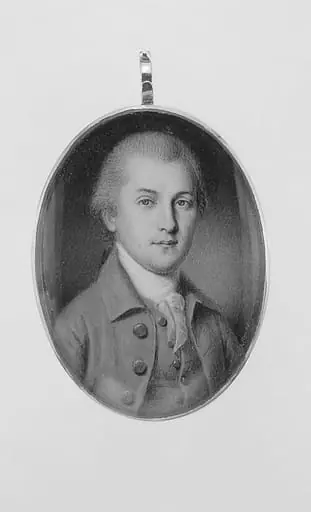
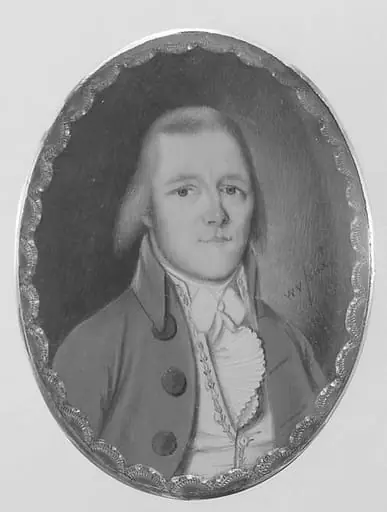
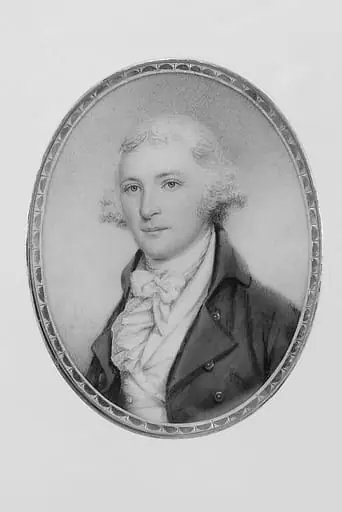
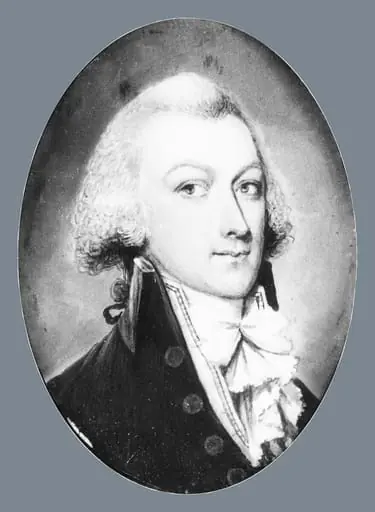
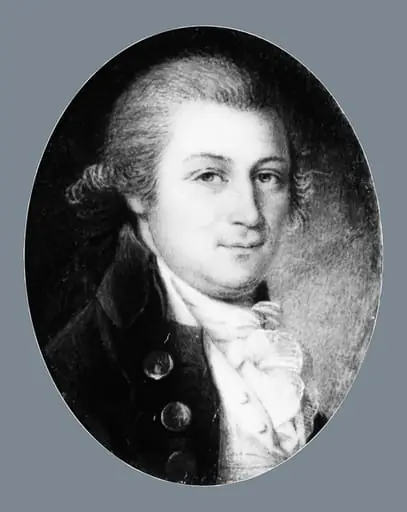
You see a small, round portrait of a man with sharp eyes and a high white collar, painted in soft watercolor on ivory.
You see a small, round portrait of a man with sharp eyes and a high white collar, painted in soft watercolor on ivory.
This tiny painting was made in 1786, when miniatures like this were worn as keepsakes, like a painted photograph. The artist, Robert Fulton, is better known for inventing the steamboat, not for art. Yet here, his brushwork is delicate, almost like lace.
To see how other artists painted tiny portraits, look up the subject portrait.
Subject & Meaning
Robert Fulton’s 1786 watercolor on ivory, catalogued as a miniature portrait within The American Wing, portrays the historical figure John Brown. The diminutive dimensions (4.4 × 3.4 cm) and delicate medium emphasize a private, intimate representation rather than a public monument. Dressed in contemporary attire, the sitter’s composed gaze and subdued palette suggest notions of civic virtue and Enlightenment rationality associated with early American ideals.
As a work classified as a portrait genre, it functions both as a likeness and a symbolic embodiment of the era’s political aspirations, linking the subject to the broader narrative of nation‑building.
Technique & Style
Robert Fulton's 1786 portrait of John Brown is executed as a miniature painted in watercolor on an ivory support. The work measures 4.4 units in height and 3.4 units in width, adhering to the compact dimensions characteristic of the genre. As a watercolor on ivory, the piece relies on the translucent qualities of the pigment applied to the smooth, polished surface of the material, a technique favored for its ability to render delicate skin tones and fine details in portraiture.
The classification within the American Wing identifies it specifically as a portrait of a man, emphasizing its formal function as a likeness. The handling of the medium allows for the subtle gradations typical of miniature painting from this period, creating a refined and intimate representation of the sitter.
History & Provenance
The miniature portrait John Brown was painted in 1786 by Robert Fulton, who is recorded as both artist and creator of the work. The portrait is executed in watercolor on ivory, a common format for miniature portraiture of the period. It is held in the collection of the Metropolitan Museum of Art, where it is catalogued as an example of Fulton’s early portrait practice.
The work’s date of inception is given as 1786, aligning with Fulton’s documented activity in portrait miniatures during that year. The portrait depicts a man and is classified within the museum’s American Wing holdings.
The work is held by the Metropolitan Museum of Art, accessioned as a miniature portrait in The American Wing (1786). It is listed in the museum’s holdings under the title John Brown and attributed to Robert Fulton. The painting measures 4.4 cm in height and 3.4 cm in width. As of the recorded data, no exhibition history is documented in the provided sources.
Overview
This watercolor on ivory, titled John Brown, was created by Robert Fulton in 1786. The small, round portrait depicts a man with sharp eyes and a prominent white collar, rendered with soft tones. Such miniature paintings served as personal keepsakes during the late 18th century, often worn or carried as intimate mementos, much like photographs would be in later eras.
Context
Created in 1786, John Brown exemplifies the role of miniature portraits in pre-photographic society. These small, portable artworks functioned as cherished personal objects, allowing individuals to carry images of loved ones or significant figures. Worn as jewelry or kept in small cases, they offered a tangible connection to the subject, serving a purpose similar to that of photographs in subsequent centuries, preserving likenesses for private contemplation.
Artist & collection
Artist
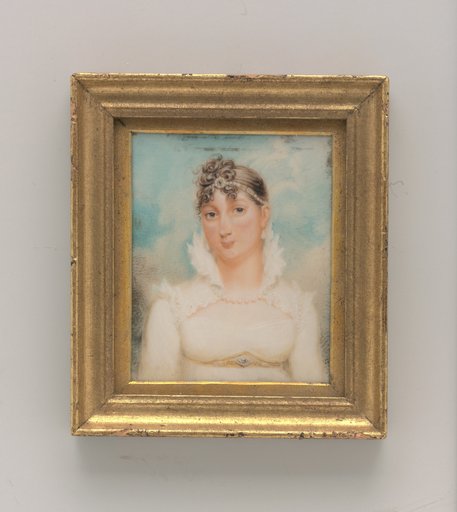
Robert Fulton (1765 to 1815), the American engineer remembered for developing the first commercially successful steamboat, began his career as a painter.