Artwork
A Village in a Valley
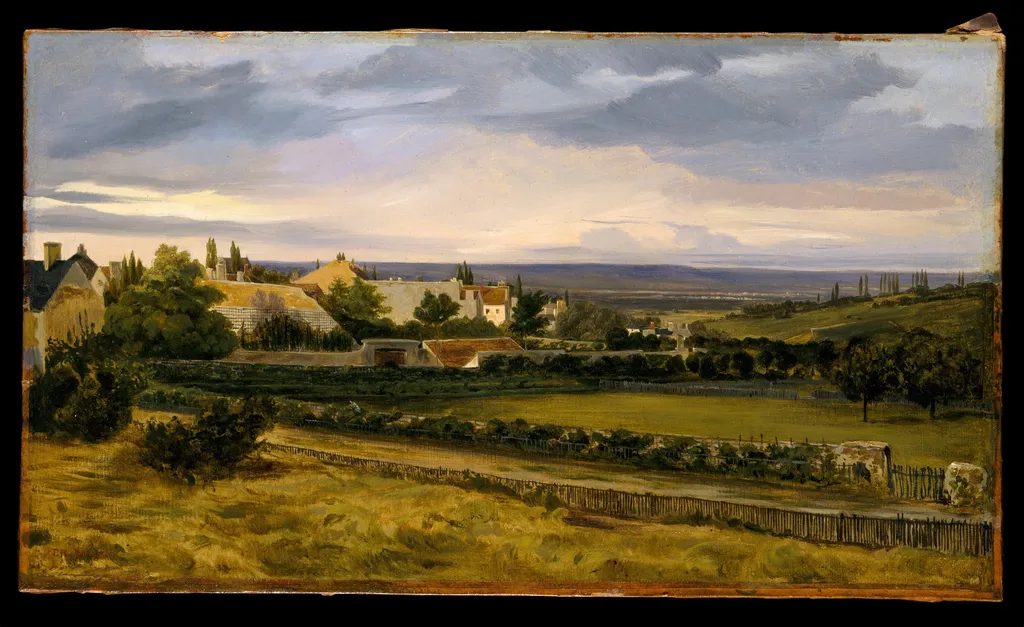
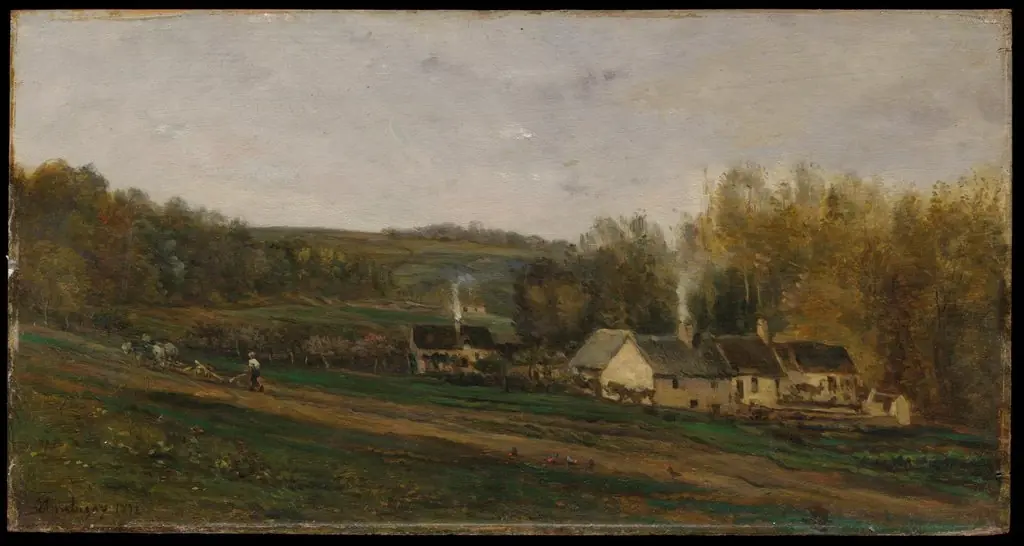
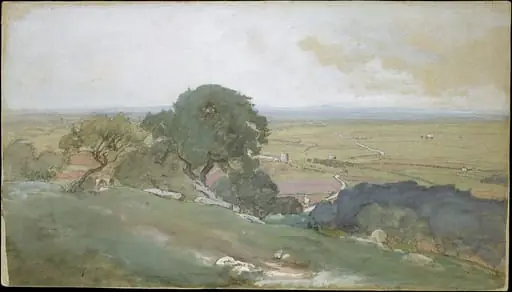
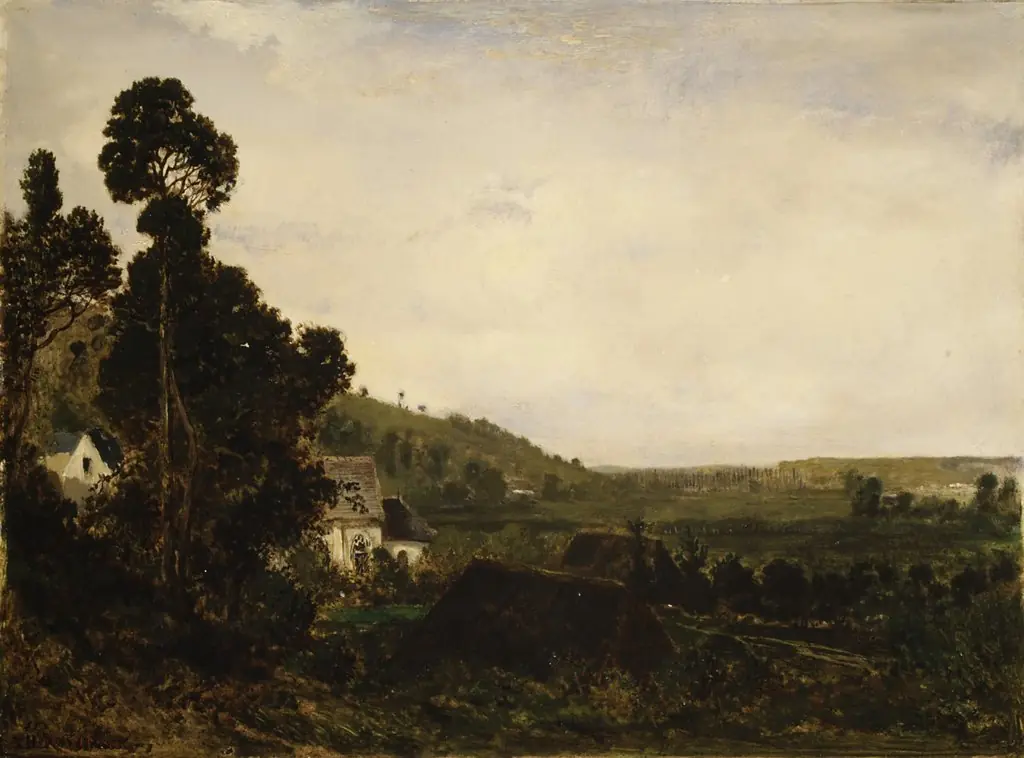
A Village in a Valley is an unspecified painting by the Barbizon school artist Théodore Rousseau. It dates from 1820 and is held in the collection of the Metropolitan Museum of Art.
About this work
Subject & Meaning
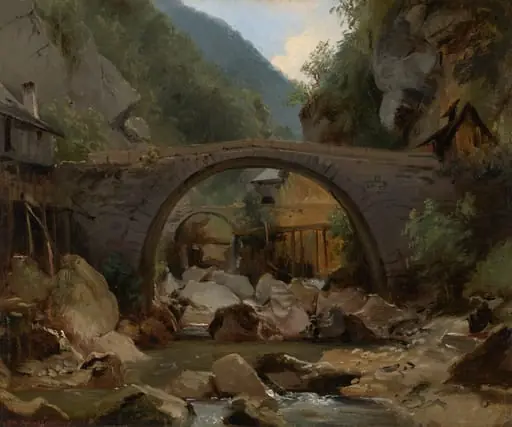
According to the available records, the work portrays a village integrated into its surrounding landscape, classifying it firmly within the landscape genre.
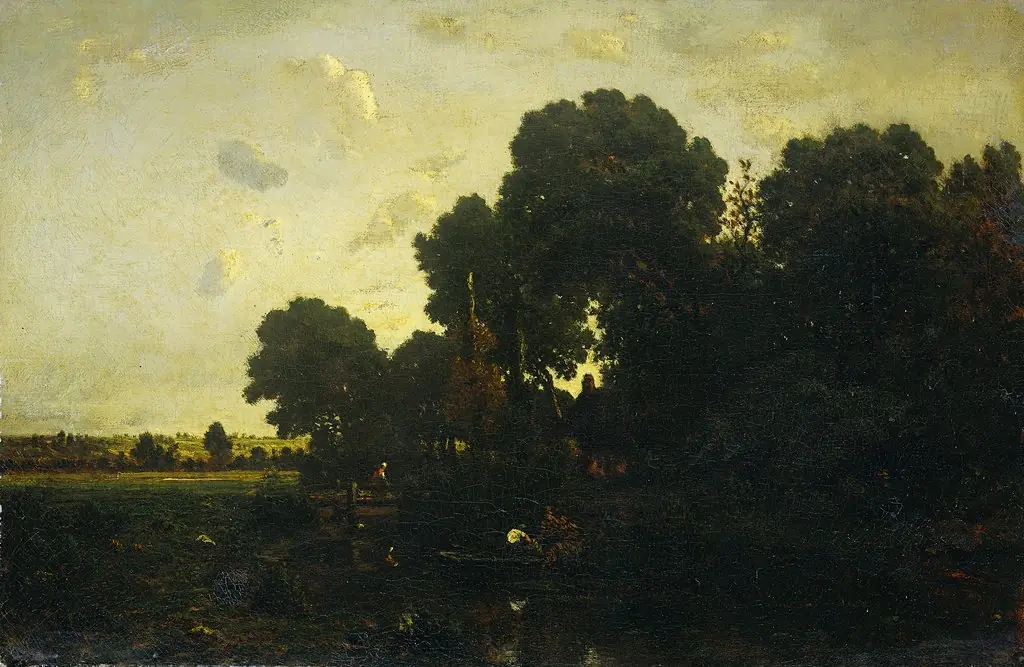
A Village in a Valley is a landscape painting by Théodore Rousseau that depicts a rural settlement nestled within a valley setting. According to the available records, the work portrays a village integrated into its surrounding landscape, classifying it firmly within the landscape genre. The painting's modest dimensions, measuring 23.2 by 40.6 centimeters, suggest an intimate, cabinet-scale composition typical of early-nineteenth-century French landscape studies rather than a grand topographical statement.
Created in 1820, when Rousseau was at the outset of his career, the subject reflects the Barbizon-school interest in unembellished rural scenery, presenting the village as a humble feature of the natural terrain rather than as a monument. No specific iconographic symbols, allegorical figures, or narrative attributes beyond the village and landscape itself are recorded in the sources, leaving the work's meaning rooted in its straightforward depiction of pastoral life within a valley environment.
History & Provenance
Théodore Rousseau’s A Village in a Valley was created in 1820, establishing its origins within the early phase of the artist’s landscape oeuvre. The work’s small dimensions, 23.2 by 40.6 centimeters, align with its intimate depiction of a rural scene. Following its completion, the painting entered the collection of Michael Friedsam, an American philanthropist and art collector.
After Friedsam’s death in 1931, the work was bequeathed to the Metropolitan Museum of Art in New York, where it has remained part of the permanent collection since its acquisition. No definitive record of a commission for the piece has been identified in the available sources.
Overview
Théodore Rousseau, a French artist recognized for his contributions to the Barbizon school, created A Village in a Valley in 1820. This early landscape painting captures a rural scene and is currently housed in the collection of The Metropolitan Museum of Art. The work exemplifies Rousseau's emerging interest in depicting natural environments, a hallmark of his later career.
Technique & Style
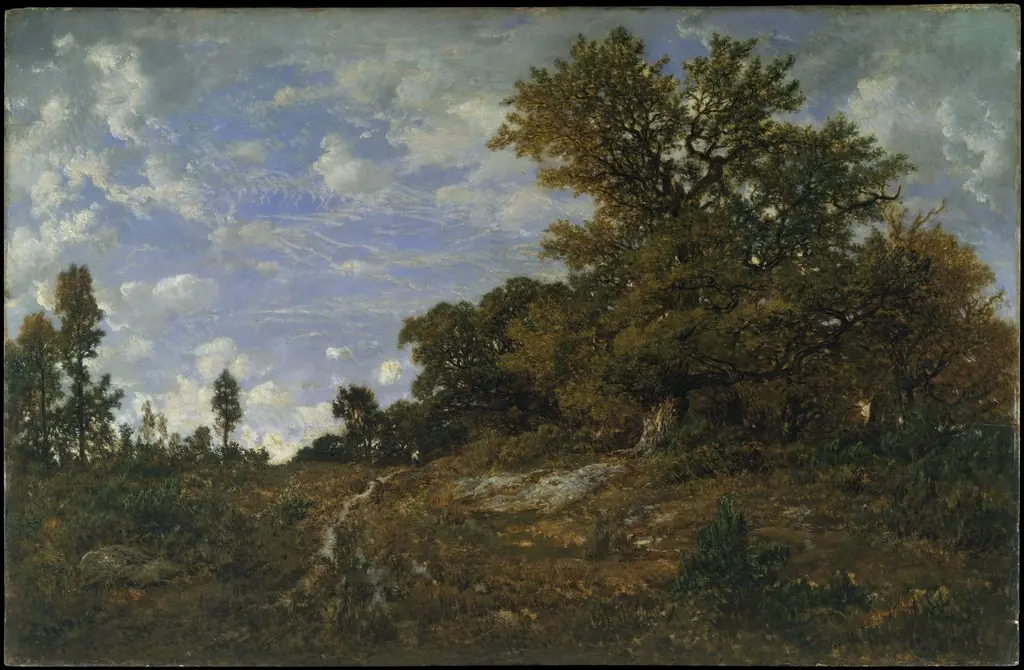
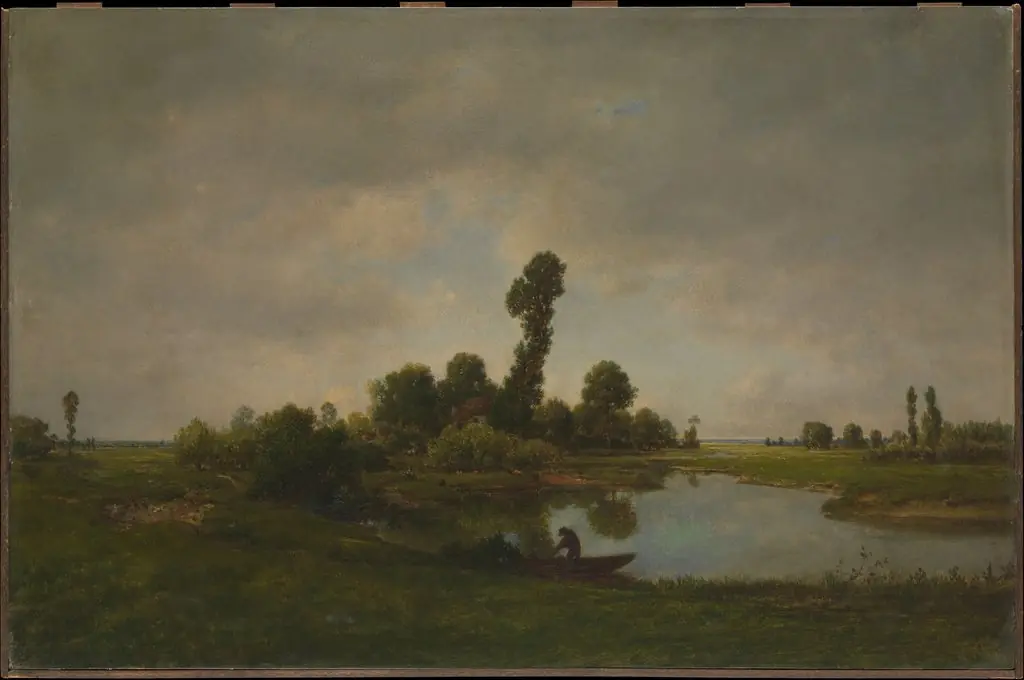
Rousseau's deliberate use of color and light is central to the painting's effect, generating a palpable sense of depth and atmosphere. These artistic choices draw the viewer into the heart of the village, creating an overall impression of tranquility and calm. The composition invites contemplation of a serene, pastoral world through its harmonious visual elements.
Own this work as a print
Artist & collection
Artist
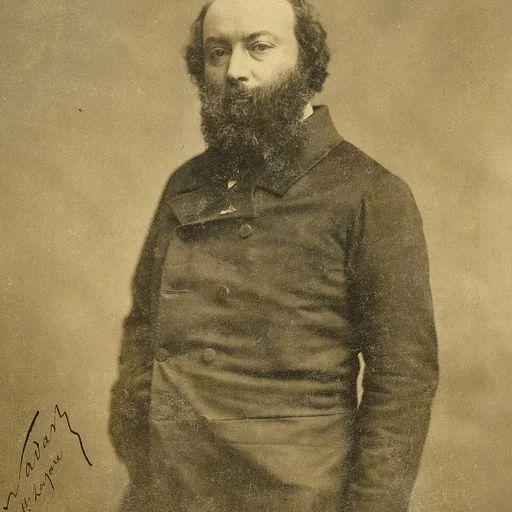
Étienne Pierre Théodore Rousseau (French pronunciation:; 15 April 1812 – 22 December 1867) was a French painter of the Barbizon school.