Artwork
Amberley
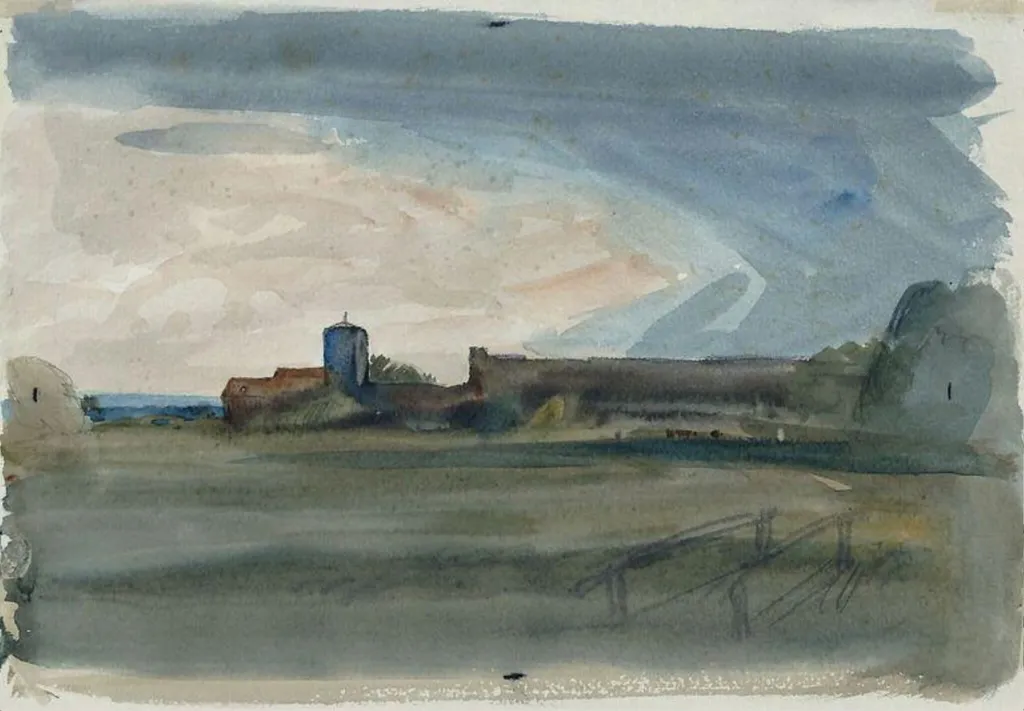
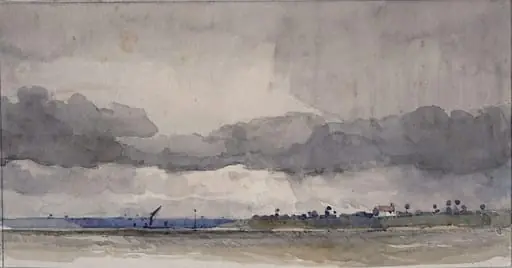
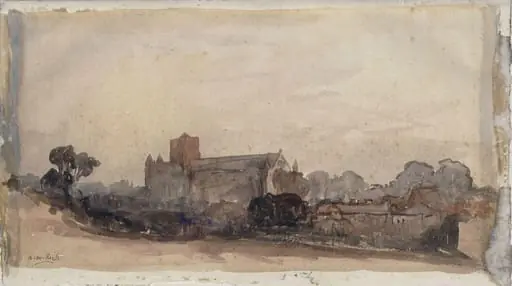
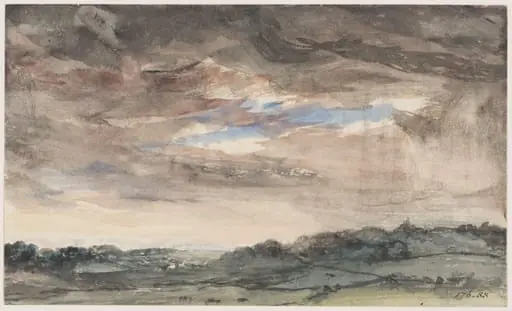
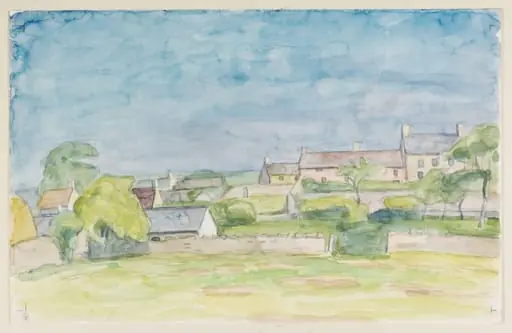
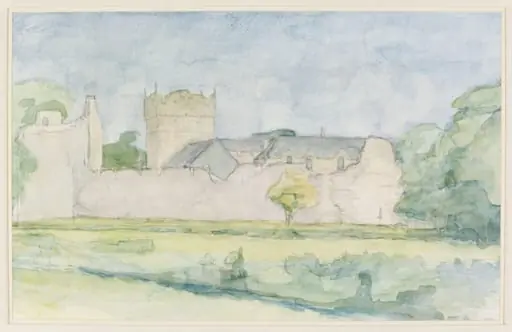
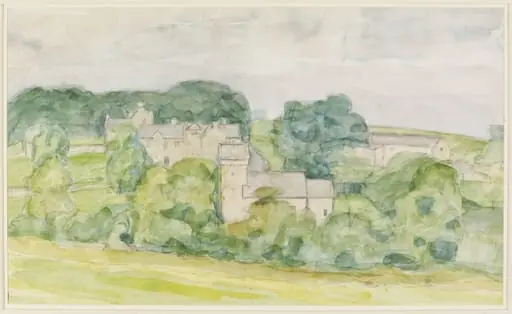
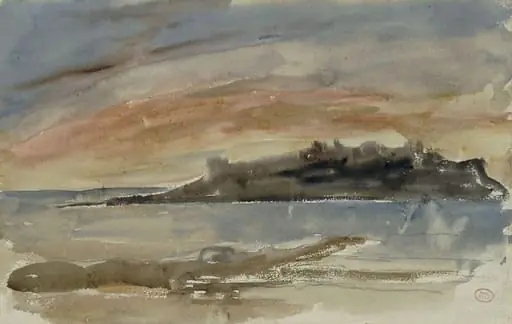
Amberley is a watercolor work on paper by the Aestheticist artist Rowland Alston. It dates from 1932 and is held in the collection of the Victoria and Albert Museum.
About this work
Overview
1932', it belongs to a body of work documenting English countryside life during the early 20th century with restrained observation.
Rowland Alston's 1932 watercolour, titled Amberley, captures a quiet rural scene in the Sussex village of the same name. Executed in transparent washes, the work reflects the artist’s interest in everyday landscapes rather than grand vistas. Signed on the reverse as 'R. W. A. 1932', it belongs to a body of work documenting English countryside life during the early 20th century with restrained observation.
Subject & Meaning
The painting presents a modest view of Amberley, centered on a partially open wooden gate leading toward a path that winds into the distance. A church tower and clustered buildings rise gently behind, framed by fields and trees. There is no human presence, and the scene conveys stillness rather than narrative. The composition suggests a moment of pause, inviting contemplation of place over event.
Technique & Style
Alston employed loose, fluid brushwork typical of watercolour sketching, allowing pigment to bleed subtly at edges. Soft gradients of green and brown define the terrain, while pale washes suggest a diffused sky. Depth is implied through tonal shifts rather than sharp detail, buildings recede through muted hues, and shadows under trees anchor the composition without definition.
History & Provenance
The work is dated and signed on its reverse, a practice Alston used to authenticate his smaller studies. Its survival in private hands suggests it was not exhibited widely during the artist’s lifetime. No public record of its early ownership exists, but its condition indicates careful preservation, consistent with its status as a personal record rather than a commercial piece.
Context
Created in the early 1930s, Amberley aligns with a broader British tradition of topographical watercolours that valued quiet observation over dramatic effect. Alston’s approach echoes contemporaries like Paul Nash and John Piper, who found artistic value in ordinary landscapes. The work reflects a period when rural England was being re-examined through an increasingly modern, yet restrained, visual language.
Legacy
Though not widely published or exhibited, Amberley remains representative of Alston’s consistent focus on the English countryside. Its unassuming character and technical restraint distinguish it from more sensationalized depictions of the era. The painting contributes to a quieter, enduring record of regional landscapes, valued today for its sincerity and understated observation.
Artist & collection
Artist
Rowland Alston spent his working life at the Post Office, but his real love was painting the South Downs at dusk.