Artwork
A Cully Pillaged
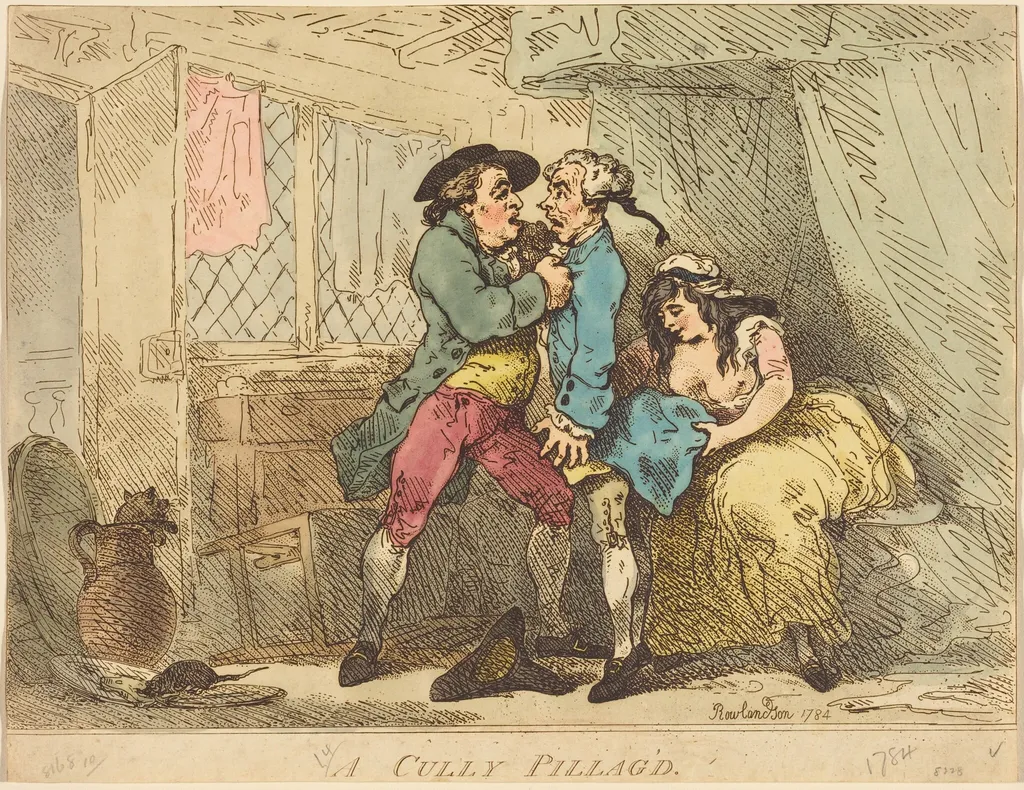
A Cully Pillaged is an ink print by the Romanticist artist Thomas Rowlandson. It dates from 1784 and is held in the collection of the National Gallery of Art.
About this work
Overview
The work exemplifies Rowlandson’s engagement with everyday social disorder, rendered through ink and watercolor.
Created circa 1784, A Cully Pillaged is a hand-colored etching by Thomas Rowlandson, an English artist renowned for his satirical prints during the Georgian period. The work exemplifies Rowlandson’s engagement with everyday social disorder, rendered through ink and watercolor. Its informal composition and spontaneous appearance suggest it was produced rapidly, likely as a commentary on transient moments of vice or misadventure rather than a polished finished piece.
Subject & Meaning
The scene depicts three figures in disarray: a man leaning heavily on another who lies collapsed on the floor, while a woman rests nearby, exhausted. A dog sits quietly in the corner, adding to the sense of abandonment. The title, possibly a play on 'cull' and 'pillaged,' implies a scene of disorder or depletion, perhaps the aftermath of a drunken revel or a failed escapade. The lack of narrative clarity invites interpretation, typical of Rowlandson’s preference for ambiguous, observational humor.
Technique & Style
Rowlandson employed etching to create the linear structure, then added hand-colored washes to enhance mood and detail. The lines are loose and energetic, suggesting immediacy rather than refinement. Colors are applied unevenly, with areas of unblended pigment reinforcing the sense of haste.
The absence of background detail and the rough texture of the paper contribute to a sketch-like quality, aligning the work with the artist’s habit of capturing fleeting, unvarnished moments.
History & Provenance
The print emerged during Rowlandson’s early career, when he was producing numerous satirical works for publishers in London. Few records detail its early ownership, but it likely circulated among middle-class collectors interested in social satire. Unlike his more famous political prints, this piece was not widely reprinted or documented in contemporary catalogs, suggesting it was a minor, perhaps experimental, work within his broader output.
Context
In the 1780s, London’s print culture thrived on satirical imagery that mocked public behavior, from political corruption to domestic excess. Rowlandson’s work responded to this demand, often focusing on the consequences of indulgence. A Cully Pillaged fits within a tradition of genre scenes that portrayed the fallout of revelry, reflecting broader societal anxieties about morality and class conduct during a period of rapid urban growth and shifting social norms.
Legacy
Though not among Rowlandson’s most celebrated prints, A Cully Pillaged illustrates his consistent interest in the unglamorous edges of Georgian life. Its informal style and ambiguous narrative influenced later illustrators who favored candid observation over idealized composition. The work remains a quiet example of how printmakers used everyday scenes to reflect cultural tensions, preserving the texture of ordinary disorder in an age of increasing social scrutiny.
Own this work as a print
Artist & collection
Artist
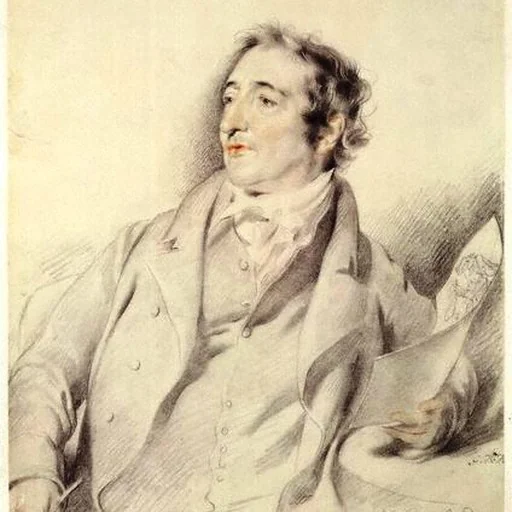
Thomas Rowlandson (; 13 July 1757 – 21 April 1827) was an English artist and caricaturist of the Georgian Era, noted for his political satire and social observation.

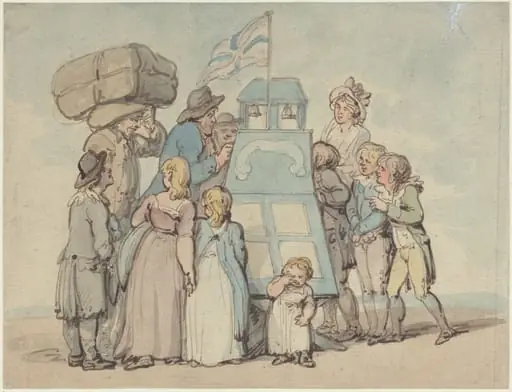
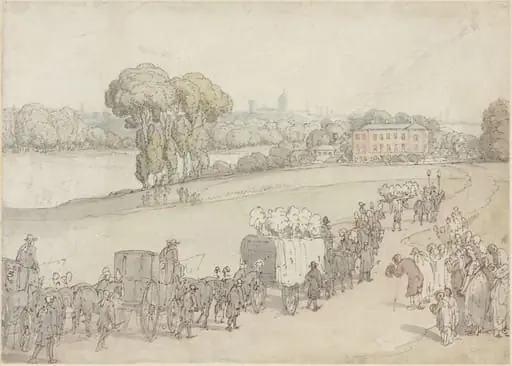
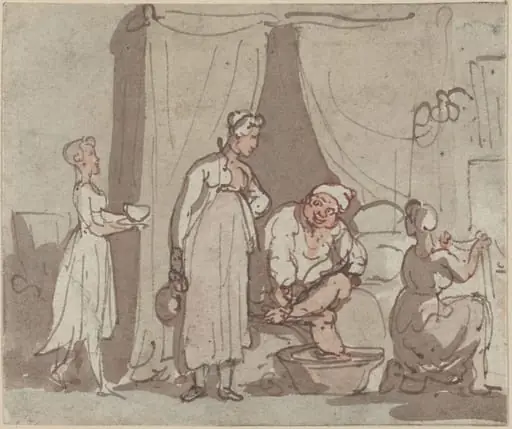
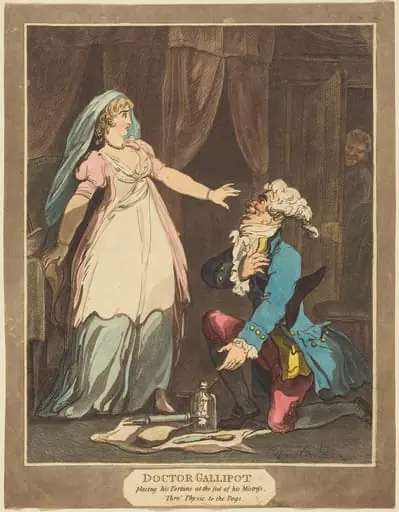
- Doctor Gallipot placing his Fortune at the feet of his Mistress
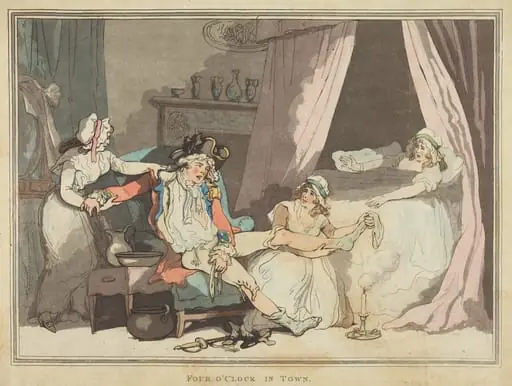 Four o'Clock in Town
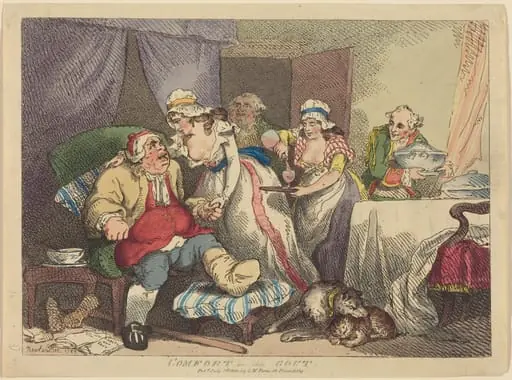 Comfort in the Gout
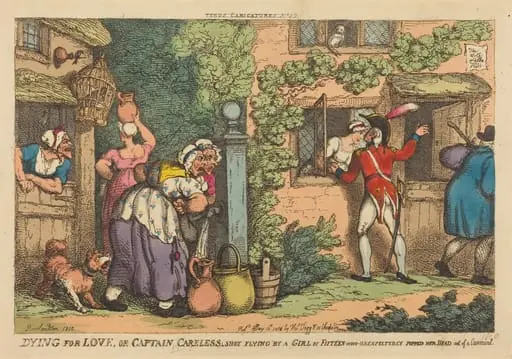 Dying for Love, or Captain Careless shot flying by a Girl of Fifteen, who Unexpectedly Popped her Head out of a Casement
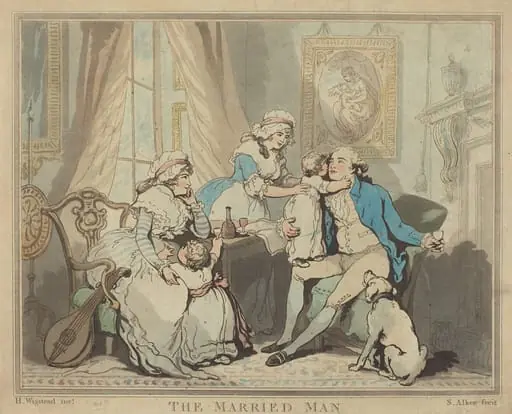 The Married Man
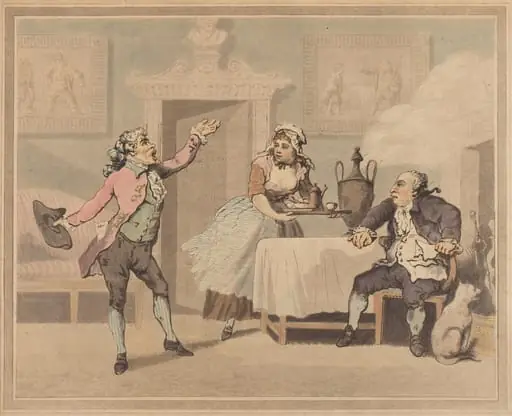 Manager and Spouter
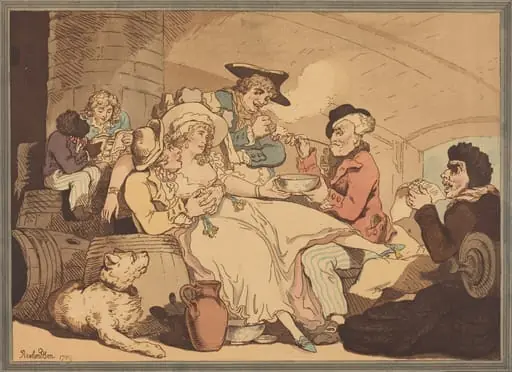 Grog on Board
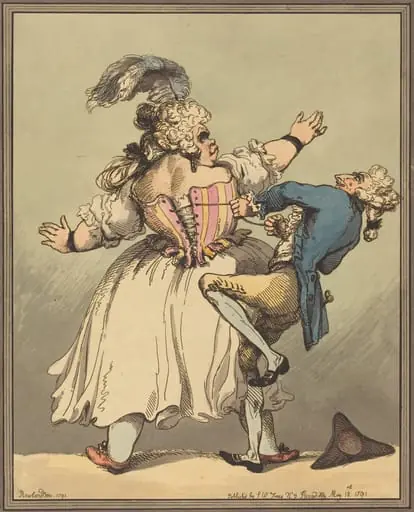 A Little Tighter
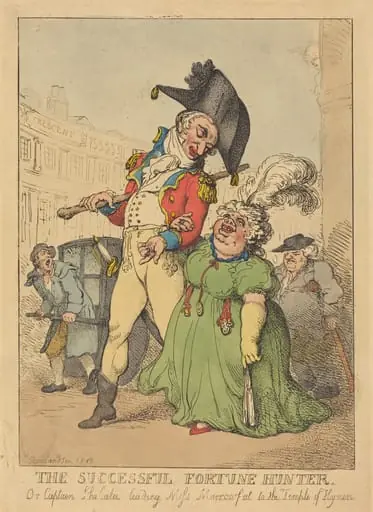 The Successful Fortune Hunter
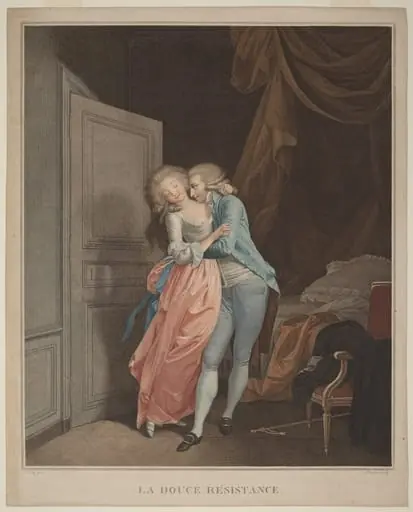 Sweet resistance (La douce resistance)
 Dressing for a Birthday
 The Bachelor