Artwork
Dying for Love, or Captain Careless shot flying by a Girl of Fifteen, who Unexpectedly Popped her Head out of a Casement
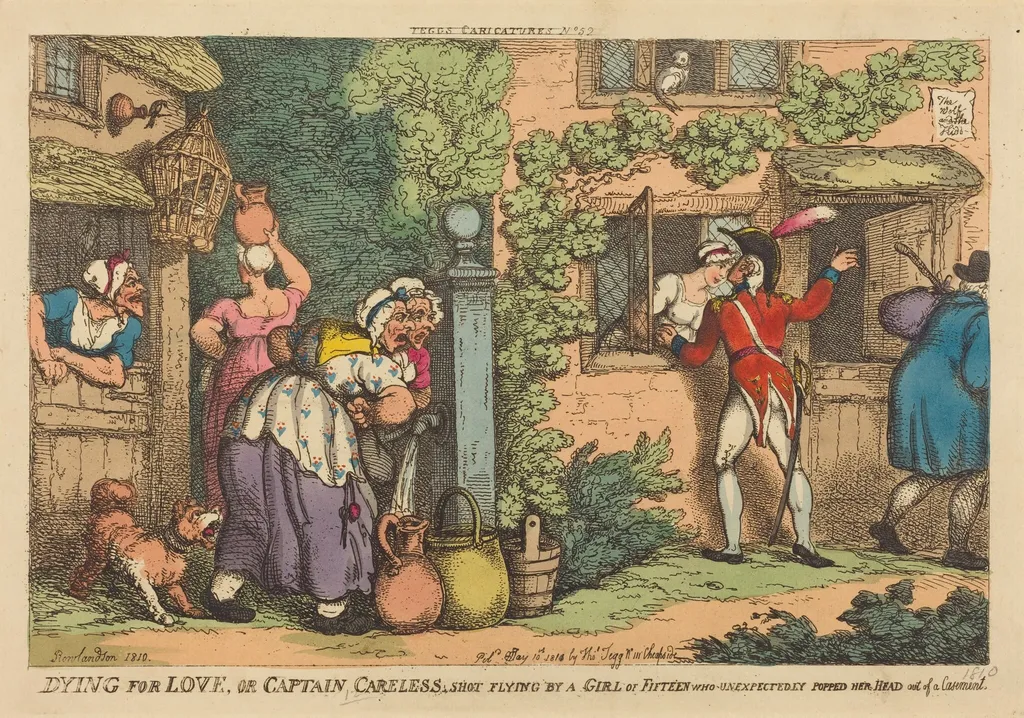
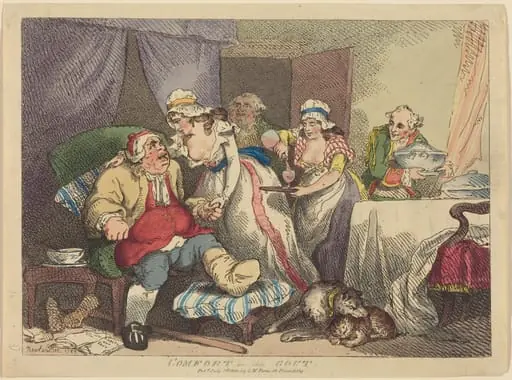
Dying for Love, or Captain Careless shot flying by a Girl of Fifteen, who Unexpectedly Popped her Head out of a Casement is an ink print by the Romanticist artist Thomas Rowlandson. It dates from 1810 and is held in the collection of the National Gallery of Art.
About this work
Overview
Its vivid coloring and dense composition reflect Rowlandson’s skill in transforming everyday scenes into theatrical vignettes.
Created in 1810, this hand-colored etching by Thomas Rowlandson captures a moment of accidental violence wrapped in farce. As part of a broader tradition of Georgian satire, the print uses humor to critique social behavior, particularly the recklessness of military figures and the unpredictability of urban life. Its vivid coloring and dense composition reflect Rowlandson’s skill in transforming everyday scenes into theatrical vignettes.
Subject & Meaning
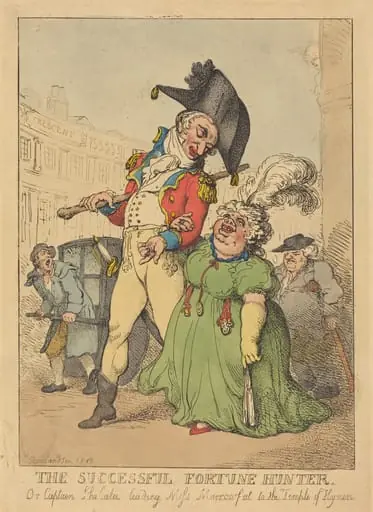
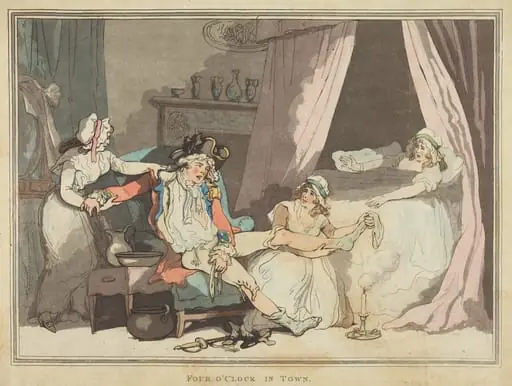
The scene portrays a red-coated officer, seemingly in the midst of a romantic advance, who is startled by a young woman suddenly appearing at a window. The title suggests a mock-tragic outcome, his supposed demise from a lover’s unintended intervention. The composition teems with bystanders, each reacting with varied amusement or indifference, underscoring the absurdity of the moment and the detachment of public spectacle.
Technique & Style
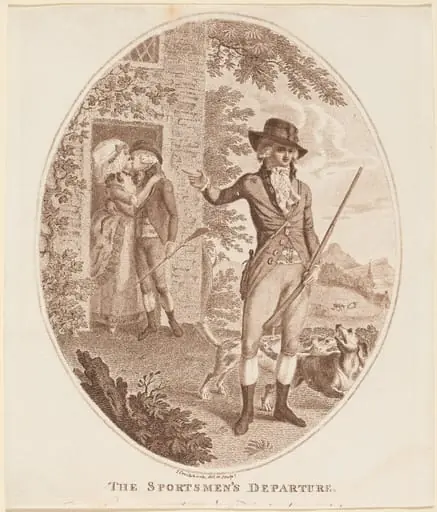
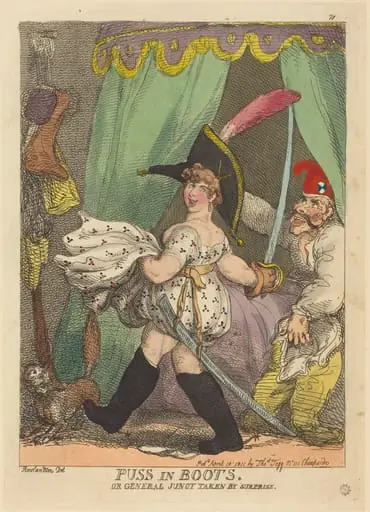
Rowlandson employed etching to achieve fine, expressive lines, then added watercolor by hand to heighten the narrative’s liveliness. The figures are rendered with exaggerated gestures and distinct costumes, emphasizing their roles as social types rather than individuals. The cluttered street setting, with its architectural details and small props, enhances the sense of chaotic realism, typical of his approach to urban satire.
History & Provenance
Produced during Rowlandson’s most active period as an independent printmaker, this work circulated among middle-class audiences who appreciated topical humor. It was likely sold as a standalone print, not bound in a book, and may have been displayed in private homes as both entertainment and social commentary. Its survival in multiple collections suggests modest but sustained interest in his satirical output.
Context
In early 19th-century England, military men were frequent subjects of caricature, often portrayed as brash or inept. Rowlandson’s work tapped into public ambivalence toward the army, especially during the Napoleonic Wars. The casual intimacy between soldier and civilian, juxtaposed with the absurdity of the 'accident,' mirrors broader anxieties about class, gender, and public decorum in crowded urban spaces.
Legacy
Rowlandson’s etchings, including this one, helped define the visual language of British social satire. Though not politically radical, his images preserved the rhythms and absurdities of daily life with uncommon detail. Later illustrators and cartoonists drew from his compositional energy and narrative wit, cementing his role as a bridge between 18th-century caricature and modern graphic storytelling.
Own this work as a print
Artist & collection
Artist
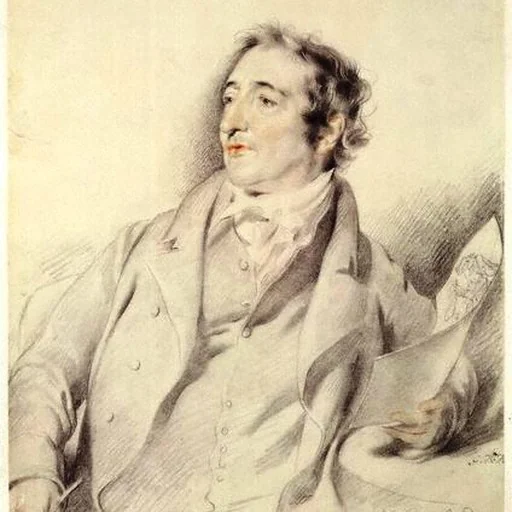
Thomas Rowlandson (; 13 July 1757 – 21 April 1827) was an English artist and caricaturist of the Georgian Era, noted for his political satire and social observation.