Artwork
The Reconciliation, or The Return from Scotland
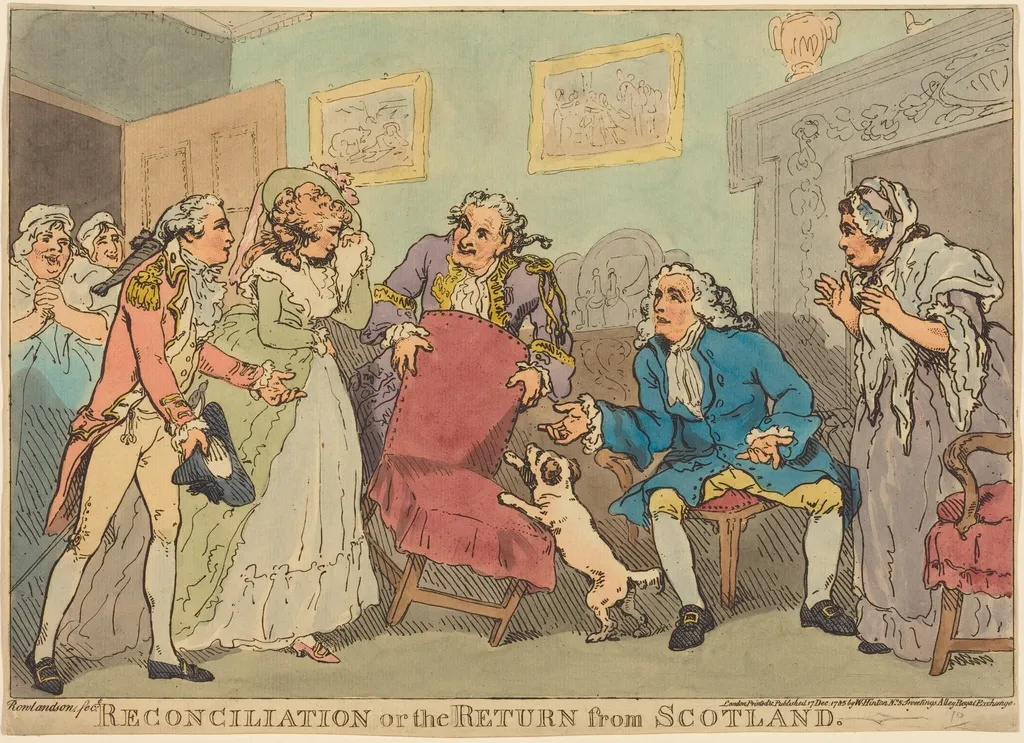
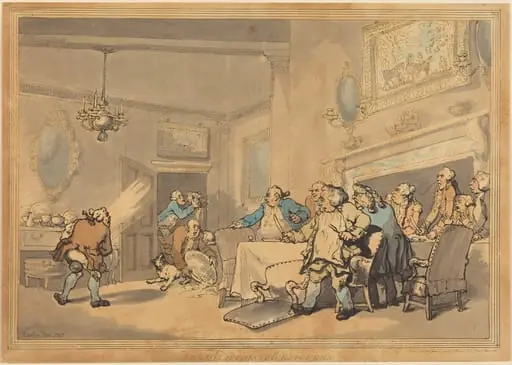
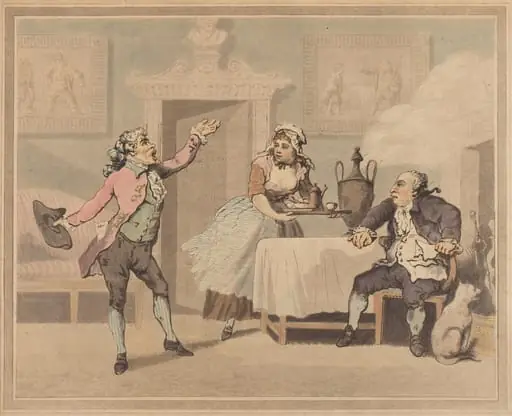
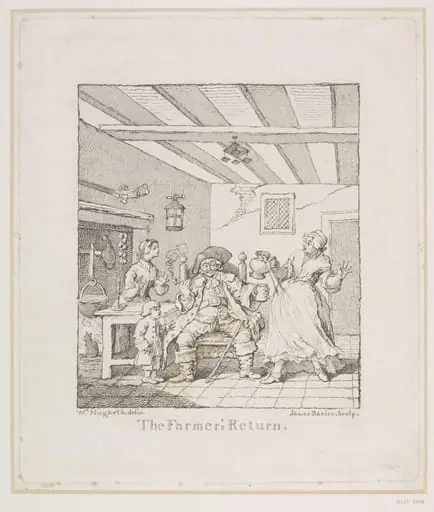
The Reconciliation, or The Return from Scotland is an ink print by the Romanticist artist Thomas Rowlandson. It dates from 1785 and is held in the collection of the National Gallery of Art.
About this work
Overview
Unlike his more overtly political satires, this work captures a moment of personal reunion, likely among gentry or middle-class figures.
Thomas Rowlandson’s 1785 hand-colored etching, titled The Reconciliation, or The Return from Scotland, is a lively domestic scene rendered in ink and watercolor. Unlike his more overtly political satires, this work captures a moment of personal reunion, likely among gentry or middle-class figures. The print exemplifies Rowlandson’s skill in combining precise draftsmanship with subtle, expressive color to convey warmth and movement within a confined interior space.
Subject & Meaning
The scene depicts a family or social group reuniting after an absence, possibly linked to a journey from Scotland. Central to the composition is a man in a blue coat, seated and interacting with a leaping dog, while a woman in green stands nearby, drawing attention. The gestures and expressions suggest relief and affection, framing the moment as one of emotional resolution rather than spectacle. The absence of political symbols shifts focus to intimate human connection.
Technique & Style
Rowlandson employed etching as a base, then applied delicate hand-coloring to enhance mood and detail. The figures are rendered with fluid lines and naturalistic postures, while the soft blue-green walls provide a muted backdrop that heightens the vibrancy of the costumes. The dog’s dynamic motion and the varied angles of the figures create visual rhythm, guiding the eye across the composition without overwhelming it. His approach balances realism with gentle caricature, avoiding exaggeration for emotional effect.
History & Provenance
Produced in 1785, the print was part of Rowlandson’s broader output during a period when hand-colored etchings were popular among middle-class collectors. Though not as widely documented as his political prints, this work aligns with contemporary tastes for domestic narratives in print form. Its survival in multiple institutional collections suggests it was circulated and preserved as a representative example of his non-political genre work.
Context
In late 18th-century Britain, prints like this catered to an audience interested in scenes of everyday life, often infused with humor or sentiment. While Rowlandson was known for lampooning politicians, this piece reflects a broader trend in print culture that celebrated familial and social harmony. The inclusion of a dog, a symbol of loyalty, reinforces themes of trust and homecoming, resonating with values held by the urban middle class during a time of social change.
Legacy
The Reconciliation stands as a quiet counterpoint to Rowlandson’s more raucous satires, demonstrating his range as a visual storyteller. It influenced later genre painters and printmakers who sought to capture domestic warmth with nuance rather than ridicule. Though less studied than his political works, it remains a key example of how Georgian-era artists used printmaking to explore the emotional textures of ordinary life.
Own this work as a print
Artist & collection
Artist
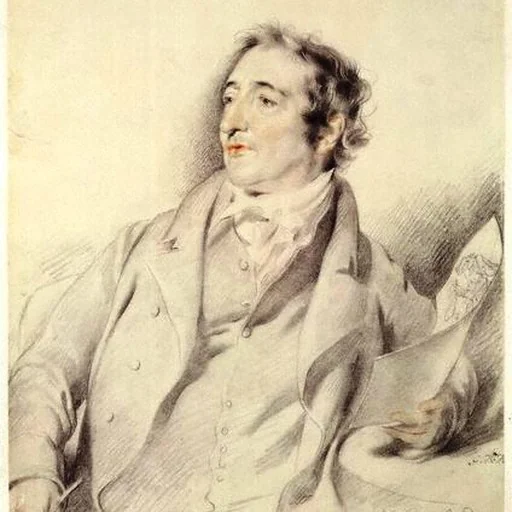
Thomas Rowlandson (; 13 July 1757 – 21 April 1827) was an English artist and caricaturist of the Georgian Era, noted for his political satire and social observation.