Artwork
Hercules and Omphale
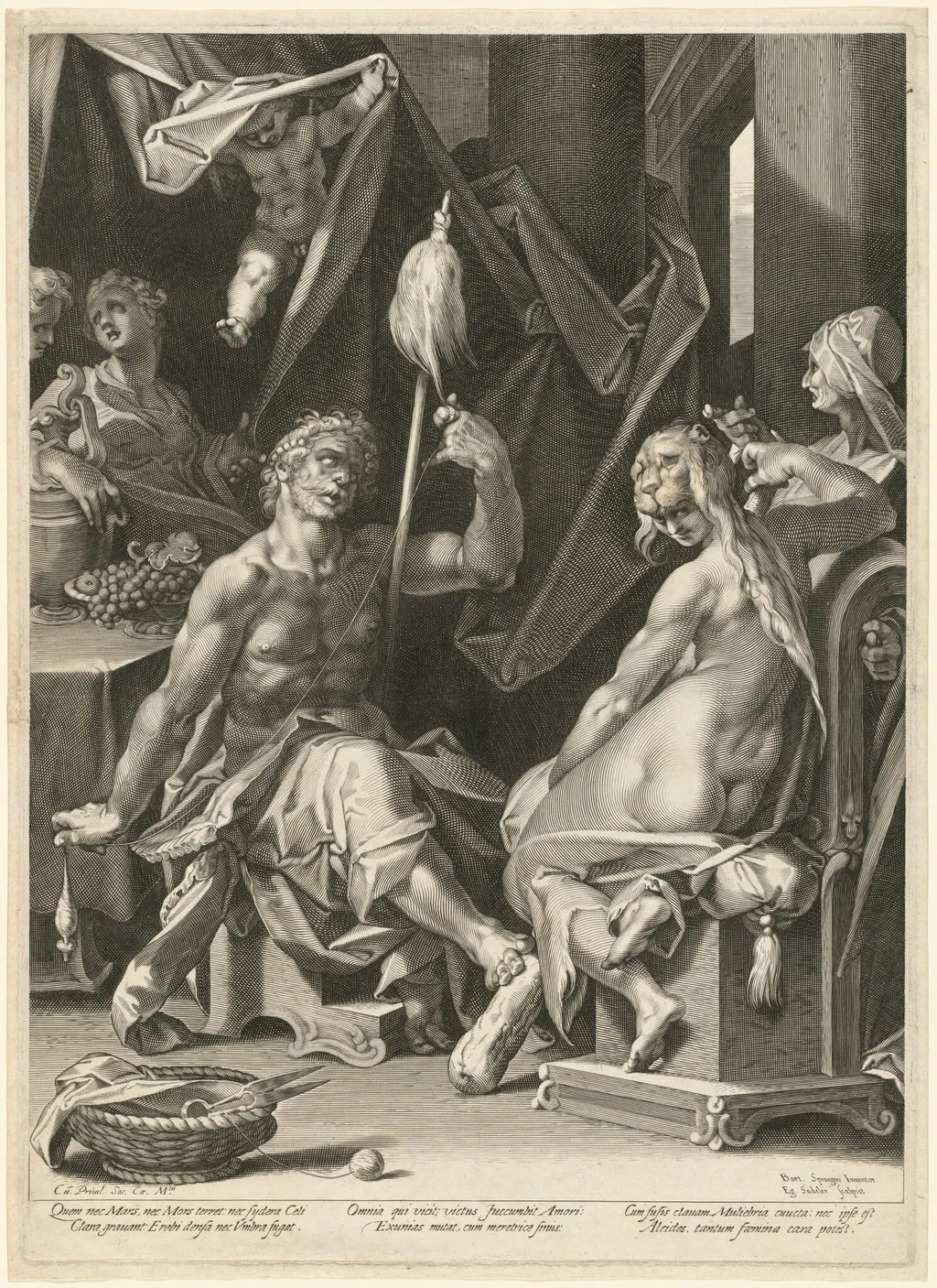
Hercules and Omphale is an ink print by the Renaissance artist Aegidius Sadeler II. It dates from 1600 and is held in the collection of the National Gallery of Art.
- Inscription
- Inscribed:in image, at bottom left: Cu. Priuil. Sac. Cae. Mtis; in image, at bottom right: Bart. Sprangers Inuentor / Eg Sadeler Scalpsit; below image: Quem nec Mars, nec Mors terret: nec sydera Celi / Clara grauant: Erebi densa nec Vmbra fugat. / Omnia qui vicit; vicitus succumbit Amori: / Exunias mutat, cum meretrice sinus: / Cum fusis clauam Muliebria cuucta: nec ipse est / Alcides. tantum foemina cara potest.
About this work
Overview
Around the turn of the 17th century, Flemish engraver Aegidius Sadeler II created an intaglio print titled Hercules and Omphale. Executed on laid paper, the image belongs to the mythological genre and measures roughly the size typical of courtly prints produced for Rudolf II’s Prague workshop.
Subject & Meaning
Small onlookers and a basket of grapes populate the scene, emphasizing the reversal of power between the traditionally masculine hero and the feminine ruler.
The composition illustrates the classical episode in which the hero Hercules, temporarily stripped of his usual strength, is shown seated, unclothed and weary, while the queen Omphale stands above him, dressed in luxurious attire and holding a spear. Small onlookers and a basket of grapes populate the scene, emphasizing the reversal of power between the traditionally masculine hero and the feminine ruler.
Technique & Style
Sadeler employed fine, overlapping lines to render the figures, creating a sense of texture and movement. The engraving’s stark black‑and‑white palette, combined with the rough, almost chaotic arrangement of forms, reflects the late‑Renaissance taste for dramatic chiaroscuro and intricate detailing in printmaking.
History & Provenance
Active at the imperial court in Prague, Sadeler worked under Emperor Rudolf II and his successors, producing works for a sophisticated patronage network. Hercules and Omphale is dated to circa 1600, situating it within the artist’s mature period before his death in 1629.
Context
The print forms part of a broader Central European fascination with classical mythology during the late Renaissance, where court artists reinterpreted ancient stories to suit contemporary tastes for moral allegory and visual spectacle.
Own this work as a print
Artist & collection
Artist
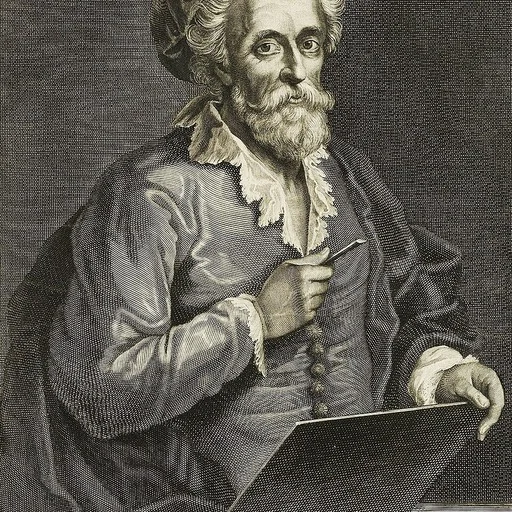
Aegidius Sadeler or Aegidius Sadeler II (1570–1629) was a Flemish engraver who was principally active at the Prague court of Rudolf II, Holy Roman Emperor and his successors.

- Evening
 Mars and Venus
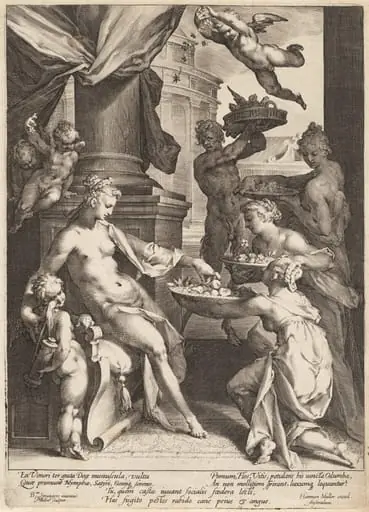 Venus Honored by the Nymphs
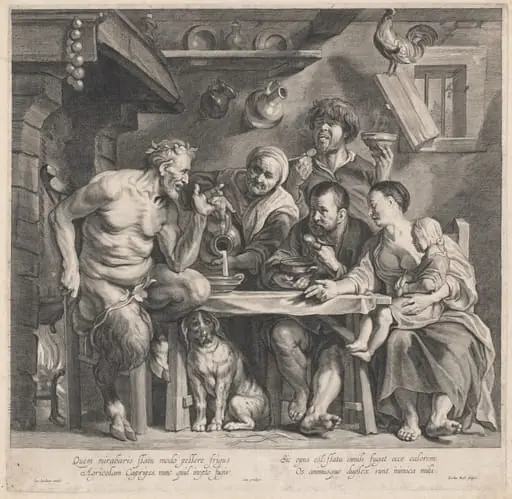 A Satyr Visiting a Peasant Family
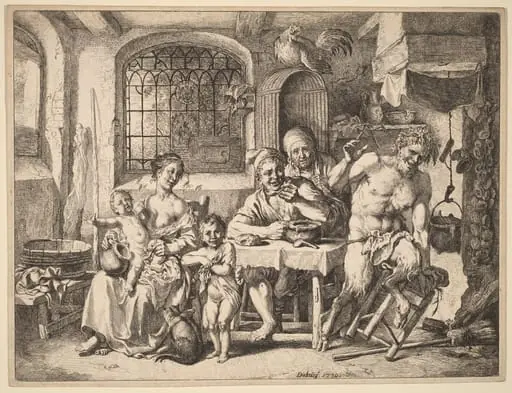 A Satyr Visiting a Peasant Family
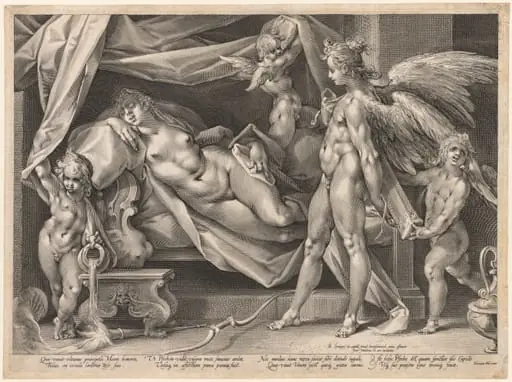 Cupid and Psyche
 Two Nymphs and a Satyr before a Large Vat
 Without Ceres and Bacchus, Venus Freezes
 Envy Driven from the Temple of the Muses
 Jupiter and Mercury Entertained by Philemon and Baucis
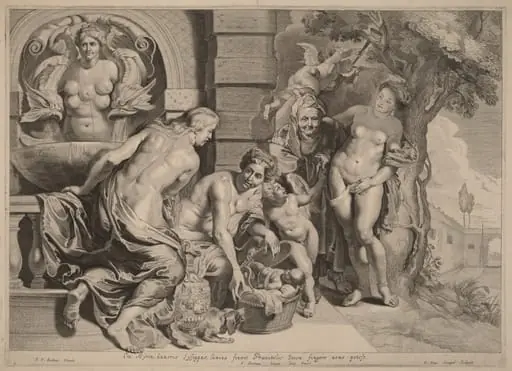 Erichthonius in His Basket
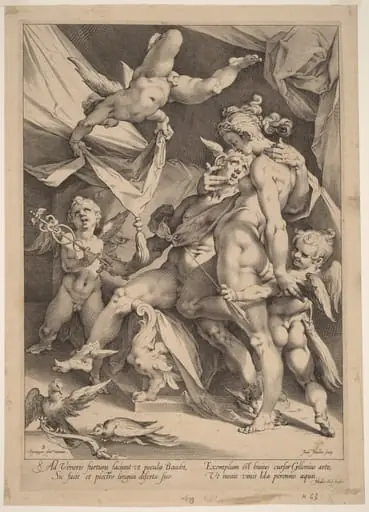 Venus and Mercury