Artwork
Arthur Harper
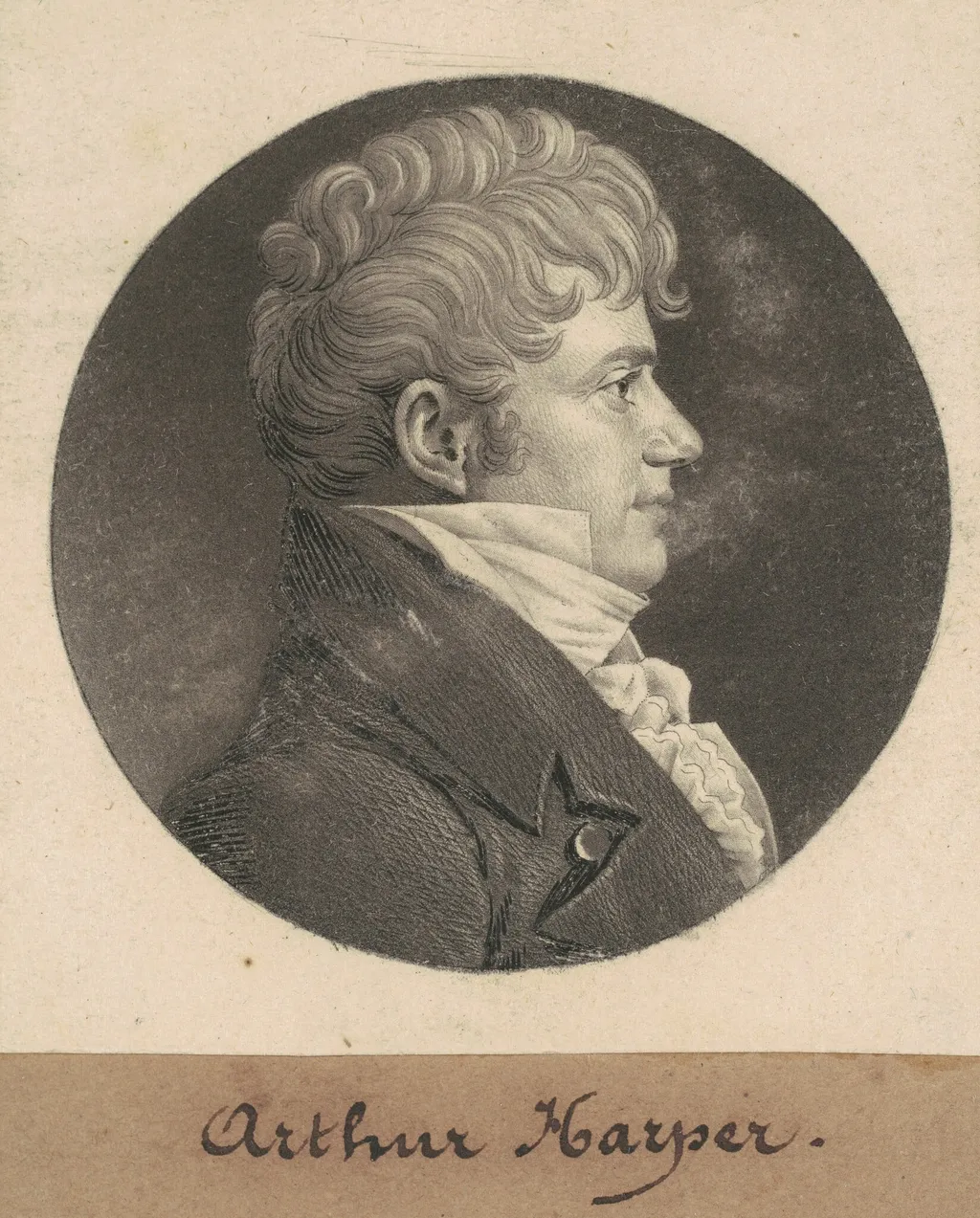
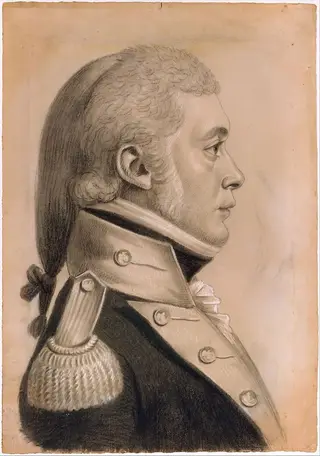
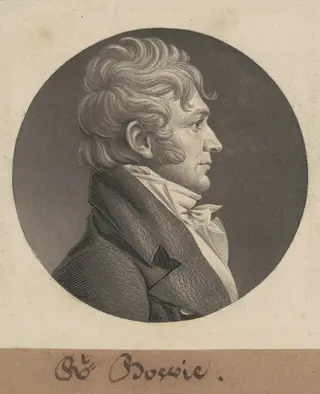
Arthur Harper is an ink print by the Romanticist artist Charles B. J. Févret de Saint-Mémin. It dates from 1809 and is held in the collection of the National Gallery of Art. Created in 1809 by Charles B.
- Inscription
- Inscribed:lower center mount in black ink by unknown hand: Arthur Harper.
About this work
The background is plain, so your eyes stay on his sharp profile and high collar.
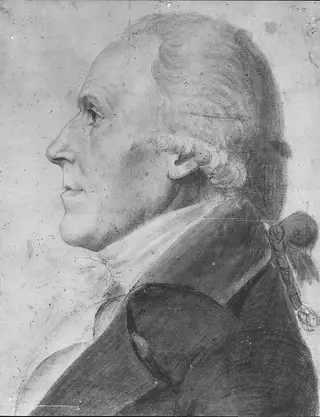
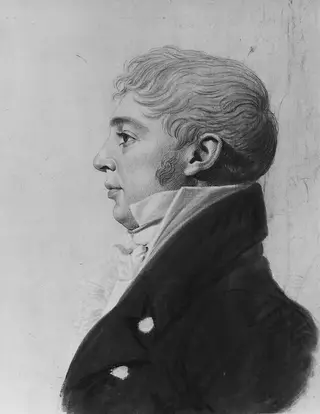
This small engraving shows Arthur Harper’s face in three-quarter view. Light falls on his cheek and forehead, leaving the rest in soft shadow. The background is plain, so your eyes stay on his sharp profile and high collar.
Saint-Mémin used a printing trick called mezzotint. He roughed a metal plate, then smoothed it to leave tiny burrs that held ink. Each press left a velvety dark tone that feels almost photographic for 1809.
The fine lines around Harper’s eyes hint at age and quiet confidence. See how the paper edges curl slightly under the mount.
Look next at Saint-Mémin, Charles B. J. Févret de.
Overview
Created in 1809 by Charles B. J. Févret de Saint-Mémin, this small print depicts Arthur Harper in a three-quarter portrait. Executed in mezzotint and engraving on wove paper, it is mounted on a slightly darker brown sheet. Measuring just over five and a half centimeters in both dimensions, the work is part of the Corcoran Collection. Its compact scale and refined technique reflect the precision favored in early American portraiture.
Subject & Meaning
Arthur Harper, a figure of modest historical record, is portrayed with restrained dignity. His face, caught in soft chiaroscuro, reveals subtle lines around the eyes and a high collar that frames his posture. The absence of background or symbolic elements directs focus to his expression, an unadorned presence suggesting quiet authority.
The portrait functions less as a public statement than as a personal record, typical of the era’s intimate likeness-making.
Technique & Style
Saint-Mémin employed mezzotint to achieve rich tonal gradations, a technique involving a textured metal plate selectively smoothed to hold varying amounts of ink. The result is a velvety black ground that enhances the soft modeling of Harper’s features. Fine engraving lines define the edges of his collar and the contours of his face, adding precision to the atmospheric shadows. The effect, unusual for its time, approximates the depth of a daguerreotype decades before its invention.
History & Provenance
The print entered the Corcoran Collection in the 19th century, where it remained until the collection’s dispersal. Its small size and delicate paper suggest it was likely produced as part of a series of individual portraits, possibly for private distribution or as studies. The slight curling of the mount edges indicates careful handling over time, preserving its original condition despite its age.
Context
In early 19th-century America, portrait prints were valued for their accessibility and fidelity. Saint-Mémin, a French émigré, became known for his detailed mezzotints of prominent figures, blending European technique with American subject matter. This work reflects a broader trend of documenting civic and commercial leaders through reproducible imagery, bridging the gap between painted portraits and mass-produced likenesses.
Legacy
Though Arthur Harper himself is not widely remembered, the print endures as an example of Saint-Mémin’s technical mastery and the quiet realism of early American portraiture. Its restrained aesthetic and innovative use of mezzotint influenced later printmakers seeking naturalistic representation without embellishment. The work remains a quiet testament to the era’s interest in capturing individual presence through meticulous craft.
Own this work as a print
Artist & collection
Artist
Charles B. J. Févret de Saint-Mémin
Charles Balthazar Julien Févret de Saint-Mémin (French pronunciation: ; 1770–1852) was a French portrait painter and museum director.