Artwork
Foucher
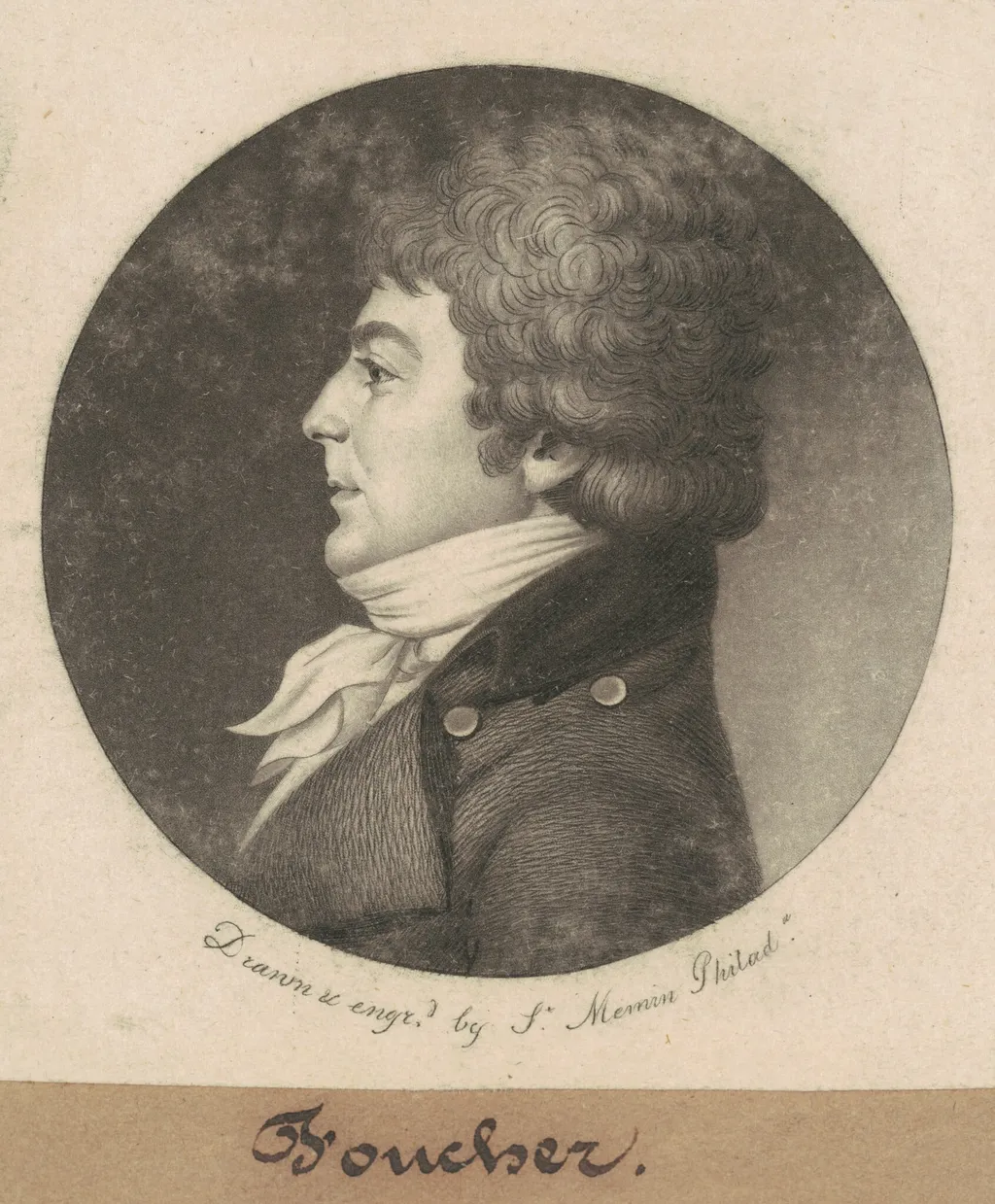
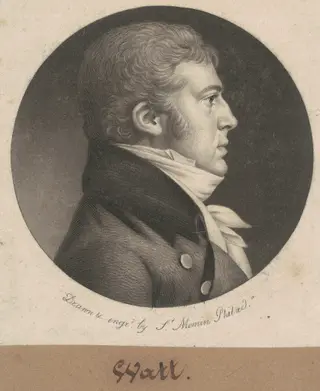
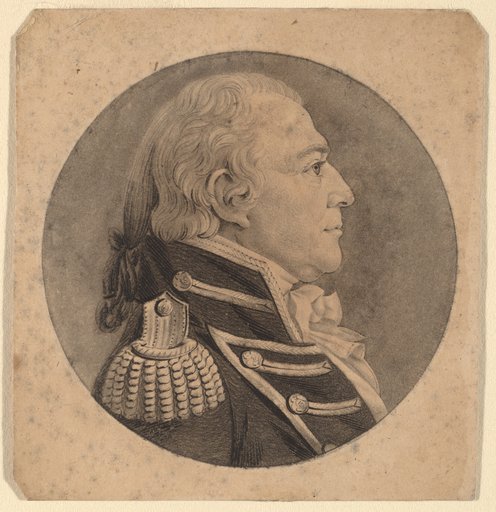
Foucher is an ink print by the Romanticist artist Charles B. J. Févret de Saint-Mémin. It dates from 1800 and is held in the collection of the National Gallery of Art. Created in 1800, this small print measures just over five and a half centimeters square.
- Inscription
- Inscribed:lower center in plate: Drawn & engrd. by St. Memin Philada.; lower center mount in black ink by unknown hand: Foucher.
About this work
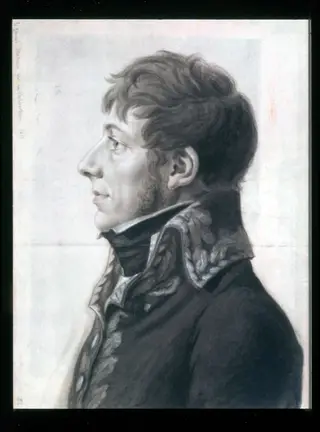
This small engraving shows a man’s face in profile, carved neatly onto paper.
This small engraving shows a man’s face in profile, carved neatly onto paper. The lines are smooth but sharply detailed. You can see stubble on his jaw and a single mole near his ear.
Saint-Mémin made this in 1800 using a copper plate. He pressed ink onto paper to create the image, a trick called mezzotint. The dark background makes the man’s face pop.
This style was big in early American portraiture. Look up Saint-Mémin, Charles B. J. Févret de.
Overview
Created in 1800, this small print measures just over five and a half centimeters square. Executed in black on wove paper that has been mounted to a brown‑toned backing, the work presents a tightly cropped bust portrait in profile. The image is attributed to Charles B. J. Févret de Saint‑Mémin, a French‑born artist active in the United States during the turn of the nineteenth century.
Subject & Meaning
The figure is rendered in strict profile, showing a mature male face with a hint of stubble along the jaw and a distinctive mole near the ear. The composition focuses on the sitter’s features without ornamental background, suggesting an emphasis on individual identity and status typical of portraiture intended for personal or familial remembrance.
Technique & Style
Saint‑Mémin employed a copper plate for both mezzotint and engraving, applying ink to the plate’s surface before transferring the image onto paper. The mezzotint process yields deep, velvety blacks that contrast sharply with the lighter areas, while the engraved lines provide precise detail. The dark background serves to isolate the profile, enhancing the three‑dimensional illusion of the bust.
Context
At the turn of the nineteenth century, mezzotint and engraved portraiture were popular among American patrons seeking European‑style likenesses. Saint‑Mémin, trained in France, brought these techniques to the United States, where his works contributed to the development of a distinctly American portrait tradition that combined technical rigor with a focus on personal representation.
History & Provenance
The print is catalogued within the Google Arts & Culture collection, indicating its digitisation and public accessibility. Its small size and mounting suggest it may have been intended for inclusion in a collection of miniature portraits or as a study piece, though specific ownership records prior to its digital acquisition are not documented.
Own this work as a print
Artist & collection
Artist
Charles B. J. Févret de Saint-Mémin
Charles Balthazar Julien Févret de Saint-Mémin (French pronunciation: ; 1770–1852) was a French portrait painter and museum director.