Artwork
Louisa DuPonceau
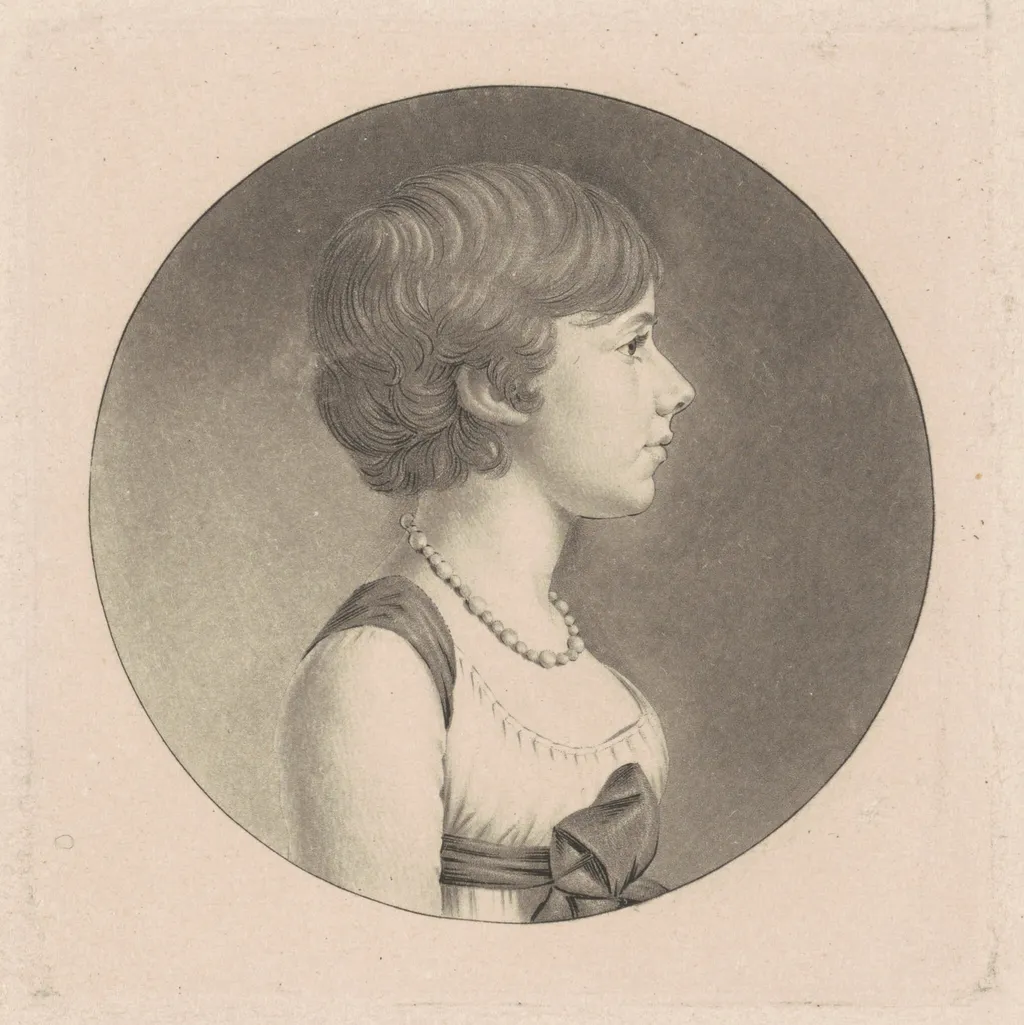
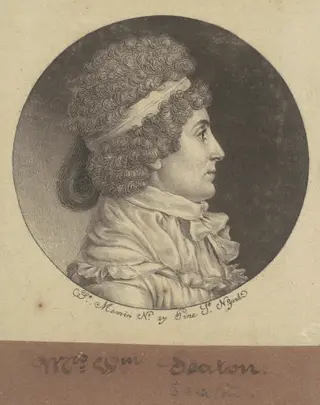
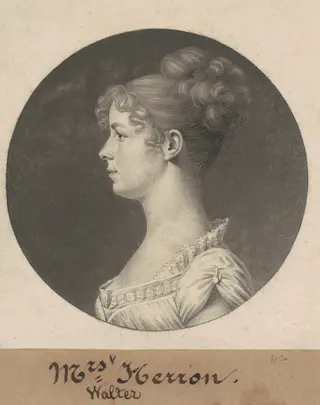
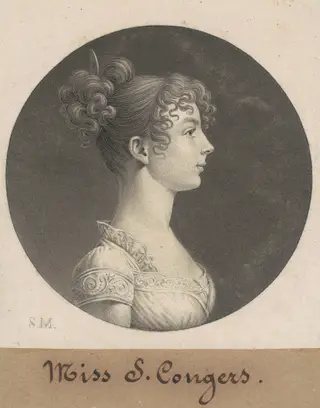
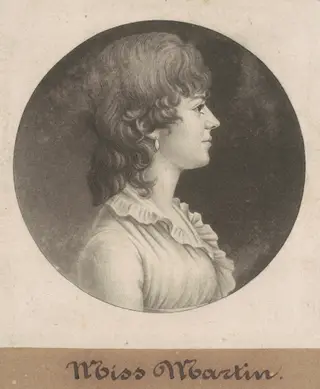
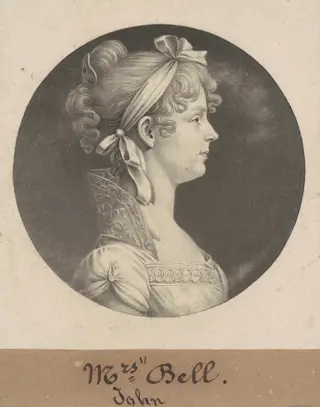
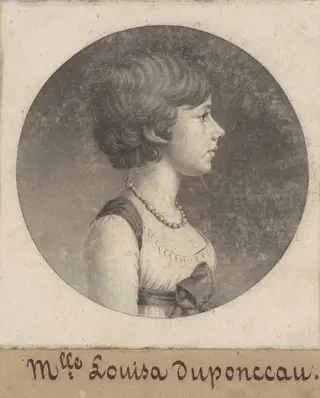
Louisa DuPonceau is an ink print by the Romanticist artist Charles B. J. Févret de Saint-Mémin. It dates from 1800 and is held in the collection of the National Gallery of Art. Charles B.
- Inscription
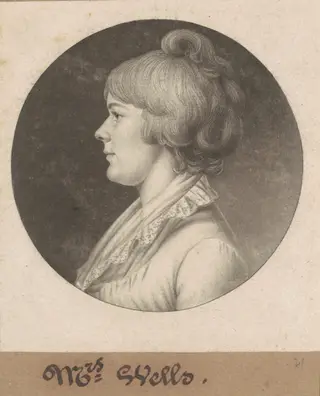
- Inscribed:upper right in graphite by unknown hand: Presented to the Gallery by / Mr. F. J. Duer of Phila. / (see letter) May 16, 1884; lower right in graphite by unknown hand: Mrs Duponceau
About this work
This portrait is interesting because it shows the Neoclassical style, which was popular in the early 19th century.
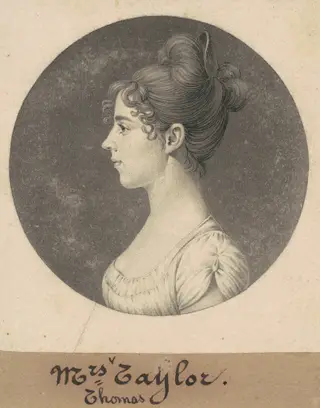
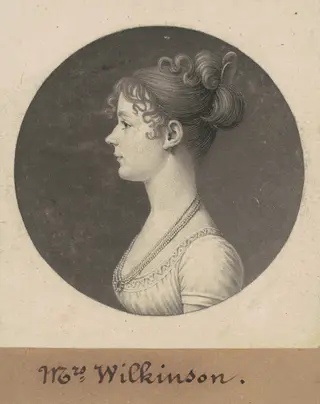
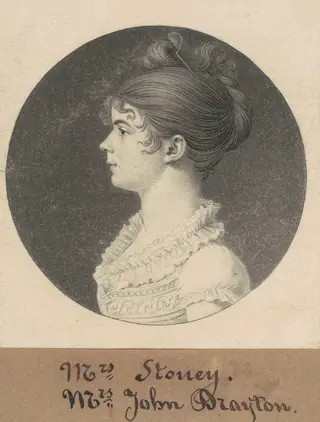
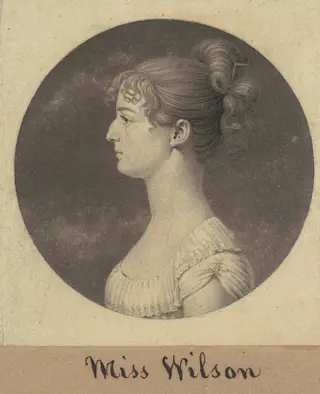
You see a young woman's profile, with a rounded face and curly hair, in this engraving.
This portrait is interesting because it shows the Neoclassical style, which was popular in the early 19th century. The simple background and elegant details, like the pleated dress and beaded necklace, reflect this style.
To learn more about the artist who created this portrait, look up Saint-Mémin, Charles B. J. Févret de.
Overview
Charles B. J. Févret de Saint‑Mémin’s print titled “Louisa DuPonceau” is a black‑ink engraving on wove paper. Executed in the early 1800s, the work presents a solitary female sitter in profile, her features rendered with a smooth, rounded contour and tightly coiled hair. The composition is restrained, set against an unadorned backdrop that emphasizes the figure’s attire and accessories.
Subject & Meaning
The portrait depicts a young woman, identified by the inscription as Louisa DuPonceau, shown in a three‑quarter turn that highlights the delicate curvature of her face and the texture of her curls. Her attire, a finely pleated gown complemented by a string of beads, conveys a sense of modest refinement, aligning with contemporary ideals of feminine virtue and poise.
Technique & Style
Saint‑Mémin employed traditional line engraving techniques, varying line density to model light and shadow across the paper’s surface. The crisp, controlled strokes produce a clear delineation of the dress folds and necklace, while the muted background underscores the Neoclassical aesthetic that favored clarity, balance, and restrained ornamentation in portraiture of the period.
History & Provenance
Created during the height of Neoclassicism in the early nineteenth century, the print reflects the artist’s engagement with the fashionable portrait market of the time. While specific ownership records are limited, the work has been catalogued among Saint‑Mémin’s series of engraved likenesses, which were widely circulated among patrons seeking affordable yet elegant representations of acquaintances and family members.
Own this work as a print
Artist & collection
Artist
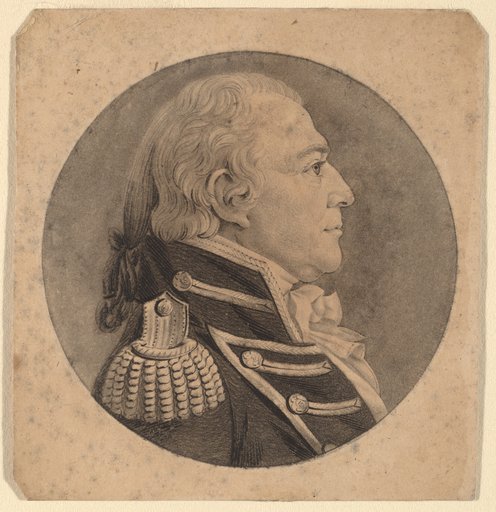
Charles B. J. Févret de Saint-Mémin
Charles Balthazar Julien Févret de Saint-Mémin (French pronunciation: ; 1770–1852) was a French portrait painter and museum director.