Artwork
Natalie Marie Louise Stephanie Beatrice Delage de Volude
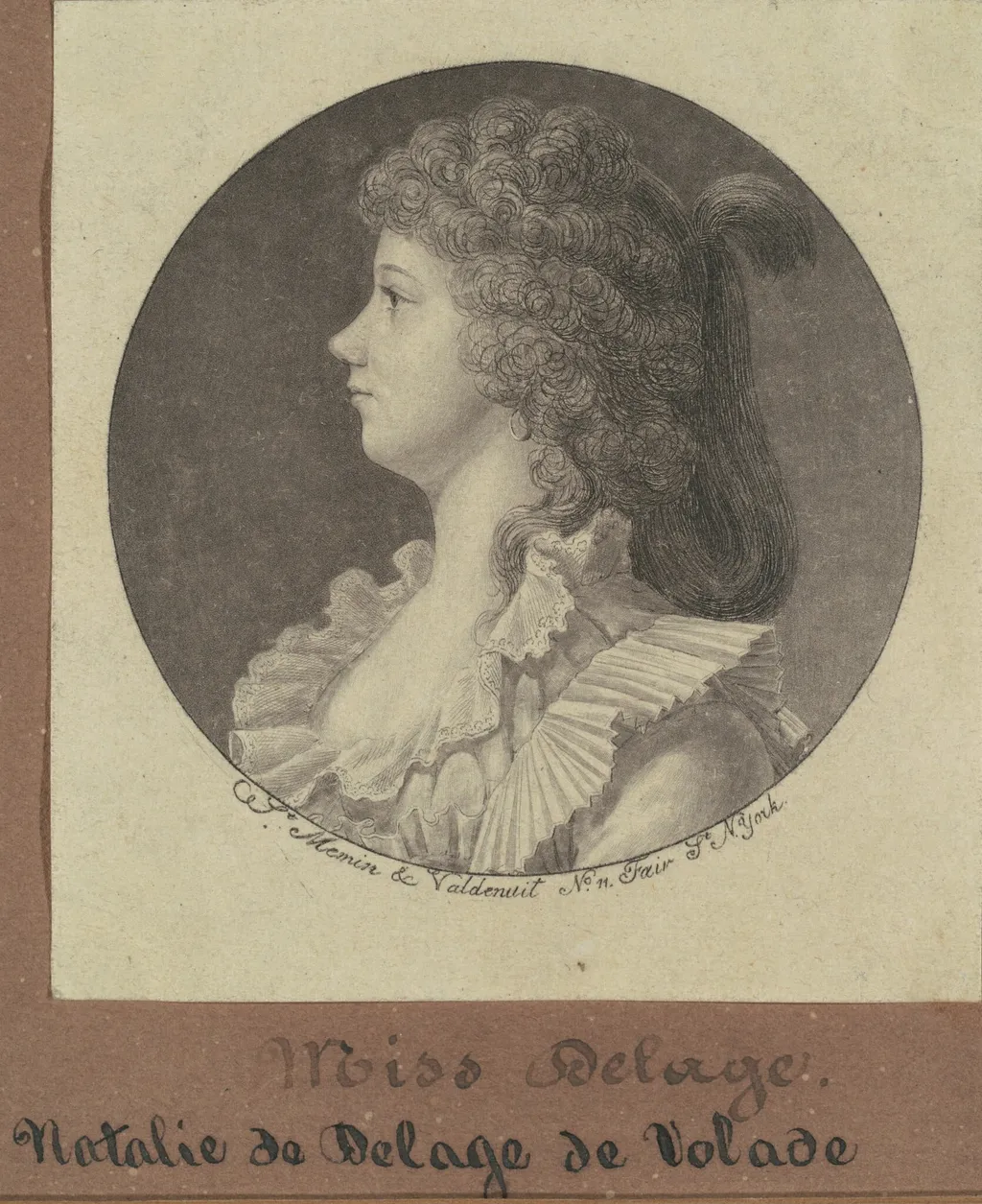
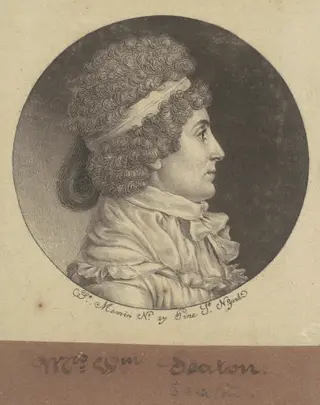
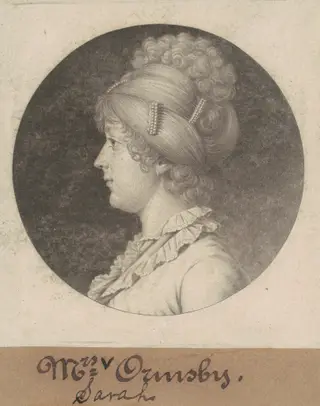
Natalie Marie Louise Stephanie Beatrice Delage de Volude is an ink print by the Romanticist artist Charles B. J. Févret de Saint-Mémin. It dates from 1796 and is held in the collection of the National Gallery of Art.
- Inscription
- Inscribed:lower center in plate: St. Memin & Valdenuit No. 11. Fair St N. York.; lower center mount in black ink by unknown hand: Miss Delage. / Natalie de Delage de Volade
About this work
Overview
This print is a mezzotint and engraving on wove paper, mounted to a brown wove support, created by Charles Balthazar Julien Févret de Saint-Mémin.
This print is a mezzotint and engraving on wove paper, mounted to a brown wove support, created by Charles Balthazar Julien Févret de Saint-Mémin. It depicts Natalie Marie Louise Stephanie Beatrice Delage de Volude, a French noblewoman, in a formal portrait. The work exemplifies Saint-Mémin’s skill in translating likeness into fine graphic detail, a hallmark of his American and French portraiture during the early 19th century.
Subject & Meaning
The sitter, a member of the French aristocracy, is rendered with quiet composure, her expression restrained and dignified. Her attire reflects late 18th-century fashion, suggesting a deliberate reference to pre-revolutionary elegance. The portrait conveys social status through stillness and refinement rather than ornamentation, aligning with the Neoclassical ideal of virtue and restraint in portraiture.
Technique & Style
Saint-Mémin employed mezzotint, a labor-intensive process that achieves rich tonal gradations through textured copper plates, combined with fine engraving for linear precision. The result is a subtle interplay of light and shadow that models the sitter’s features with softness, while the crisp outlines of her dress and hair add structure. This hybrid technique was favored for its ability to capture both texture and nuance in portraiture.
History & Provenance
Created during Saint-Mémin’s time in the United States, where he produced numerous portraits of prominent figures, this work likely dates to the early 1800s. The sitter’s full name and aristocratic lineage suggest a commission from a French émigré family. The print’s mounting on brown paper reflects period conservation practices, preserving the delicate image for private collection rather than public display.
Context
Saint-Mémin’s portraiture emerged amid political upheaval in Europe, as many French nobles fled to America. His prints served as both personal mementos and assertions of identity for displaced elites. The quiet formality of this portrait contrasts with the dynamism of revolutionary imagery, offering instead a visual anchor to a vanishing social order.
Legacy
Saint-Mémin’s mezzotints remain significant for their technical rigor and historical record of early American and French elite portraiture. This work contributes to a broader corpus that documents the transatlantic movement of culture and class during the Napoleonic era. Though not widely exhibited, such prints are studied for their role in shaping visual identity among exiled aristocracies.
Own this work as a print
Artist & collection
Artist
Charles B. J. Févret de Saint-Mémin
Charles Balthazar Julien Févret de Saint-Mémin (French pronunciation: ; 1770–1852) was a French portrait painter and museum director.