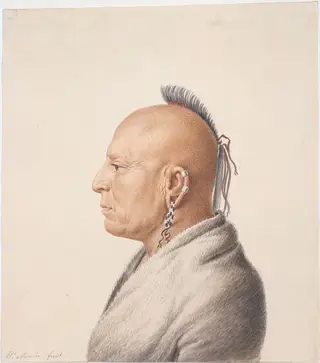
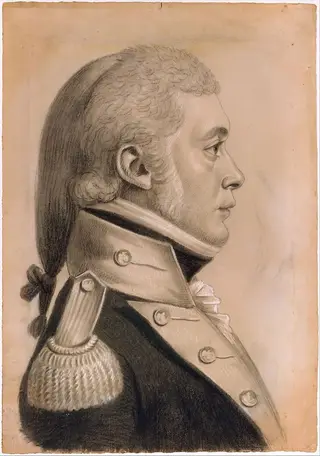
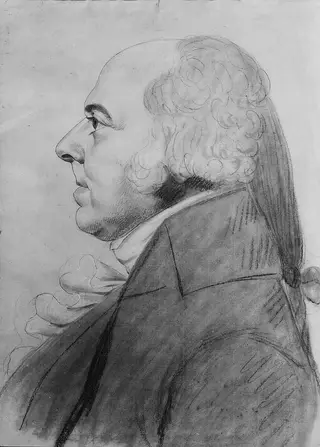
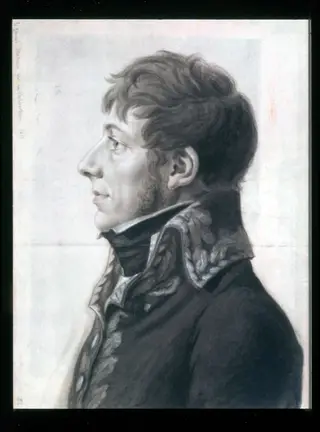
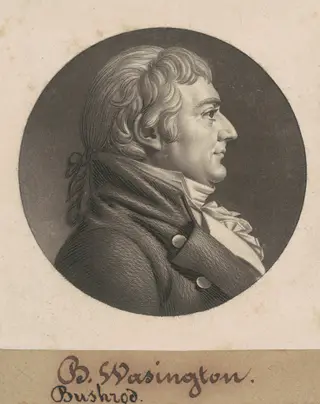
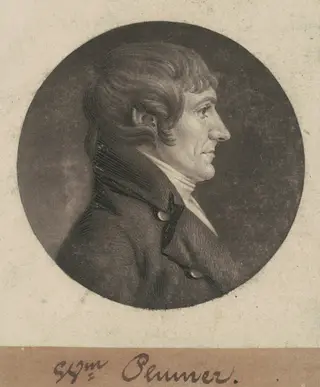
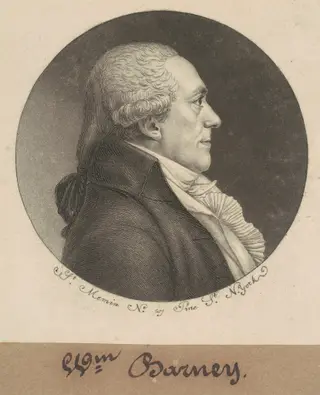
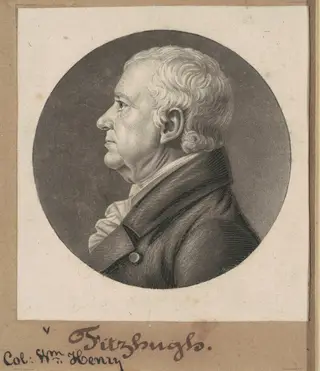
Artwork
William Richards
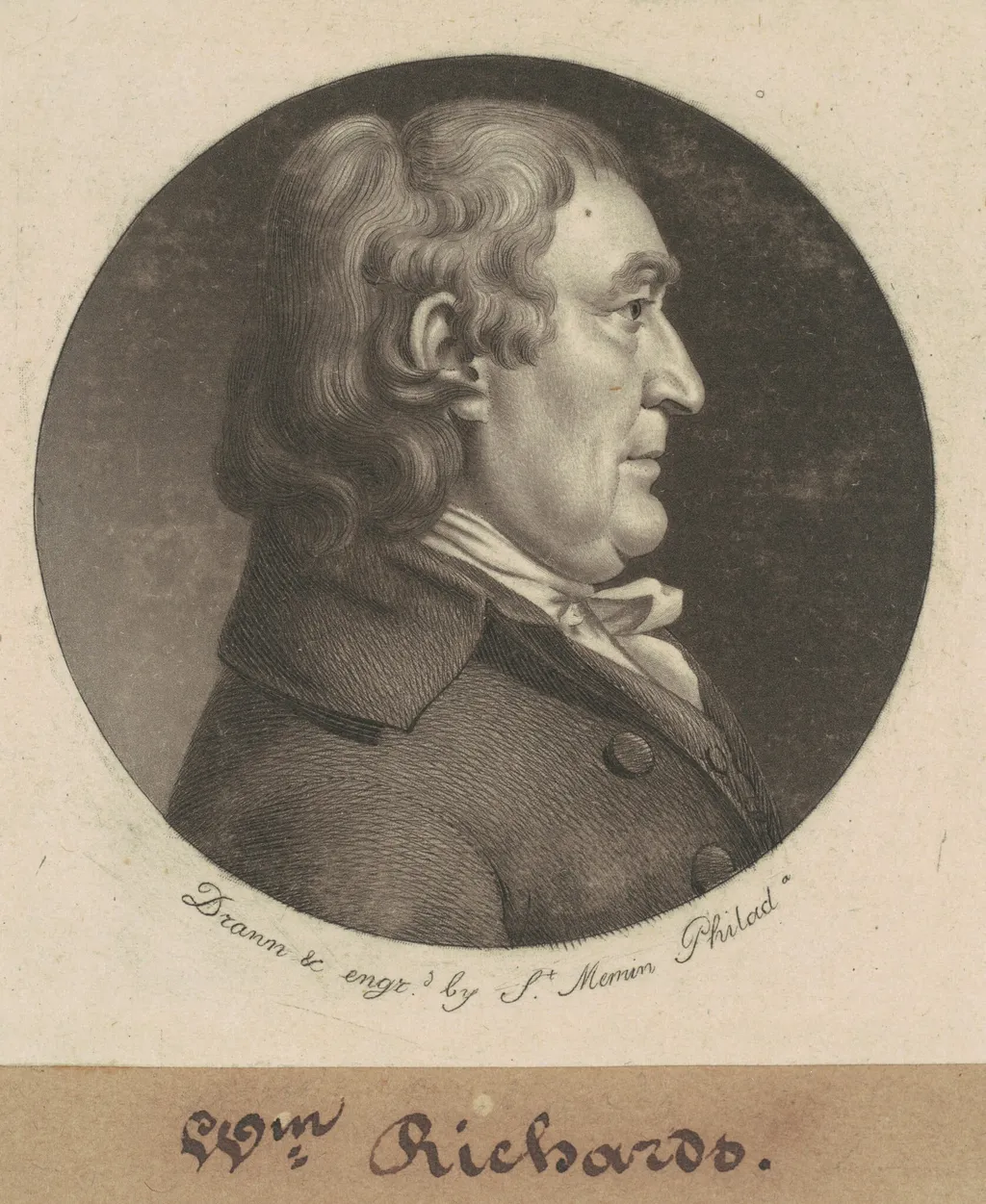
William Richards is an ink print by the Romanticist artist Charles B. J. Févret de Saint-Mémin. It dates from 1800 and is held in the collection of the National Gallery of Art.
- Inscription
- Inscribed:lower center in plate: Drawn & engrd. by St. Memin Philada.; lower center mount in black ink by unknown hand: Wm. Richards.
About this work
He used a print technique called mezzotint, where he roughed up a metal plate and smoothed areas to create soft light and dark shades.
Charles B. J. Févret de Saint-Mémin made a tiny, dark portrait of William Richards in 1800. It’s only about the size of a quarter. He used a print technique called mezzotint, where he roughed up a metal plate and smoothed areas to create soft light and dark shades.
Mezzotint was rare in America at the time. Richards was a well-known painter himself, so Saint-Mémin’s engraving helped spread his face across the country.
Check out another of Saint-Mémin, Charles B. J. Févret de’s portraits next.
Overview
This small black-and-white print, dated 1800, depicts William Richards, an American painter, rendered in mezzotint and engraving on wove paper. Mounted on a brown wove support, the image measures approximately 5.56 cm square. It was produced by Charles B. J. Févret de Saint-Mémin, a French-born artist active in the United States, and is part of the Corcoran Collection, now held by the National Gallery of Art.
Subject & Meaning
William Richards was a respected portrait painter in early 19th-century America. Saint-Mémin’s portrait captures him in profile, emphasizing his identity as a professional artist. The image served not merely as a likeness but as a means of disseminating the appearance of notable cultural figures during a time when photographic reproduction did not exist, helping to establish public recognition of American artists.
Technique & Style
Saint-Mémin employed mezzotint, a labor-intensive print method involving a textured metal plate scraped and burnished to achieve tonal gradations. Combined with fine engraving lines, the technique produced a rich, velvety black field with subtle transitions of light. This approach was uncommon in the U.S. at the time, making the work a technically distinctive example of early American printmaking.
History & Provenance
Created in 1800, the portrait was likely made as part of Saint-Mémin’s series of American notables. It entered the Corcoran Collection in the 19th century and was transferred to the National Gallery of Art in 1990 following the dissolution of the Corcoran Gallery. Its small scale suggests it was intended for private circulation or inclusion in a portfolio rather than public display.
Context
In the early 1800s, portraiture in the United States relied heavily on prints to reach wider audiences. Saint-Mémin’s series of mezzotints aimed to document prominent citizens, blending European techniques with American subjects. Richards, as a practicing artist, represented the emerging class of professional creatives whose visibility was cultivated through such engraved likenesses.
Legacy
The portrait stands as a rare surviving example of mezzotint production in early American print culture. It reflects Saint-Mémin’s role in introducing sophisticated European print methods to the U.S. and contributes to the historical record of American artists’ self-representation. The work remains a quiet but significant artifact of early national identity in visual culture.
Own this work as a print
Artist & collection
Artist
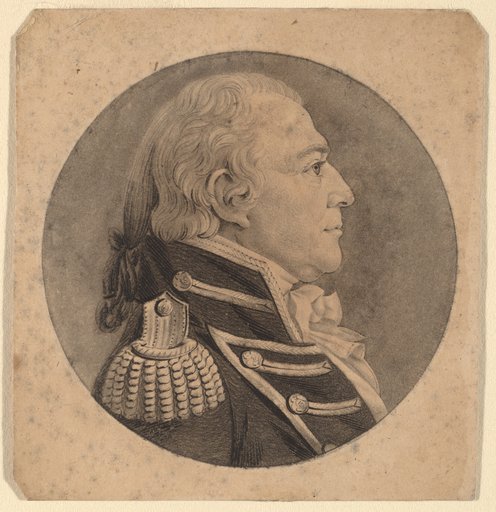
Charles B. J. Févret de Saint-Mémin
Charles Balthazar Julien Févret de Saint-Mémin (French pronunciation: ; 1770–1852) was a French portrait painter and museum director.