Artwork
Judith offering the Head of Holofernes
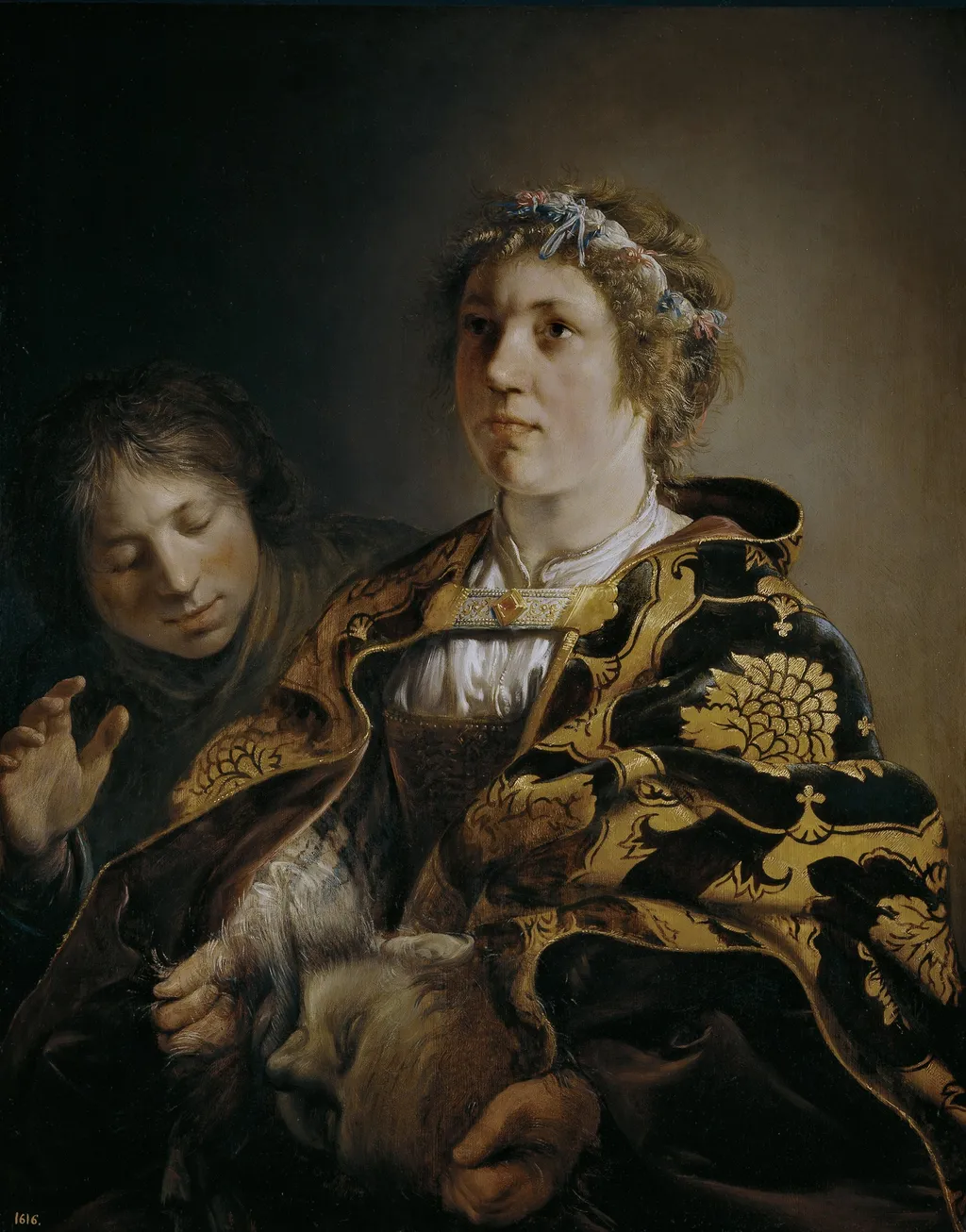
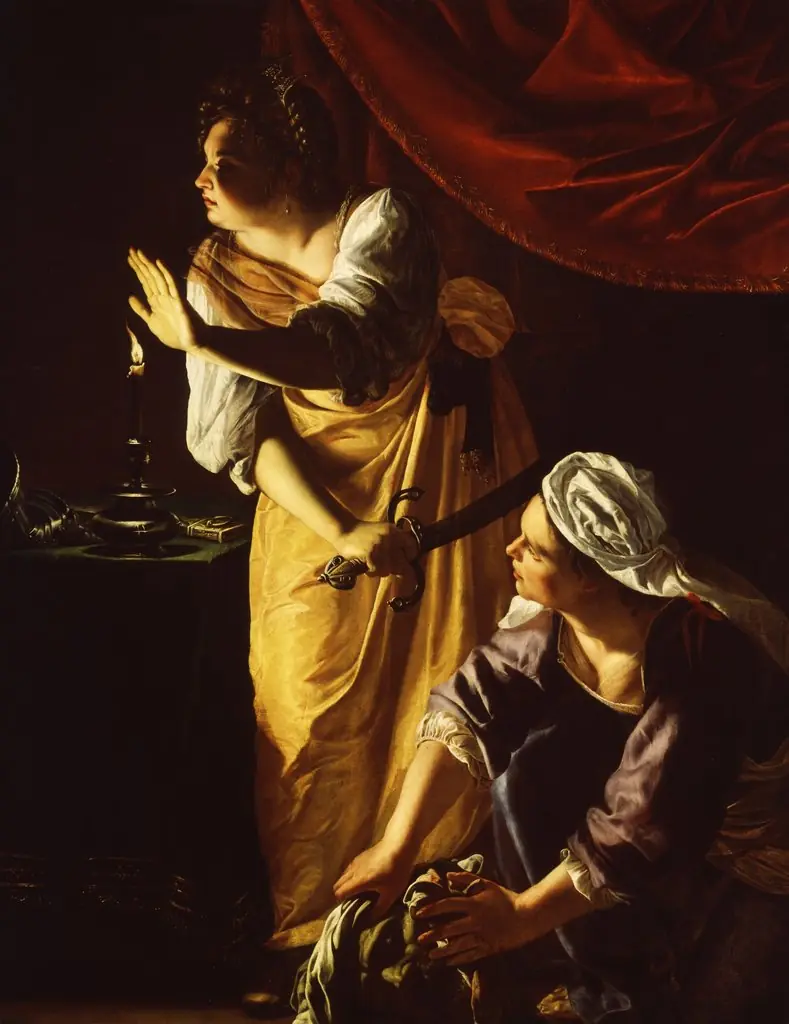
Judith offering the Head of Holofernes is an oil painting by the Dutch Golden Age artist Salomon de Bray. It dates from 1636 and is held in the collection of the Museo del Prado.
About this work
Subject & Meaning
Her severed head was typically shown carried away in a basket or held aloft as a trophy of divine deliverance.
The painting depicts the biblical heroine Judith, a popular subject in religious art. According to the Book of Judith (Apocrypha), she entered the Assyrian camp of General Holofernes, charmed him, and beheaded him while he was drunk, saving her people of Bethulia from siege. Her severed head was typically shown carried away in a basket or held aloft as a trophy of divine deliverance.
In Salomon de Bray's 1636 treatment, classified as a religious painting, the moment is recast as an "offering", Judith presenting the head rather than concealing it. This compositional choice reframes the narrative from stealthy rescue to triumphal display, emphasizing Judith's role as deliverer and casting the severed head as a symbolic trophy of faith overcoming tyranny. The Holofernes figure, common in Counter-Reformation imagery, served as a stand-in for enemies of the faithful, lending the subject an allegorical resonance about virtue, divine providence, and the power of humble means against worldly power.
Technique & Style
Salomon de Bray painted Judith offering the Head of Holofernes in oil on panel in 1636. The work measures 89 cm in height by 71 cm in width.
The painting belongs to the religious genre, depicting the biblical scene of Judith presenting the severed head of Holofernes. De Bray, active in Haarlem, employed the oil painting technique on a wooden support, consistent with Dutch Golden Age panel painting practices of the period.
History & Provenance
Salomon de Bray created the oil-on-panel painting Judith offering the Head of Holofernes in 1636. The work was produced in Haarlem and is currently held in the collection of the Museo del Prado. As a religious artwork, it depicts the biblical figure Judith. The piece measures 89 cm in height and 71 cm in width.
Overview
Salomon de Bray’s 1636 oil on canvas, titled Judith offering the Head of Holofernes, is part of the collection at Madrid’s Museo del Prado. The work presents a biblical scene rendered in a compact composition, focusing on a dignified woman in elaborate attire as she presents a concealed object, while a secondary figure watches from behind.
Context
Created during a period when biblical narratives were popular subjects for moral instruction, the painting aligns with contemporary Dutch Protestant sensibilities. De Bray, known for both architectural and figural works, integrates a theatrical staging that mirrors the era’s interest in dramatic storytelling through visual art.
Own this work as a print
Artist & collection