Artwork
Ariadne on Naxos

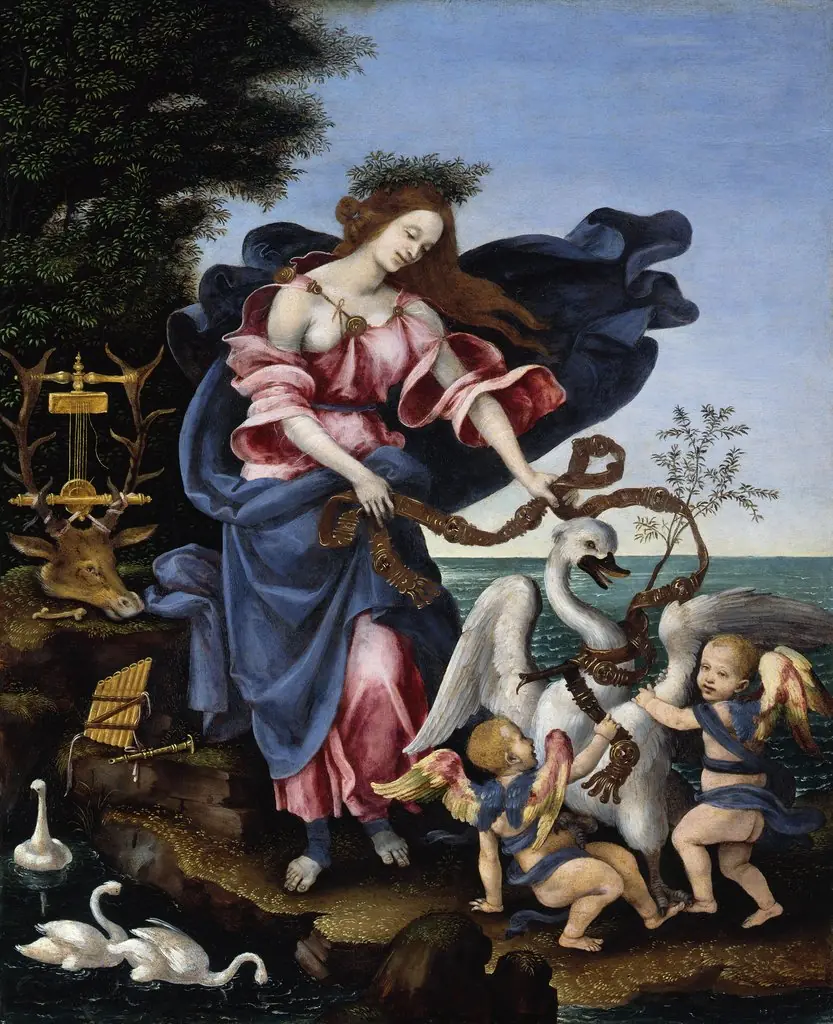
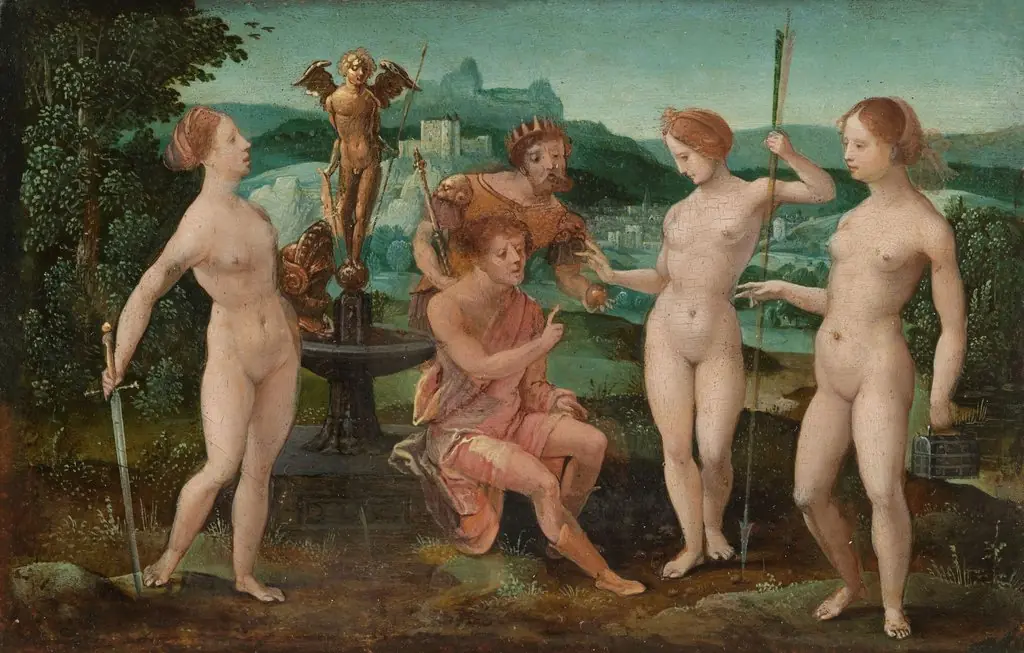
Ariadne on Naxos is an oil painting by the Early Baroque Italian artist Filippo da Verona. It dates from 1600 and is held in the collection of the Rijksmuseum.
About this work
Subject & Meaning
Executed in oil on panel, the artwork visualizes this specific episode without additional symbolic elements detailed in the available records.
The painting depicts the mythological figure Ariadne on the island of Naxos. Created around 1600, the work belongs to the genre of mythological painting, illustrating a narrative from classical antiquity. The composition focuses specifically on the presence of Ariadne within the setting of Naxos, a location central to her legend following her abandonment by Theseus.
Executed in oil on panel, the artwork visualizes this specific episode without additional symbolic elements detailed in the available records.
Technique & Style
Created in 1600, Ariadne on Naxos is a mythological painting executed in oil paint on a panel support. The work depicts the figure of Ariadne situated on the island of Naxos. Physically, the panel measures approximately 128 to 130 centimeters in height and 119 centimeters in width.
While specific details regarding the artist's handling of the brushwork, the current condition of the surface, or distinct stylistic mannerisms are not detailed in the available records, the piece is formally classified as a painted panel work from the early seventeenth century.
History & Provenance
Created in 1600, this mythological panel painting is attributed to Filippo da Verona, though some records also associate Josaphat Araldi and Girolamo dai Libri with its creation. The work entered the collection of Henri Cernuschi before passing through the Galerie Georges Petit. Subsequent ownership included Otto Lanz, followed by his heirs Anna Theresia Elisabeth Lanz-Willi and Hans Posse.
During the mid-20th century, the painting was held by the Führermuseum and later processed at the Munich Central Collecting Point. It eventually became part of the Stichting Nederlands Kunstbezit and the Dienst Verspreide Rijkscollecties, settling in the Rijksmuseum.
The artwork Ariadne on Naxos is held in the Rijksmuseum. It entered the collection through a series of ownership transfers including Henri Cernuschi, Galerie Georges Petit, Otto Lanz, Anna Theresia Elisabeth Lanz-Willi, and Hans Posse. The work was exhibited at the Führermuseum and Munich Central Collecting Point before its current location at the Rijksmuseum.
The painting is catalogued under inventory number SK-A-1466 and was accessioned in 1885. Exhibition history includes displays at the Rijksmuseum and previously at the Führermuseum in Munich.
Dimensions are recorded as 128.0 cm in height and 119.0 cm in width, matching the oil paint on panel format described in the source.
The work is classified as a mythological painting depicting Ariadne on the island of Naxos, created by Filippo da Verona in 1600.
Legacy
The mythological canvas depicting Ariadne on Naxos by Filippo da Verona was dispersed through several prominent collections in the 20th century, including the Rijksmuseum, Führermuseum, and Munich Central Collecting Point, and later entered the holdings of Henri Cernuschi, Galerie Georges Petit, and Otto Lanz. The work continues to be cited in studies of Venetian‑style mythological painting and informs scholarly discussions of Baroque reinterpretations of classical narratives.
Overview
Filippo da Verona’s Ariadne on Naxos (1600) is an oil painting that belongs to the early Baroque period in Italy. Executed on canvas, the work portrays the mythic heroine Ariadne standing on the shore of Naxos, her bare feet and pink garment contrasting with the surrounding landscape. The painting is currently housed in the Rijksmuseum’s collection.
Context
During the early Baroque, Italian artists revisited classical myths to explore human emotion and divine intervention. Filippo da Verona, active in the Veneto, blended Renaissance compositional clarity with emerging dramatic lighting. Ariadne on Naxos reflects this transitional moment, marrying narrative content with a growing interest in naturalistic landscape.

Own this work as a print
Artist & collection
Artist
Filippo da Verona (16th century) was an Italian painter of the early-Renaissance period.