Artwork
Kings Cross London, 1832, from 1852 the site of the terminus of the Great Northern Railway
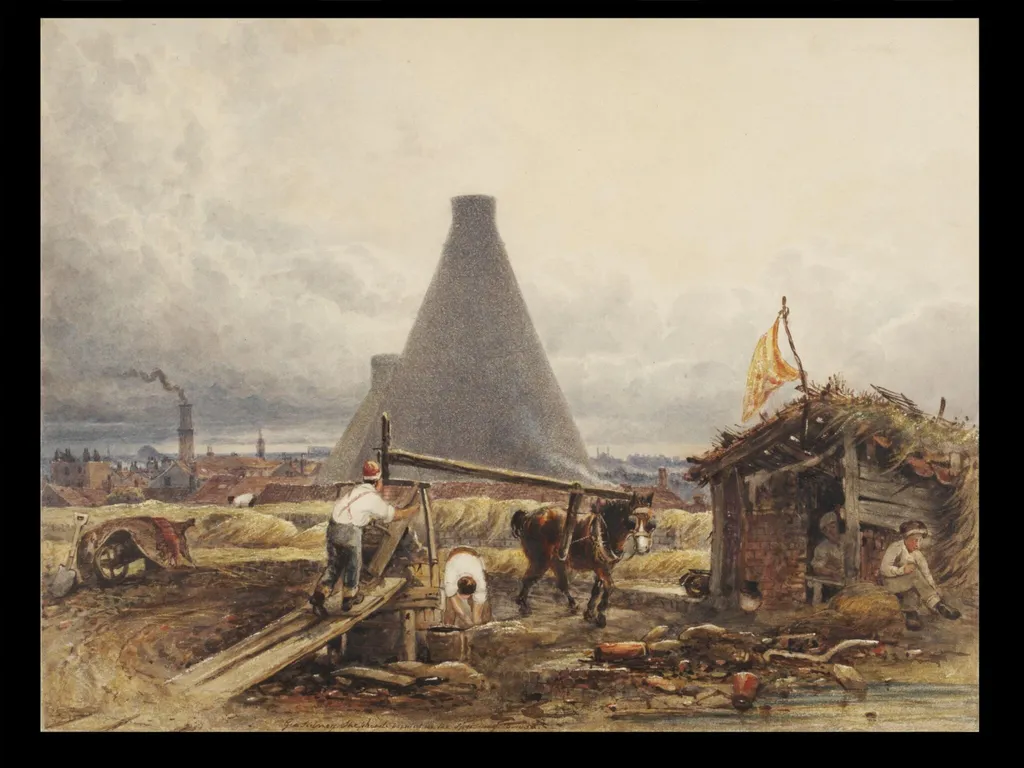
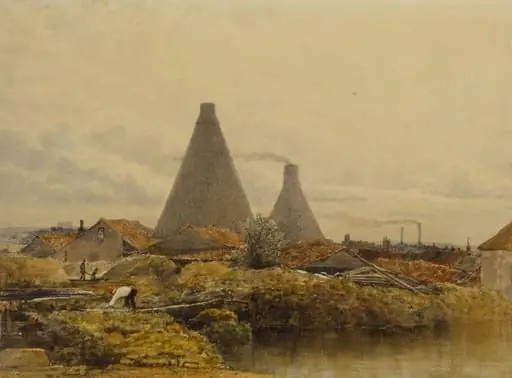
Kings Cross London, 1832, from 1852 the site of the terminus of the Great Northern Railway is a watercolor work on paper by the British Romanticist artist George Sidney Shepherd. It dates from 1832 and is held in the collection of the Victoria and Albert Museum.
About this work
Overview
George Sidney Shepherd’s watercolour records the King's Cross area as it appeared in 1832, prior to the establishment of the railway terminus that would open two decades later. The composition centers on a bustling yard dominated by two brick kilns, with laborers extracting and handling clay amid a muddy, industrial landscape.
Subject & Meaning
The work emphasizes the everyday labor of brickmaking, showing workers in hats and aprons loading carts, guiding horses, and stacking newly fired bricks beside a modest wooden hut. By focusing on these routine activities, Shepherd highlights the site’s role in supplying building materials for London’s rapid urban expansion.
Technique & Style
Shepherd employs precise architectural drawing and aerial perspective to render the topography of the area. His controlled wash and fine detail convey both the texture of the muddy ground and the distant, faint outlines of buildings and smokestacks under a gray, smoky sky.
History & Provenance
Created in 1832, the watercolour predates the construction of King’s Cross Station, which commenced operations in 1852. The painting thus serves as a visual document of the pre‑railway landscape, illustrating the industrial environment that would later be transformed by the railway’s development.
Context
During the early nineteenth century, London’s growth demanded large quantities of brick, and the King's Cross area functioned as a key production site. Shepherd’s depiction situates the viewer within this supply chain, linking the local brickworks to the broader narrative of the city’s expansion.
Own this work as a print
Artist & collection
Artist
George Shepherd painted London streets and buildings in the early 1800s, using watercolour to record places before they changed.