Artwork
Untitled
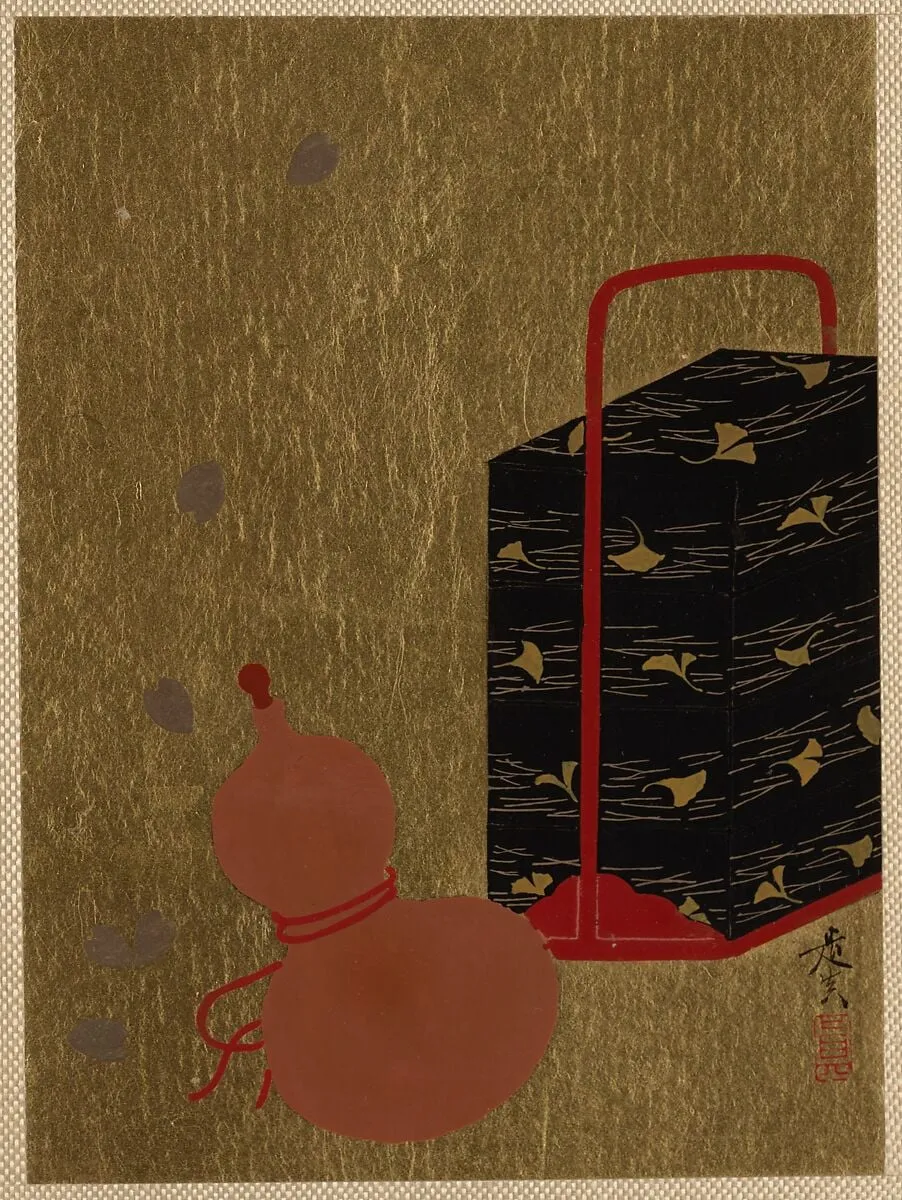
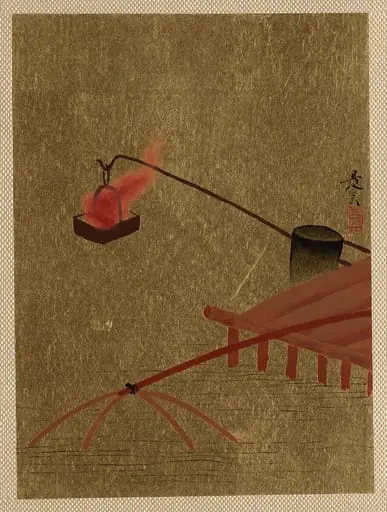
Untitled is a gold painting by the Nihonga artist Shibata Zeshin. It dates from 1837 and is held in the collection of the Metropolitan Museum of Art.
- Accession no.
- 36.100.114
About this work
Subject & Meaning
These elements reflect the artist’s engagement with traditional Japanese still-life motifs while maintaining a delicate balance between object and surface.
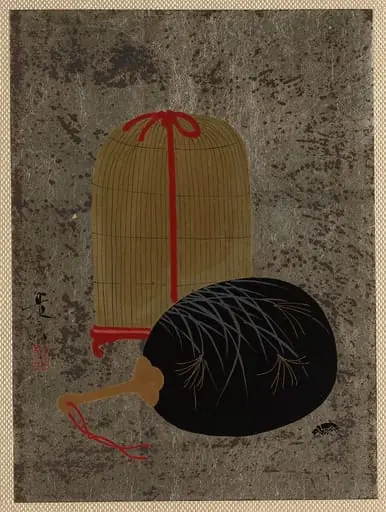
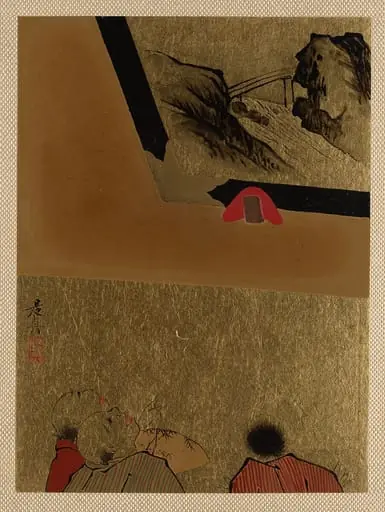
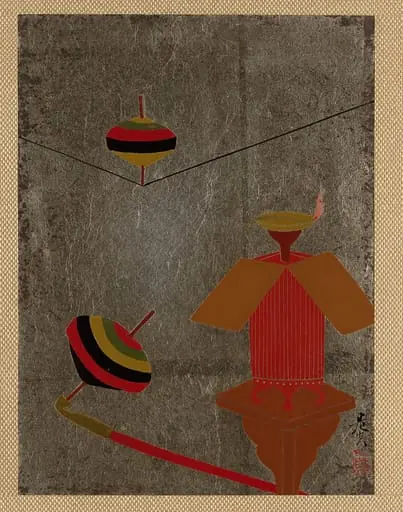
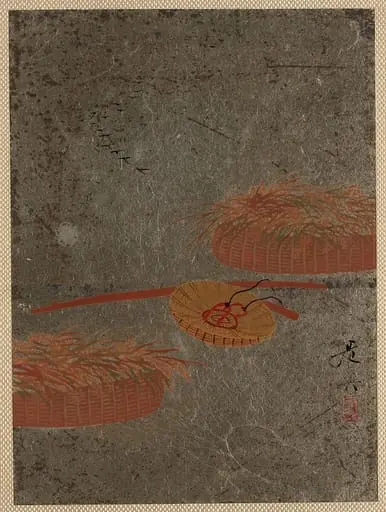
The painting Untitled by Shibata Zeshin, created in 1837, portrays a box and a gourd, objects that function as the visual subject of the composition. As a work classified as a still_life, it emphasizes ordinary material items rather than narrative scenes. The piece is part of the Metropolitan Museum of Art’s collection, located in New York, and was produced in Japan using lacquer on gold paper as an album leaf format.
These elements reflect the artist’s engagement with traditional Japanese still-life motifs while maintaining a delicate balance between object and surface. The depiction of a box and a gourd invites contemplation of everyday material culture in the Edo period.
Technique & Style
The work is executed in lacquer on gold paper, taking the form of an album leaf classified as a painting. Its still-life subject, a box and a gourd, is rendered in this distinctive lacquer technique, a medium closely associated with Shibata Zeshin's practice. The small-scale format measures 12.1 cm in height by 8.9 cm in width, suited to the album-leaf format.
Produced in Japan in 1837, the piece is held in the collection of the Metropolitan Museum of Art.
History & Provenance
The work was created by Shibata Zeshin in 1837, as indicated by its dated inscription and corroborated by museum records. It is an album leaf executed in lacquer on gold paper, depicting a box and gourd.
The painting entered the collection of the Metropolitan Museum of Art, where it is currently held under accession number 2015.374. Museum documentation lists its dimensions as 12.1 cm in height and 8.9 cm in width, and confirms its Japanese origin.
It has not been recorded as exhibited in major public venues subsequent to its entry into the museum’s collection.
Overview
Created in 1837 by Shibata Zeshin, this album leaf exemplifies the artist's innovative fusion of painting and lacquerware techniques. The work depicts a single, glossy black gourd resting upon a gold surface, accented by a red ribbon. Zeshin applied lacquer directly onto paper, a medium traditionally reserved for functional objects like bowls and boxes, to achieve a depth and reflectivity unattainable with standard pigments.
This technique allows the gourd to appear wet and tactile, capturing the play of light on its curved surface with remarkable realism. As a still life, the composition is minimalist, focusing entirely on the materiality of the object and the interplay between the dark lacquer and the luminous gold background. This piece marks a significant moment in Zeshin's career, demonstrating his mastery in elevating everyday subjects through experimental media.
It reflects the 19th-century Japanese artistic trend of blurring boundaries between fine art and craft, showcasing the artist's unique ability to imbue simple forms with a sense of vitality and presence.
Artist & collection