Artwork
Untitled
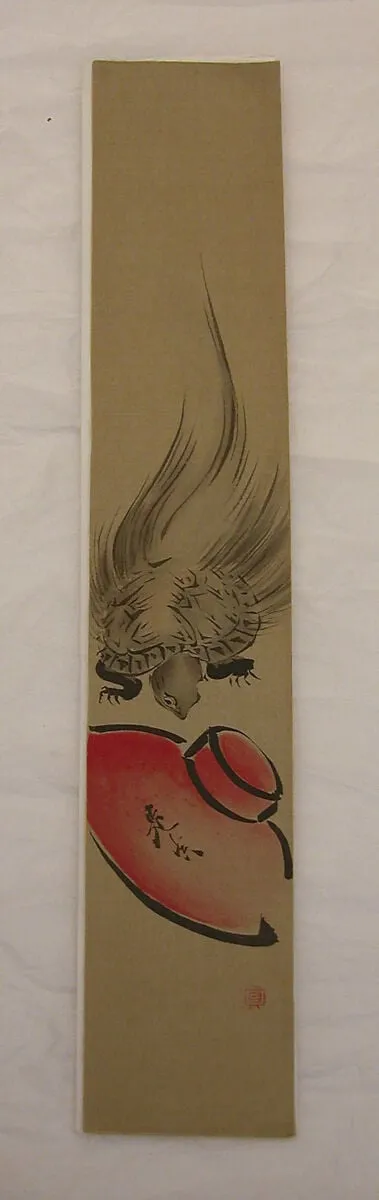
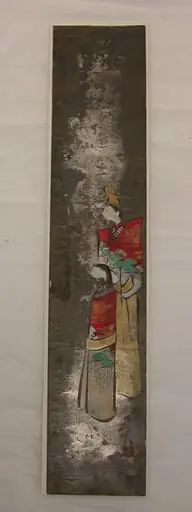
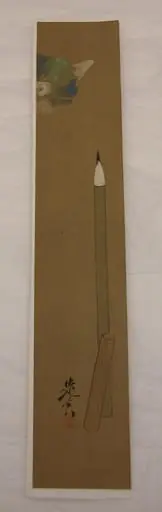
Untitled is an ink painting by the Nihonga artist Shibata Zeshin. It dates from 1849 and is held in the collection of the Metropolitan Museum of Art.
About this work
Subject & Meaning
Its meaning resides in this focused, aesthetic attention to a single creature, presented as an object of quiet visual study on an intimate paper support.
The painting belongs to the still-life genre and depicts an animal subject, rendered in ink and color on a narrow tanzaku-format paper support. As a work in the still-life tradition, its focus is on the careful observation and representation of a creature from the natural world rather than on human figures or narrative scene. The tanzaku format, a tall and slender paper strip traditionally used for poetry, shapes the composition and frames the animal motif in a vertical, contemplative arrangement.
The work reflects Shibata Zeshin's early engagement with naturalistic depiction during the late Edo period, using restrained ink-and-color technique to capture the form of the animal. Its meaning resides in this focused, aesthetic attention to a single creature, presented as an object of quiet visual study on an intimate paper support.
Technique & Style
Created in 1849, this work by Shibata Zeshin is executed as a painting using ink and color applied to paper. The support is a tanzaku, a traditional Japanese format characterized by its narrow, elongated dimensions of 37.5 cm in height and 6 cm in width. Stylistically, the piece belongs to the still-life genre and depicts an animal, reflecting the artist's engagement with natural subjects.
The handling of ink and pigment on the paper surface results in a compact composition typical of this specific vertical format.
History & Provenance
The work Untitled by Shibata Zeshin was created in 1849 in Japan. Executed as a painting in ink and color on paper, specifically formatted as a tanzaku, the piece measures 37.5 cm in height and 6 cm in width. The artwork depicts an animal and falls within the still-life genre.
It is held by the Metropolitan Museum of Art, New York, where it is accessioned as 2015.440.1, having entered the museum's holdings in 2015. No exhibition history is documented in the available sources.
Overview
Created in 1849, this work by Shibata Zeshin is a small painting executed in ink and color on paper, formatted as a tanzaku. The composition features two sparrows perched on a bare, diagonally oriented branch that traverses the narrow vertical strip. Zeshin employs a minimalist aesthetic, utilizing swift, confident brushstrokes to define the birds' forms without extraneous detail.
A subtle application of red pigment highlights the birds' heads, providing a focal point against the monochromatic ink washes of the plumage and the unpainted background. This piece exemplifies Zeshin's mastery of the Rinpa tradition's decorative sensibility while demonstrating his unique ability to capture natural vitality with economy of means. Although Zeshin is most renowned for his lacquerware, this painting illustrates his versatility across media during the mid-19th century.
The tanzaku format, traditionally reserved for poetry, suggests the work may have been intended as a visual complement to verse or as a standalone object of refined appreciation. The depiction of sparrows, a common subject in Japanese art symbolizing resilience and everyday life, is rendered here with a spontaneity that reflects the artist's deep observation of nature.
Context
The choice of a tanzaku format is significant, as these vertical paper strips were historically associated with the presentation of classical Japanese poetry. By adopting this format for a visual artwork, Zeshin subtly connects his painting to a rich literary tradition. This integration of visual art with a poetic medium suggests an intention to evoke a contemplative or lyrical mood, characteristic of the tanzaku's original purpose.

Artist & collection