Artwork
Hanshan and Shide (Kanzan and Jittoku)
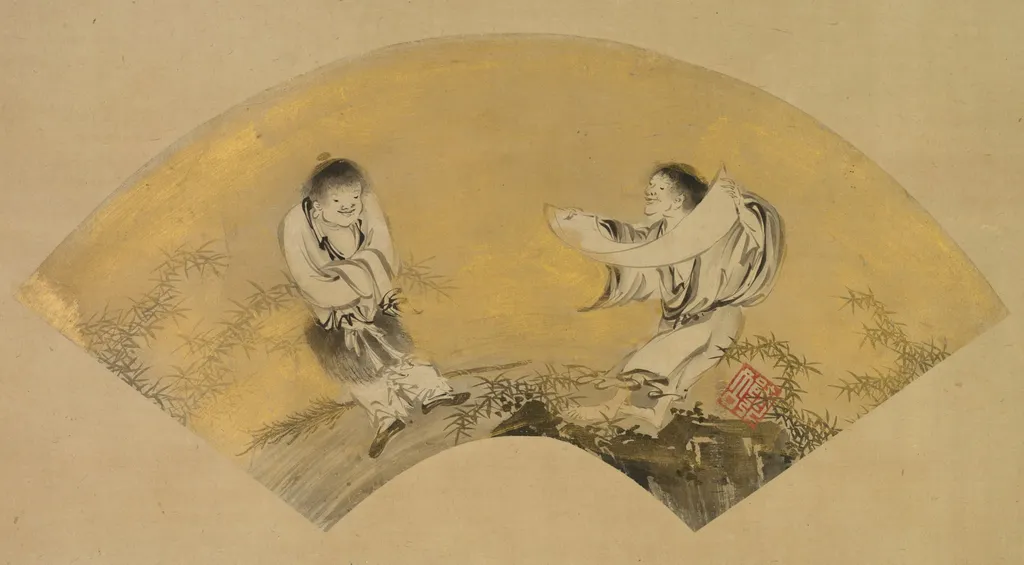
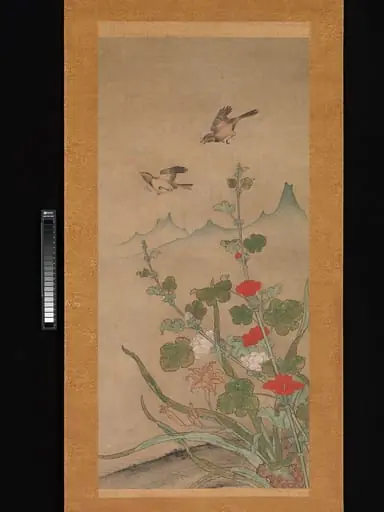
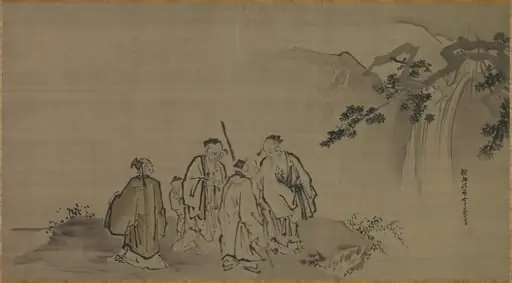
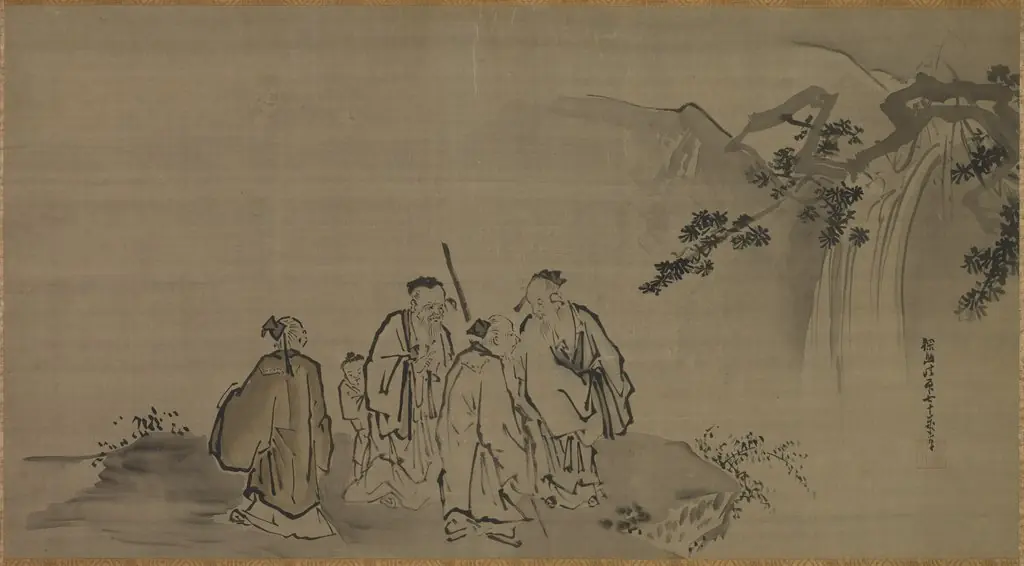
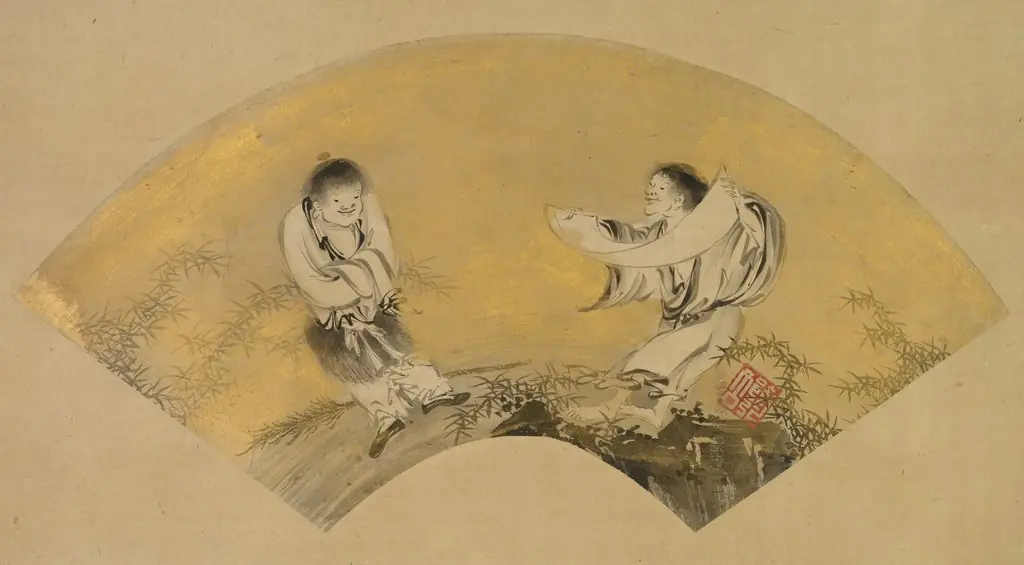
Hanshan and Shide (Kanzan and Jittoku) is an unspecified painting by the Nanga artist Shikibu Terutada. It dates from 1504 and is held in the collection of the Cleveland Museum of Art.
- Accession no.
- 2015.592
- Credit line
- Gift from the Collection of George Gund III
About this work
Overview
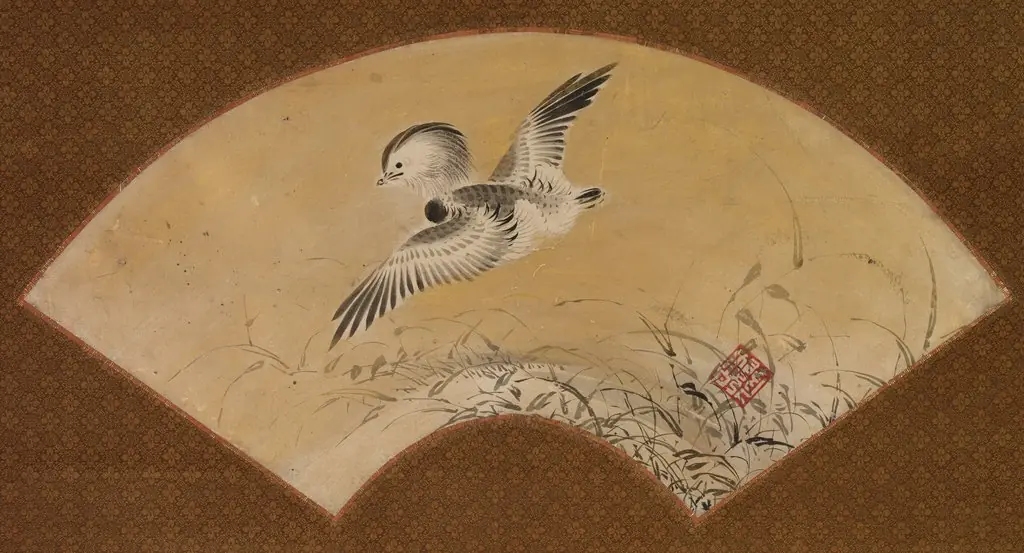
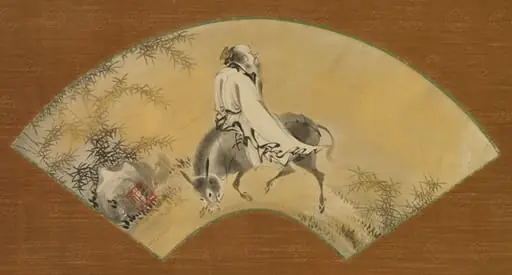
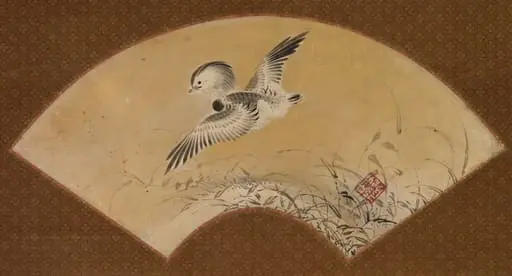
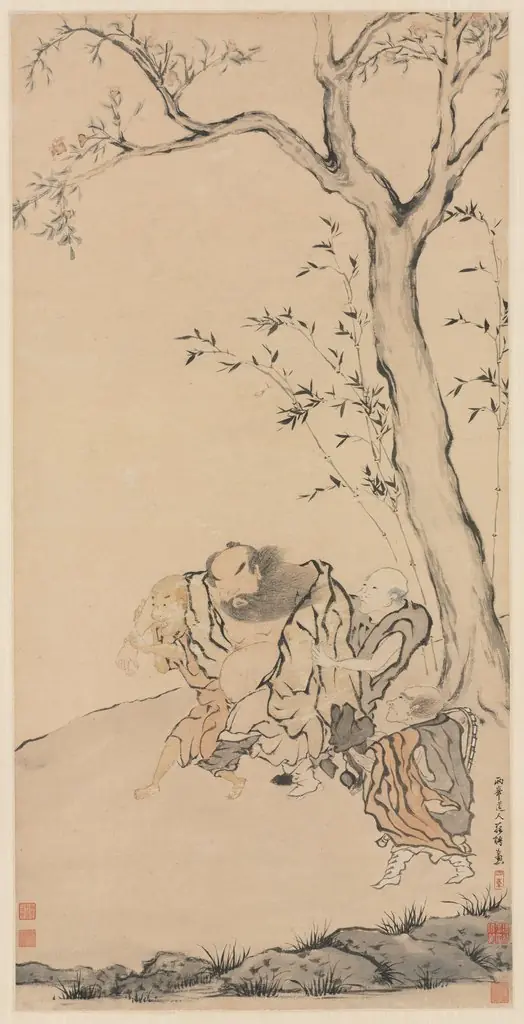
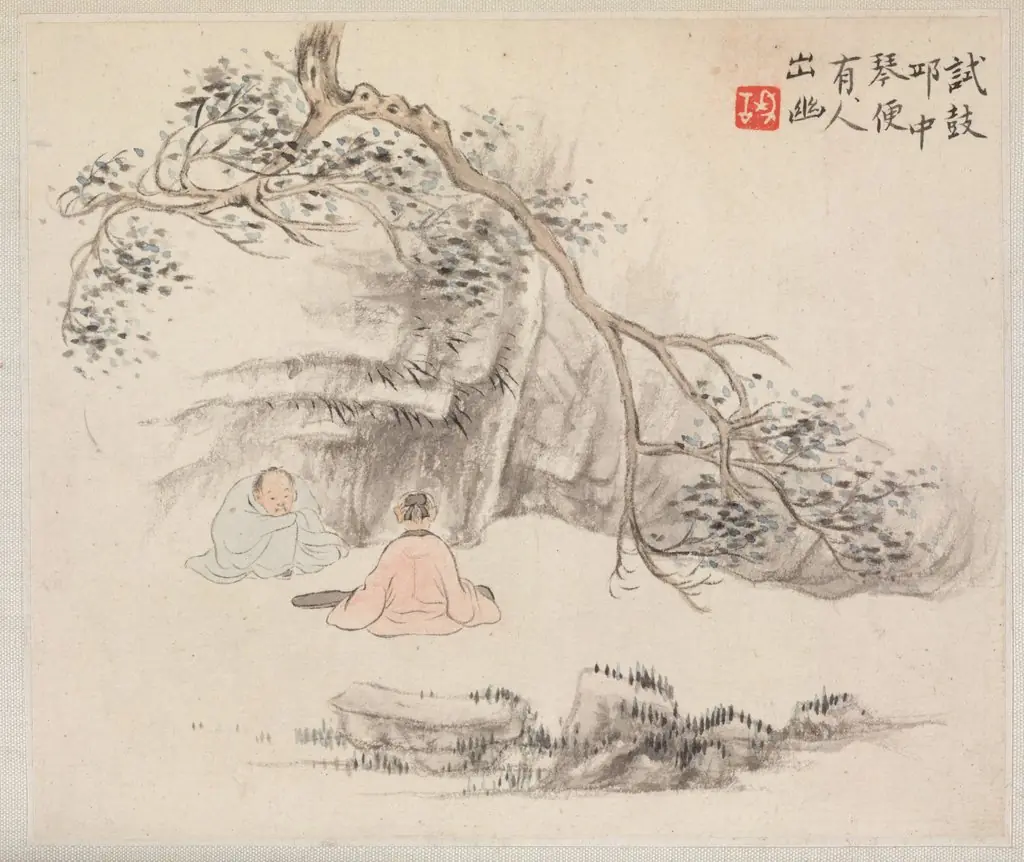
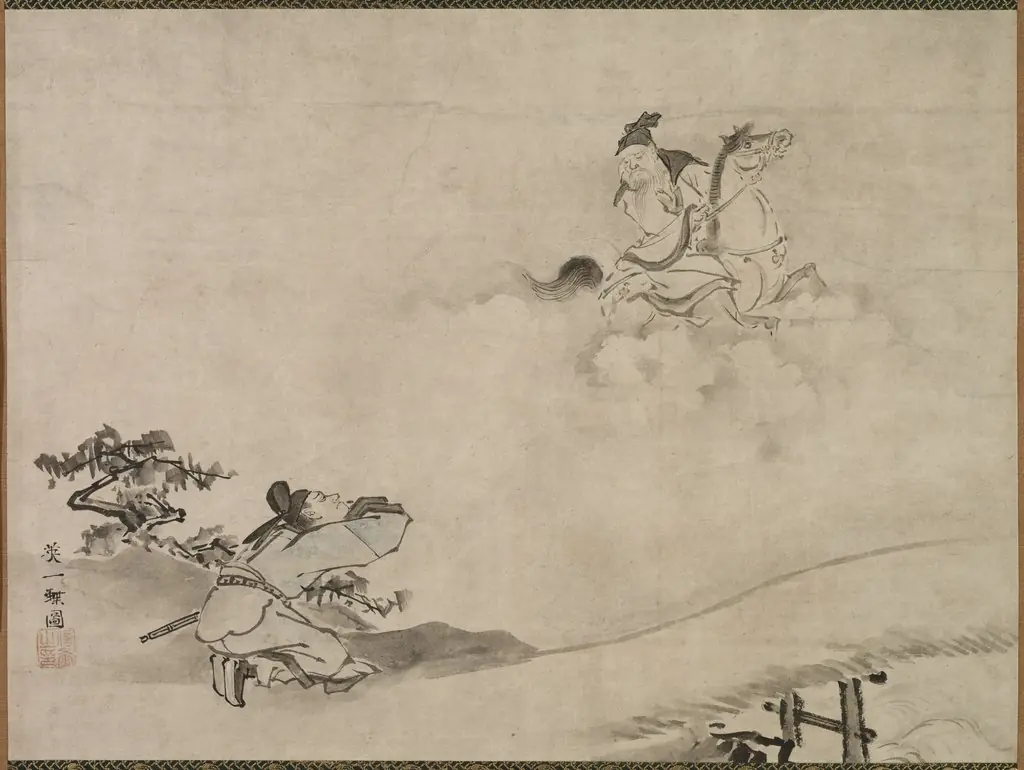
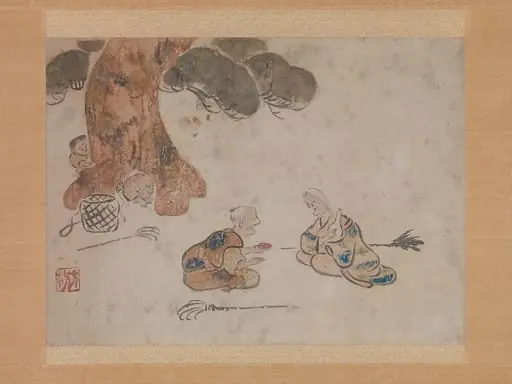
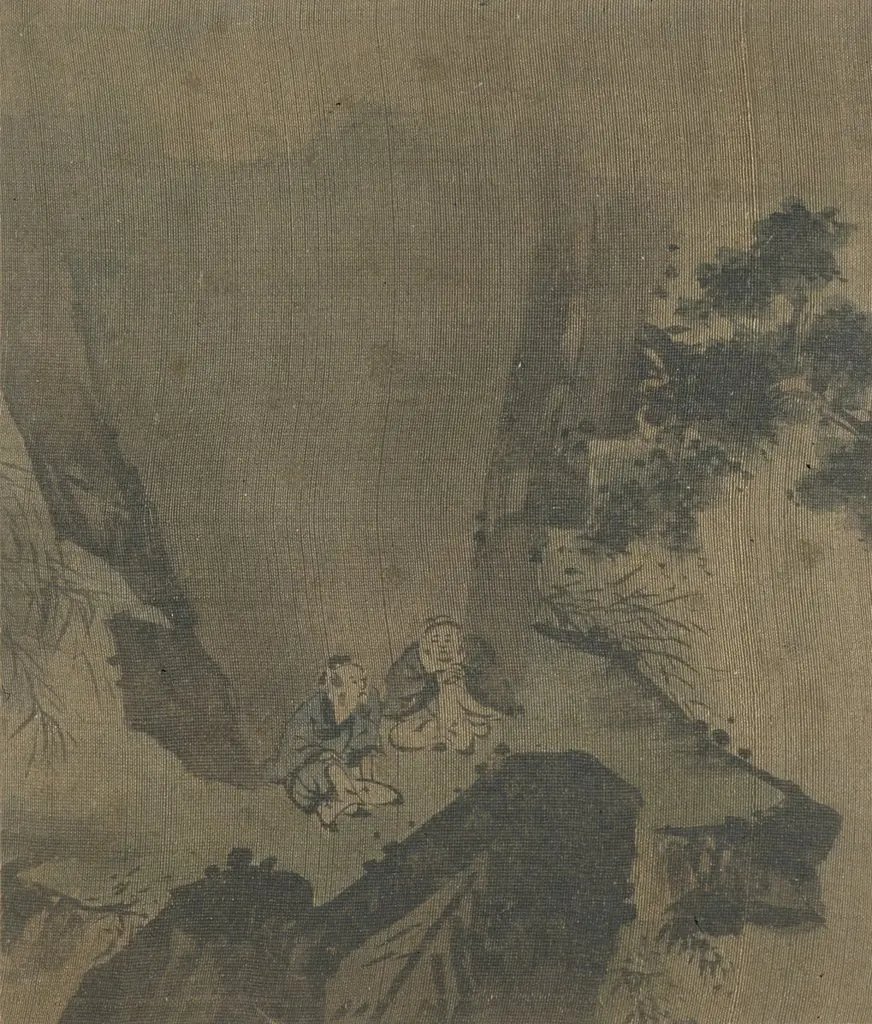
The work consists of three fan‑shaped panels, now displayed as separate hanging scrolls, originally forming part of a twenty‑panel series mounted on a folding screen. The central panel shows the Chinese figures Hanshan and Shide in a natural setting; flanking panels depict the scholar‑official Pan Lang and a mandarin duck in flight above reeds.
Subject & Meaning
Hanshan, a hermit poet, is shown reciting verses to his companion Shide, a monk who served in a Zen monastery kitchen; together they are traditionally identified as incarnations of the bodhisattvas Manjushri and Samantabhadra. The adjacent images of Pan Lang, who famously rode backward on a donkey to keep his beloved mountain in view, and the duck with reeds, allude to themes of loyalty, scholarly aspiration, and civil‑service achievement in Chinese culture.
Technique & Style
The panels are executed in the fan‑shape format typical of Japanese screen painting, employing ink and color on silk. The artist Shikibu Terutada signed each work; his brushwork reflects the influence of the Kano school while also echoing the earlier style of the Kanto painter Kenkō Shōkei, combining precise line work with a restrained, atmospheric palette.
History & Provenance
Created by the Kantō‑based painter Shikibu Terutada in the early sixteenth century, the three panels were once components of a larger screen ensemble. They entered the collection of the Cleveland Museum of Art in the twentieth century, where they have been conserved as individual hanging scrolls, preserving the original seals and signatures of the artist.
Context
The depiction of Hanshan and Shide draws on a popular Zen legend that emphasizes the spiritual value of poetry and humble labor. The inclusion of Pan Lang and the mandarin duck references Chinese literary and bureaucratic traditions, linking the work to the broader East Asian visual culture that blended Chinese subject matter with Japanese painting techniques during the Muromachi period.
Artist & collection