Artwork
Chinese Sages
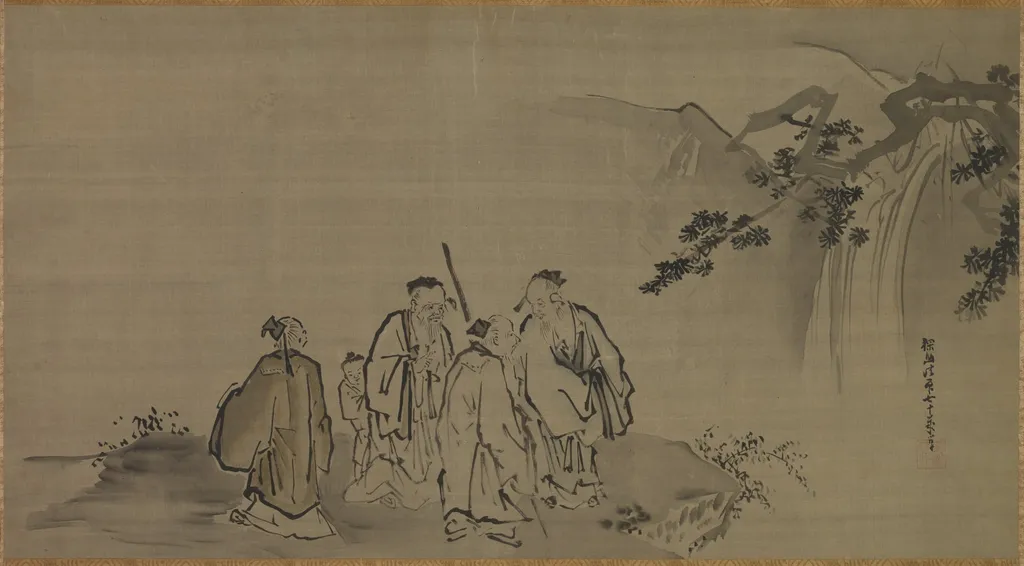
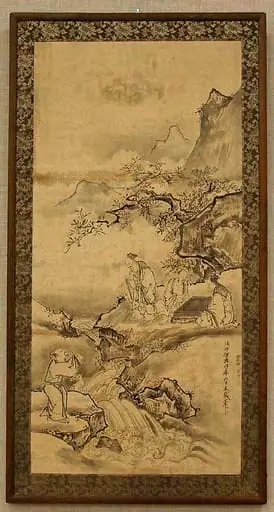
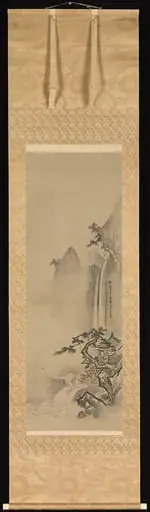
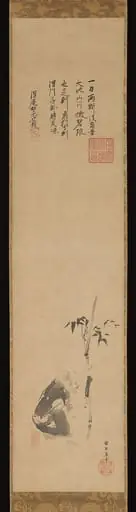
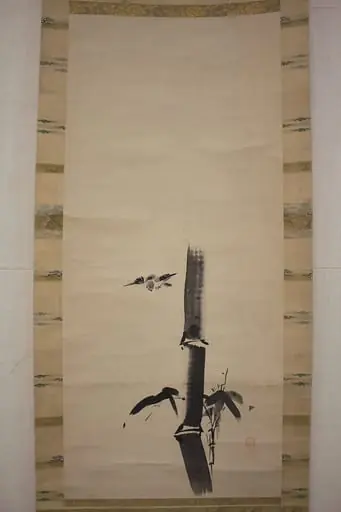
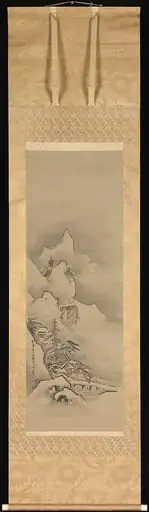
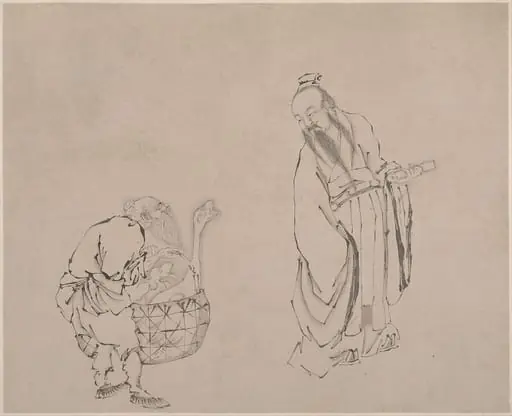
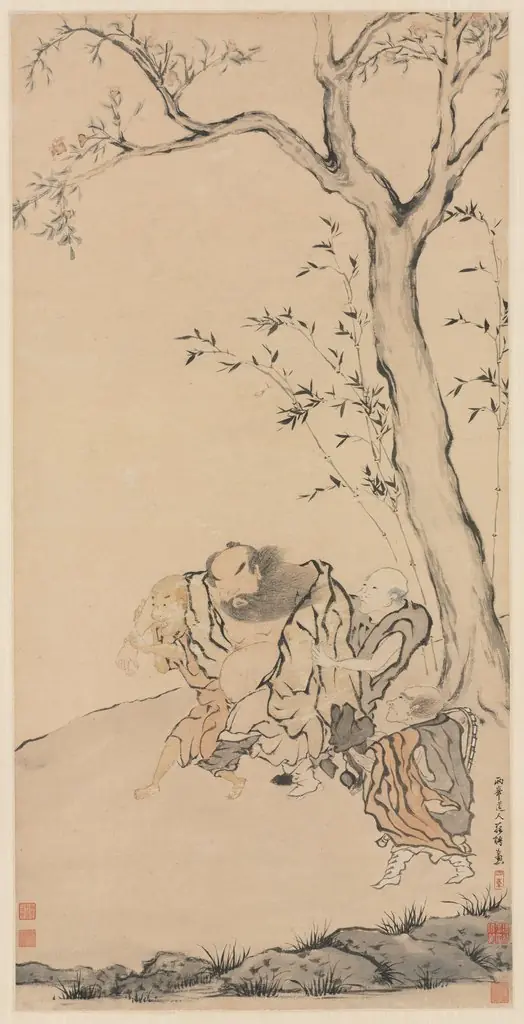
Chinese Sages is an unspecified painting by the Baroque artist Kano Tan'yū. It dates from 1604 and is held in the collection of the Cleveland Museum of Art.
- Accession no.
- 1992.83
- Credit line
- Bequest of Harley C. Lee and Elizabeth K. Lee
About this work
Overview
Created around 1604 by Kanō Tan’yū, a leading figure of the Kanō school during Japan’s early Tokugawa era, Chinese Sages is a painted grouping of scholarly figures. The work is classified as a portrait genre piece and is part of the permanent collection of the Cleveland Museum of Art.
Subject & Meaning
The composition depicts several men in traditional court robes, their hair bound in the customary style, gathered beneath a tree. Their postures and gazes suggest a quiet dialogue, evoking the ideal of learned conversation among Chinese sages, a theme often employed to convey moral refinement and intellectual virtue.
Technique & Style
Tan’yū employs restrained, flowing lines that delineate the figures with a sense of immediacy. The brushwork is loose yet controlled, allowing the forms to appear spontaneous, while subtle shading in the muted background creates atmospheric depth. This combination of simplicity and expressiveness typifies the Kanō school’s approach to figure painting.
History & Provenance
The painting has remained in Japan since its creation before entering the collection of the Cleveland Museum of Art, where it is displayed as an example of early Edo‑period Kanō school portraiture. Its acquisition reflects the museum’s broader effort to represent Japanese painting traditions from the Tokugawa period.
Artist & collection