Artwork
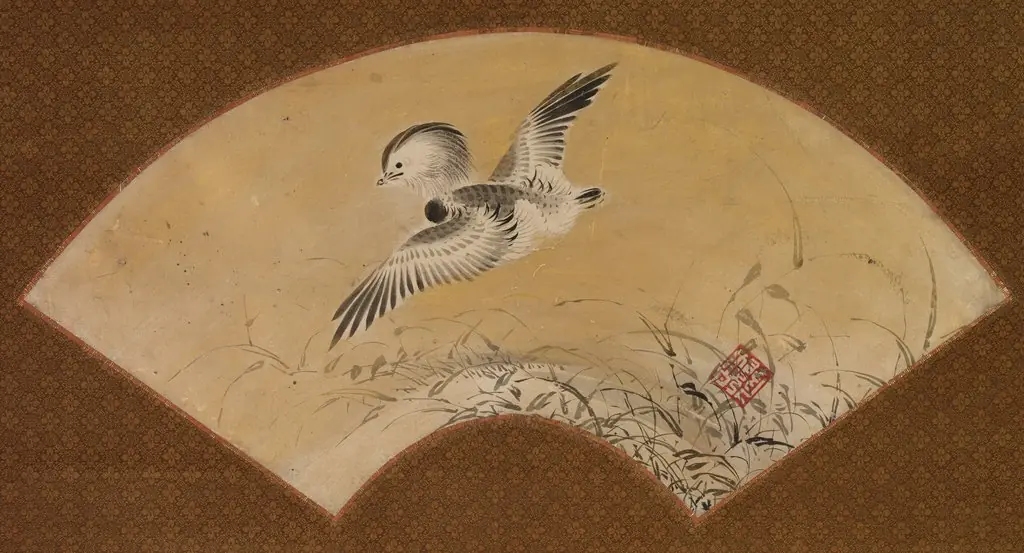
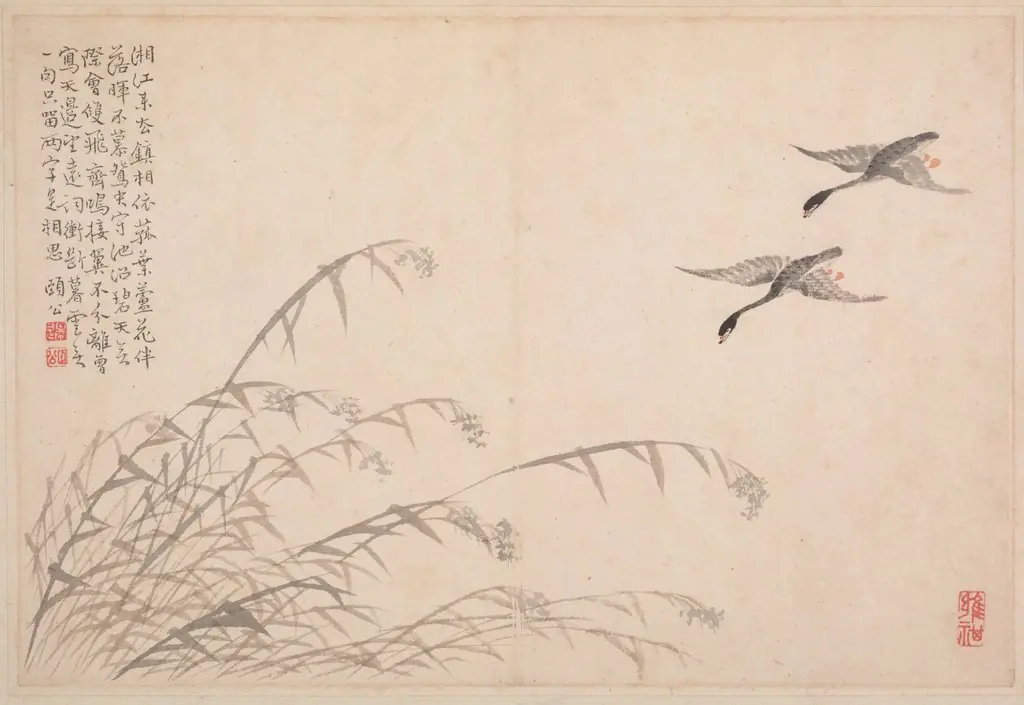
Duck in Flight
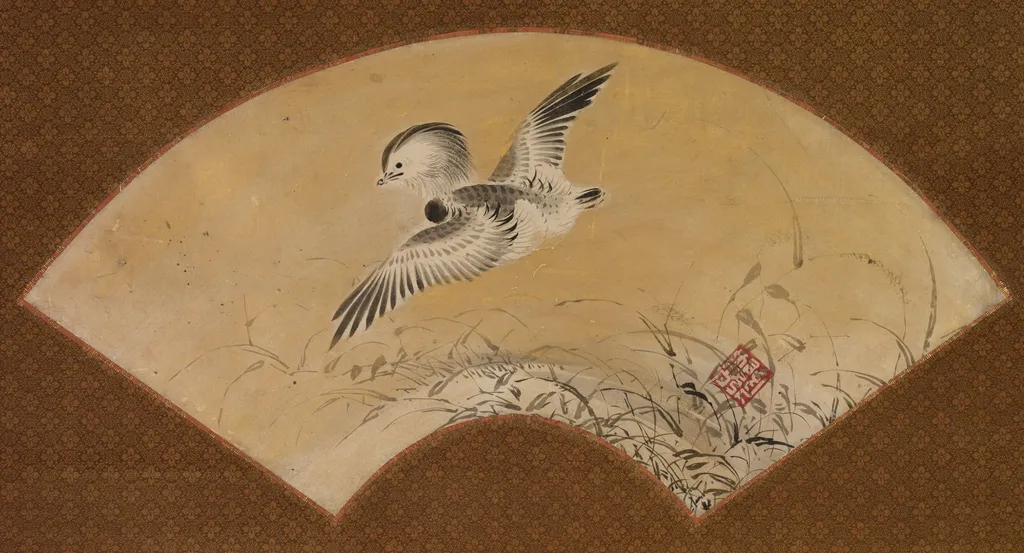
Duck in Flight is an unspecified painting by the Renaissance artist Shikibu Terutada. It dates from 1504 and is held in the collection of the Cleveland Museum of Art. Three fan-shaped ink paintings, originally part of a twenty-panel folding screen, now hang as individual scrolls.
- Accession no.
- 1992.140
- Credit line
- Seventy-fifth anniversary gift of Leighton Longhi in memory of Yabumoto Soshiro
About this work
Overview
The works reflect a blend of Chinese subject matter and Japanese ink-painting traditions, executed with restrained brushwork and subtle tonal variation.
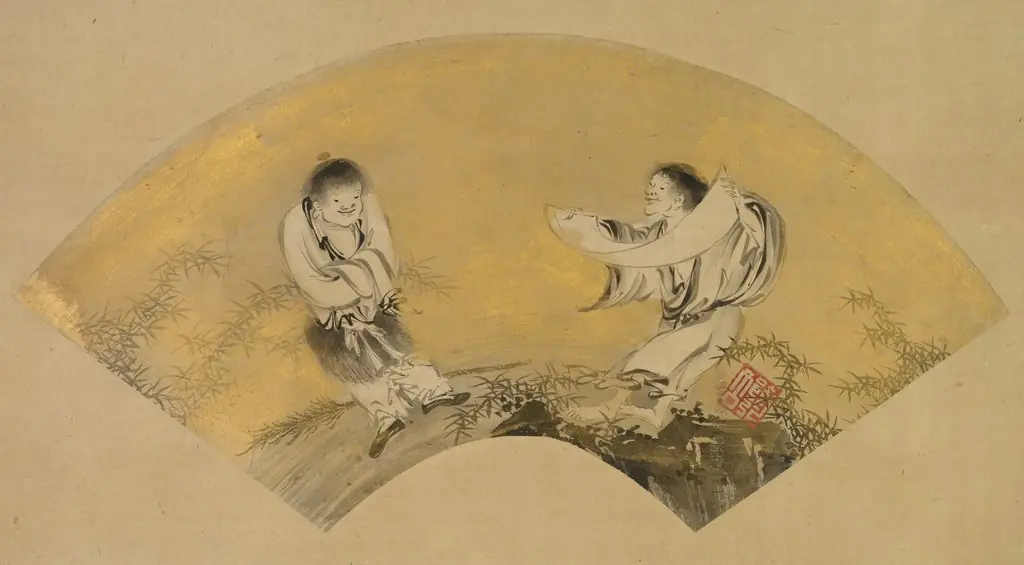
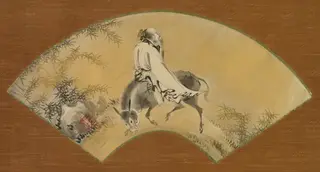
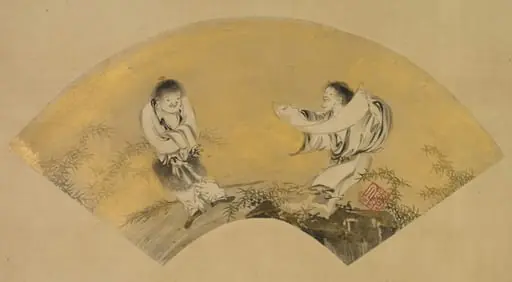
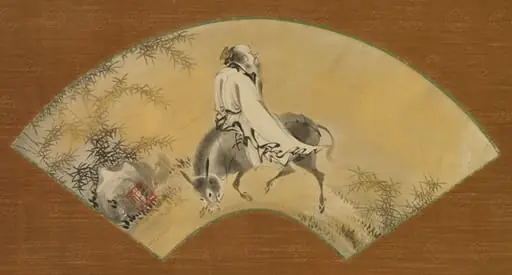
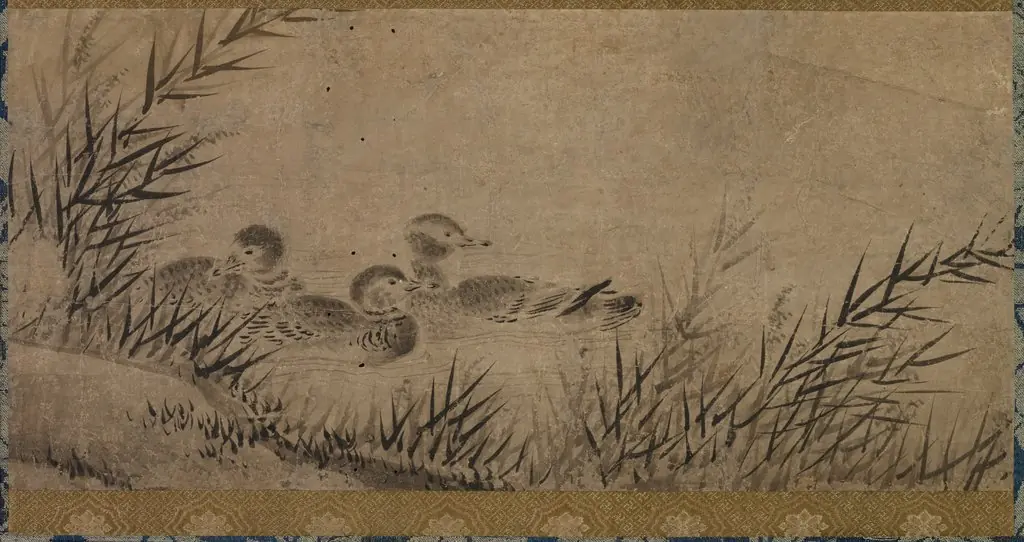
Three fan-shaped ink paintings, originally part of a twenty-panel folding screen, now hang as individual scrolls. Each depicts a distinct Chinese literary or spiritual theme: a scholar departing reluctantly, two Zen figures engaged in quiet exchange, and a duck soaring above reeds. All bear the seal of Shikibu Terutada, a mid-16th-century Japanese artist active in the Kantō region.
The works reflect a blend of Chinese subject matter and Japanese ink-painting traditions, executed with restrained brushwork and subtle tonal variation.
Subject & Meaning
The duck in flight is one of three symbolic scenes drawn from Chinese cultural narratives. The bird, often paired with reeds, alludes to scholarly achievement, possibly referencing success in civil service examinations. The other panels depict Pan Lang’s reluctant departure from exile and the Zen figures Hanshan and Shide, who were believed to be bodhisattvas in disguise. Together, they form a meditation on detachment, spiritual insight, and the quiet dignity of withdrawn lives.
Technique & Style
Executed in monochrome ink on paper, the duck is rendered with loose, fluid brushstrokes that suggest motion without detail. Its wings curve dynamically, feet drawn close, creating a sense of airborne grace. The reeds are sketched with swift, dry strokes, enhancing the impression of wind and space.
Shikibu’s technique shows influence from Kano school conventions but also echoes the more spontaneous style of Kenkō Shōkei, favoring expressive economy over ornate finish.
History & Provenance
The three scrolls were once mounted on a folding screen, a format common in Japanese interiors for decorative and didactic purposes. They were later separated and remounted as hanging scrolls, likely during the Edo period. Each bears the seal of Shikibu Terutada, confirming his authorship.
While their early ownership is undocumented, their survival as individual pieces suggests they were valued for their aesthetic and symbolic resonance beyond their original screen context.
Context
In 16th-century Japan, Chinese literary and Zen themes were widely admired among artists and elites. Shikibu, working in Kantō, engaged with these motifs not as direct copies but as interpretive responses, filtered through Japanese ink-painting practices. The use of fan shapes for such subjects reflects a broader trend of adapting Chinese formats to Japanese aesthetic sensibilities, where suggestion and restraint held greater value than literal representation.
Legacy
Shikibu Terutada’s work exemplifies the quiet synthesis of Chinese cultural ideals and Japanese artistic methods during the Muromachi and early Edo periods. Though not widely known today, his paintings contribute to a broader understanding of how Japanese artists selectively absorbed and reimagined Chinese narratives. The duck scroll, in particular, remains a quiet testament to the power of minimal brushwork to evoke presence, movement, and meaning.
Artist & collection