Artwork
蜀山人(大田南畝)筆 筍図|Bamboo Shoots
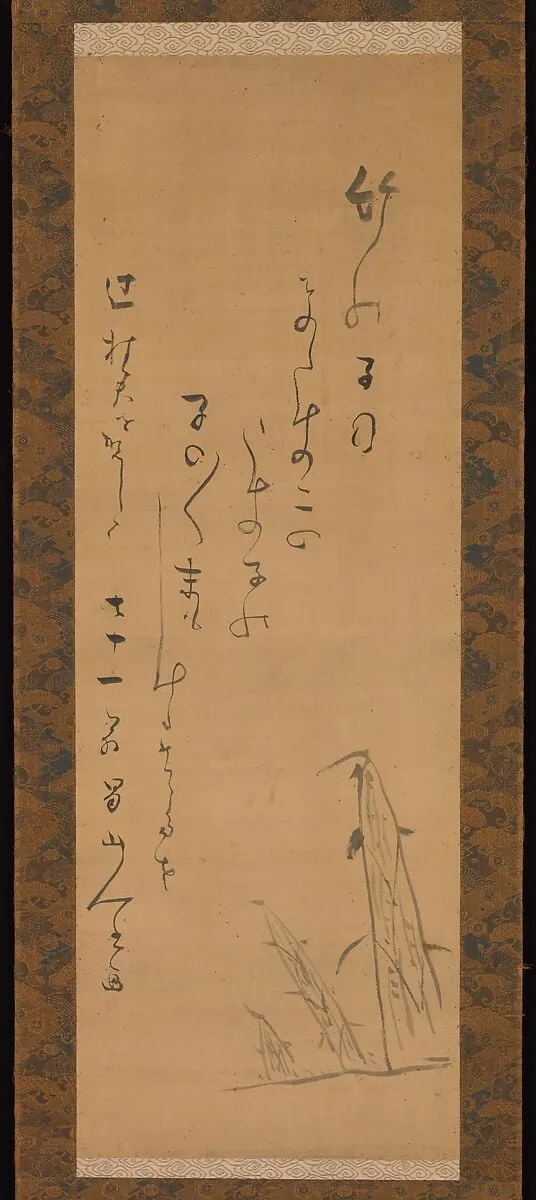
蜀山人(大田南畝)筆 筍図|Bamboo Shoots is an ink painting by the Nihonga artist Shokusanjin. It dates from 1820 and is held in the collection of the Metropolitan Museum of Art.
About this work
Subject & Meaning
Executed as an ink-on-silk hanging scroll, it belongs to the still-life genre and portrays members of the Bambusoideae subfamily.
The painting titled Bamboo Shoots was created by Shokusanjin, also known as Ōta Nanpo, in 1820. Executed as an ink-on-silk hanging scroll, it belongs to the still-life genre and portrays members of the Bambusoideae subfamily. The work measures 96.8 cm in height by 33.8 cm in width and was produced in Japan.
It entered the collection of the Metropolitan Museum of Art, where it remains on display. The depiction emphasizes the slender shoots and delicate foliage characteristic of bamboo, presenting a naturalistic rendering typical of early nineteenth-century Japanese literati painting.
Technique & Style
Executed in 1820 by the Japanese artist Shokusanjin (Ōta Nanpo), this work is a hanging scroll featuring ink applied directly onto a silk support. The painting measures 96.8 cm in height and 33.8 cm in width. Stylistically, the piece functions as a still life, focusing exclusively on the depiction of bamboo shoots (Bambusoideae).
The composition utilizes a monochromatic palette, relying solely on the tonal variations of black ink to define the form and texture of the subject against the woven silk ground. As a vertical scroll, the format is designed for wall display, characteristic of East Asian hanging scroll traditions. The handling of the ink on the smooth silk surface allows for the fluid lines and subtle gradations typical of literati-style brushwork from this period.
History & Provenance
The hanging scroll titled Bamboo Shoots was created by the Japanese artist Shokusanjin (Ōta Nanpo) in 1820. Executed in ink on silk, the work measures 96.8 cm in height and 33.8 cm in width. It was produced in Japan during the late Edo period and is held in the collection of the Metropolitan Museum of Art.
The artwork depicts bamboo shoots (Bambusoideae). No details regarding the original commission, the initial owner, or the subsequent chain of custody prior to its arrival at the museum are provided in the available records.
Overview
This hanging scroll, titled Bamboo Shoots, was created by the artist Shokusanjin (also known as Ota Nanpo) in 1820. Executed with ink on silk, the painting presents a still life composition. It features a depiction of young bamboo shoots, rendered with a delicate touch characteristic of East Asian ink painting traditions. The work exemplifies a focused approach to natural subjects.
Artist & collection

 Untitled
 Calligraphy with Willow and Swallows
 Untitled
 Autumn Moon
 Calligraphy with Willow and Swallows
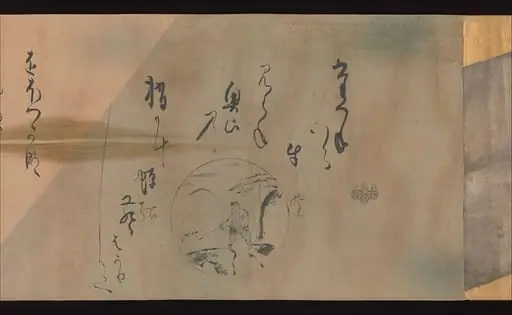 烏丸光広筆 十牛図歌賛図巻|Ten Oxherding Songs
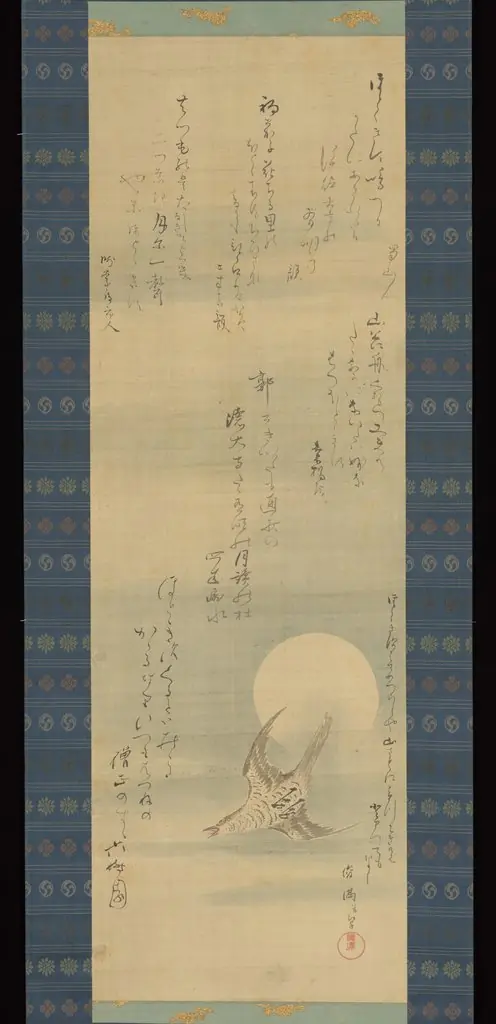 Hototogisu
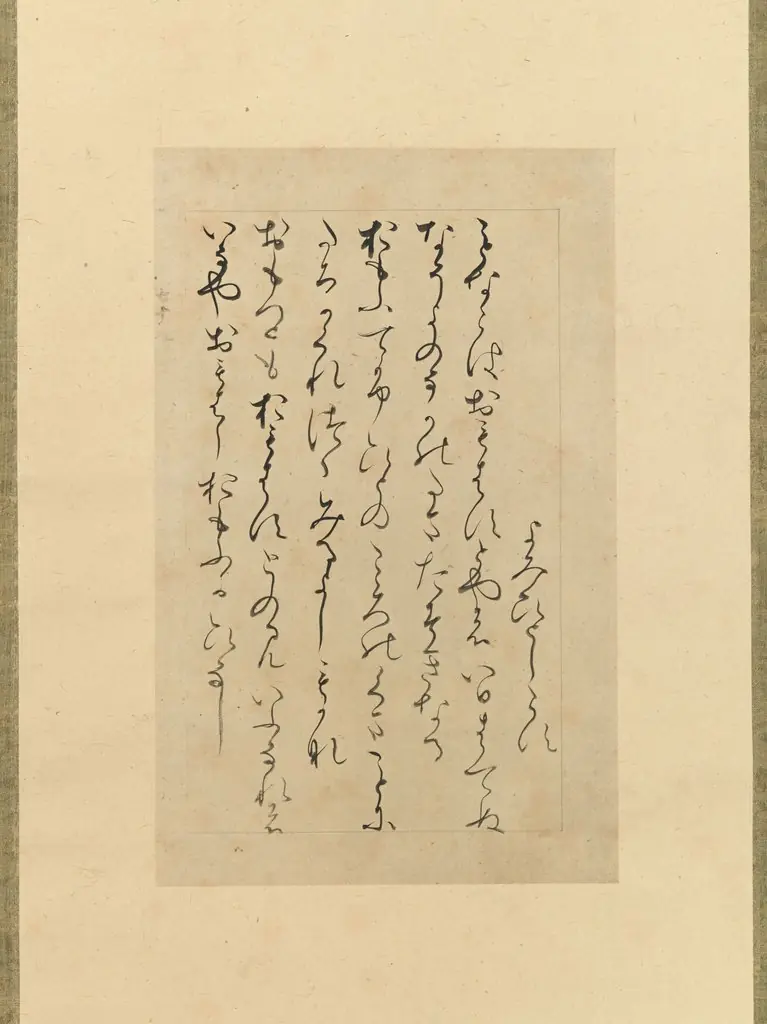 Three poems from the “Collection of Poems Ancient and Modern” (Kokin wakashū), known as the “Imaki Fragment” (Imaki-gire)
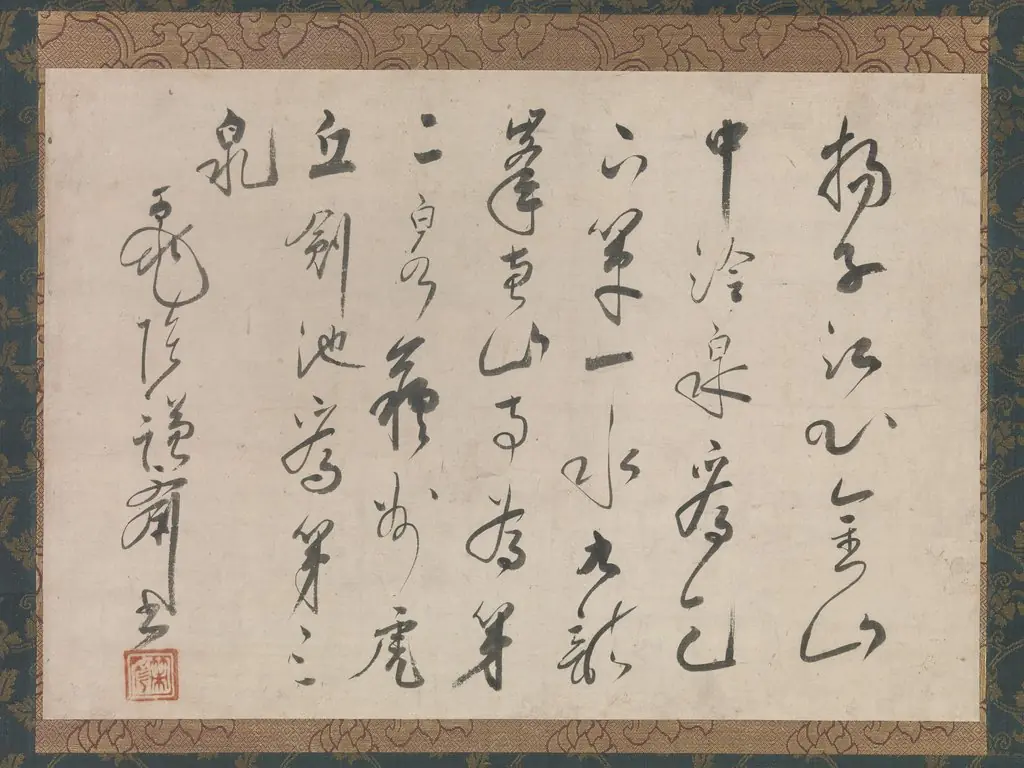 Account of the Three Springs of Jiangsu Province in China
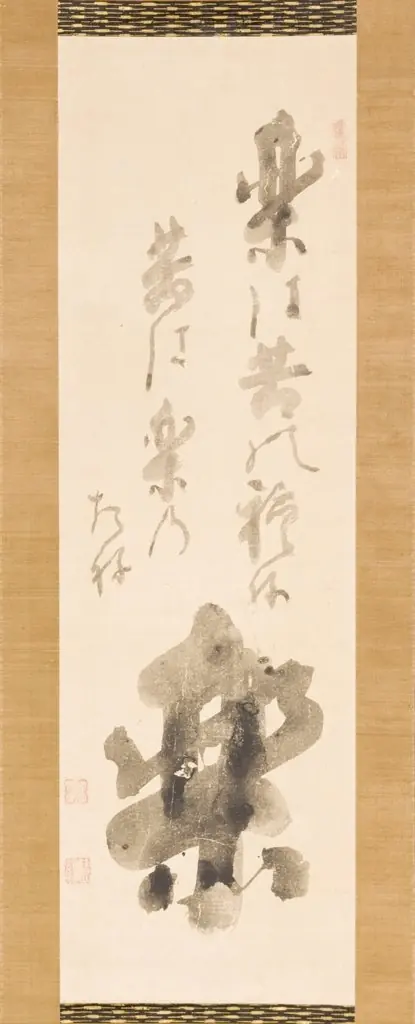 'JOY: In joy lie the seeds of sufferings; in sufferings lie the seeds of joy (RAKU: Raku wa kū no tane; Kū wa raku no tane)'
- 酒井抱一筆亀田鵬斎賛 竹雀図|Sparrow and Bamboo
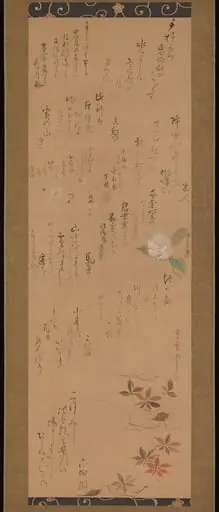 Untitled