Artwork
King Dasaratha
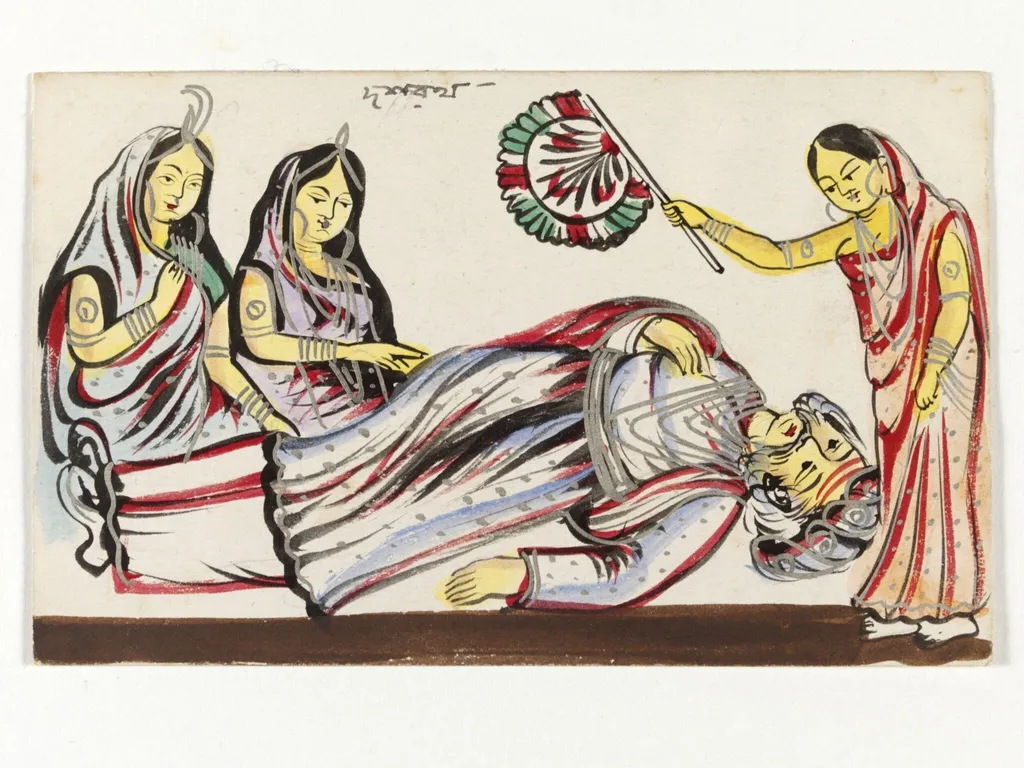
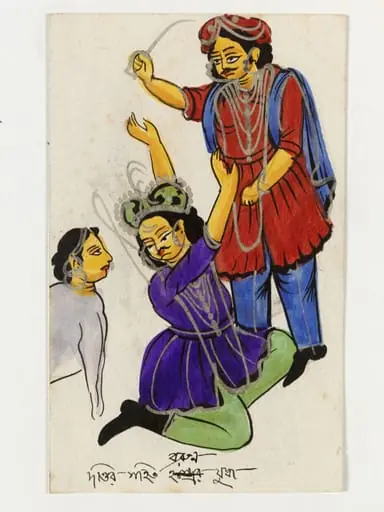
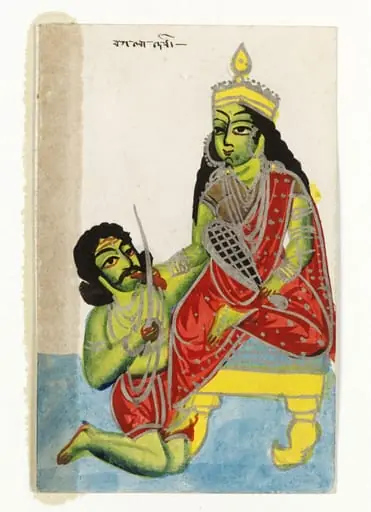
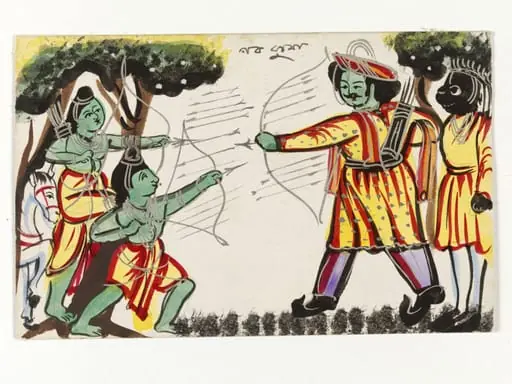
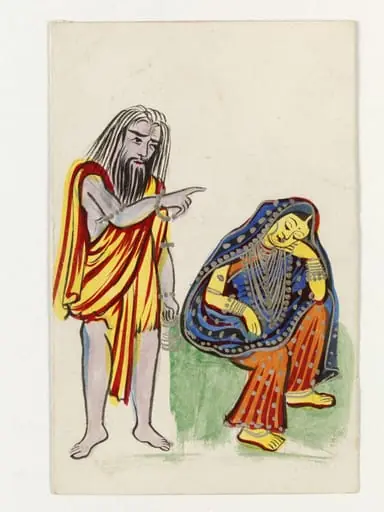
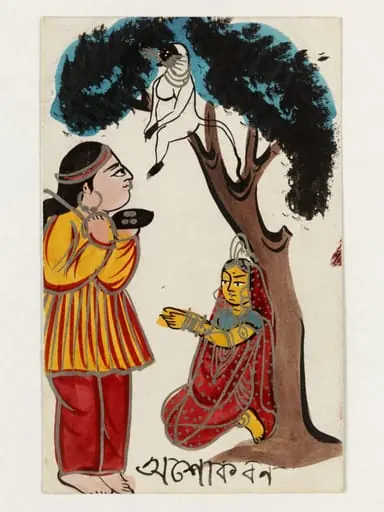
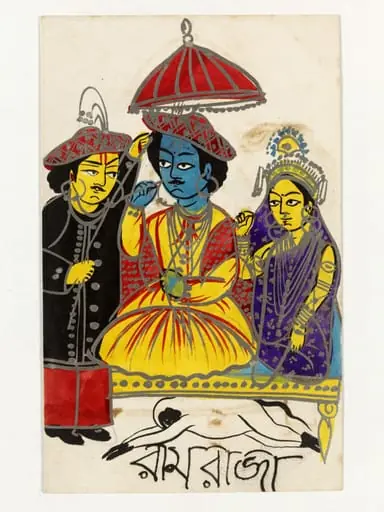
King Dasaratha is a paint painting by the Impressionist artist Unknown. It dates from 1890 and is held in the collection of the Victoria and Albert Museum. The work is a watercolor and tin‑alloy composition executed on cardboard, portraying a reclining male figure attended by three women.
About this work
Overview
The work is a watercolor and tin‑alloy composition executed on cardboard, portraying a reclining male figure attended by three women. The central figure, dressed in a long white robe striped with red and black, lies on his back with his head thrown back, while the women in traditional attire gesture gently toward him. The background is plain, emphasizing the somber interaction.
Subject & Meaning
The scene illustrates the death of King Dasaratha, a figure from Indian mythology, who succumbs to grief after his son Rama is forced into exile. The presence of the three women, often interpreted as attendants or consorts, underscores the ritual of mourning and the emotional weight of the narrative, inviting contemplation of loyalty, loss, and duty.
Technique & Style
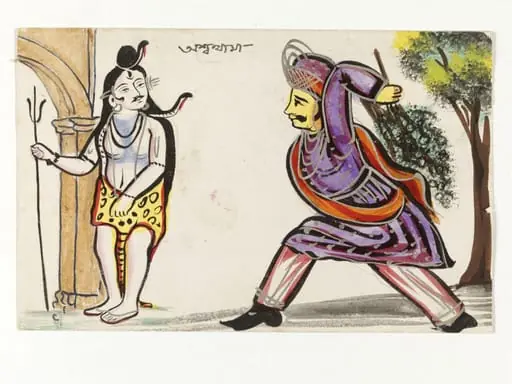
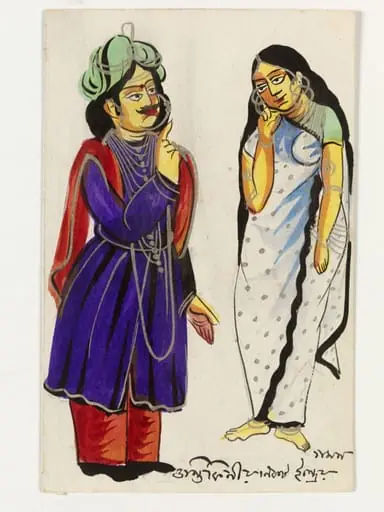
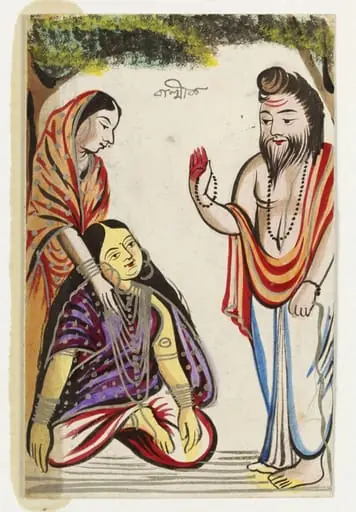
Typical of the Kalighat school of 19th‑century Calcutta, the painting employs brisk brushwork and a limited, muted palette of whites, reds, and blacks. The use of tin alloy for detailing adds subtle sheen, while the simplified forms and flattened perspective reflect the genre’s emphasis on rapid production and clear storytelling.
History & Provenance
Created in the nineteenth century, the piece belongs to the broader corpus of Kalighat paintings that emerged around the bustling Kalighat temple precincts. These works were produced for a market that spanned both local patrons and colonial observers, capturing mythological and contemporary themes in a format accessible to a diverse audience.
Context
Kalighat artists operated at a cultural crossroads, negotiating traditional Indian iconography with the visual expectations of a colonial environment. This tension is evident in the painting’s blend of devotional subject matter and a stylistic restraint that aligns with the aesthetic preferences of the period’s emerging middle class.
Artist & collection