Artwork
清 舒浩 賞蓮圖 團扇|Zhou Dunyi admiring lotus flowers
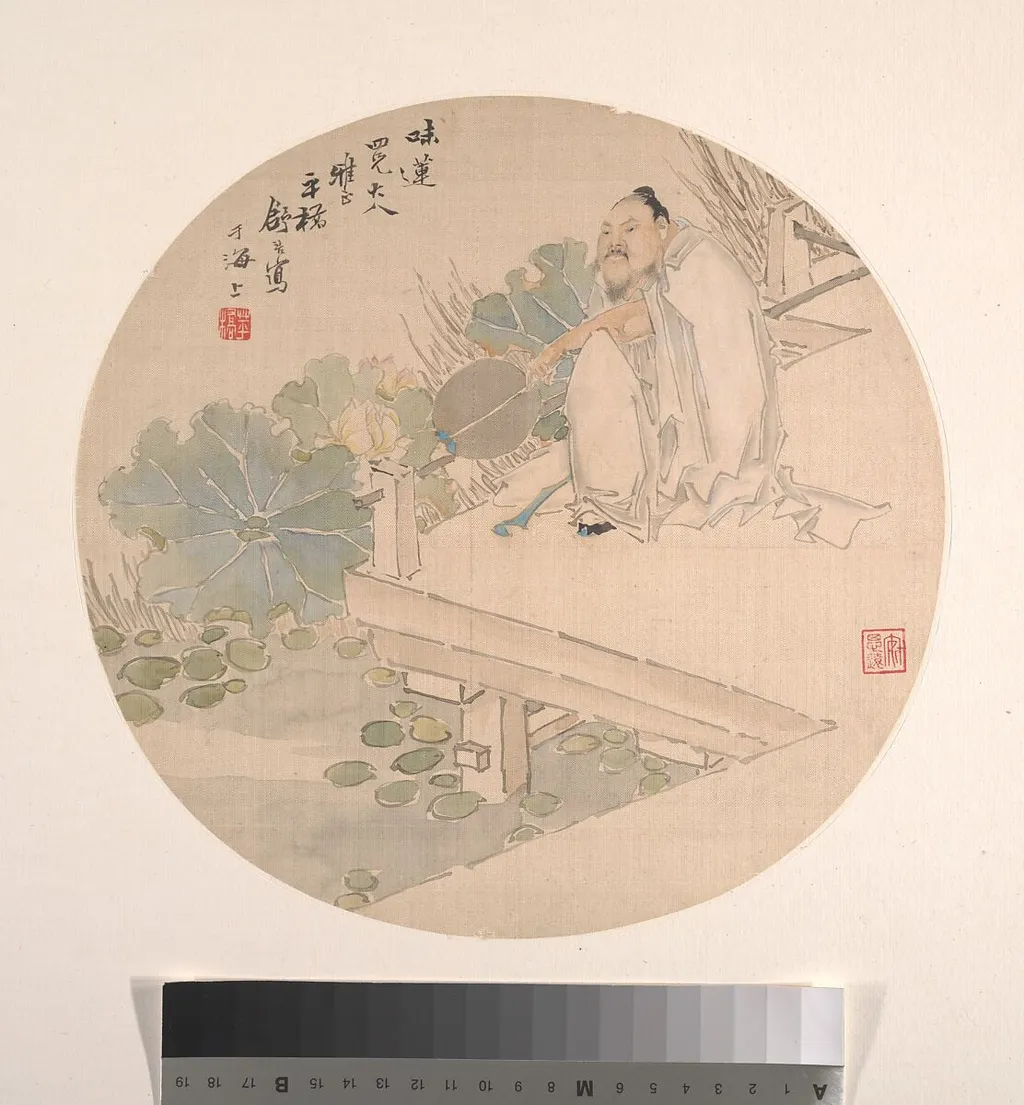
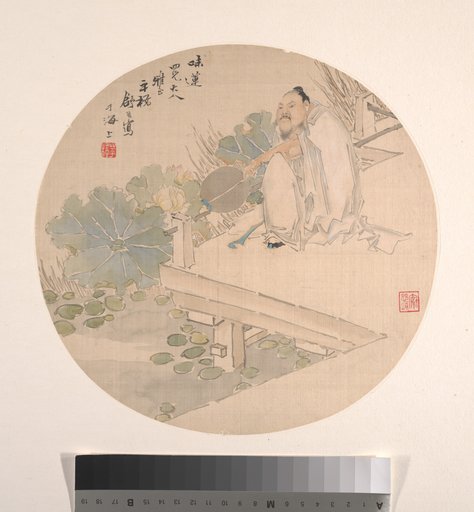
清 舒浩 賞蓮圖 團扇|Zhou Dunyi admiring lotus flowers is an ink painting by the Impressionist artist Shu Hao. It dates from 1883 and is held in the collection of the Metropolitan Museum of Art.
About this work
Overview
Shu Hao's "Zhou Dunyi admiring lotus flowers" is an ink and color painting on silk, created in 1883. This fan-shaped album leaf depicts the Song dynasty philosopher Zhou Dunyi contemplating lotus blossoms by a pond. The artwork serves as a visual homage to Zhou Dunyi's renowned essay on the symbolic purity of the lotus, a theme frequently explored in Chinese art.
Subject & Meaning
The painting centers on Zhou Dunyi, a prominent 12th-century Neo-Confucian philosopher. He is shown observing lotuses, which held deep symbolic significance for him. Zhou famously articulated that the lotus, despite growing from mud, remains unsullied, embodying the ideal of an individual maintaining integrity and moral purity amidst worldly complexities and corruption.
Technique & Style
Executed with ink and color on silk, this artwork is presented as a round, fan-shaped album leaf. The artist, Shu Hao, renders the scene with a contemplative atmosphere, depicting a man in a flowing robe standing beside a pond. Delicate pink lotus flowers emerge from the water, their forms contrasting with the subdued background, characteristic of traditional Chinese painting styles.
Context
Created centuries after Zhou Dunyi's lifetime, Shu Hao's painting serves as a visual reminder of the philosopher's enduring moral teachings. The artist's choice to depict this scene reflects a long-standing tradition in Chinese art, where the lotus frequently appears as a metaphor for virtue and resilience, often in quiet, reflective compositions that invite contemplation.
Artist & collection

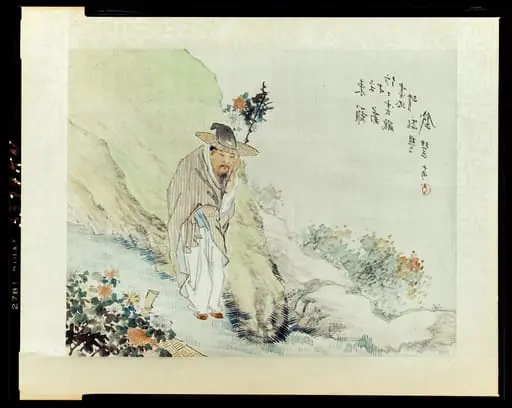
- 明/清 陳洪綬、陳字 雜畫 冊|Figures, flowers, and landscapes
 Homme descendant une colline
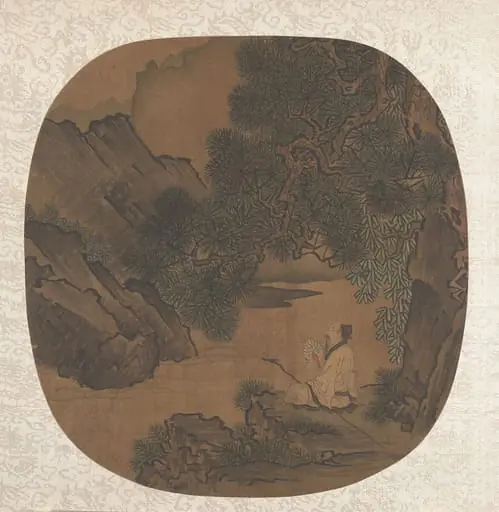 Untitled
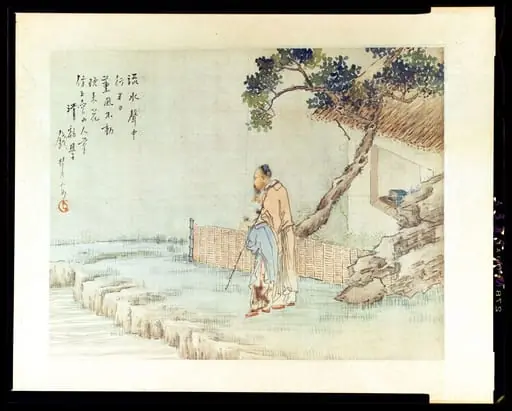 Two people walking
 清 張之萬 山水 冊頁十二開|Landscapes
 Album of Landscape Paintings Illustrating Old Poems: Two Women with Needlework in a Garden
 南宋 馬遠 高士觀瀑圖 冊頁 絹本|Scholar viewing a waterfall
 Untitled
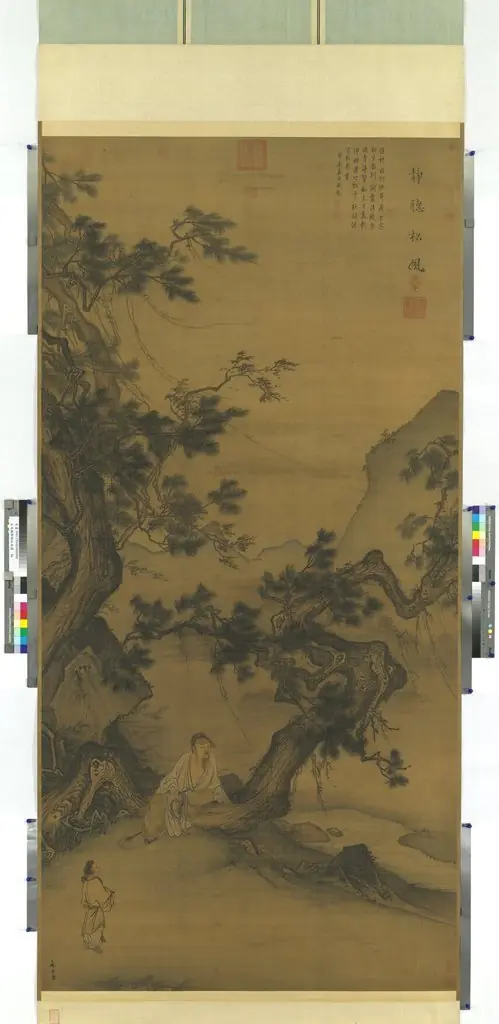 宋馬麟靜聽松風圖 軸
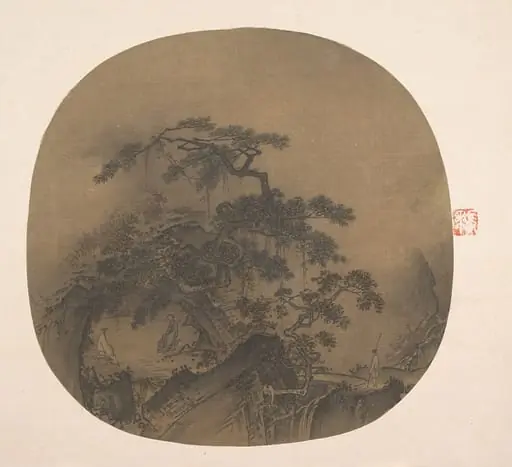 南宋 佚名 洞天論道圖 團扇|Conversation in a cave
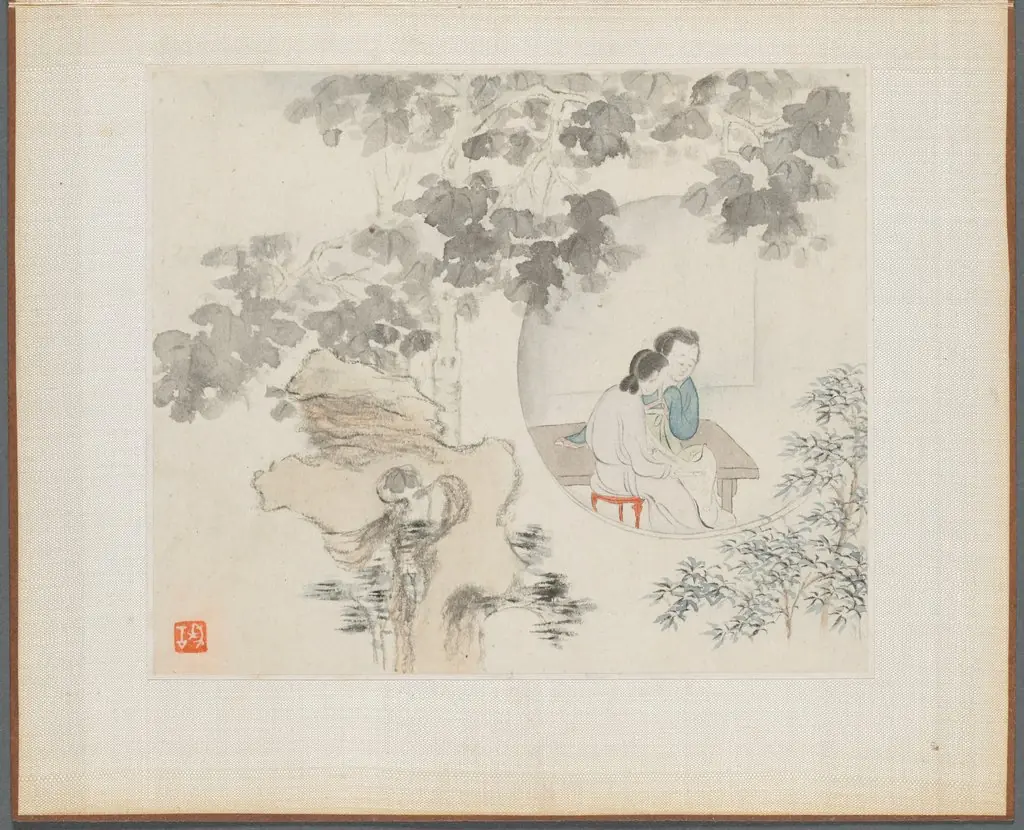 Album of Landscape Paintings Illustrating Old Poems: Two Women with Needlework in a Garden
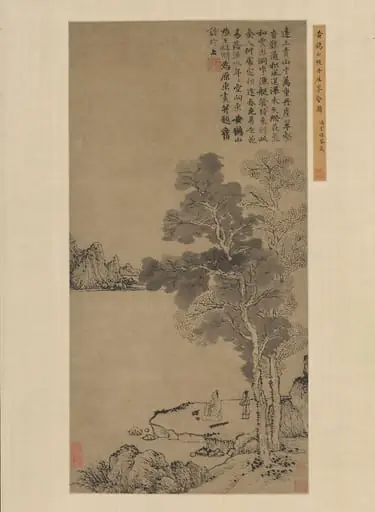 元 王蒙 丹崖翠壑圖 軸|Red Cliffs and Green Valleys