Artwork
The Meeting of David and Abigail
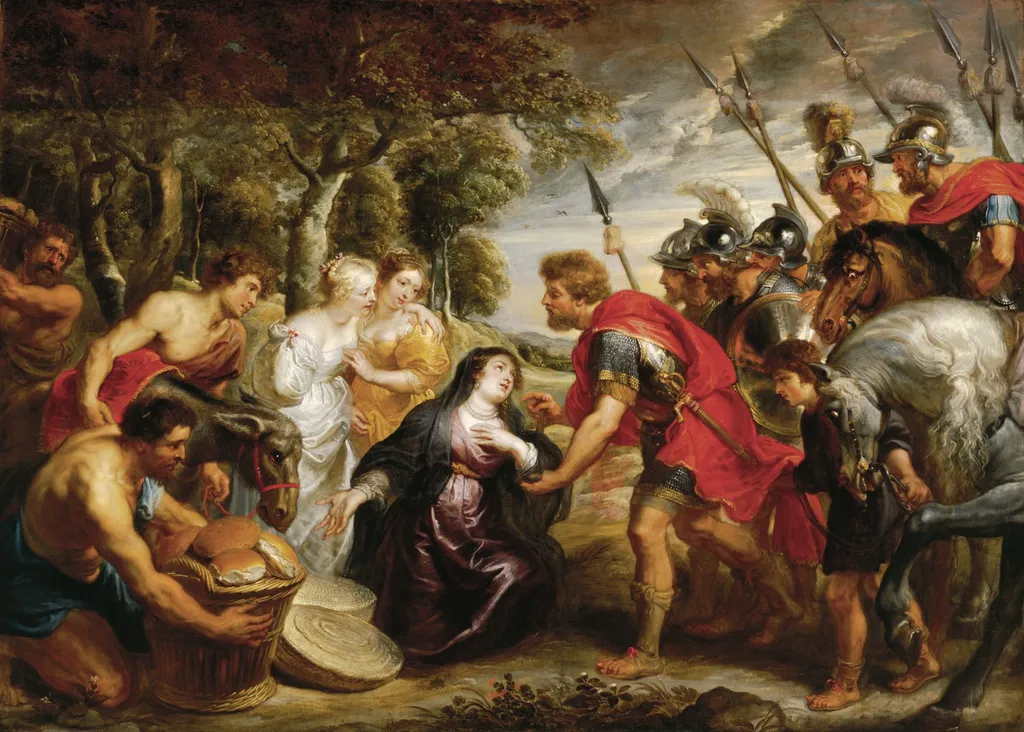
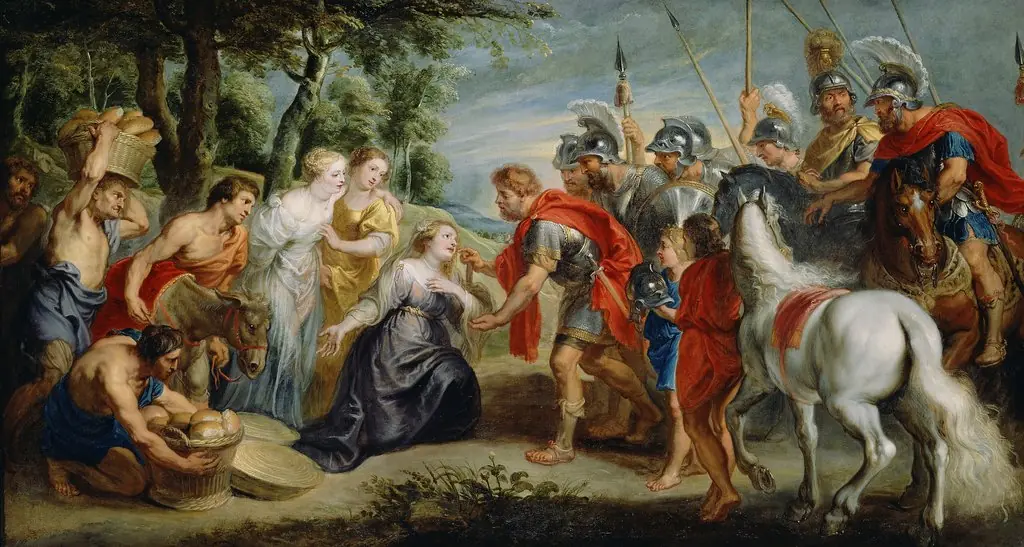
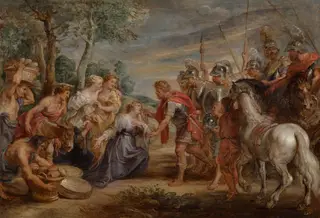
The Meeting of David and Abigail is an oil painting by the Flemish Baroque painting artist Peter Paul Rubens. It dates from 1627 and is held in the collection of the Detroit Institute of Arts.
About this work
Subject & Meaning
Abigail is shown presenting a gift while David, crowned and authoritative, listens, highlighting the contrast between royal power and humble supplication.
The work portrays the biblical moment when King David encounters Abigail, who pleads for mercy on behalf of her people, embodying themes of divine justice and diplomatic intercession. Abigail is shown presenting a gift while David, crowned and authoritative, listens, highlighting the contrast between royal power and humble supplication. The composition underscores the narrative of reconciliation and the protective role of wise counsel within Israelite society, reflecting Rubens' Counter‑Reformation emphasis on emotive storytelling and spiritual authority.
Technique & Style
The Meeting of David and Abigail is an oil painting executed on wooden panel. Its dimensions are 178.5 cm in height and 248.9 cm in width, reflecting a large-scale composition typical of Rubens' religious works. The surface bears handling marks consistent with centuries of movement, including a documented transfer to Eugène Secrétan before its acquisition by the Detroit Institute of Arts.
Stylistically, the piece combines dynamic chiaroscuro with expressive brushwork to dramatize the biblical encounter between David and Abigail, emphasizing tactile contrasts between fabric and flesh.
History & Provenance
The Meeting of David and Abigail was created by Peter Paul Rubens in 1627, executed in oil paint on panel. The painting later entered the collection of Eugène Secrétan, a known nineteenth-century collector. It subsequently passed into the holdings of the Detroit Institute of Arts, where it is currently located.
The work is held by the Detroit Institute of Arts, where it is accessioned under inventory number 71.145. It entered the museum's collection through the bequest of Eugène Secrétan. The painting was exhibited in the museum's 1949 Rubens retrospective and has been part of subsequent European Old Masters displays.
Context
The Meeting of David and Abigail (1627) is a religious painting by Peter Paul Rubens depicting the biblical encounter between King David and Abigail, daughter of Nabal. Executed in oil on wood panel, the work measures 178.5 cm in height and 248.9 cm in width. Originally owned by Eugène Secrétan, it now resides in the collection of the Detroit Institute of Arts in Detroit.
The painting has been studied within the broader context of Rubens' religious works and his influence on Baroque art, reflecting his mastery in narrative composition and chiaroscuro. Its scholarly significance is underscored by its inclusion in collections of Baroque masterpieces and its role in discussions of 17th-century European religious art.
The attribution and dating of the work have been confirmed through archival records and technical analysis, aligning with Rubens' known practice of biblical storytelling. Its placement within Rubens' oeuvre is contextualized by his extensive production of religious subjects during the early 17th century, a period marked by his active engagement with Counter-Reformation themes. The painting's provenance and current location are well documented in institutional records and art historical literature.
Overview
Created in 1627 by the Flemish painter and diplomat Peter Paul Rubens, this oil on canvas belongs to the Baroque period of the Low Countries. The composition is bustling, set in a wooded landscape where numerous figures interact. Central to the scene are two women in contrasting dresses, a spear‑bearing man, and a group of armored soldiers, all rendered with vigorous movement and dramatic lighting.
Own this work as a print
Artist & collection
Artist
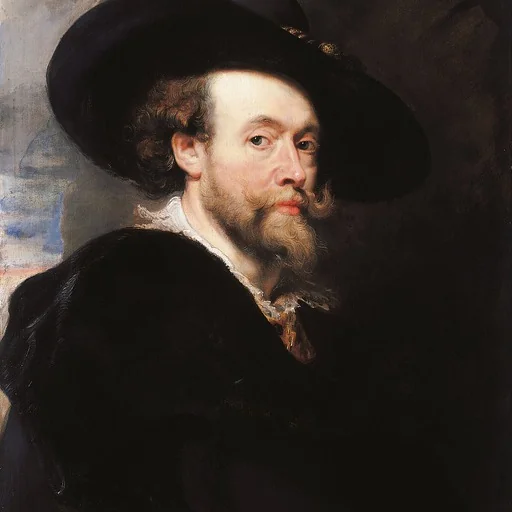
Sir Peter Paul Rubens ( ROO-bənz; Dutch:; 28 June 1577 – 30 May 1640) was a Flemish artist and diplomat.