Artwork
Banks of the River (Les Bords de rivière)
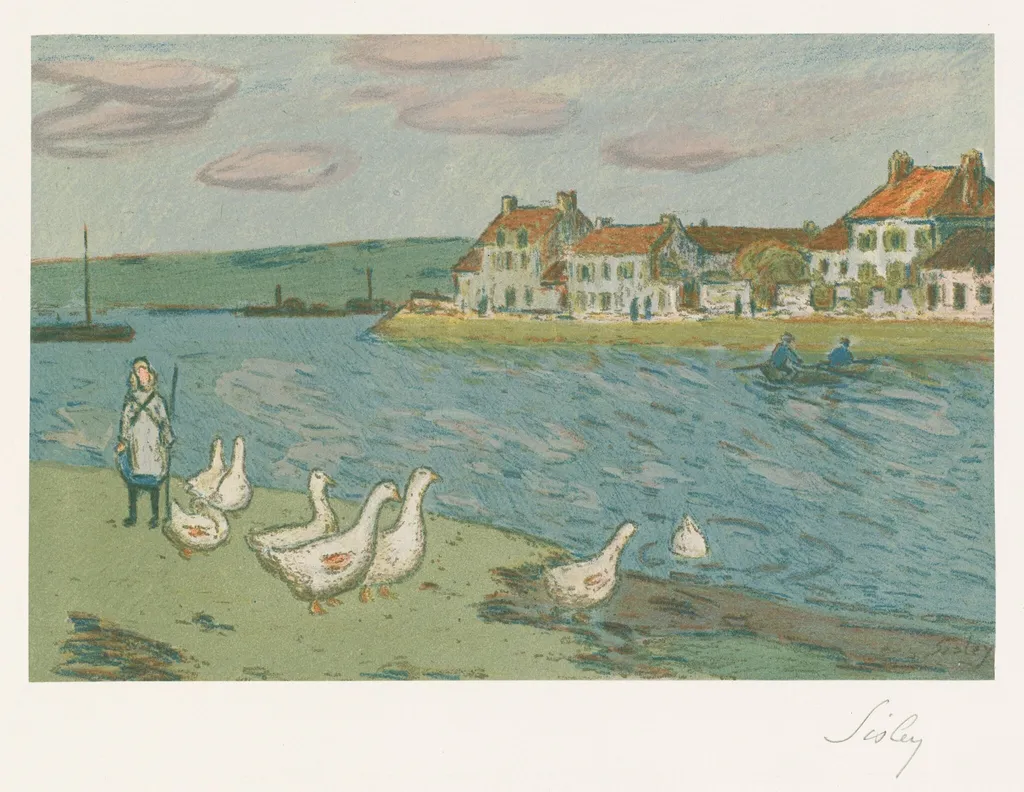
Banks of the River (Les Bords de rivière) is an ink print by the Impressionist artist Alfred Sisley. It dates from 1897 and is held in the collection of the National Gallery of Art.
- Inscription
- Inscribed:recto: in stone, in image, at lower right: Sisley; in graphite, below image, at right: Sisley; in graphite, in bottom left corner: 11; verso: none
- Markings
- Marked:none
About this work
Overview
As a print, it reflects his lifelong commitment to capturing outdoor scenes with immediacy and sensitivity to atmospheric conditions.
Created in 1897, Banks of the River (Les Bords de rivière) is a color lithograph by Alfred Sisley, executed on wove paper. As a print, it reflects his lifelong commitment to capturing outdoor scenes with immediacy and sensitivity to atmospheric conditions. Though primarily known as a painter, Sisley explored lithography late in his career, using the medium to extend his exploration of light and landscape without abandoning his core aesthetic.
Subject & Meaning
The scene depicts a tranquil riverside: a woman in a dark coat stands near the water, her gesture ambiguous, perhaps shielding her eyes from sunlight or signaling to someone in the distance. Four ducks move through shallow water at her feet, while two figures drift in a small boat beyond. The quiet, uneventful composition conveys a moment of stillness, emphasizing the harmony between human presence and the natural environment, a recurring theme in Sisley’s work.
Technique & Style
Sisley employed loose, rapid brushwork to suggest rather than define forms, allowing tones of sky, water, and earth to merge softly. The lithographic process enabled subtle layering of color, enhancing the luminosity of the scene. Rather than precise detail, the image relies on tonal gradations and fragmented marks to evoke the fleeting effects of daylight, consistent with Impressionist principles adapted to printmaking.
History & Provenance
This print was made in 1897, near the end of Sisley’s life, during a period when he increasingly turned to print media. It was likely produced in a small edition, as was typical for artist lithographs of the time. No major public collection records its early ownership, but it remains part of the broader corpus of his graphic work, valued for its intimate scale and technical restraint.
Context
In the late 1890s, Sisley lived in relative isolation near Paris, continuing to paint and print landscapes despite financial hardship and limited recognition. While contemporaries experimented with new styles, he remained devoted to plein air observation. His use of lithography reflected a practical and artistic desire to disseminate his vision beyond oil paintings, aligning with broader trends in artist-led print production of the era.
Legacy
Though less prominent than his paintings, Sisley’s lithographs, including this one, demonstrate his adaptability within the Impressionist framework. They offer a quieter, more intimate view of his vision, emphasizing atmosphere over narrative. Today, these prints are studied for their technical nuance and their role in expanding the boundaries of printmaking as a vehicle for landscape expression.
Own this work as a print
Artist & collection
Artist
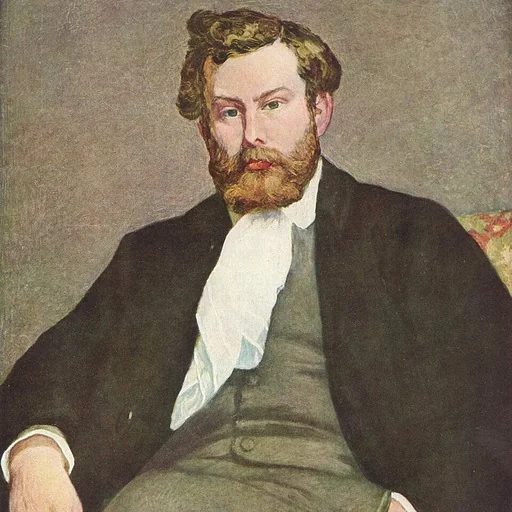
Alfred Sisley (; French:; 30 October 1839–29 January 1899) was a French-Born British Impressionist landscape painter who was born to British parents, but spent most of his life in France.

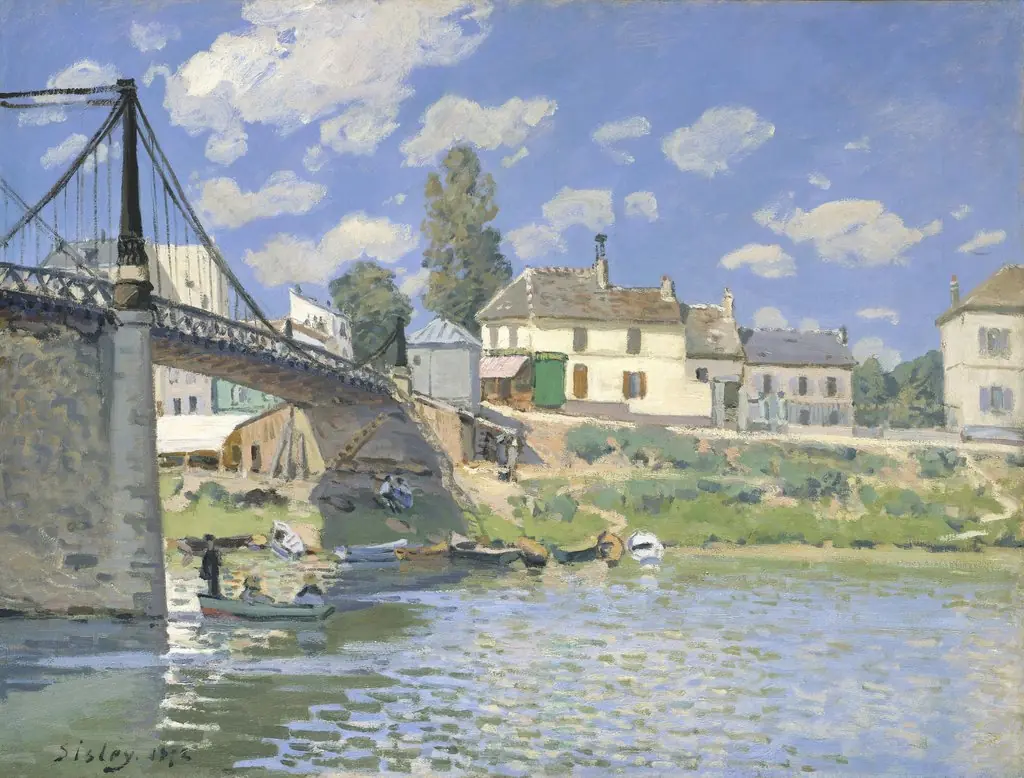
 Barges on the Loing at Saint-Mammès
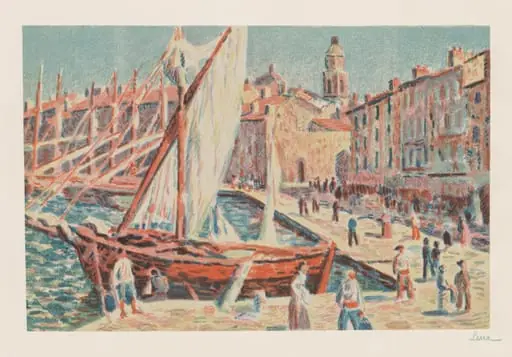 Saint-Tropez
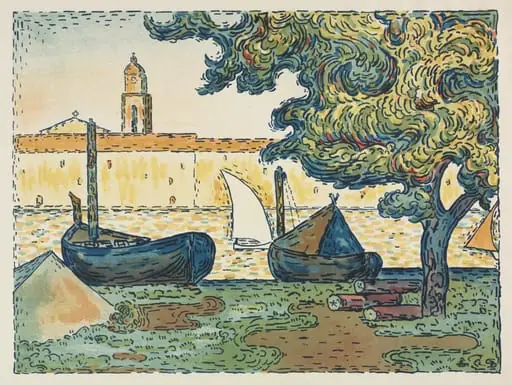 St. Tropez (The Port of St. Tropez)
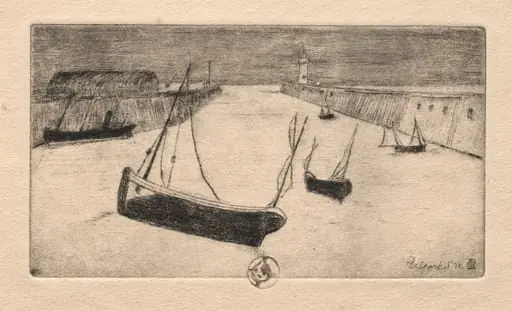 Six Etchings: Tréport
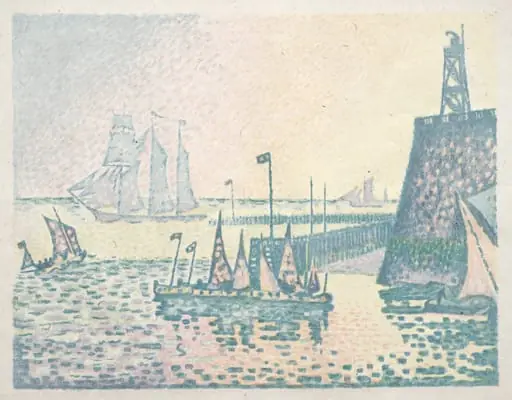 Evening, The Jetty at Vlissingen
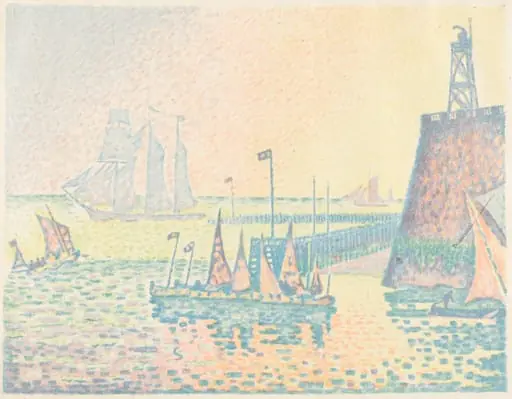 Evening (Le soir)
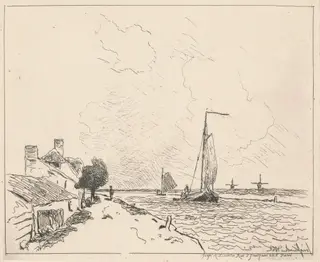 Two Boats at Sail (Les deux Barques à voile)
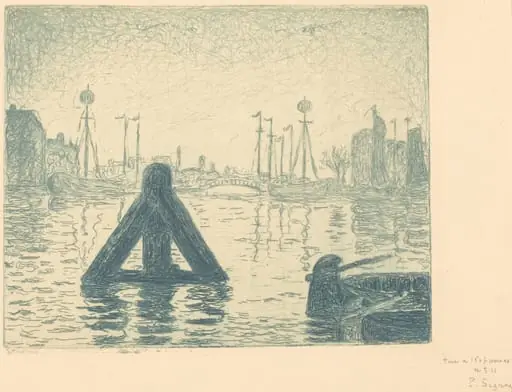 Harbor in Holland - Flushing (La balise - En Holland, Flessingue)
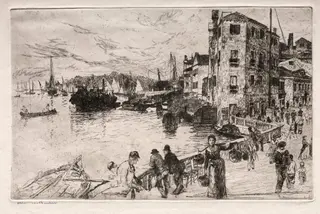 Etchings of Venice: Castello Quarters, Riva
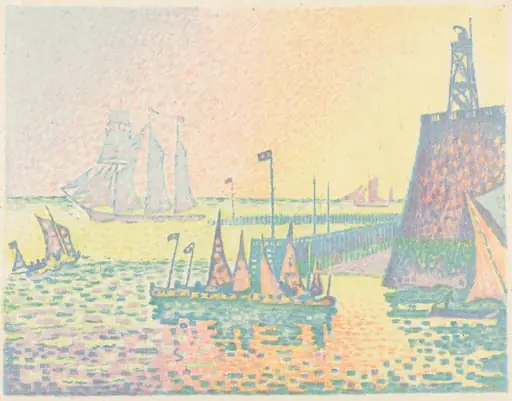 Evening (Le soir)
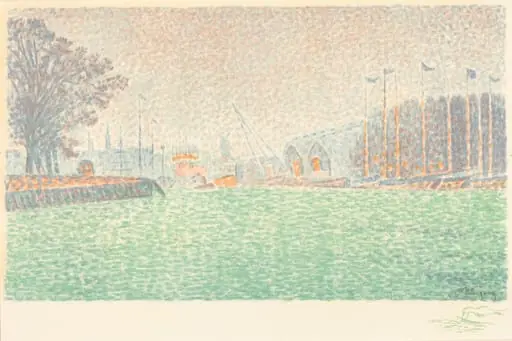 At Flushing (A Flessingue)
- The River Bank or Geese