Artwork
Tomb of Sterne's Eliza, Culpee
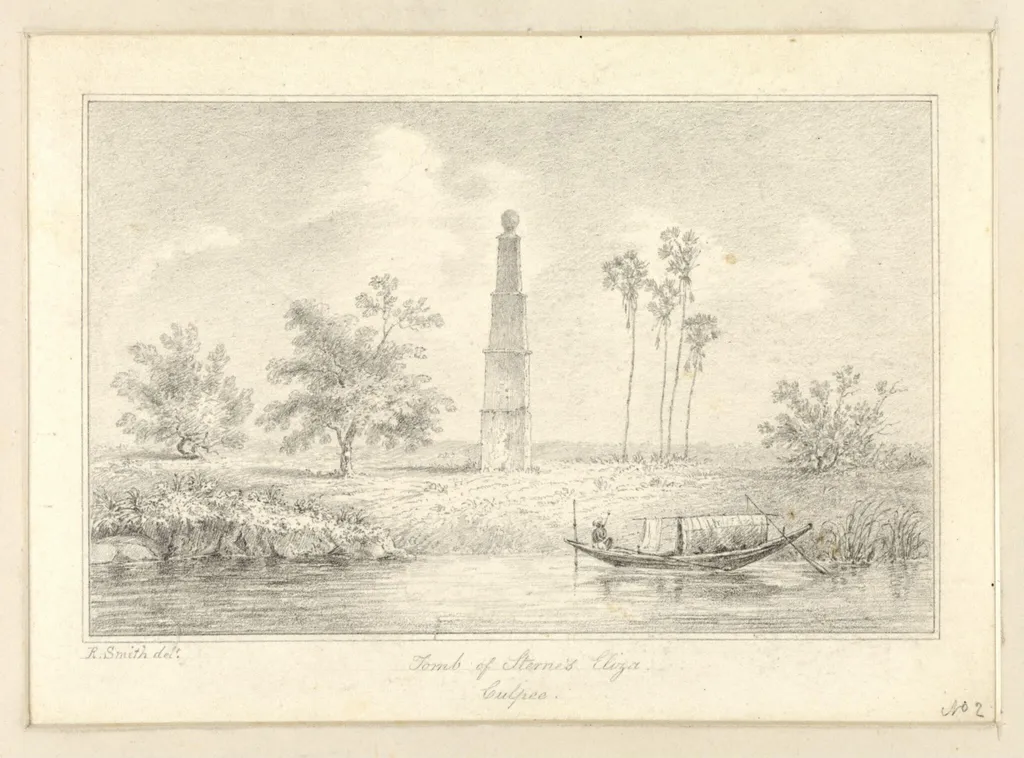
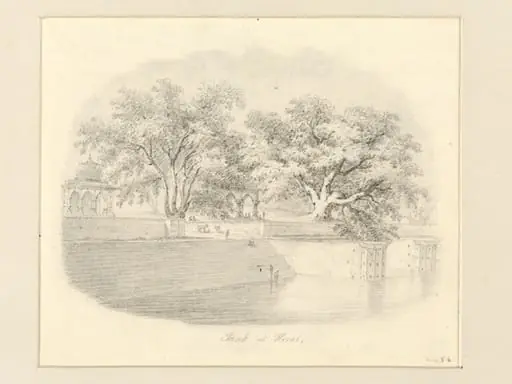
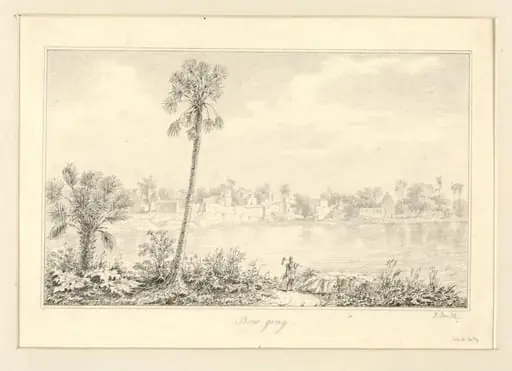
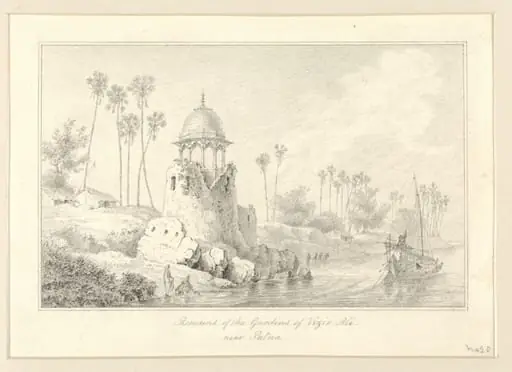
Tomb of Sterne's Eliza, Culpee is a drawing by the Romanticist artist Robert Captain Smith. It dates from 1830 and is held in the collection of the Victoria and Albert Museum.
About this work
The title points to Eliza Draper, a woman who once met writer Laurence Sterne in London.
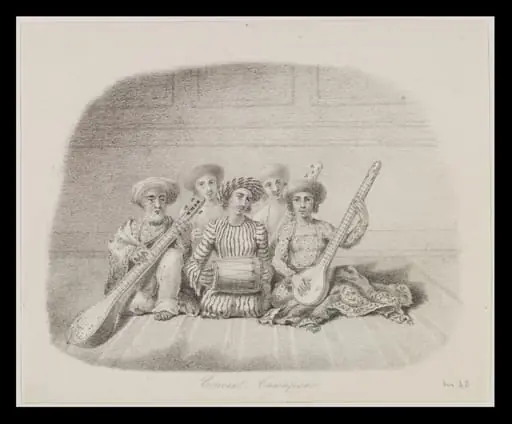
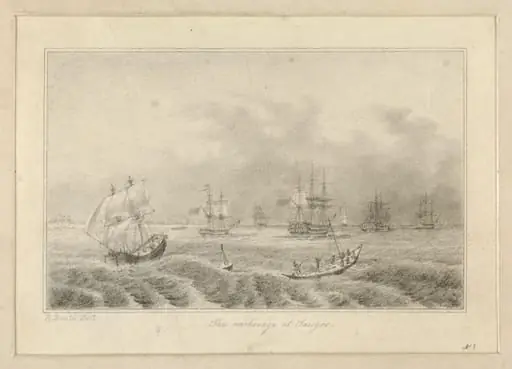
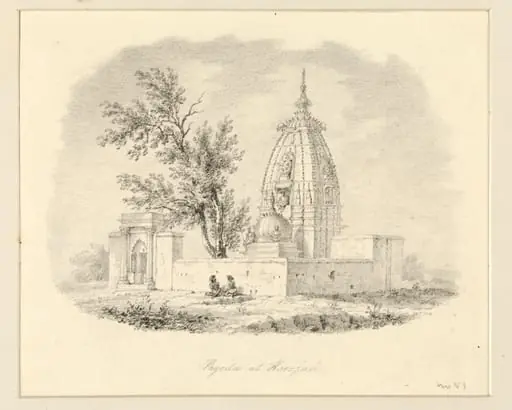
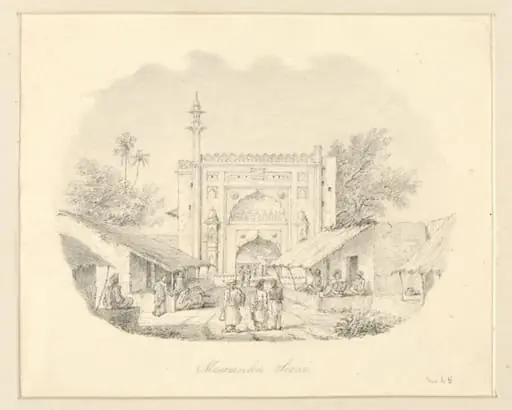
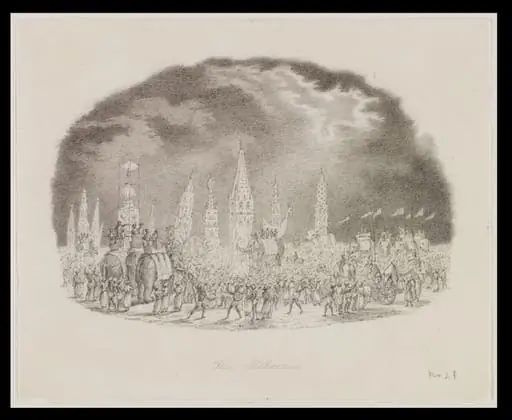
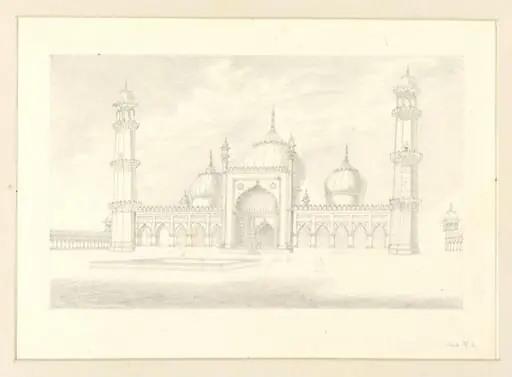
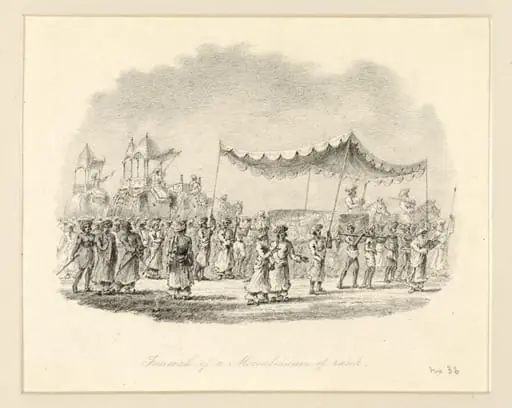
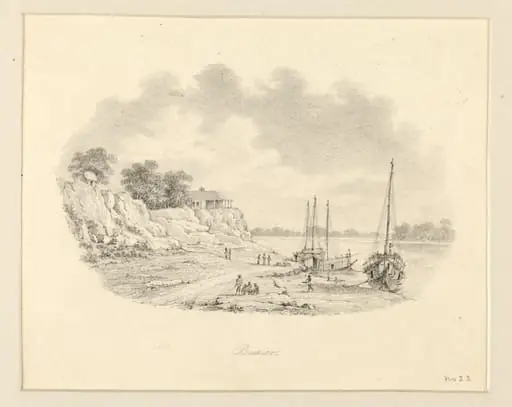
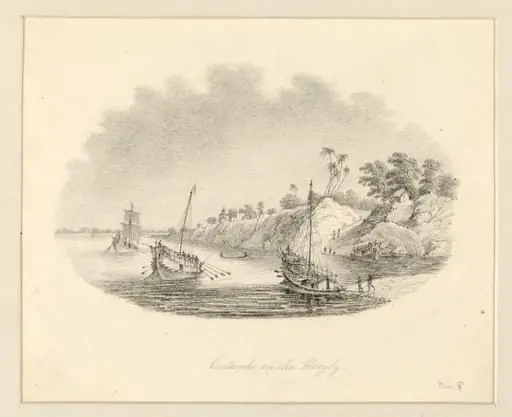
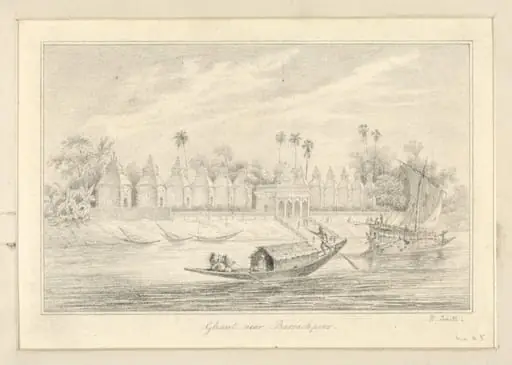
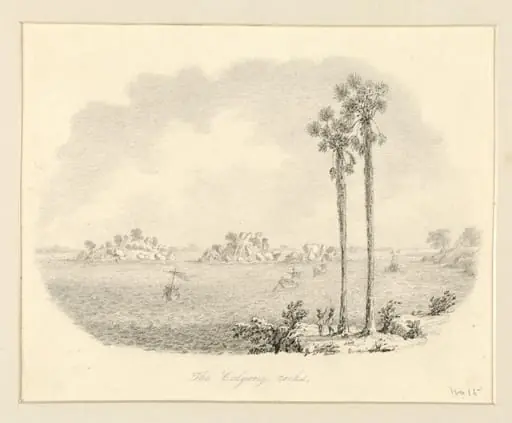
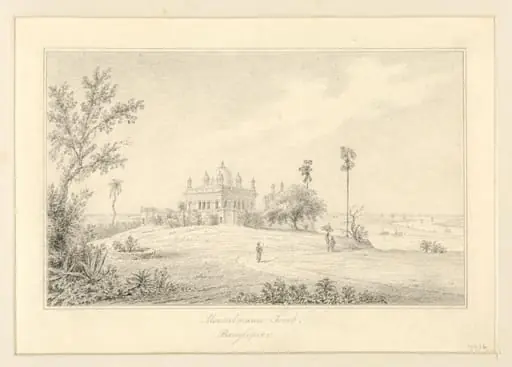
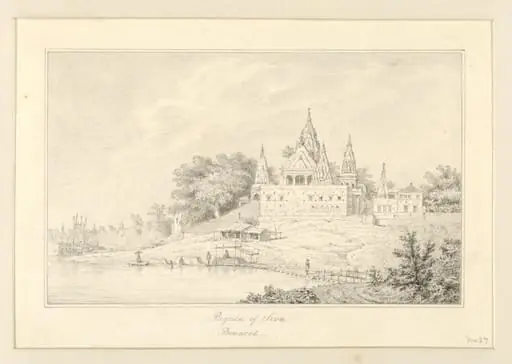
Captain Robert Smith drew this landscape during his travels in India. It’s part of his sixty-five-pencil “Pictorial Journal” from 1828-33. The title points to Eliza Draper, a woman who once met writer Laurence Sterne in London.
Smith served with Britain’s 44th Regiment and retired to Ireland in 1833. The drawings mix personal notes with sketches of rivers, tombs, and cities.
Want more like this? Check out the Victoria and Albert Museum.
Overview
This pencil drawing is one of sixty-five folios in Captain Robert Smith’s unpublished Pictorial Journal of Travels in Hindustan, created between 1828 and 1833. Commissioned during his service with the 44th Regiment, the journal documents his journeys along the Ganges and through northern Indian cities. Smith continued refining the work after retiring to Ireland in 1833, completing it in 1845.
The drawing bears the caption 'Tomb of Sterne's Eliza, Culpee,' linking a local site to a literary figure from a century prior.
Subject & Meaning
The drawing references Eliza Draper, an Anglo-Indian woman who briefly met author Laurence Sterne in London in 1767. Though Sterne later fictionalized their encounter in his writings, Draper actually died and was buried in Bristol, not India. Smith’s depiction of a tomb at Kulpi, south of Calcutta, reflects a romanticized conflation of place and literary memory, revealing how European travelers projected literary narratives onto unfamiliar landscapes, even when historically inaccurate.
Technique & Style
Executed in pencil, the drawing belongs to a series of topographical sketches that blend observational detail with personal annotation. Smith’s lines are precise yet unembellished, capturing architectural forms and landscape features without dramatic flourish. The absence of color and the diary-like quality of accompanying text suggest a private, documentary intent rather than public display. The composition emphasizes spatial clarity, typical of military surveying traditions of the era.
History & Provenance
Captain Robert Smith, a British officer stationed in India, compiled the journal during and after his service, completing it in 1845 after returning to Ireland. The drawings remained unpublished and largely unknown until their later acquisition by institutional collections. The folio’s title and subject reflect 19th-century European fascination with literary associations in colonial spaces, even when those associations were geographically or historically misplaced.
Context
Smith’s travels occurred during a period of heightened British interest in India’s cultural and historical sites, often filtered through literary and romantic lenses. The misattribution of Eliza Draper’s burial site mirrors broader tendencies among colonial travelers to overlay European literary memory onto Indian geography. Kulpi, a modest riverside village, became a symbolic locus for a story that never unfolded there, revealing the interplay between imagination and exploration in colonial documentation.
Legacy
The Pictorial Journal survives as a quiet testament to the personal engagement of British officers with India’s landscapes and histories. While not widely known in its time, the collection offers insight into how colonial subjects were interpreted through personal, literary, and often inaccurate frameworks. Today, it contributes to scholarly understanding of 19th-century visual culture and the construction of colonial memory.
Own this work as a print
Artist & collection