Artwork
Tiger
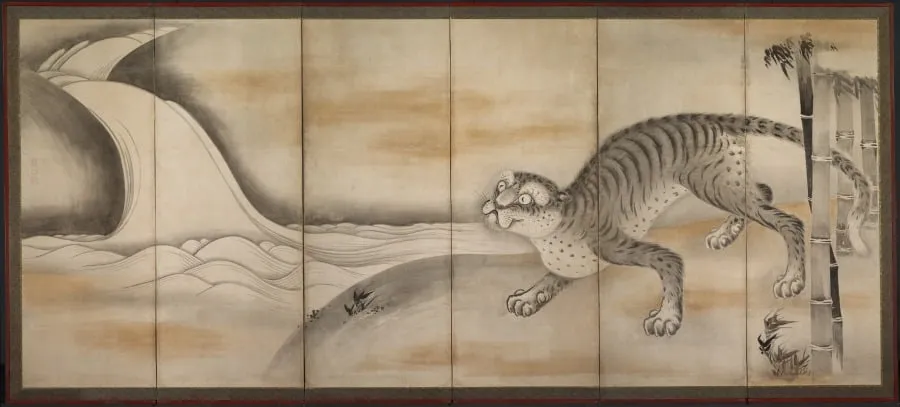
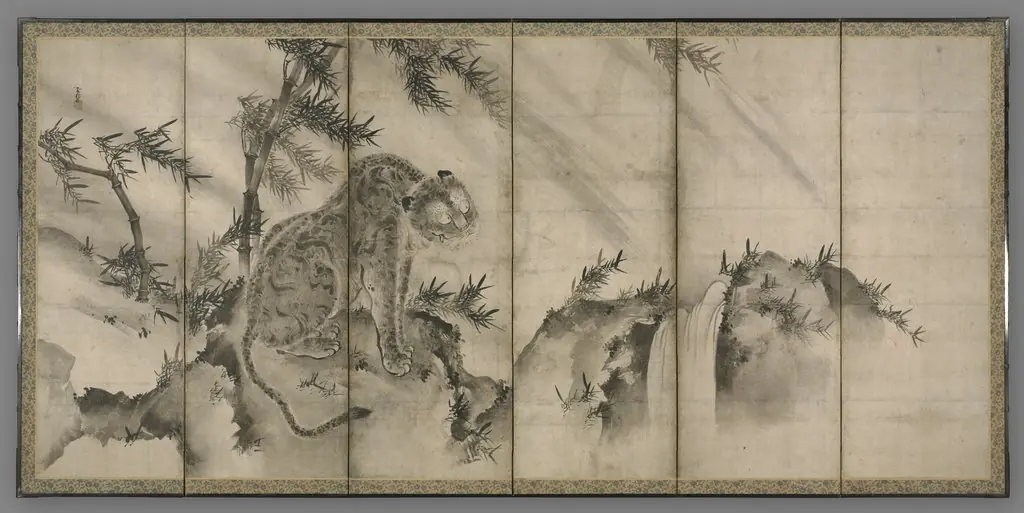
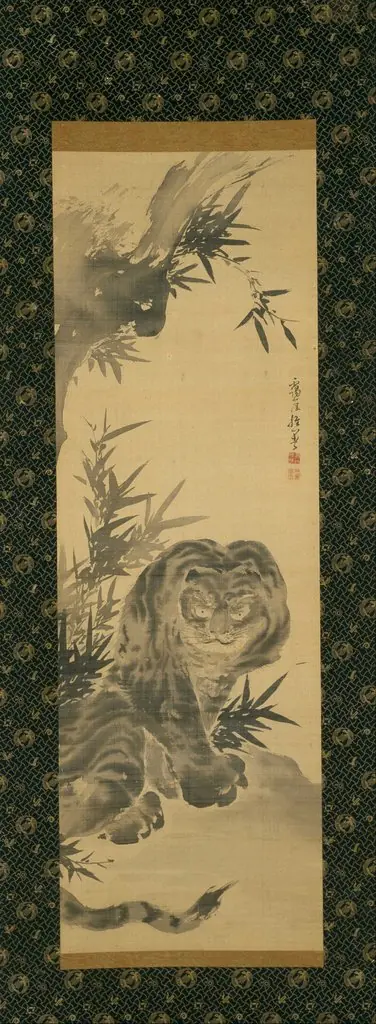
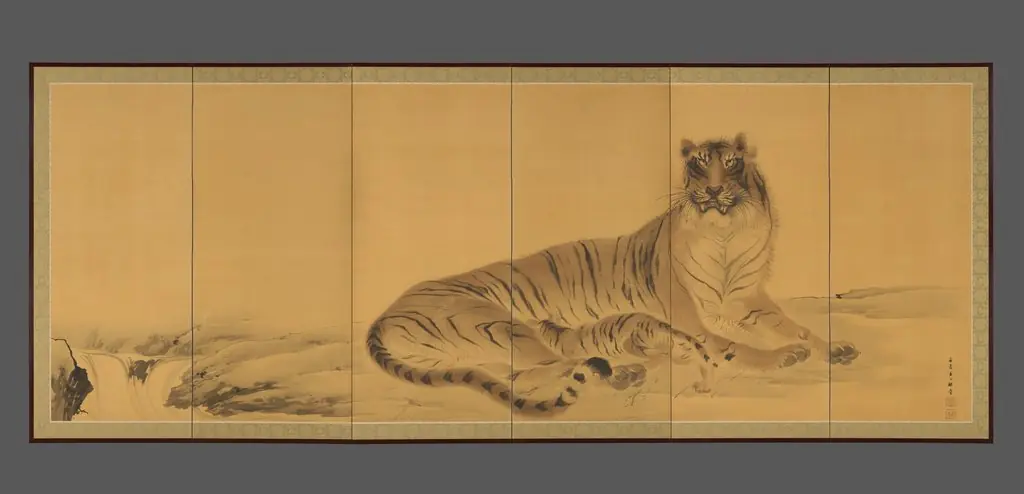
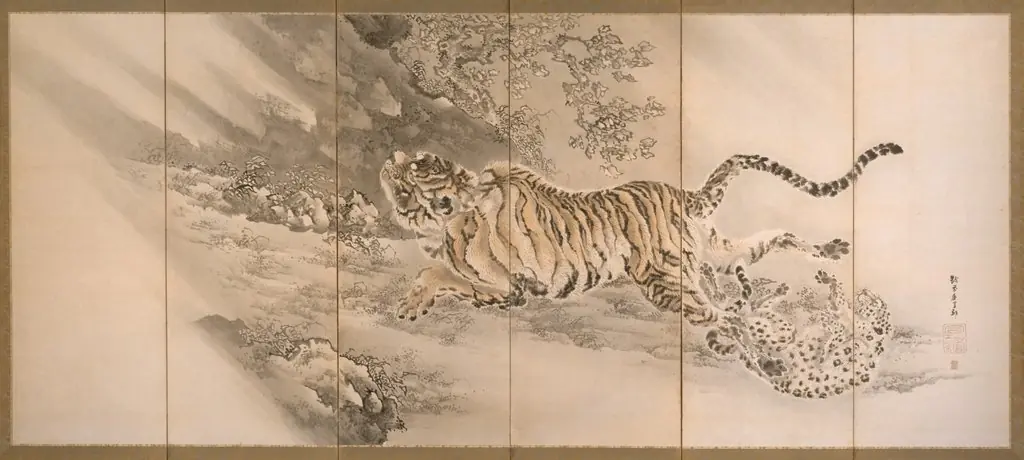
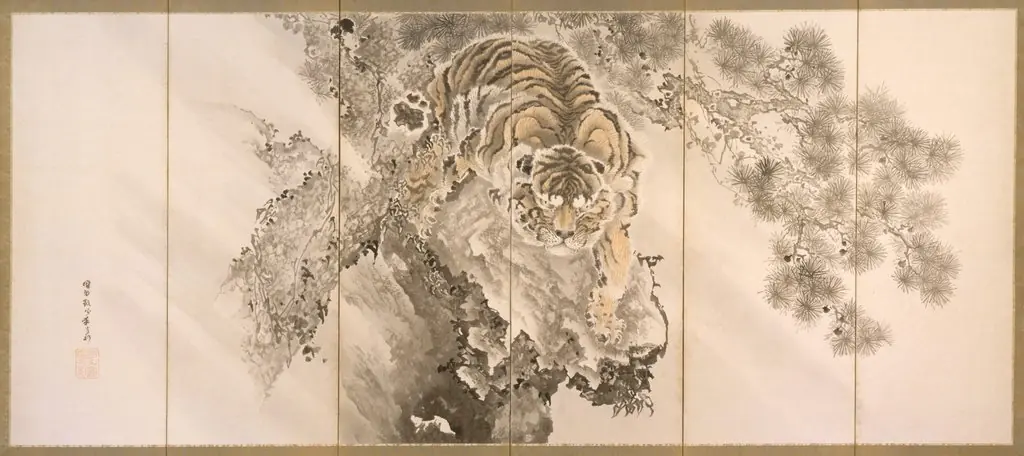
Tiger is an unspecified painting by the Baroque artist Soga Nichokuan. It dates from 1604 and is held in the collection of the Cleveland Museum of Art.
- Accession no.
- 1985.134.2
- Credit line
- Leonard C. Hanna Jr. Fund
About this work
Overview
The composition balances dynamic movement with natural stillness, reflecting traditional East Asian cosmological principles.
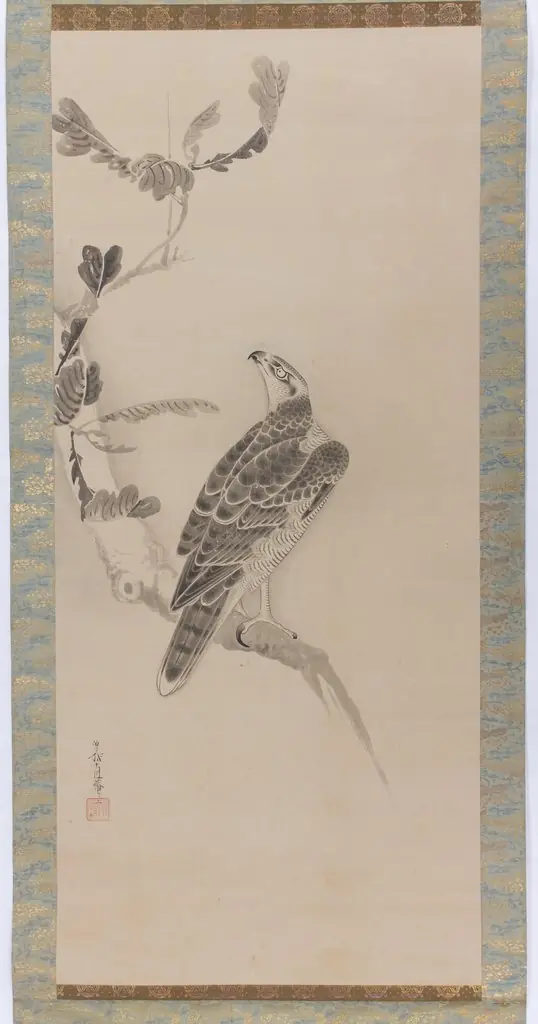
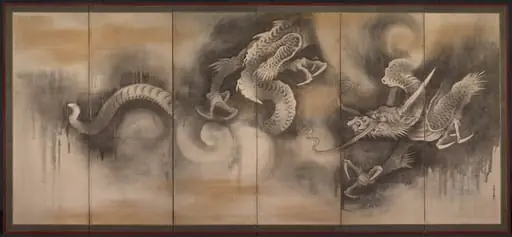
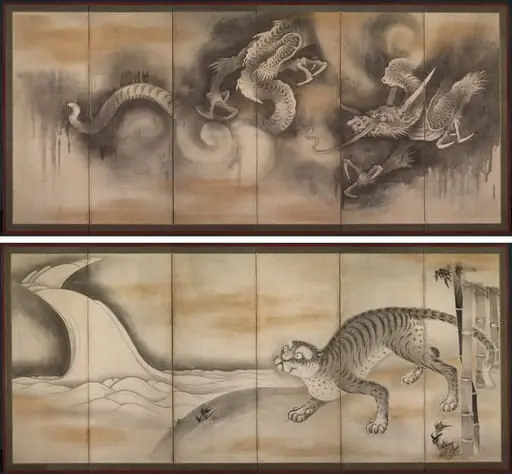
This folding screen depicts a tiger emerging from a bamboo thicket, gazing toward a cascading waterfall, while a dragon soars through turbulent clouds on the opposite panel. The composition balances dynamic movement with natural stillness, reflecting traditional East Asian cosmological principles. The work is attributed to Soga Nichokuan, a painter associated with Sakai, known for his depictions of birds of prey.
Subject & Meaning
The tiger and dragon are paired as complementary forces: the tiger, grounded and earth-bound, embodies yin, passive, receptive energy, while the dragon, ascending through the heavens, represents yang, active, expansive power. Their juxtaposition suggests harmony between opposing elements of nature and the cosmos, a common theme in Zen-influenced ink painting that seeks balance rather than conflict.
Technique & Style
Executed in ink and light color on paper, the painting employs expressive brushwork to convey texture and motion. The tiger’s fur is rendered with rapid, controlled strokes, while the dragon’s form dissolves into misty clouds using diluted ink washes. Bamboo stalks are drawn with precise, angular lines, contrasting with the fluidity of water and air, demonstrating a refined command of monochrome tonality and spatial depth.
History & Provenance
Signed and sealed by Soga Nichokuan, the work aligns with a regional tradition of Sakai-based artists active in the late Muromachi to early Edo periods. Though little is documented about Nichokuan’s life, his known oeuvre centers on raptors, making this tiger-and-dragon screen an unusual and significant departure. Its survival and attribution suggest it was valued by collectors within a scholarly or monastic circle.
Context
During the 16th and 17th centuries, ink paintings featuring mythological animals were popular among elite patrons who appreciated their philosophical undertones. Such screens often adorned Zen temples or samurai residences, serving as visual meditations on cosmic order. The pairing of tiger and dragon reflects broader East Asian iconography, rooted in Daoist and Buddhist thought, rather than literal naturalism.
Legacy
This screen stands as a rare example of Nichokuan’s non-avian subject matter, expanding understanding of his artistic range. It contributes to the study of regional painting styles outside Kyoto and Edo centers, highlighting Sakai’s role in the transmission of ink traditions. The work remains a quiet testament to the enduring symbolic language of yin and yang in Japanese visual culture.
Artist & collection