Artwork
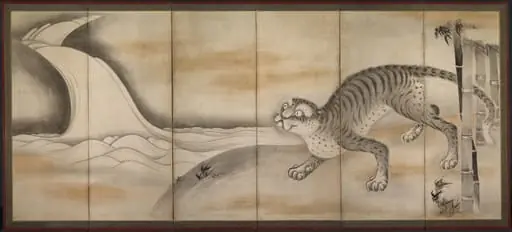
Tiger Family
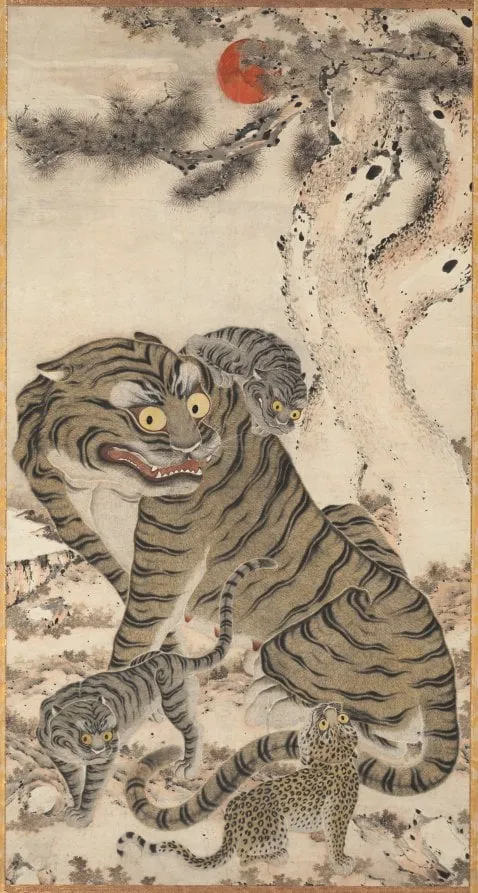
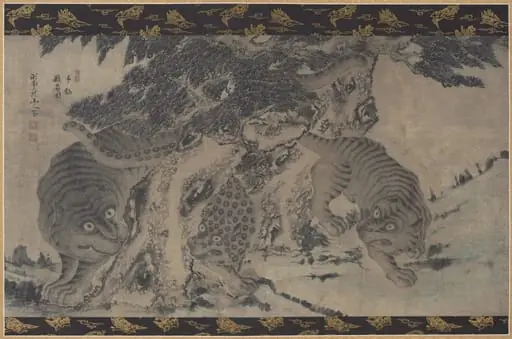
Tiger Family is an unspecified painting by the Impressionist artist Unknown. It dates from 1804 and is held in the collection of the Cleveland Museum of Art.
- Accession no.
- 1997.148
- Credit line
- Leonard C. Hanna Jr. Fund
About this work
Most Korean tiger paintings show chattering magpies, but here, the artist swapped them for a bold red sun.
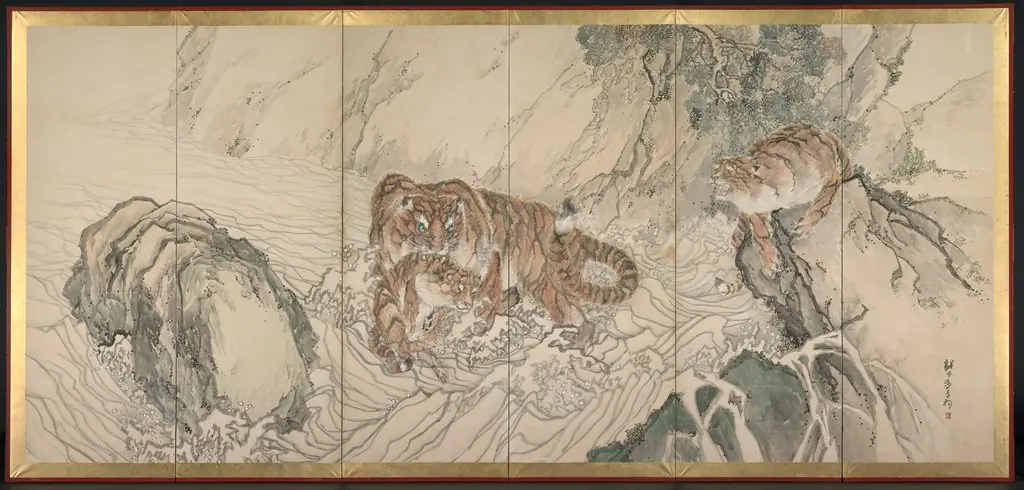
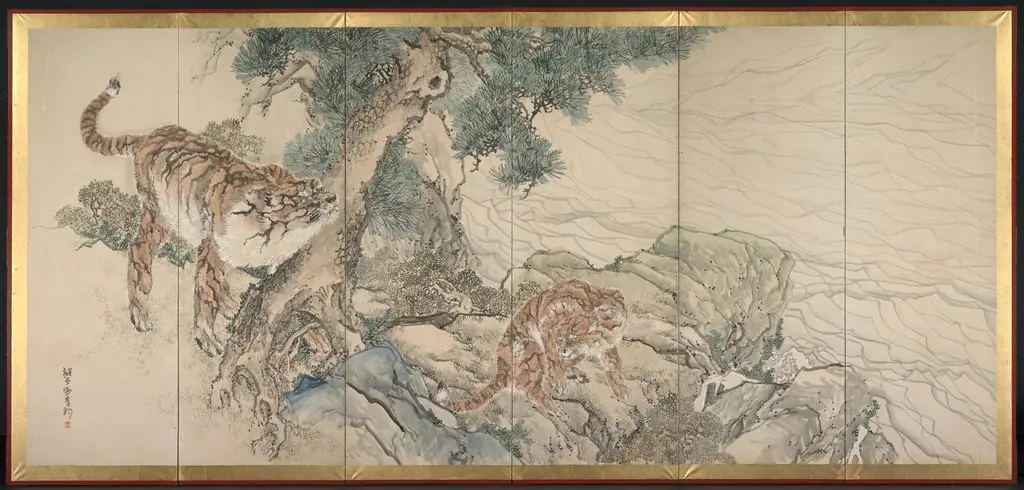
A tigress and two cubs stand on a rocky slope beside a leopard, all bathed in golden morning light. Pine trees rise behind them, and a red sun glows low in the sky.
This painting wasn’t just for looks, it was a good-luck charm. People hung tiger images on doors to scare away bad spirits. The cubs and leopard meant wealth and luck, while the pines stood for long life.
Most Korean tiger paintings show chattering magpies, but here, the artist swapped them for a bold red sun.
To see more art like this, look up Korea, Joseon dynasty (1392–1910).
Overview
This Korean painting from the Joseon dynasty depicts a tigress and her two cubs alongside a leopard, all illuminated by a low, crimson sunrise. Set against a rocky slope with towering pine trees, the scene blends naturalistic observation with symbolic intent. Unlike typical tiger paintings of the period, it omits magpies in favor of a radiant sun, emphasizing light and atmosphere over conventional motifs.
Subject & Meaning
The tigress and cubs symbolize familial strength and prosperity, while the leopard represents good fortune. Pine trees, evergreen and resilient, signify longevity. The rising sun, positioned behind the pines, suggests renewal and divine favor.
Together, these elements formed a protective and auspicious composition, often displayed during New Year’s to deter malevolent forces and invite blessings into the home.
Technique & Style
The artist rendered the felines with careful attention to texture and form, capturing the sheen of fur and the play of light across their bodies. The golden sunrise is rendered with subtle gradations, enhancing the sense of dawn. The composition avoids clutter, focusing on the animals’ presence against a minimalist landscape, reflecting a refined balance between realism and symbolic restraint.
History & Provenance
Created during the Joseon dynasty, the painting aligns with a tradition of tiger imagery used in domestic rituals, particularly around the lunar New Year. While tiger motifs were commonly pasted on doors as apotropaic symbols, this version elevates the subject into a refined ink-and-color work, suggesting it may have been commissioned by an elite household or scholar-official seeking both spiritual and aesthetic value.
Context
In Joseon-era Korea, tiger paintings served both decorative and ritual functions. While magpies were standard companions to tigers in folk art, this artist deliberately replaced them with the sun, signaling a shift toward naturalism and personal expression. The choice reflects broader trends in late Joseon painting, where artists began to prioritize observational detail and atmospheric effects over rigid iconography.
Legacy
This work stands as an example of how traditional symbolic imagery evolved in the hands of individual artists. By integrating naturalistic lighting and omitting expected elements like magpies, it contributed to a quieter, more contemplative strand of Korean painting. Its emphasis on harmony between animal and environment influenced later depictions of wildlife in Korean art, moving beyond superstition toward aesthetic introspection.
Artist & collection