Artwork
Bilang Lake
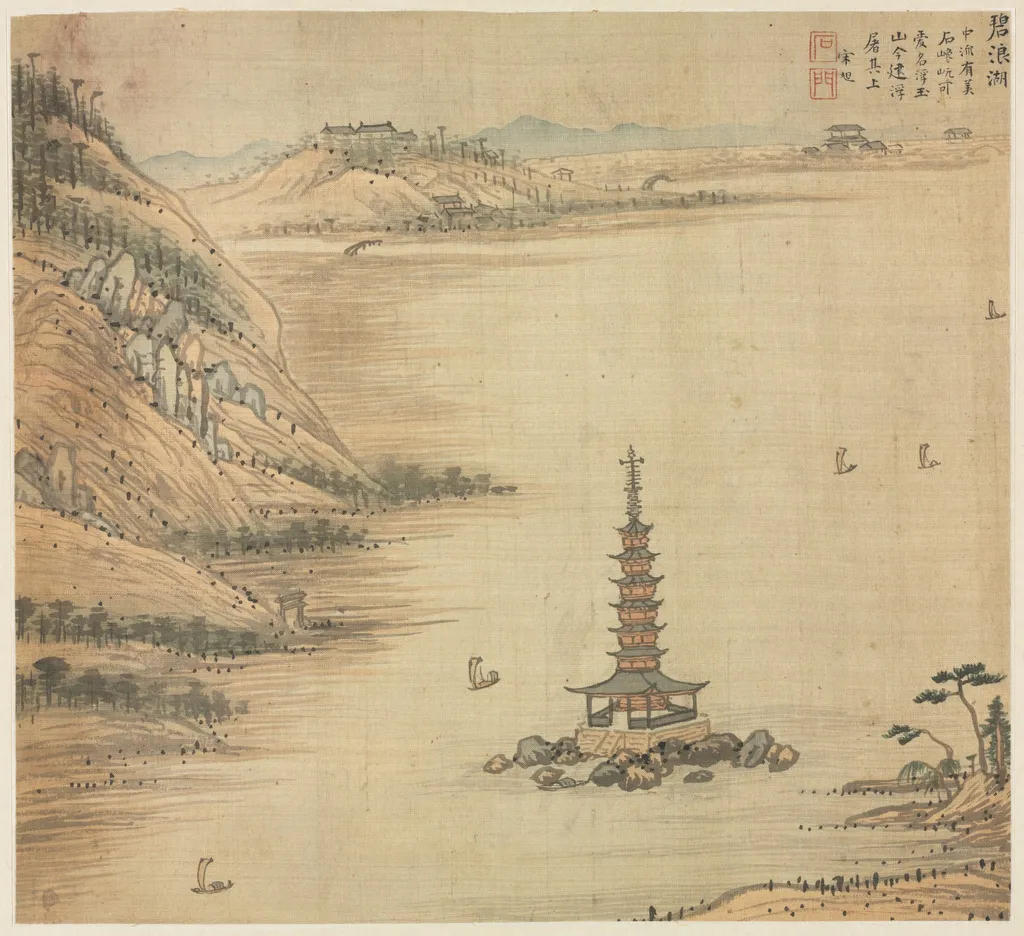
Bilang Lake is an unspecified painting by the Ming dynasty painting artist Song Xu. It dates from 1594 and is held in the collection of the Cleveland Museum of Art.
About this work
History & Provenance
It is currently held in the collection of the Cleveland Museum of Art, where it is cataloged under the accession number 1998.
The painting Bilang Lake was created by the Chinese artist Song Xu in 1588. The work originated in Jiaxing, where the artist produced the piece during that year. It is currently held in the collection of the Cleveland Museum of Art, where it is cataloged under the accession number 1998.78.17. The work dates specifically to January 1, 1588, marking its inception within the late Ming dynasty period.
Bilang Lake is held by the Cleveland Museum of Art, where it is catalogued under the accession number 1998.78.17. The work has not been recorded in any major exhibition history according to its provenance documentation. It was created in Jiaxing in 1588 and entered the museum's collection in 1998.
Context
Song Xu created Bilang Lake in 1588 during the Ming dynasty, reflecting the literati tradition of merging poetic contemplation with landscape imagery. The work shows Song Xu's engagement with regional riverine aesthetics from the Jiaxing area, situating it within broader scholarly discussions of Chinese painting's evolution. Its presence in the Cleveland Museum of Art collection has enabled detailed study of Ming dynasty techniques and compositional innovations.
Critics highlight Bilang Lake as an example of Song Xu's synthesis of classical landscape conventions with personal expression, contributing to ongoing research on late-Ming artistic developments.
Legacy
Song Xu's Bilang Lake (1588) is recognized for shaping early Qing visual culture through its atmospheric depiction of southern Chinese landscapes. The painting's composition influenced regional academies in the 17th century, particularly for its treatment of water surfaces and mist effects, techniques later adopted by Jiangnan school artists. Its inclusion in the Cleveland Museum of Art's collection since 1998 has facilitated scholarly study of Ming-Qing transition aesthetics, with curatorial notes highlighting its role in reinterpreting Song dynasty landscape traditions through Ming-era innovation.
Overview
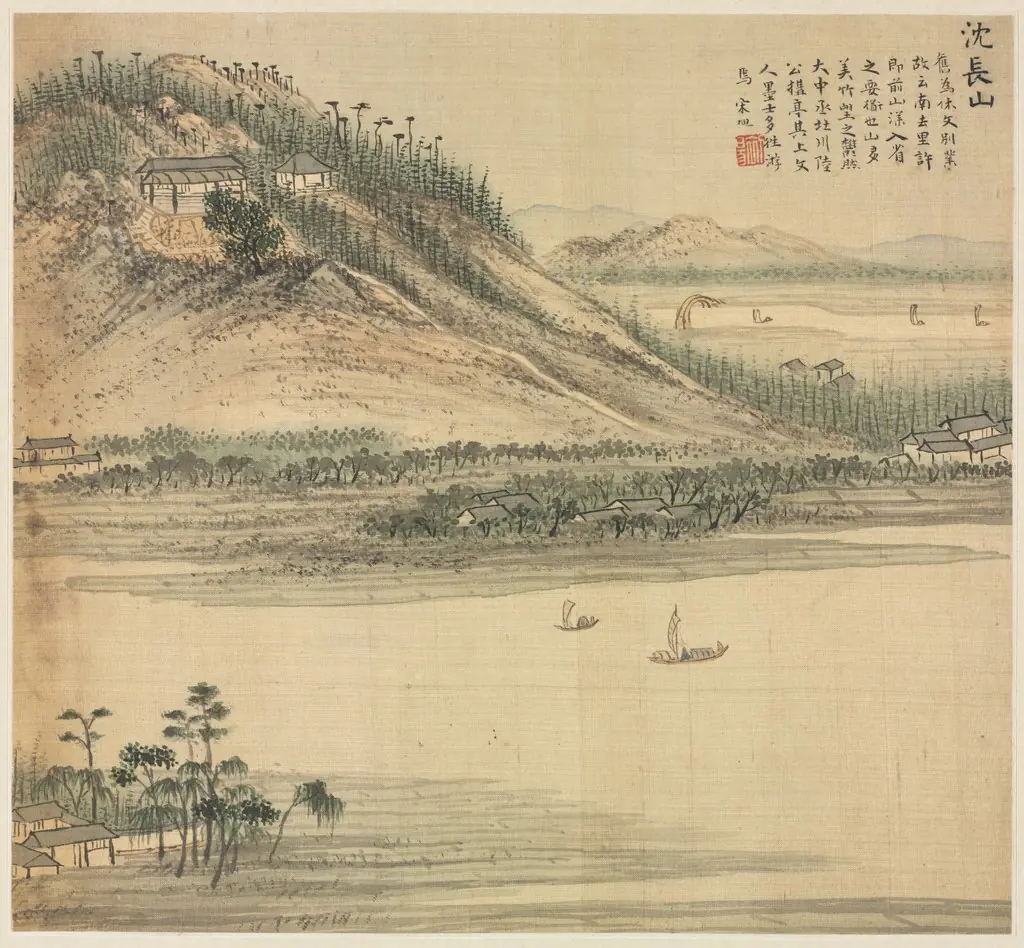
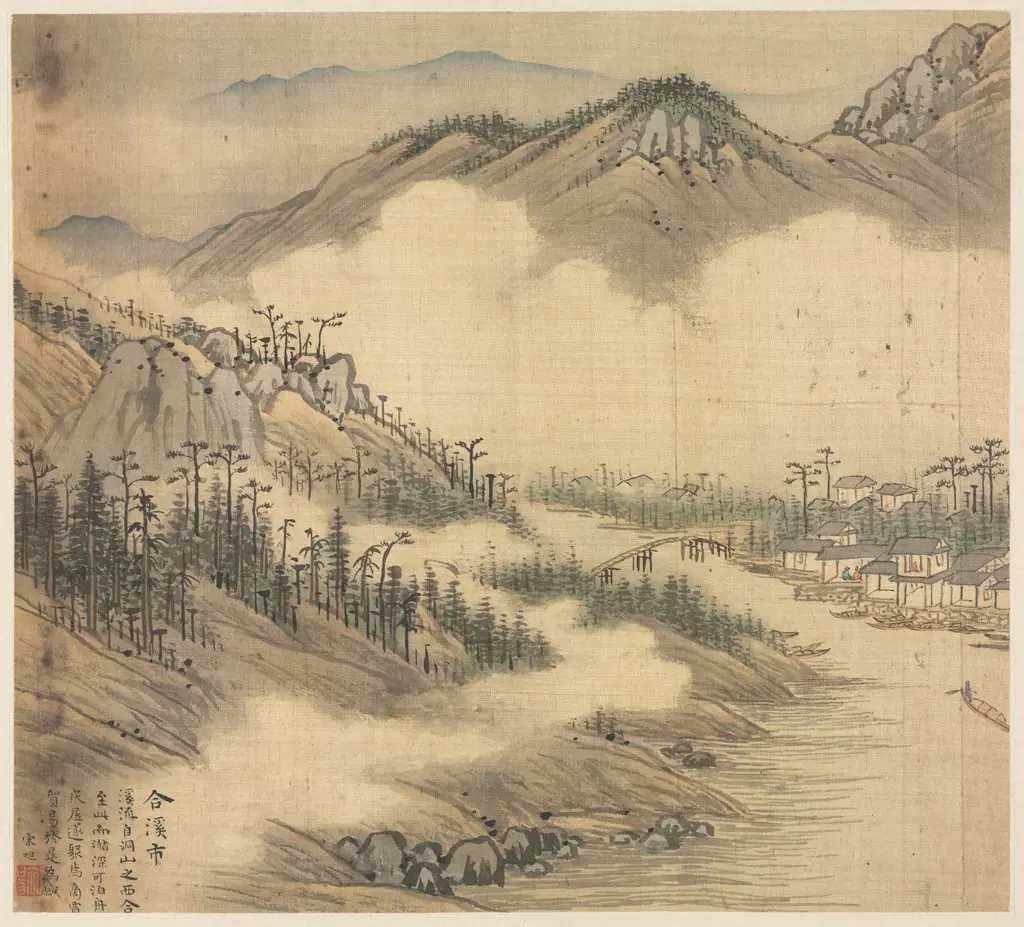
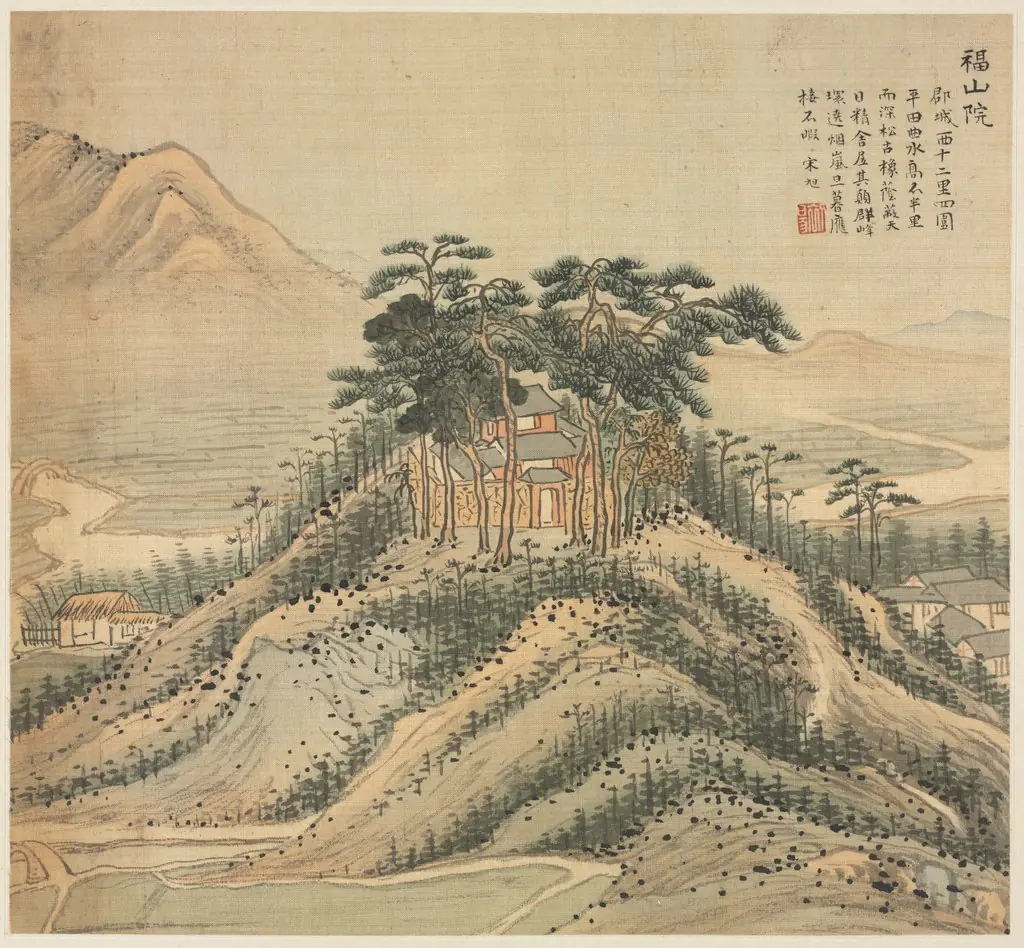
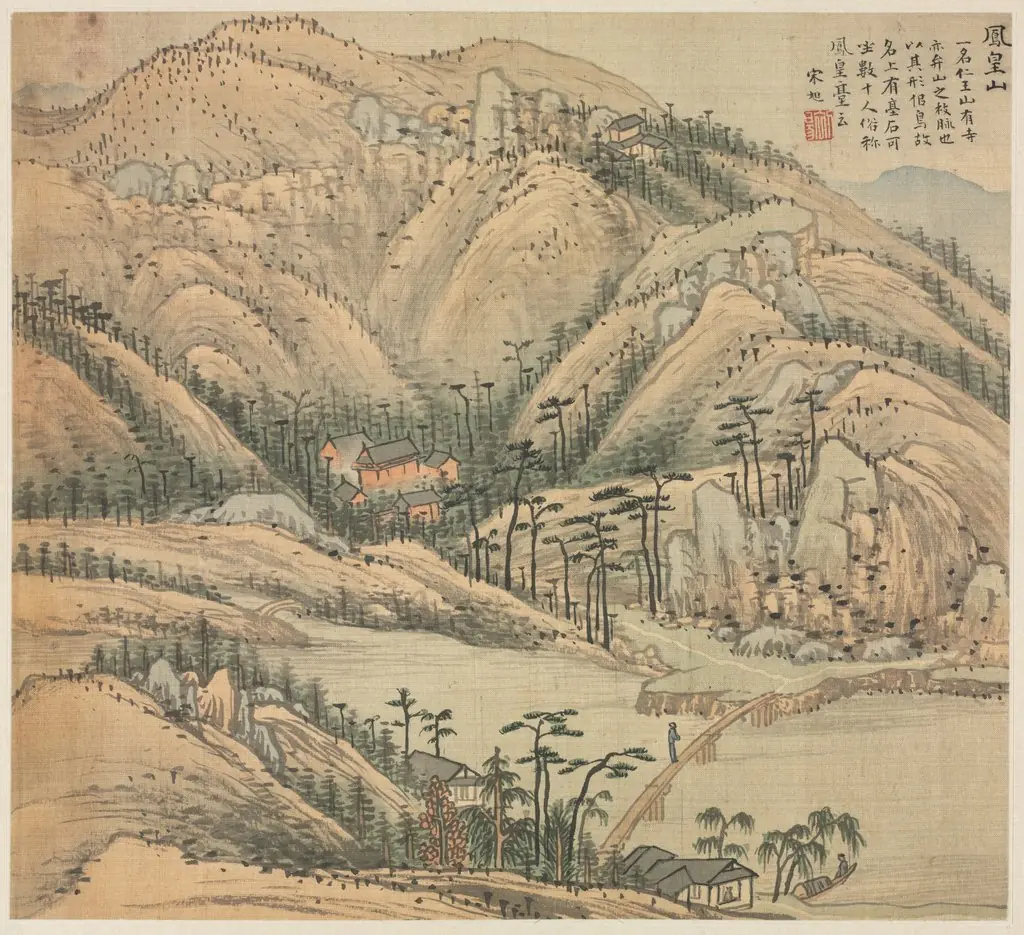
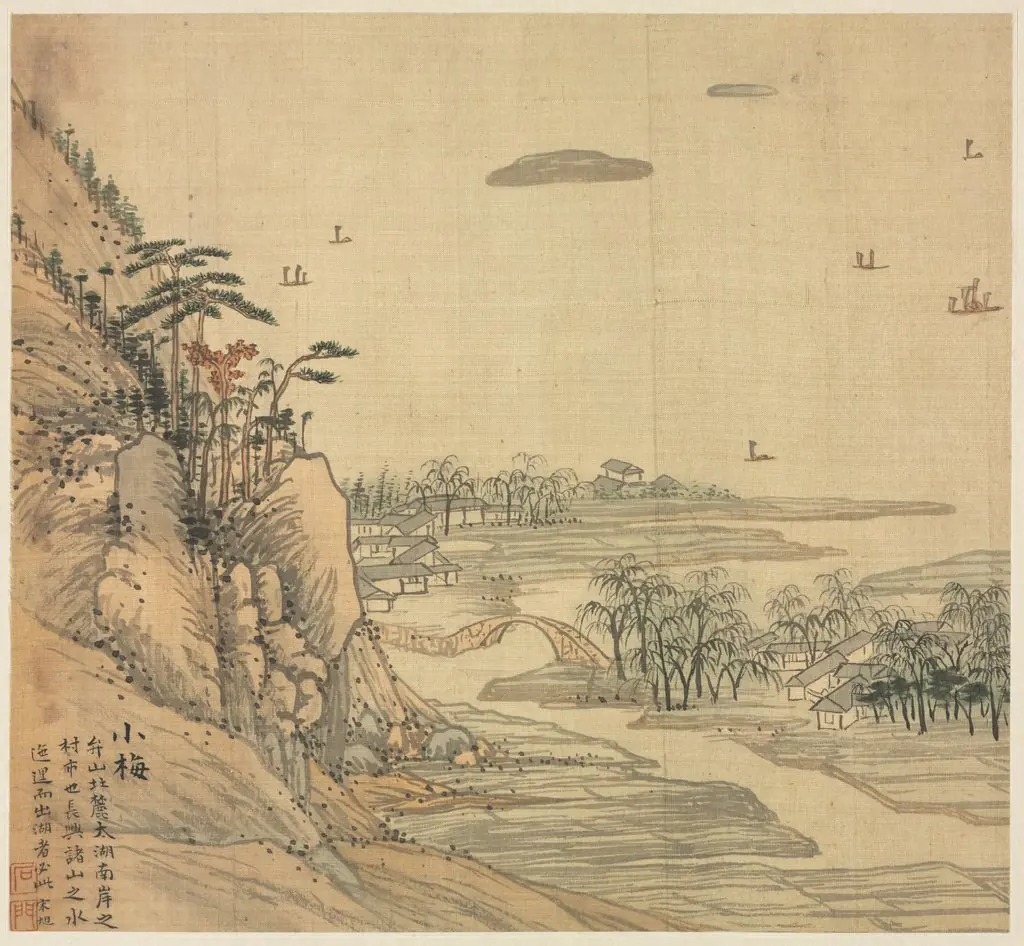
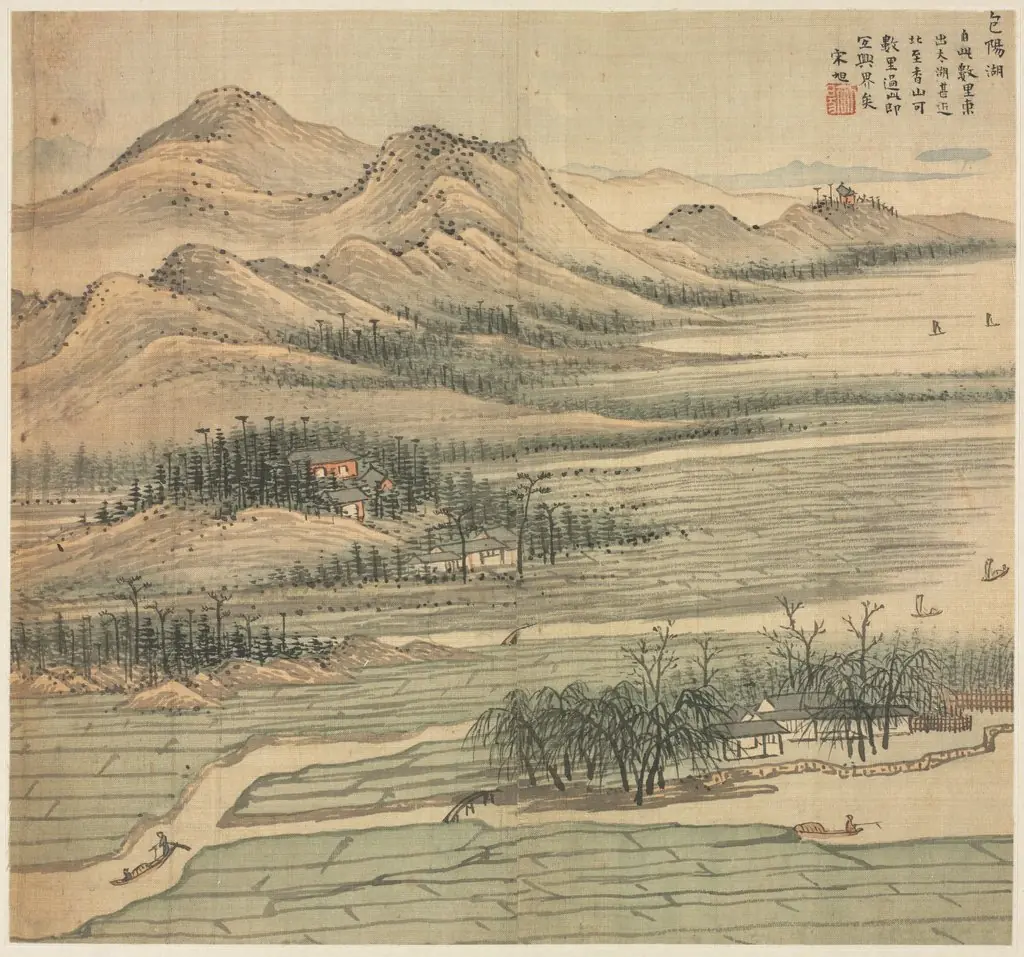
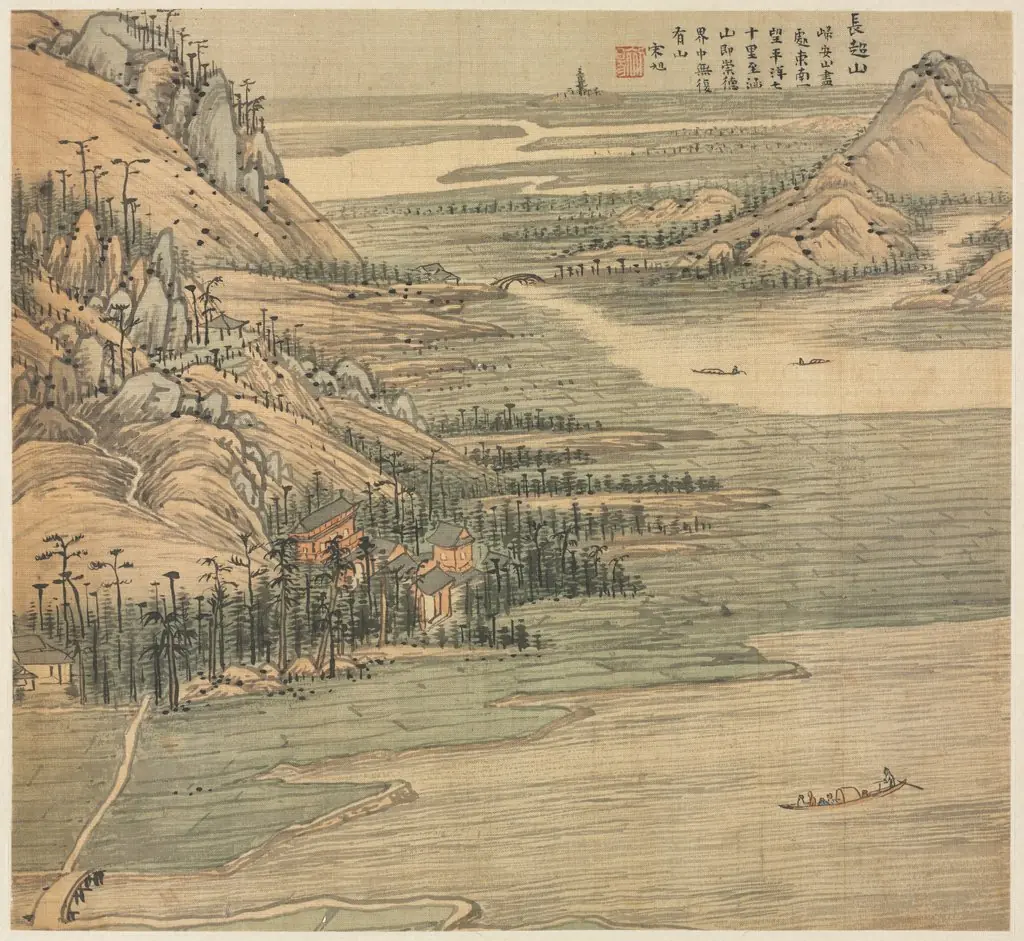
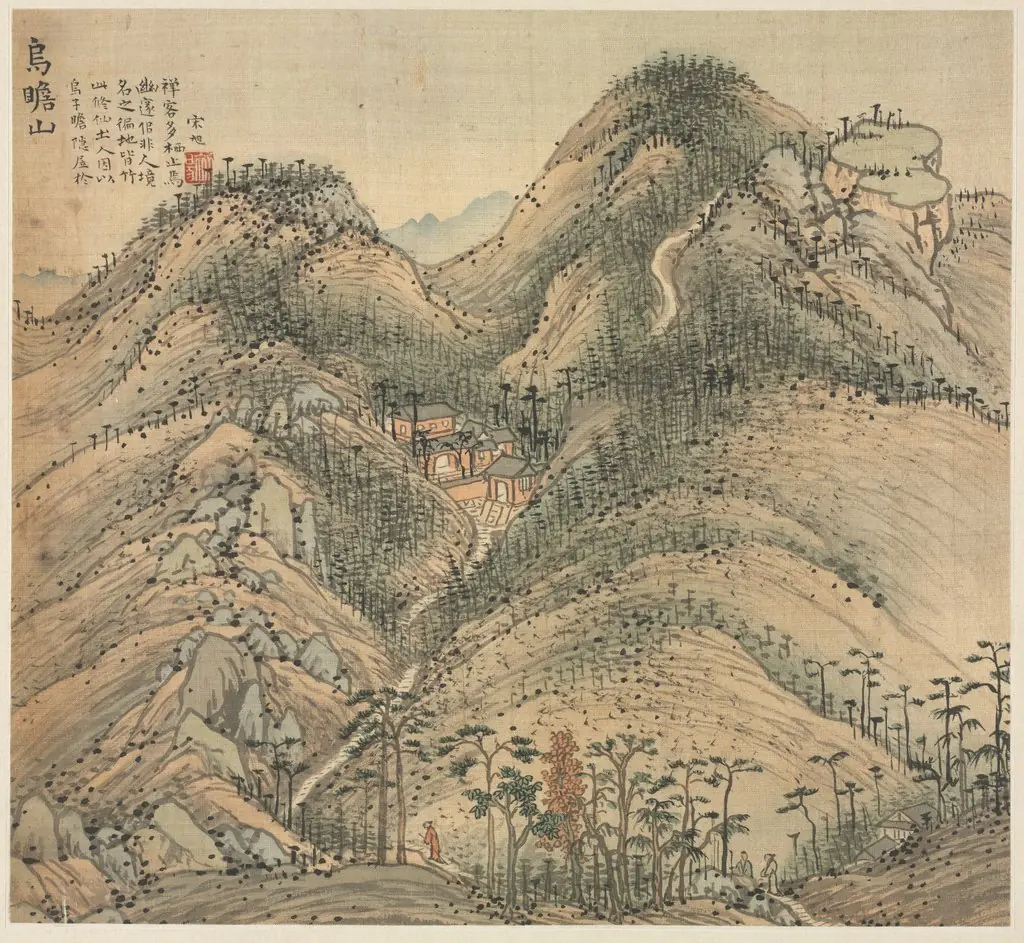
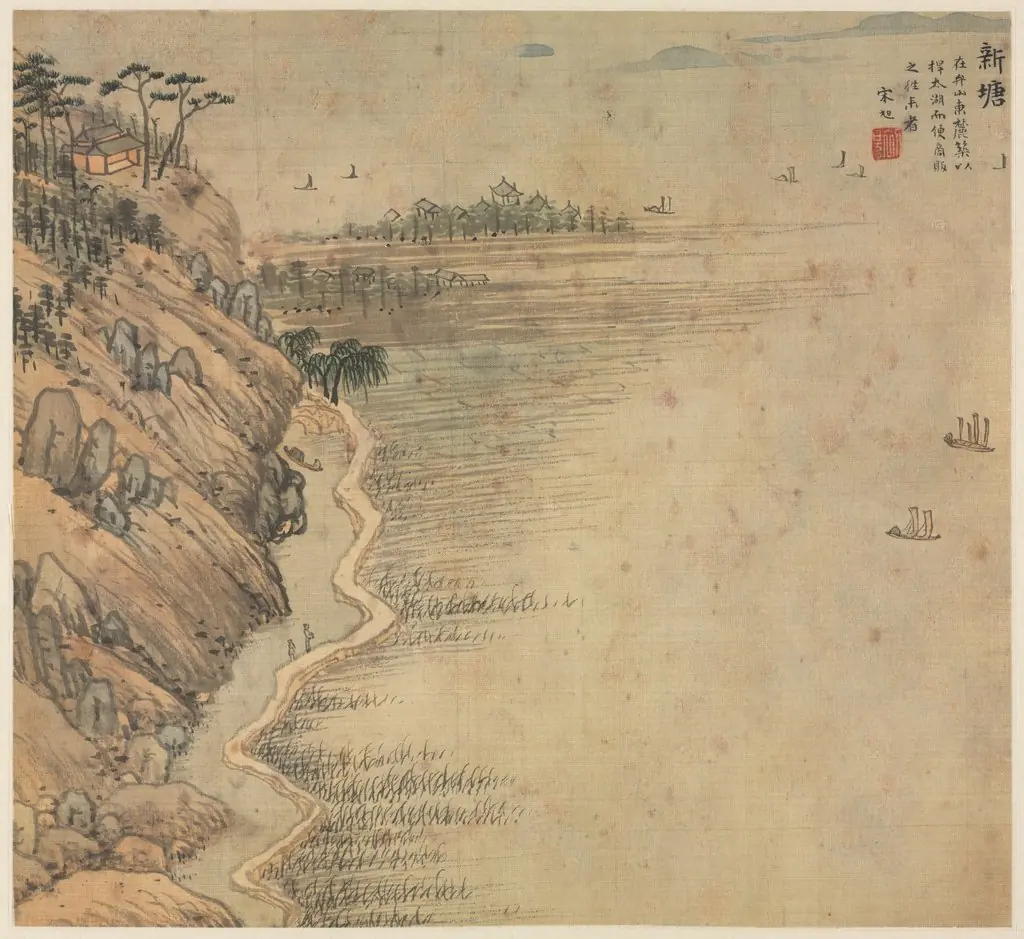
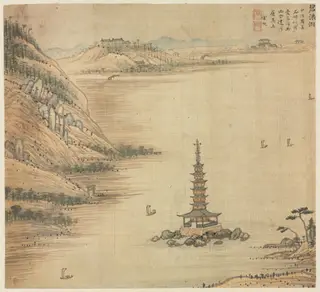
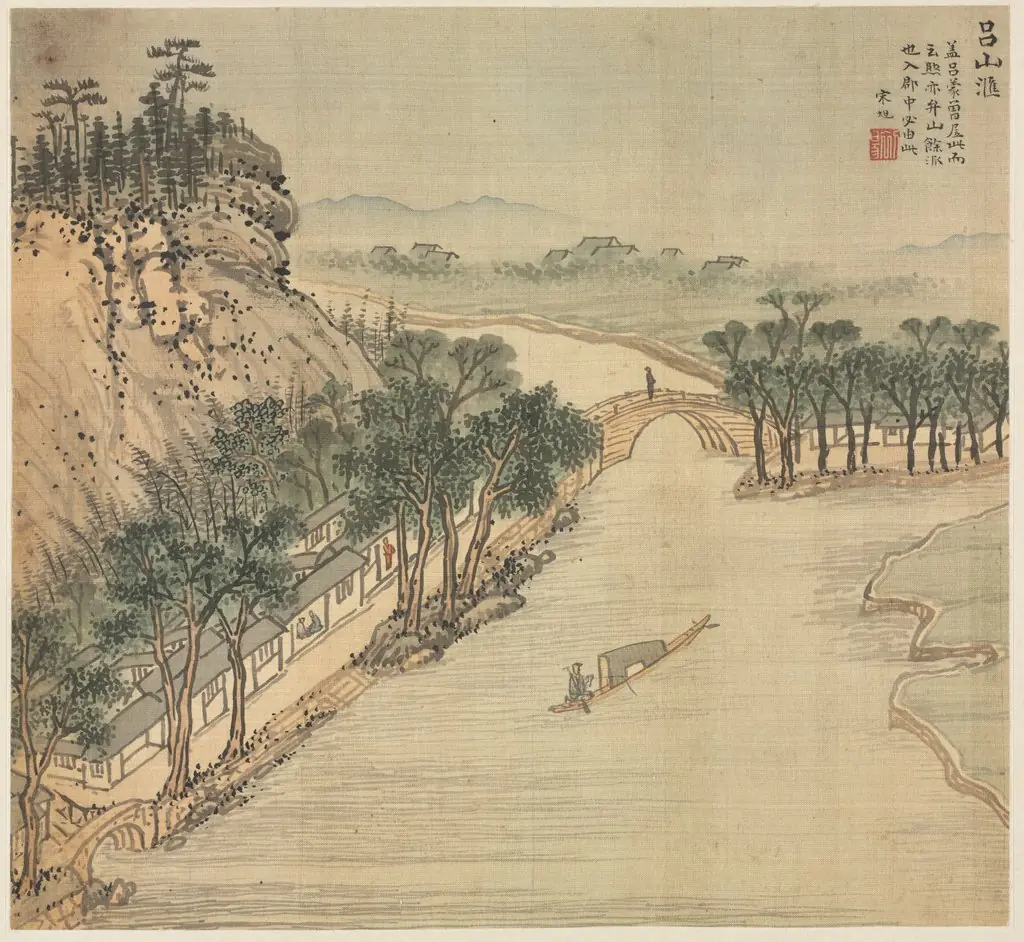
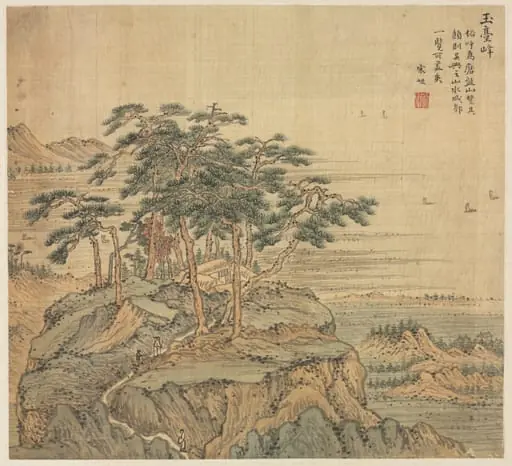
Bilang Lake, painted in 1594 by the Chinese artist Song Xu, is a landscape work in the collection of the Cleveland Museum of Art. The composition presents a gently curving river that threads through low hills, leading the eye toward a cluster of modest structures and a prominent multi‑storey pagoda that rises from a rocky outcrop.
Subject & Meaning
The scene captures a tranquil moment in a rural setting, emphasizing harmony between water, land, and architecture. The solitary pagoda, a common symbol of Buddhist practice, anchors the composition, while the scattered figures or trees suggested by tiny brush marks hint at human activity within a serene natural environment.
Technique & Style
Song Xu employs a restrained palette of pale greens, earthy browns, and subdued blues, creating a soft atmospheric effect. The brushwork is loose and sketch‑like, with dry strokes that outline hills and foliage rather than fill them in, lending the painting an impression of distance and calm.
Own this work as a print
Artist & collection