Artwork
The Temperance Hall, Roche
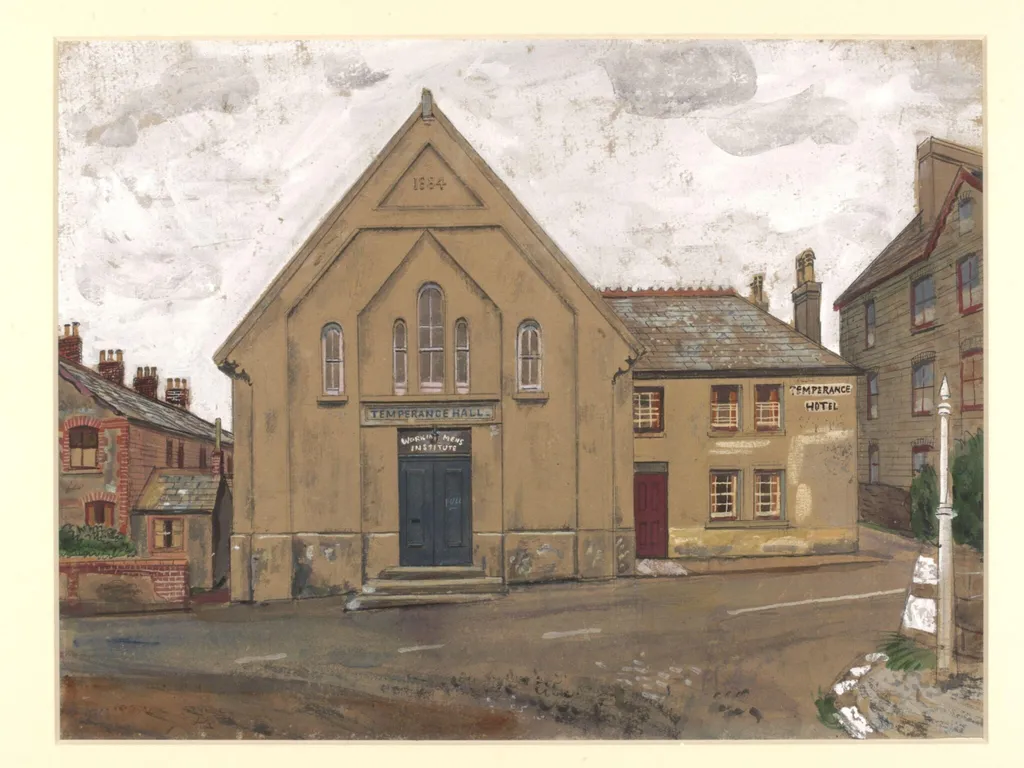
The Temperance Hall, Roche is a watercolor work on paper by the Regionalist artist Spear. It dates from 1940 and is held in the collection of the Victoria and Albert Museum.
About this work
Overview
The work is one of over 1,500 pieces commissioned from nearly 100 artists, preserving a fragile sense of place during a period of national uncertainty.
Created in 1940, The Temperance Hall, Roche is a watercolour by artist Roche, produced under the Recording Britain project. This initiative, supported by the Pilgrim Trust and directed by Sir Kenneth Clark, sought to visually archive British architecture and landscapes at risk from wartime destruction and social change. The work is one of over 1,500 pieces commissioned from nearly 100 artists, preserving a fragile sense of place during a period of national uncertainty.
Subject & Meaning
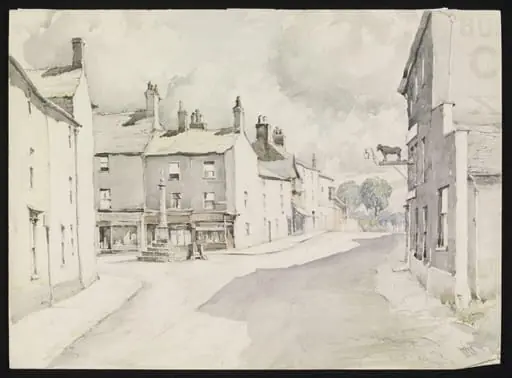
The painting depicts a modest, timber-framed hall in the village of Roche, Cornwall, alongside a smaller adjacent structure labeled 'Temperance Hotel.' These buildings reflect the influence of the 19th-century temperance movement, which promoted abstinence from alcohol. Their quiet presence in the landscape underscores a fading social culture, captured not for grandeur but for its quiet significance in local life and community identity.
Technique & Style
Rendered in watercolour, the work employs a restrained palette of earth tones and soft washes to convey the weathered texture of the buildings. Details are rendered with precision but without embellishment, emphasizing structural form over atmosphere. The composition is straightforward, framing the hall centrally with surrounding dwellings framing its context, reflecting the project’s documentary intent rather than expressive flourish.
History & Provenance
Commissioned during the Second World War, the painting entered the Recording Britain archive, later transferred to the Victoria and Albert Museum. The project’s records were preserved as a national resource, ensuring the survival of visual documentation for buildings that might otherwise have been lost. The work remains part of this curated collection, valued for its historical accuracy and unadorned representation of vernacular architecture.
Context
The Recording Britain project emerged amid fears of cultural erasure during wartime. Urban redevelopment, rural depopulation, and aerial bombardment threatened historic structures. Artists like Roche were tasked with capturing everyday buildings, halls, inns, cottages, that embodied regional character.
These works collectively formed a visual inventory of a Britain in transition, prioritizing the ordinary over the monumental.
Legacy
The Temperance Hall, Roche endures as part of a broader archive that reshaped how Britain’s architectural heritage was valued. Its quiet documentation influenced later preservation efforts and academic studies of vernacular design. Though unassuming in scale, the painting contributes to a collective record that continues to inform understanding of 20th-century British life beyond wartime headlines.
Artist & collection

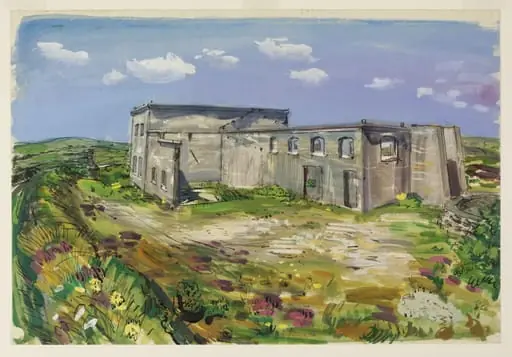
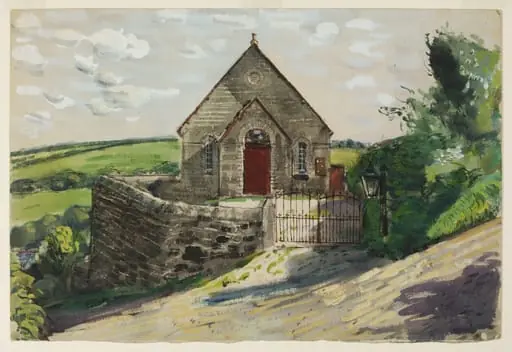
- The Guildhall, Totnes
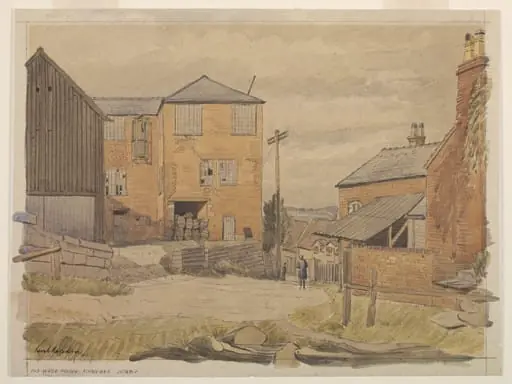 Old Warehouse, Ashbourne
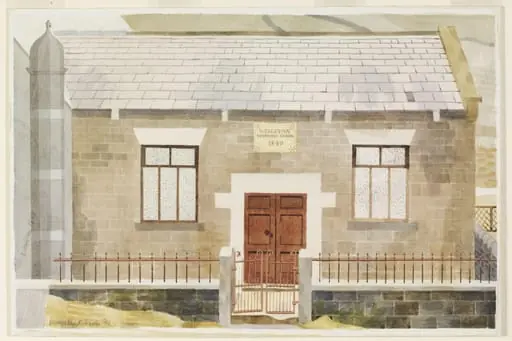 Wesleyan Methodist Chapel, Ashopton
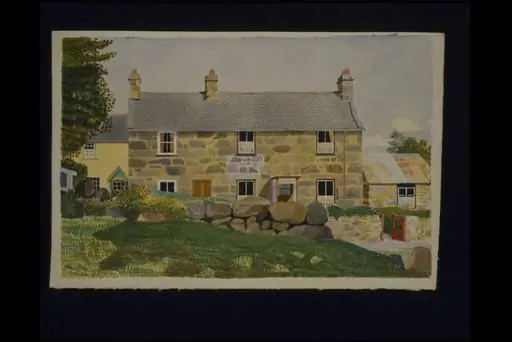 Swan Cottages, Ro-Wen, Conway Valley, Caernarvonshire
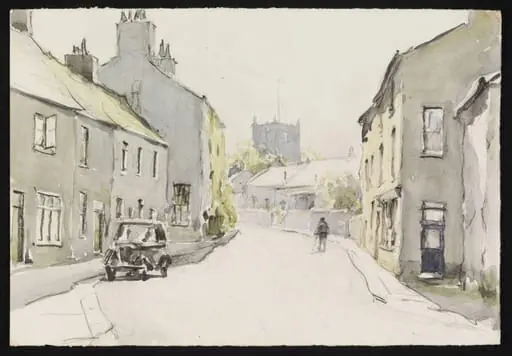 Poulton-le-fylde, near Blackpool
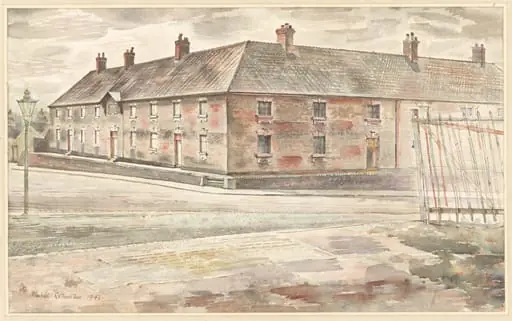 The Almshouses, Newcastle-under-Lyme
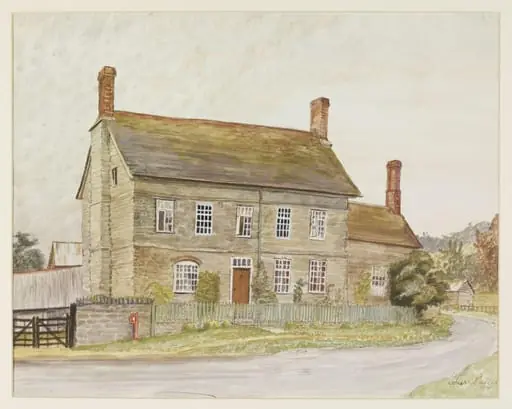 Hall Farm, Leinthall Earls
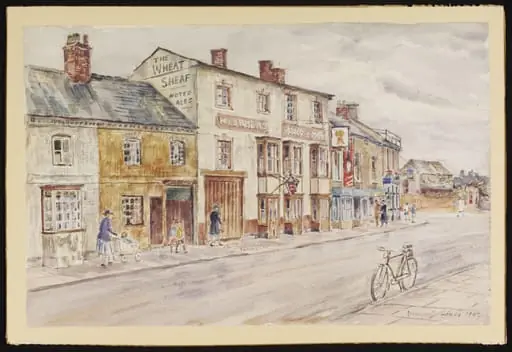 The Wheatsheaf Inn and Cottages, Newport Road, Swindon
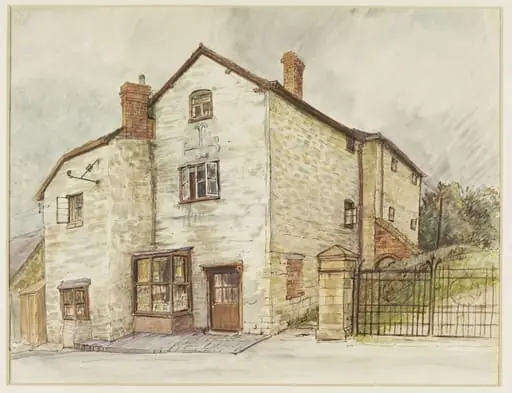 House and Shop, Leintwardine
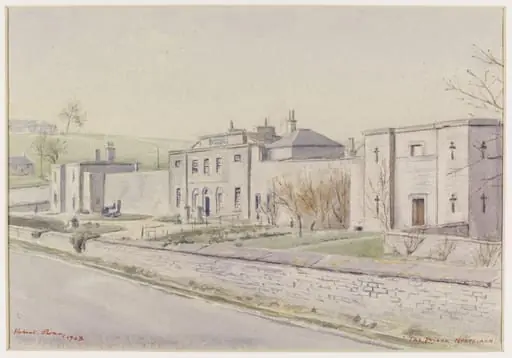 The Old Prison, Northleach
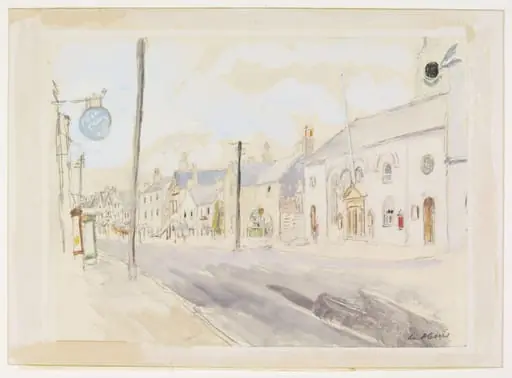 Cowbridge, Glamorganshire
 Market Place, Poulton-le-fylde, near Blackpool