Artwork
Saint Francis before the Pope (Confirmation of the Franciscan Rule)
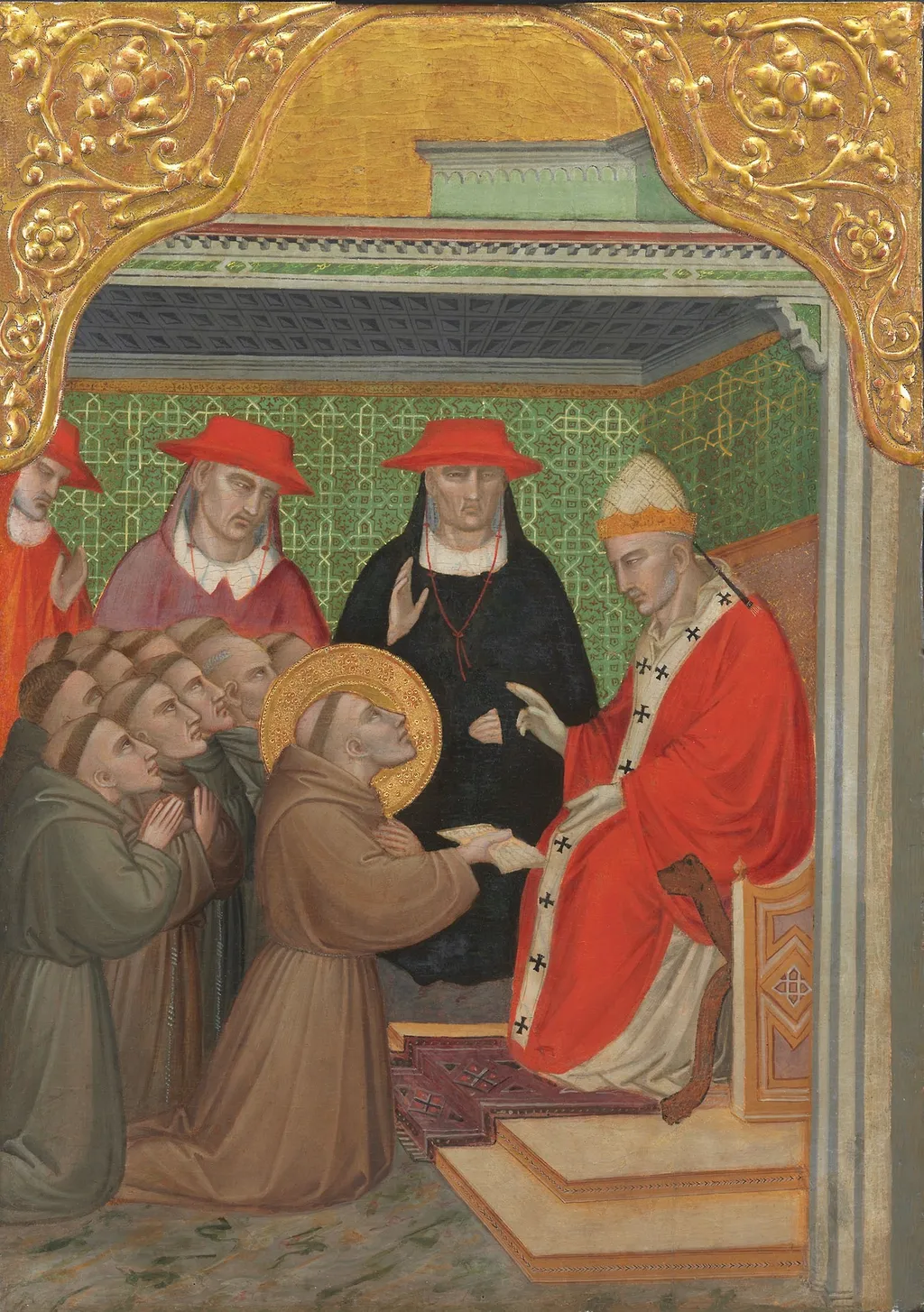
Saint Francis before the Pope (Confirmation of the Franciscan Rule) is an unspecified painting by the Italo Byzantine artist Spinello Aretino. It dates from 1398 and is held in the collection of the Art Institute of Chicago.
About this work
Overview
Painted in 1398 by Spinello Aretino, this work depicts the moment the Pope formally approves the Franciscan Rule. Executed in tempera and gold on panel, it was originally part of a larger altarpiece commissioned for a church in Arezzo. The painting now resides in the Art Institute of Chicago, where it serves as a key example of late 14th-century Italian devotional art.
Subject & Meaning
The scene captures Saint Francis of Assisi kneeling before Pope Honorius III, offering the written rule of his order.
The scene captures Saint Francis of Assisi kneeling before Pope Honorius III, offering the written rule of his order. The Pope, seated on a raised throne, wears a papal tiara and a robe adorned with a cross, signifying his authority. The act of submission and acceptance symbolizes the Church’s endorsement of the Franciscan movement, legitimizing its mission of poverty and preaching within ecclesiastical structures.
Technique & Style
Aretino employs tempera with gold leaf accents to enhance the sacred atmosphere. Figures are arranged hierarchically, with the Pope larger and centrally positioned. Richly patterned textiles, detailed architectural elements, and a flat, decorative background reflect the International Gothic style. While spatial depth is limited, the use of color and ornamentation conveys reverence and ceremonial weight.
History & Provenance
The painting was created for the church of San Francesco in Arezzo, likely as part of a multi-panel altarpiece honoring Saint Francis. It remained in the region until the 19th century, when it entered private collections. Acquired by the Art Institute of Chicago in 1930, it has since been studied for its role in documenting the visual language of mendicant orders in late medieval Italy.
Context
In the late 14th century, Franciscan spirituality was widely influential, and visual depictions of its founding moments reinforced its legitimacy. Aretino’s work aligns with a broader trend of commissioning religious narratives for public devotion. The emphasis on ritual and hierarchy reflects the Church’s desire to assert control over emerging religious movements while acknowledging their popular appeal.
Legacy
Though not widely known outside specialist circles, the painting exemplifies the transition from Byzantine rigidity to more narrative-driven Gothic compositions. It preserves the iconographic conventions of papal approval scenes and offers insight into how religious authority was visually constructed in pre-Renaissance Italy, influencing later depictions of ecclesiastical ceremonies.
Own this work as a print
Artist & collection

Artist
Spinello Aretino was an Italian painter from Arezzo, who was active in Tuscany at the end of the 14th and the first decade of the 15th century. His style influenced the development of late 14th- and early 15th-century painting in Tuscany.

 Saint Mary Magdalen Holding a Crucifix; (reverse) The Flagellation
 Virgin and Child with Angels
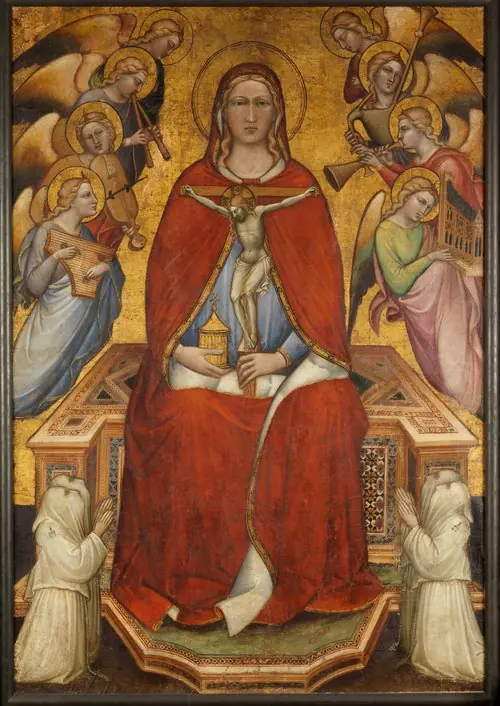 Processional Banner
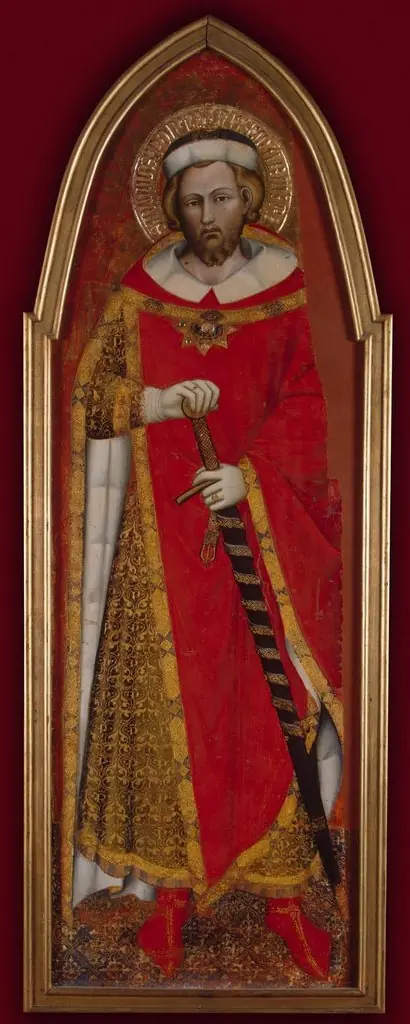 St Pontianus (wing of a polyptych)
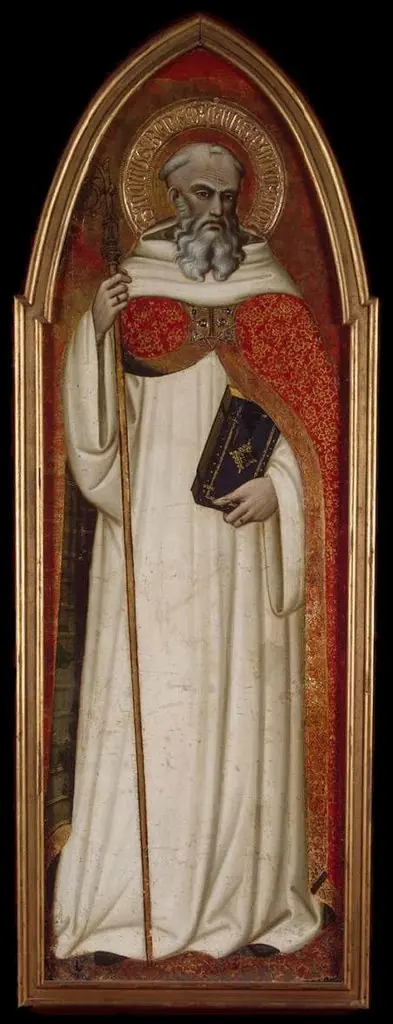 St Benedict (wing of a polyptych)
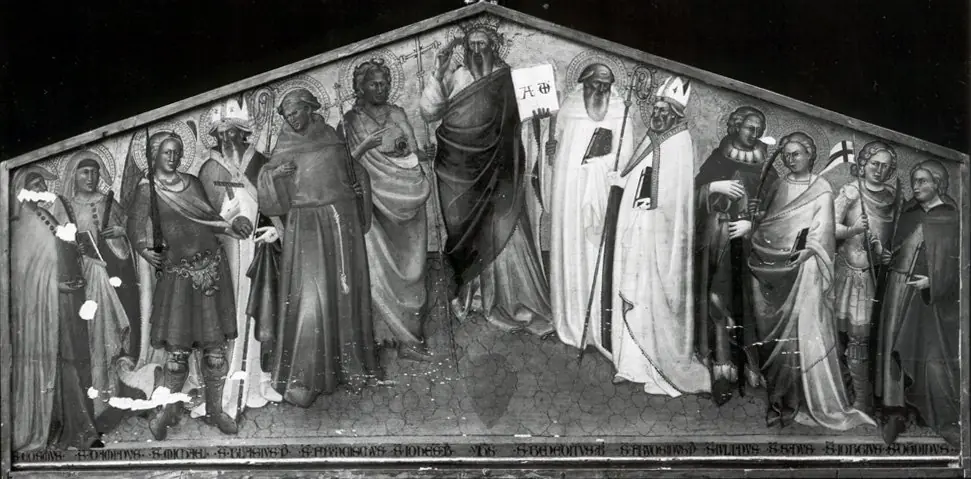 Christ between twelve Saints
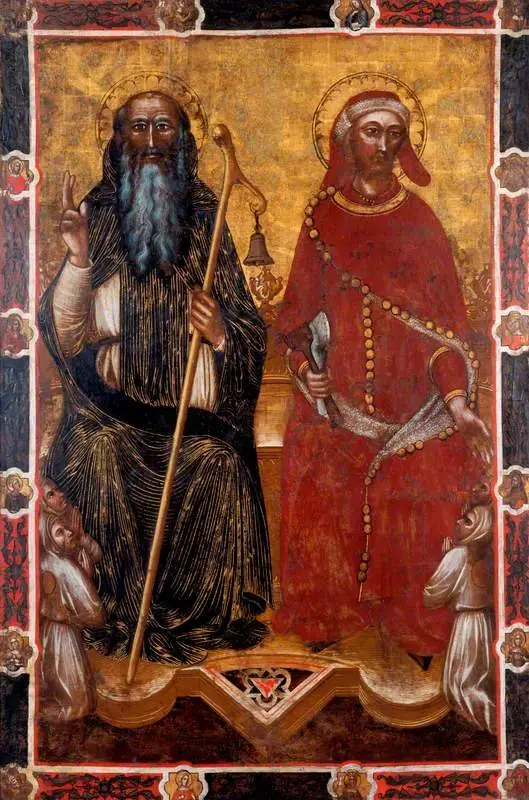 Saint Anthony Abbot and Saint Eligius with Two Pairs of Kneeling Worshippers (one side of a processional banner) (formerly attributed to Barnaba da Modena)
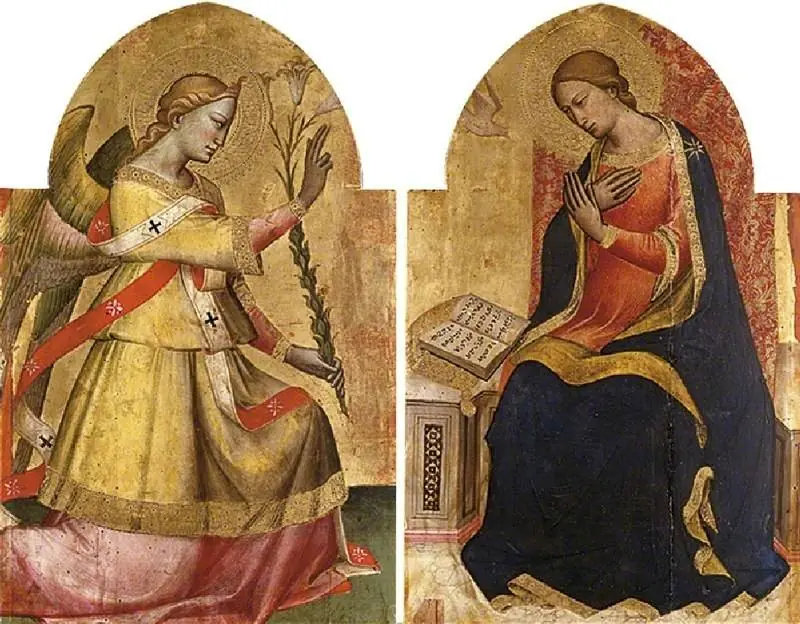 Annunciation
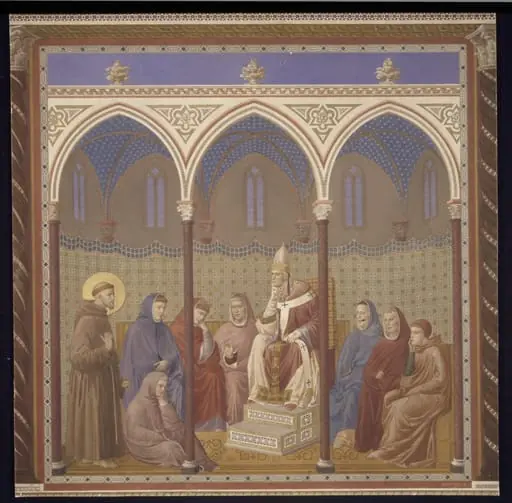 Copy after the painting St Francis before Pope Honorius by the Master of the St Francis cycle in the Upper Church, San Francesco, Assisi
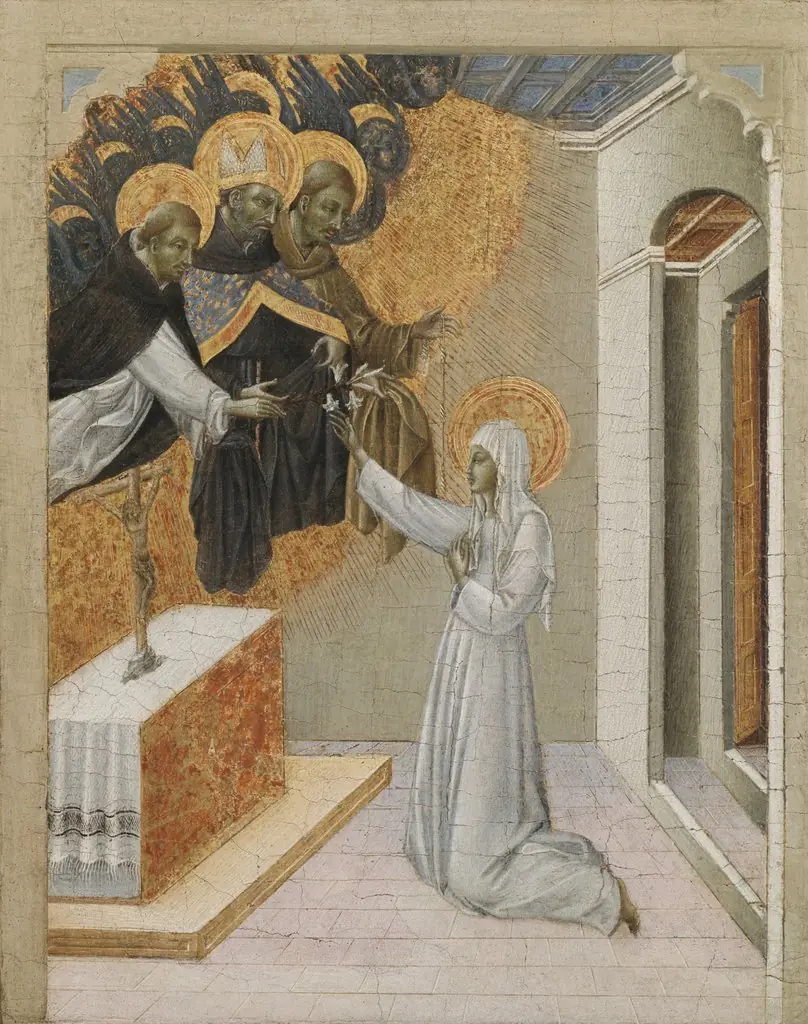 Predella Panel from an Altarpiece: St. Catherine of Siena Invested with the Dominican Habit
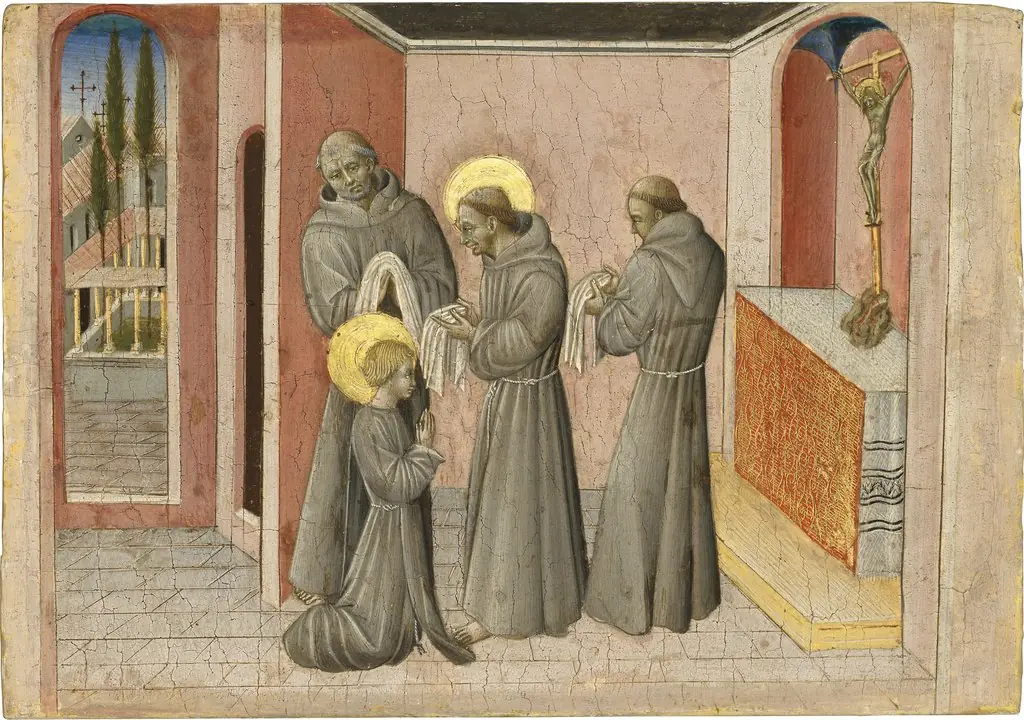 The Investiture of Saint Clare: the Saint receiving the clothes of her Order from Saint Francis
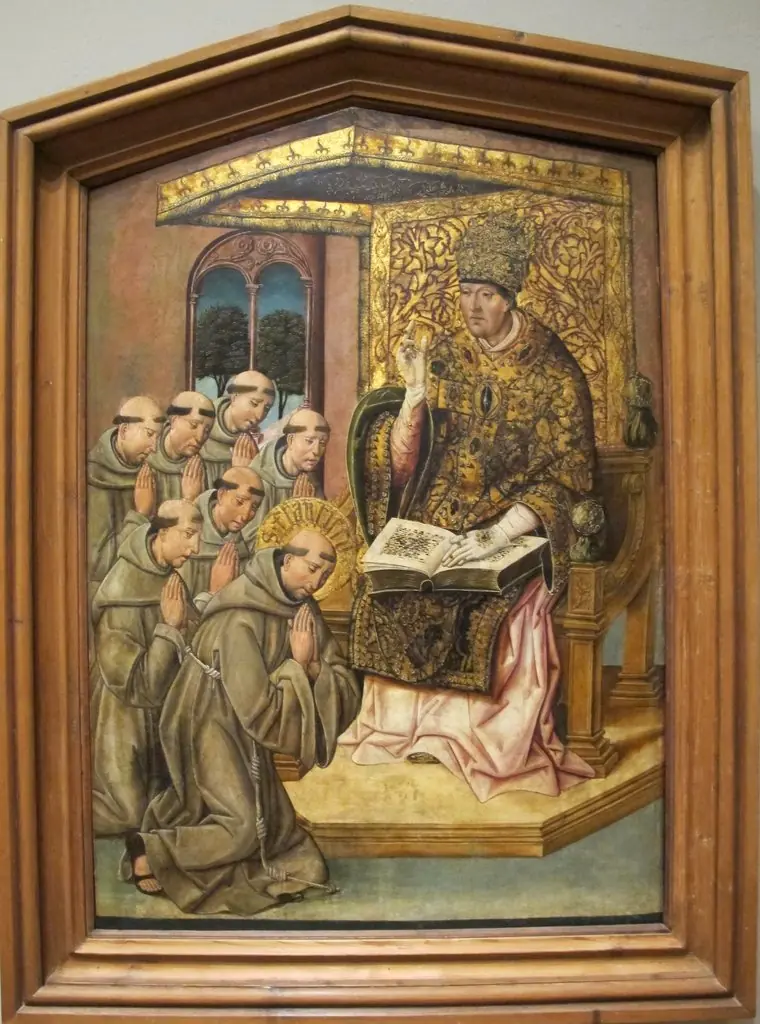 papa onorio III approva la regola francescana
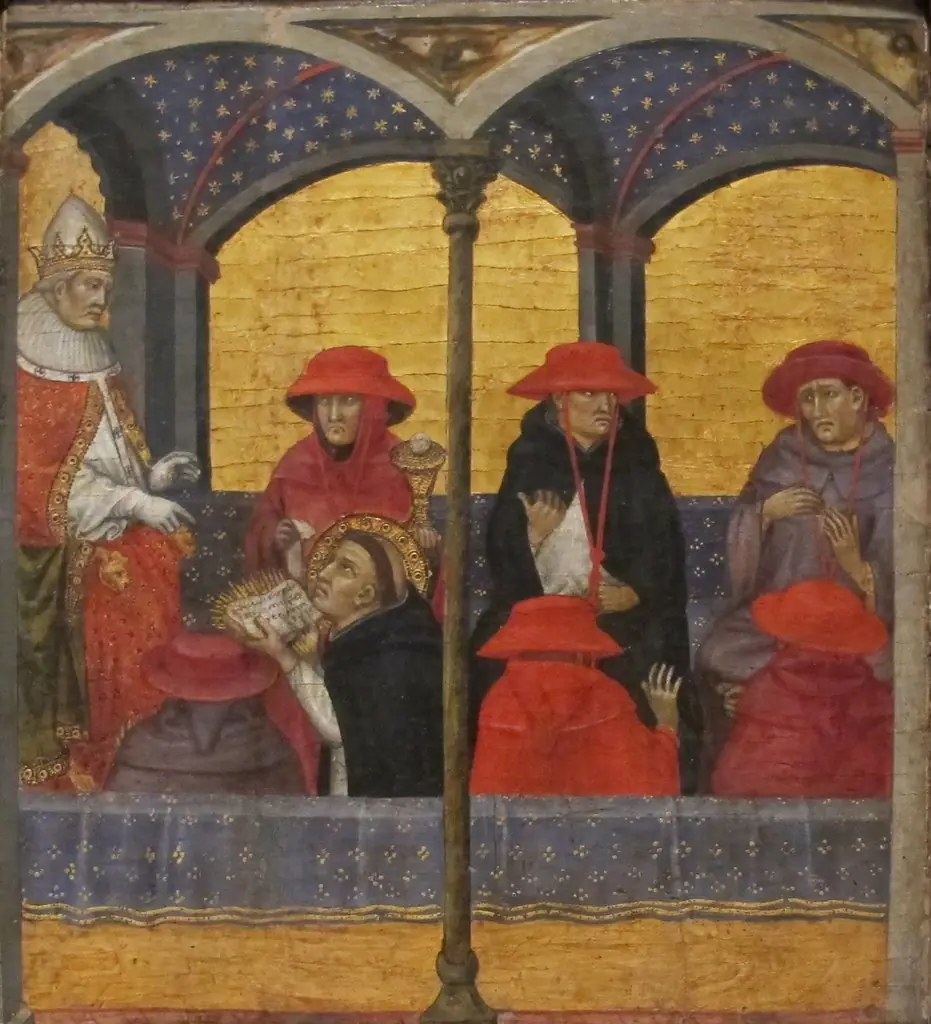 Saint Thomas Aquinas Submitting His Office of Corpus Domini to Pope Urban IV
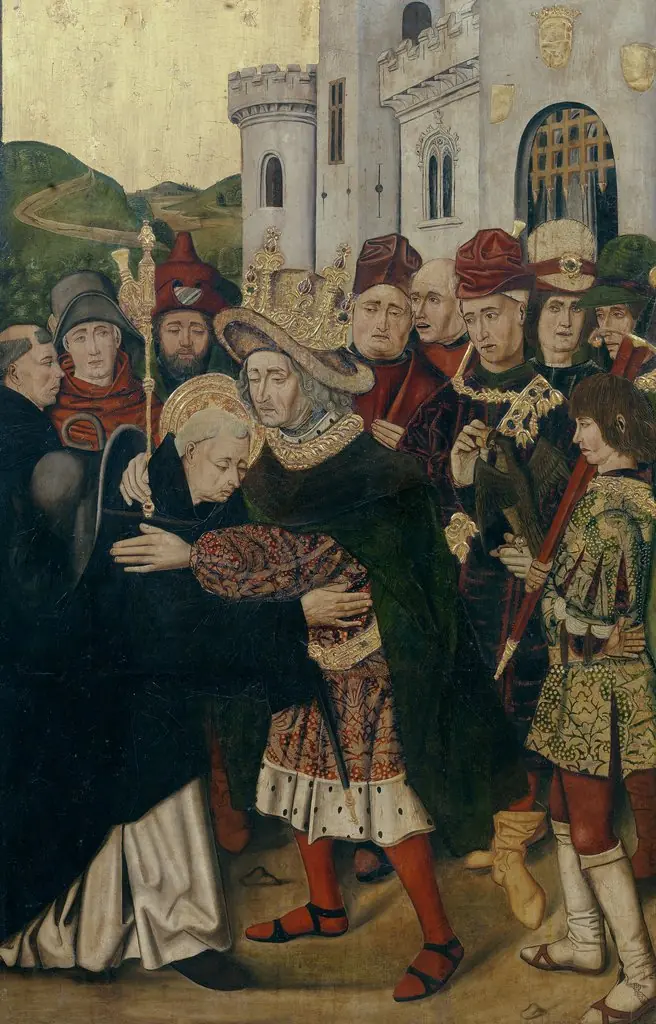 Ferdinand I of Castile welcoming Saint Dominic of Silos
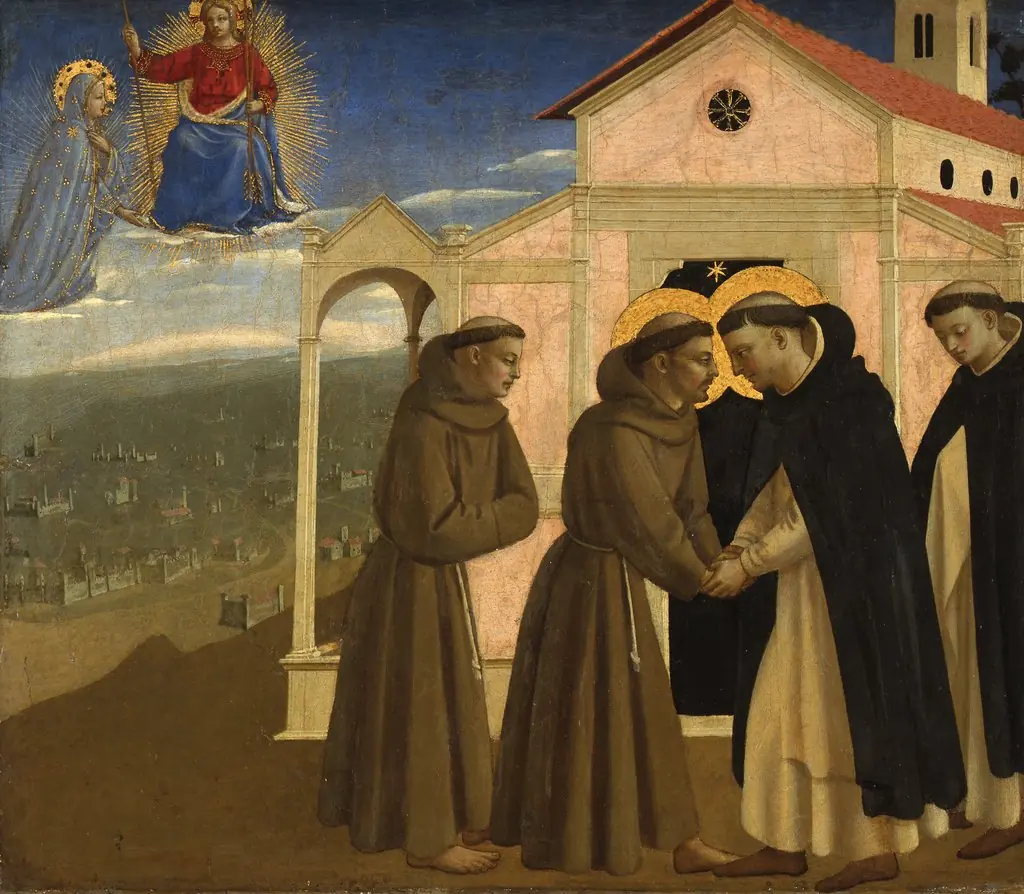 Meeting of St Francis and St Dominic
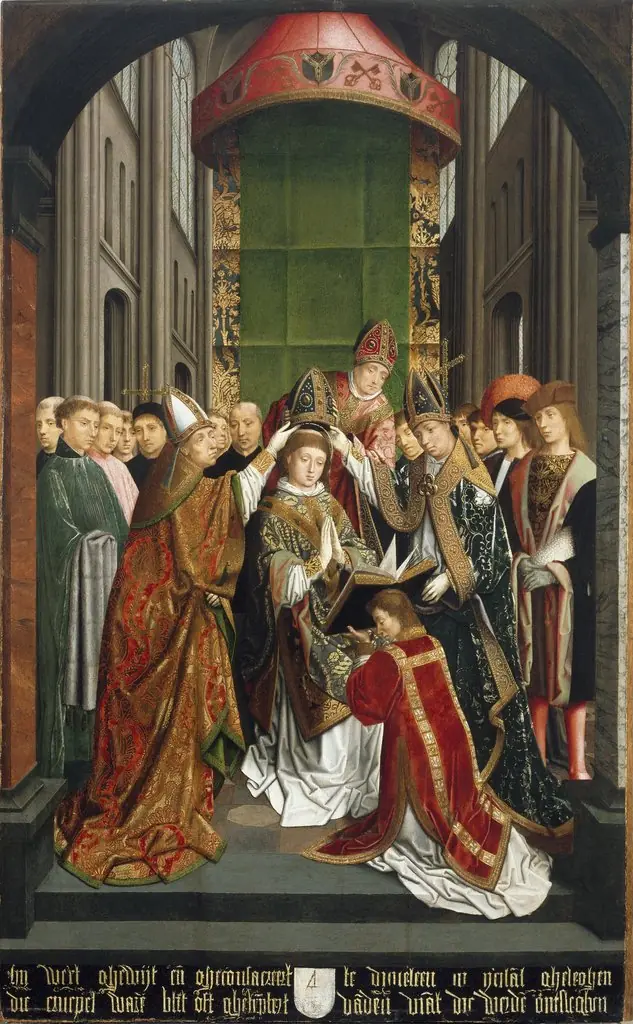 The Enthronement of Saint Romold as Bishop of Dublin
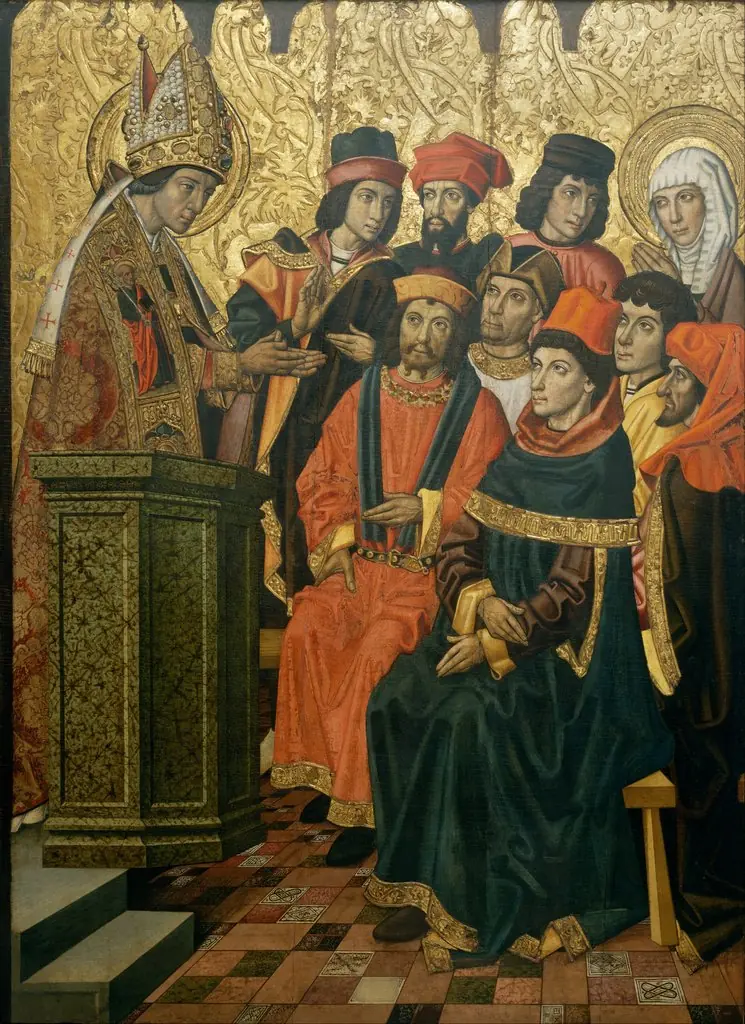 Saint Augustine and Saint Monica in a Sermon by Saint Ambrose
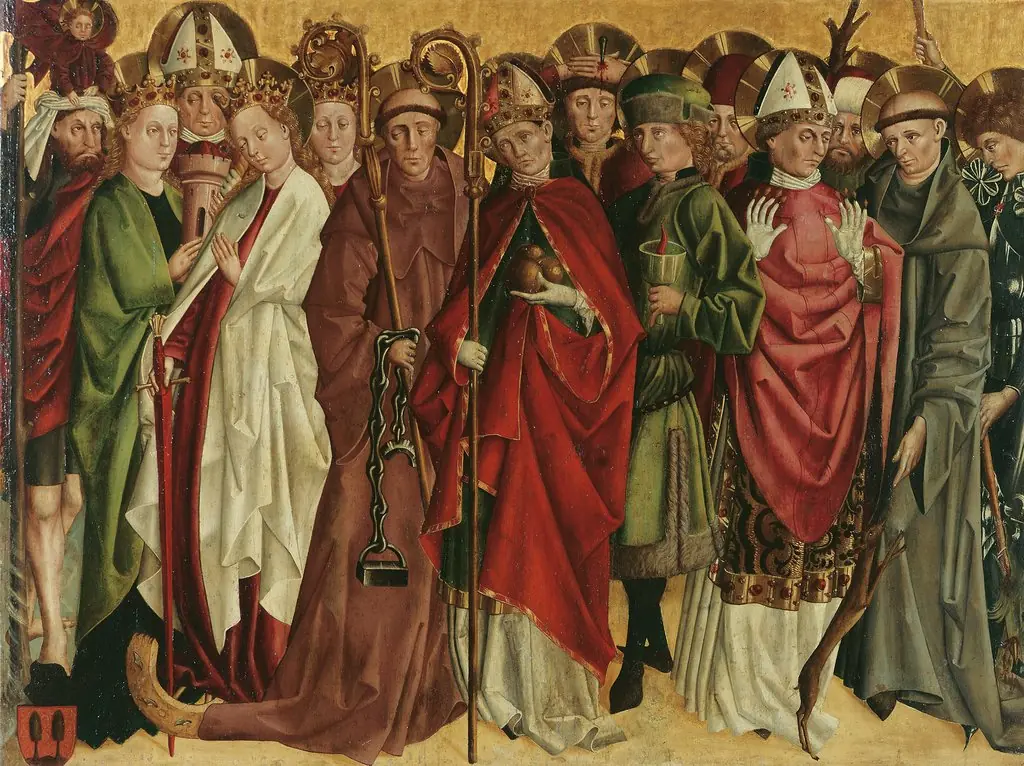 Die vierzehn Nothelfer