Artwork
Still Life with a Copy of De Waere Mercurius, a Broadsheet with the News of Tromp's Victory over three English Ships on 28 June 1639, and a Poem telling the story of Apelles and the Cobbler
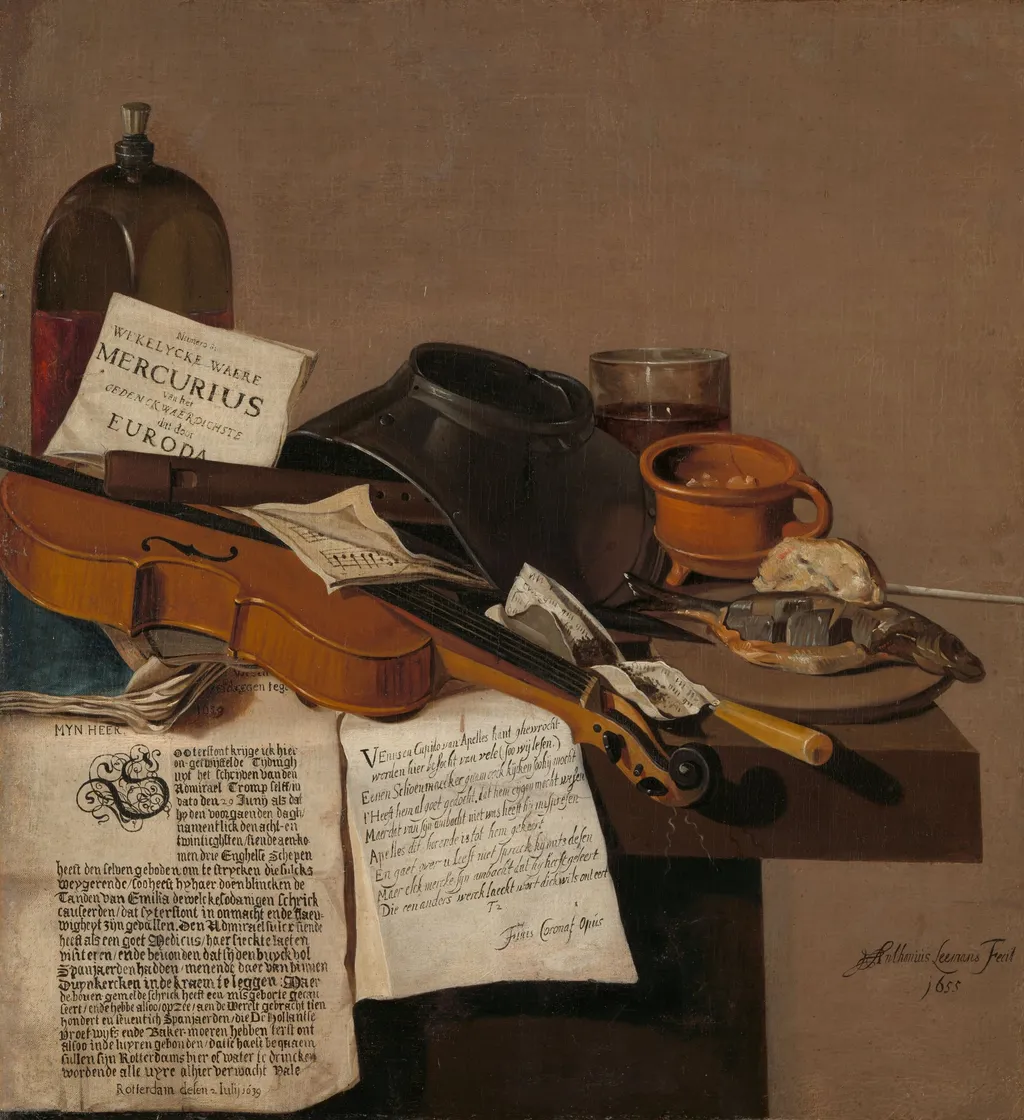
Still Life with a Copy of De Waere Mercurius, a Broadsheet with the News of Tromp's Victory over three English Ships on 28 June 1639, and a Poem telling the story of Apelles and the Cobbler is an unspecified painting by the Dutch Golden Age artist Anthonie Leemans. It dates from 1655 and is held in the collection of the Rijksmuseum.
About this work
History & Provenance
Created in 1655, this still life was painted by Anthonius Leemans during the final year of his documented activity in The Hague before his relocation to Amsterdam. The work reflects the artist's established practice of producing trompe-l'oeil compositions featuring hunting paraphernalia, weaponry, and vanitas elements, a genre in which he gained recognition alongside his brother Johannes. While specific commission details for this particular painting are not recorded in available sources, its date aligns with Leemans' period of professional activity in The Hague between 1650 and 1655. The inclusion of a broadsheet commemorating Tromp's 1639 naval victory situates the piece firmly within the artist's mature phase, shortly before he moved to Amsterdam later that same year.
Context
Leemans, who worked in The Hague before moving to Amsterdam, was the older brother of fellow painter Johannes Leemans.
Anthonie Leemans, a Dutch Golden Age painter active from 1631 to 1673, is recognized for his still life works, particularly vanitas and hunting pieces often executed with trompe-l'oeil effects. His 1655 painting, *Still Life with a Copy of De Waere Mercurius*, exemplifies his engagement with contemporary news and classical allegory, integrating a broadsheet about Admiral Tromp's 1639 naval victory with a poem on Apelles and the Cobbler. Leemans, who worked in The Hague before moving to Amsterdam, was the older brother of fellow painter Johannes Leemans. Both brothers specialized in still lifes depicting hunting paraphernalia and vanitas themes, a genre that gained significant popularity and subsequently influenced the work of Christoffel Pierson. Historical accounts by Arnold Houbraken acknowledge Leemans as a skilled artist of hunting scenes, though the specific attribution of works between the two brothers remains occasionally ambiguous in early literature.
Own this work as a print
Artist & collection

 Still Life with Violin
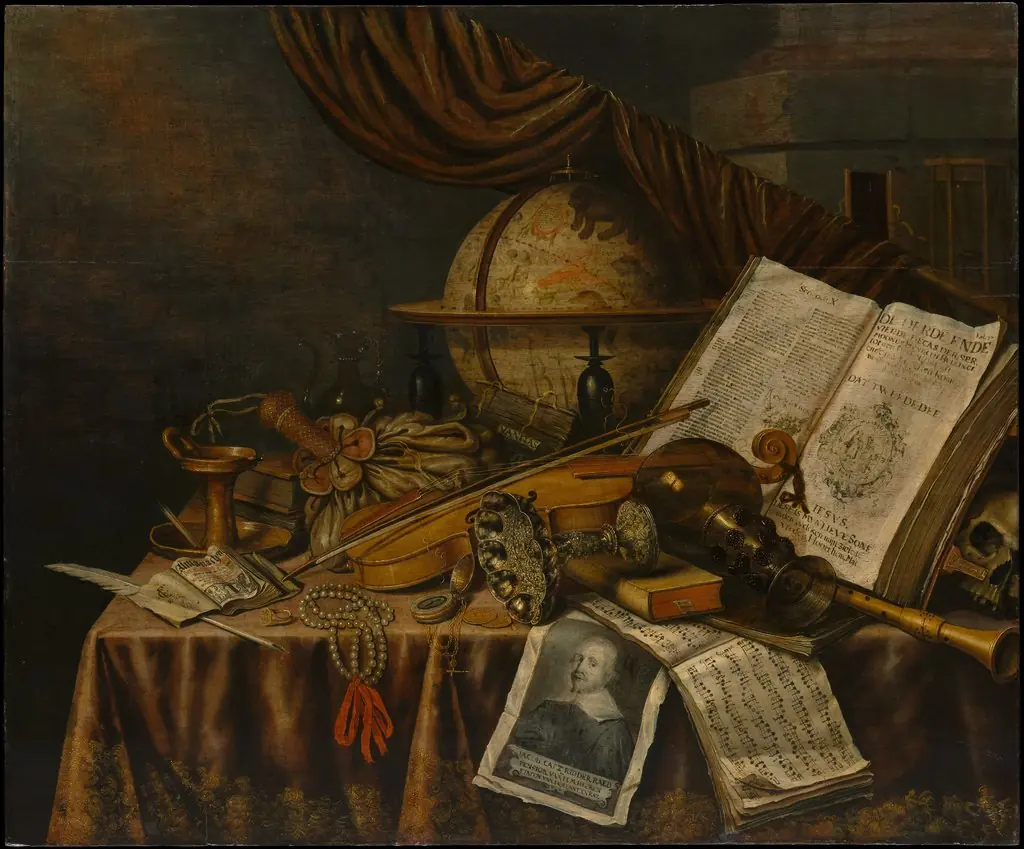 Vanitas Still Life
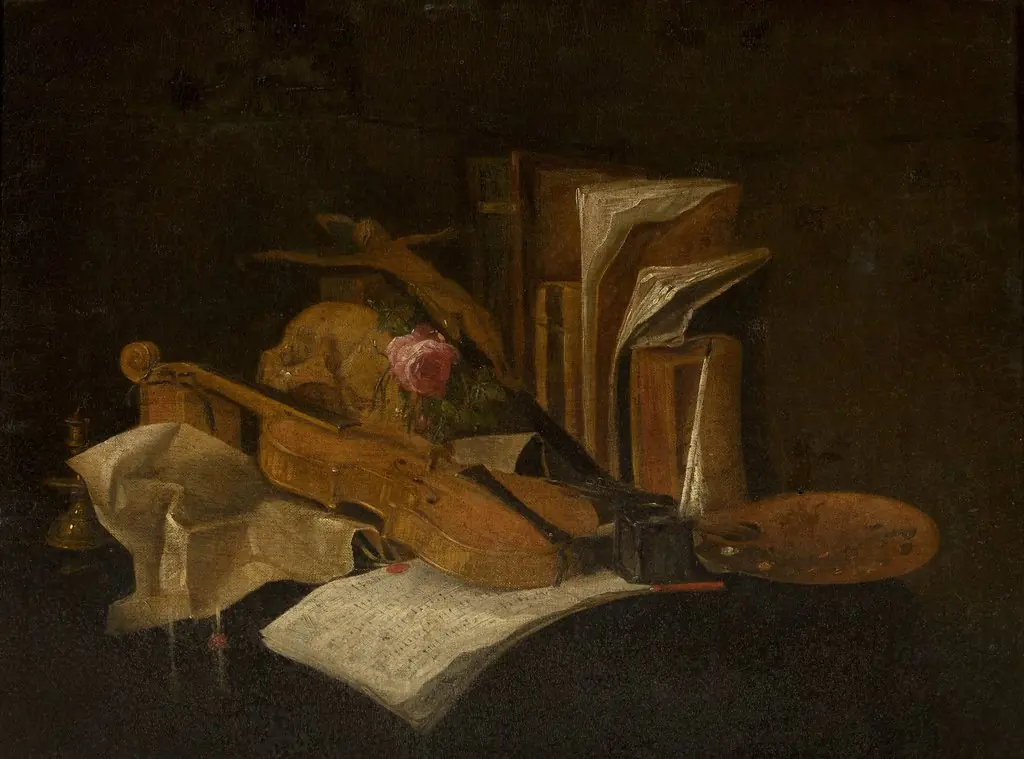 Vanitas
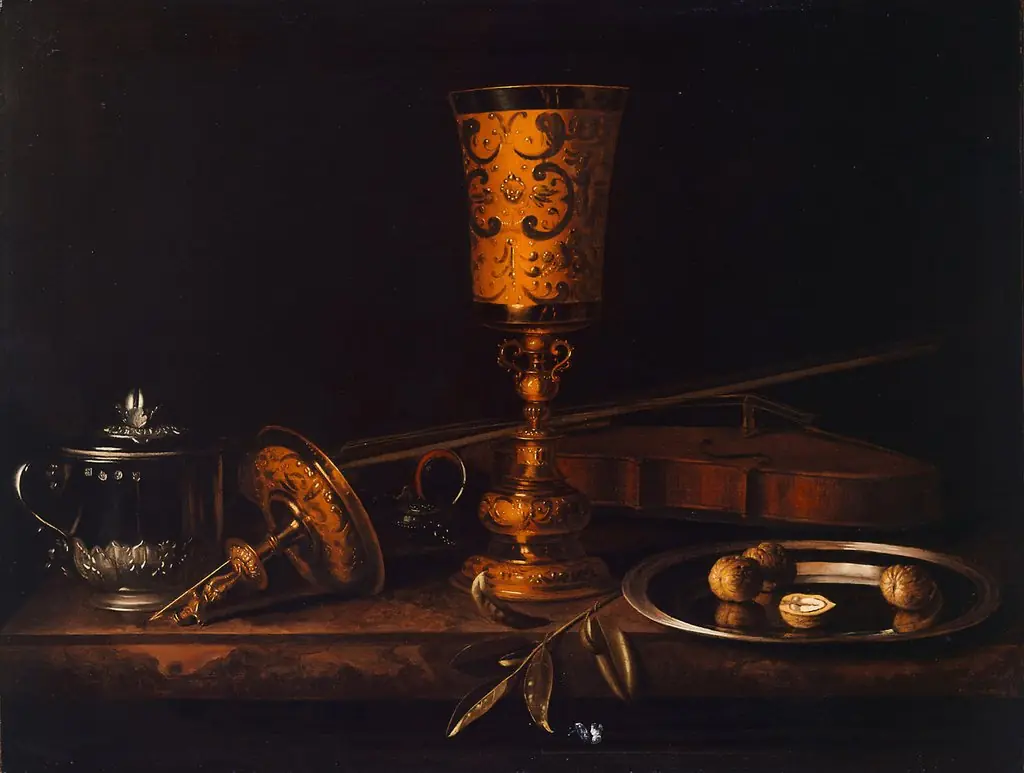 Vanitas-Stilleben
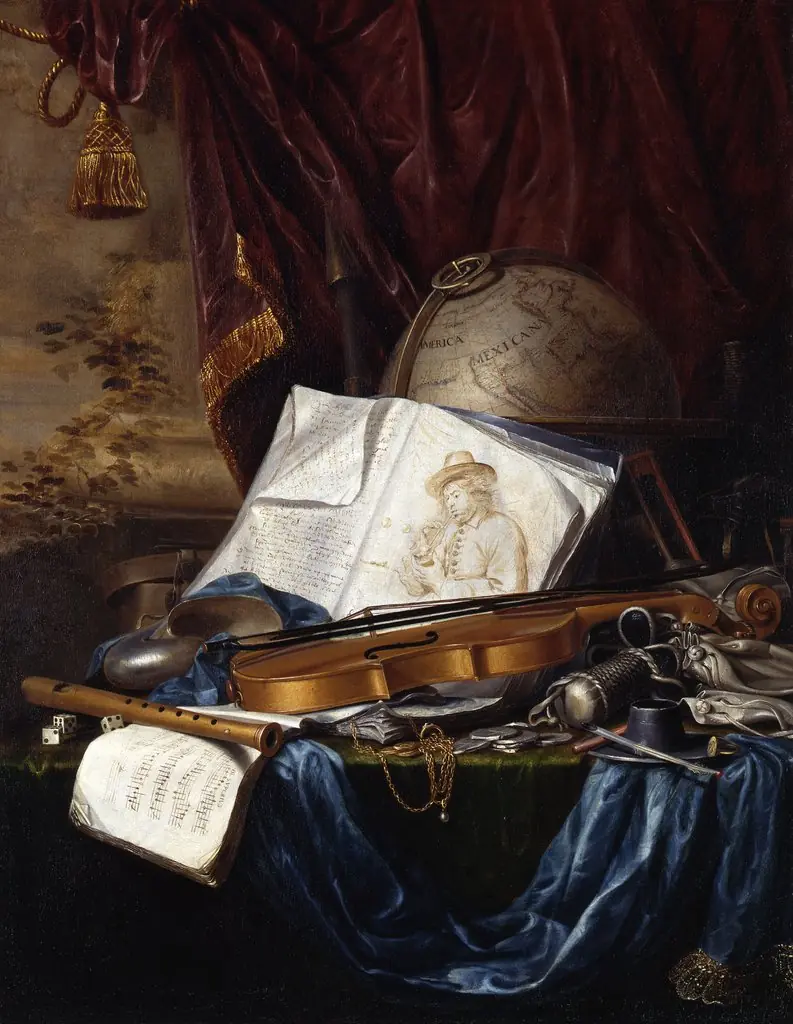 Still Life with Musical Instruments
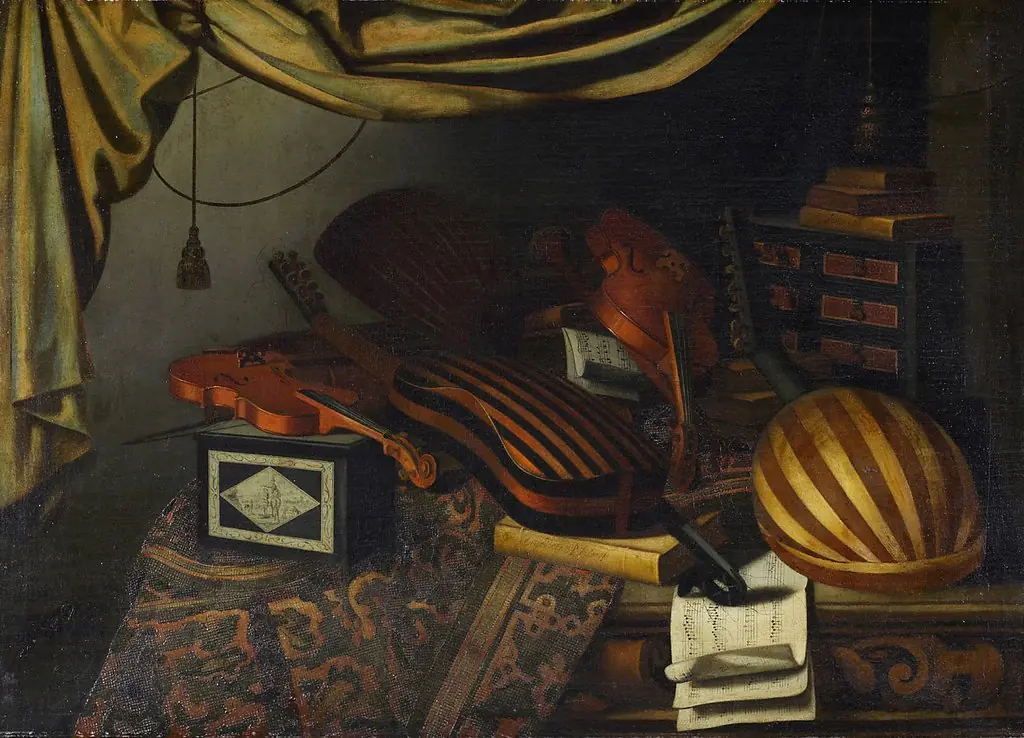 Stilleben mit Musikinstrumenten, Notenblättern und Büchern
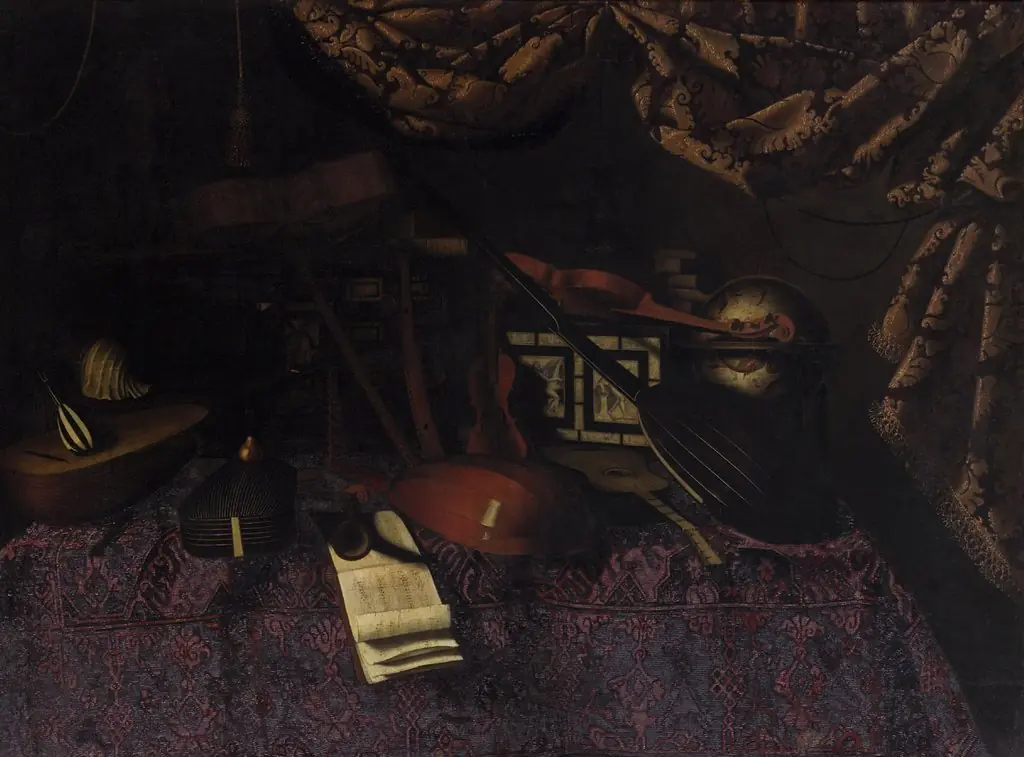 Stilleben mit Musikinstrumenten, Notenblättern, Himmelsglobus und Muschel
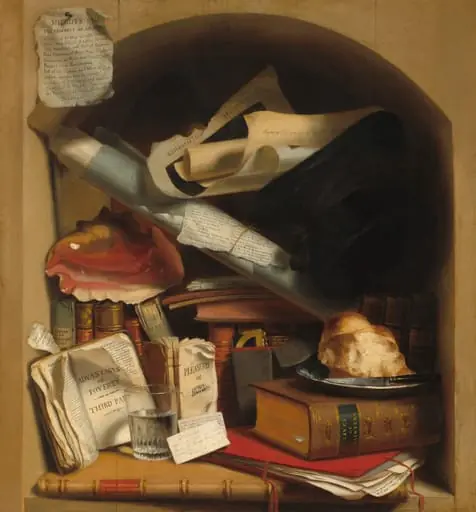 Poor Artist's Cupboard
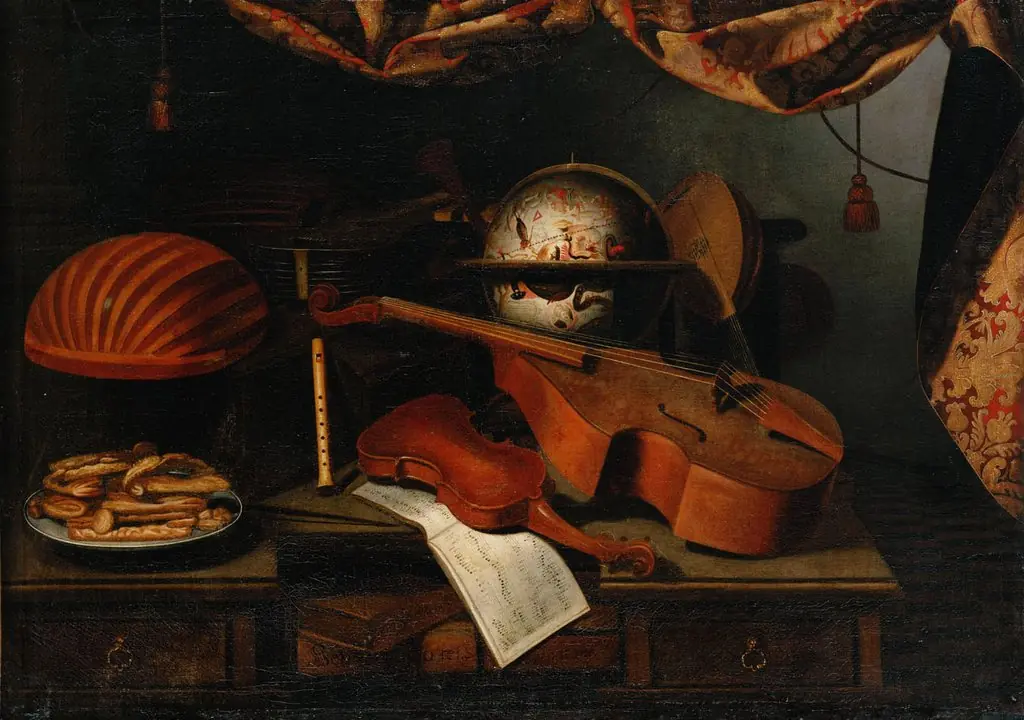 Stilleben mit Musikinstrumenten, Globus und einem Teller mit Gebäck
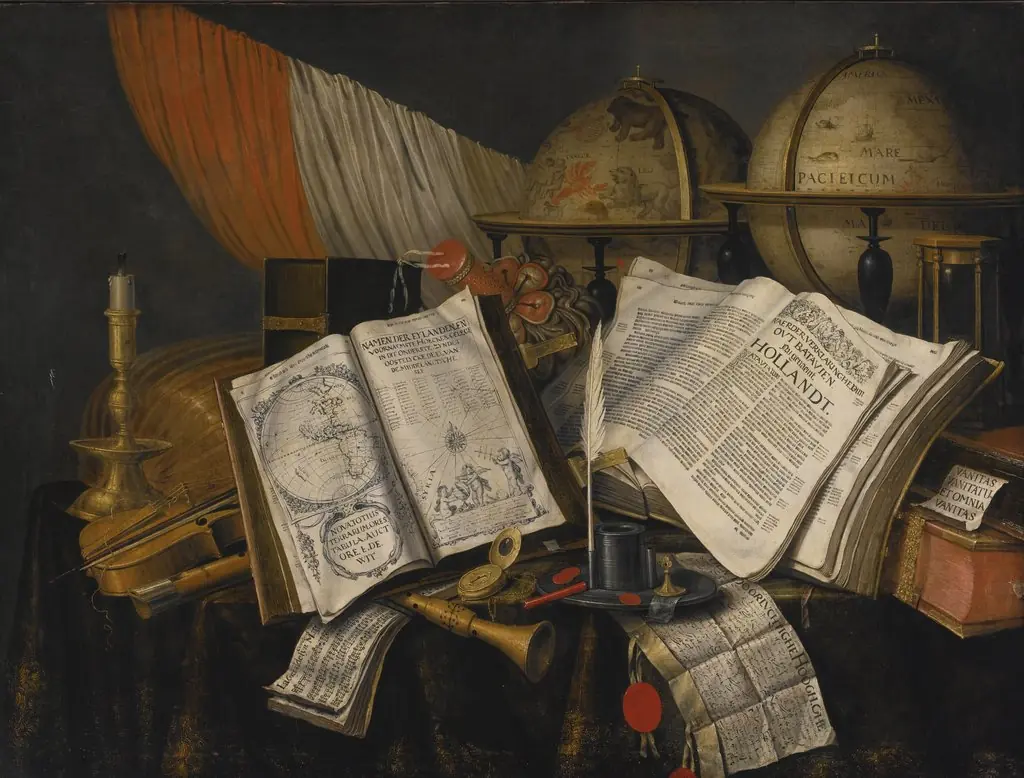 Vanitas Still Life with a Candlestick, Musical Instruments, Dutch Books, a Writing Set, an Astrological and a Terrestial Globe and an Hourglass, All on a Draped Table