Artwork
Vabhruvahana Approaches Arjuna, page from the Khan Khanan's Razm-nama
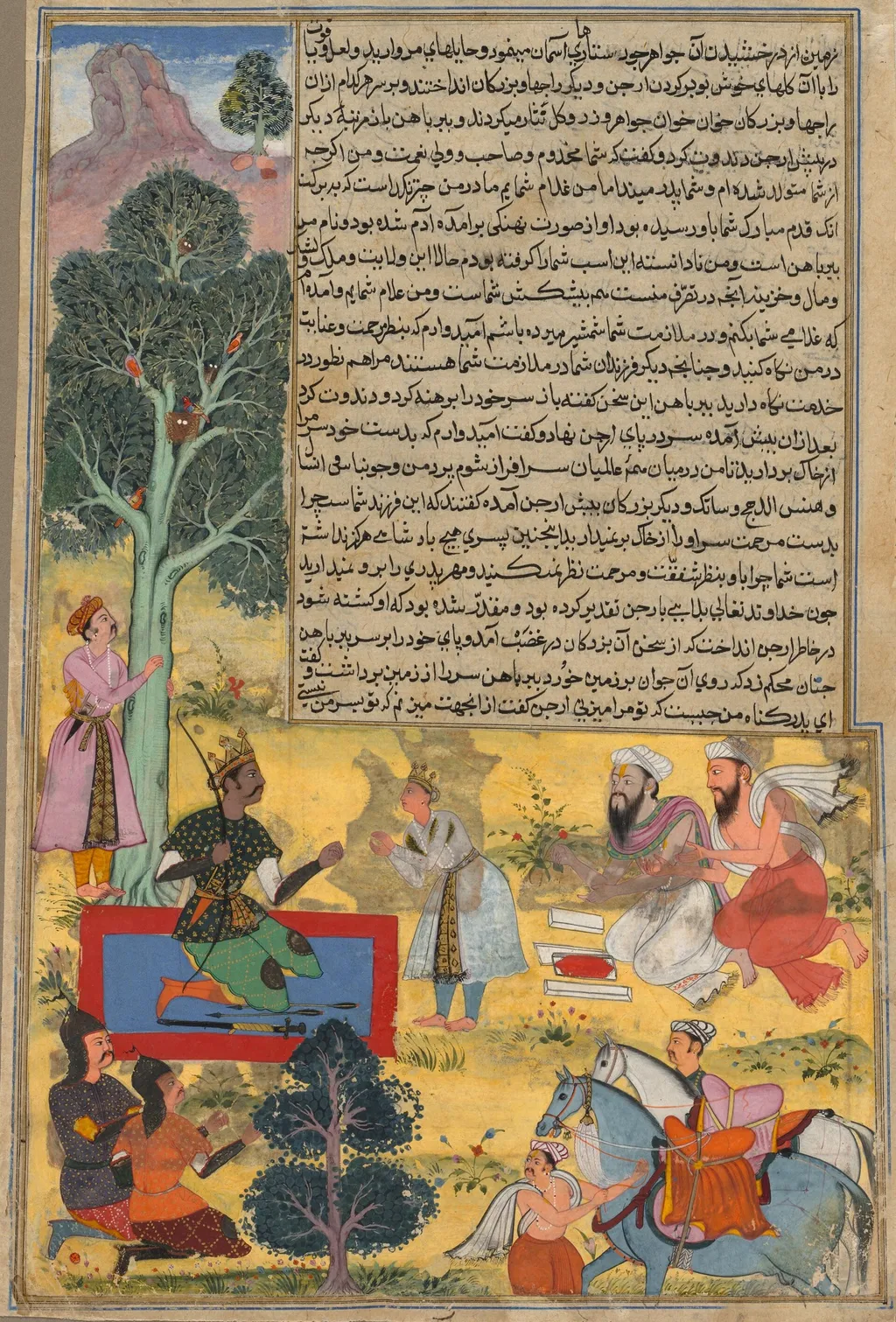
Vabhruvahana Approaches Arjuna, page from the Khan Khanan's Razm-nama is an unspecified painting by the Mughal Painting artist Sur Das. It dates from 1613 and is held in the collection of the Cleveland Museum of Art. The miniature, titled Vabhruvahana Approaches Arjuna, is a page from the illustrated manuscript known as the Razm‑nama of Khan‑Khanan.
About this work
History & Provenance
The work is held in the collection of the Cleveland Museum of Art, Cleveland, Ohio, where it is cataloged under the accession number 1960.
Vabhruvahana Approaches Arjuna is a page from the Khan Khanan's Razm-nama, painted in 1613 by Sur Das Gujarati, an Indian artist active in the late sixteenth and early seventeenth centuries. The work is held in the collection of the Cleveland Museum of Art, Cleveland, Ohio, where it is cataloged under the accession number 1960.44. The available sources do not document a detailed ownership history prior to the museum or a verified exhibition record for the page.
Overview
The miniature, titled Vabhruvahana Approaches Arjuna, is a page from the illustrated manuscript known as the Razm‑nama of Khan‑Khanan. Executed in the Mughal tradition of courtly painting, it presents a densely populated scene rendered in vivid pigments. The composition is framed by a stylised landscape of mountains and a curved band of Persian‑Arabic calligraphy that identifies the narrative episode.
Subject & Meaning
The image illustrates a moment from the Mahābhārata in which Vabhruvahana, the son of the legendary hero Arjuna, rides to meet his father. The central figure on horseback, bow in hand, represents Arjuna, while the approaching rider in orange attire is Vabhruvahana. Surrounding courtiers, attendants, and a conspicuous red cloth suggest a ceremonial reception, emphasizing the significance of the familial reunion.
Technique & Style
Created with water‑based pigments on paper, the miniature employs the fine brushwork and intricate detailing characteristic of Mughal court art. Bright, saturated colours, pink, orange, red, highlight costumes and foliage, while delicate gold leaf accents enhance the ornamental elements. The perspective remains largely flat, with a decorative border of calligraphic text that integrates literary and visual storytelling.
Context
Mughal miniatures such as this one reflect a synthesis of Persian artistic conventions with Indian narrative traditions. By depicting a scene from the Mahābhārata, the work illustrates the court’s engagement with indigenous epics, while the Persian script underscores the multicultural milieu of the empire. The piece continues to inform scholars of cross‑cultural exchange in early modern South Asia.
Own this work as a print
Artist & collection
Artist
Sur Das spent his life inking the Mughal court’s endless parade of envoys and battles, a quiet scribe sketching power moves with a line so spare it feels like he’s holding his breath.

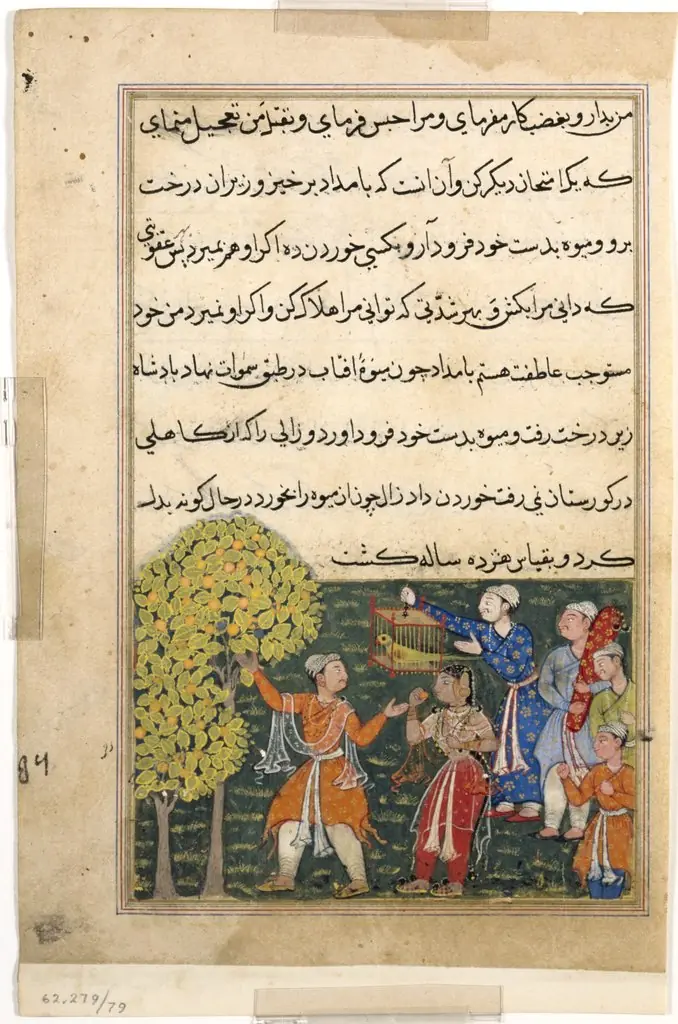 The king plucks fruit from the Tree of Life with his own hands and feeds it to a lady, from a Tuti-nama (Tales of a Parrot): Ninth Night
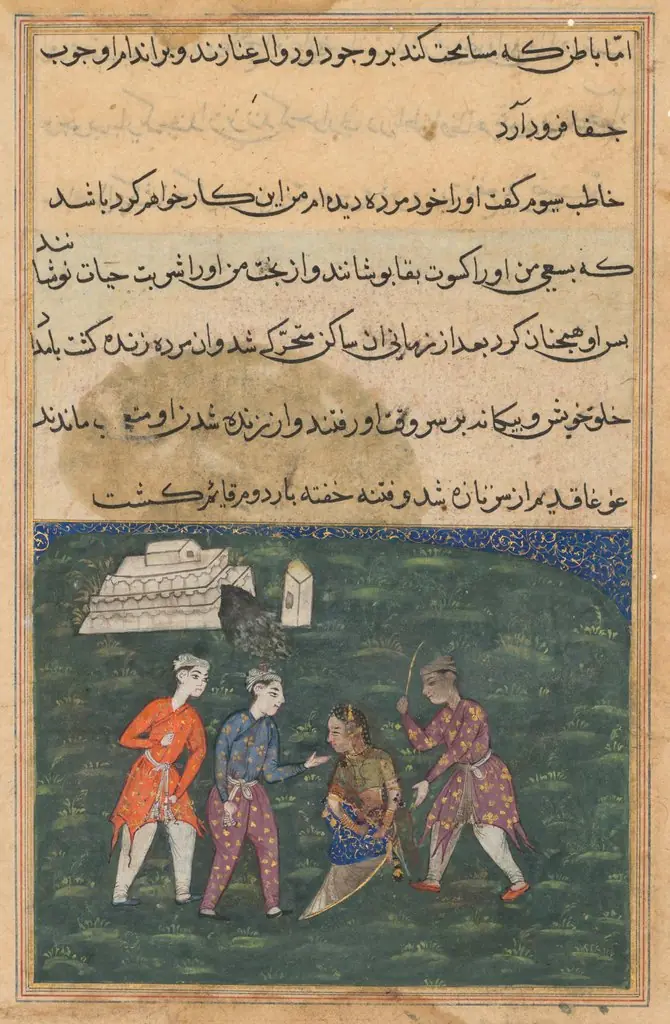 The third suitor strikes the devotee’s daughter and thus restores her to life, from a Tuti-nama (Tales of a Parrot): Twentieth Night
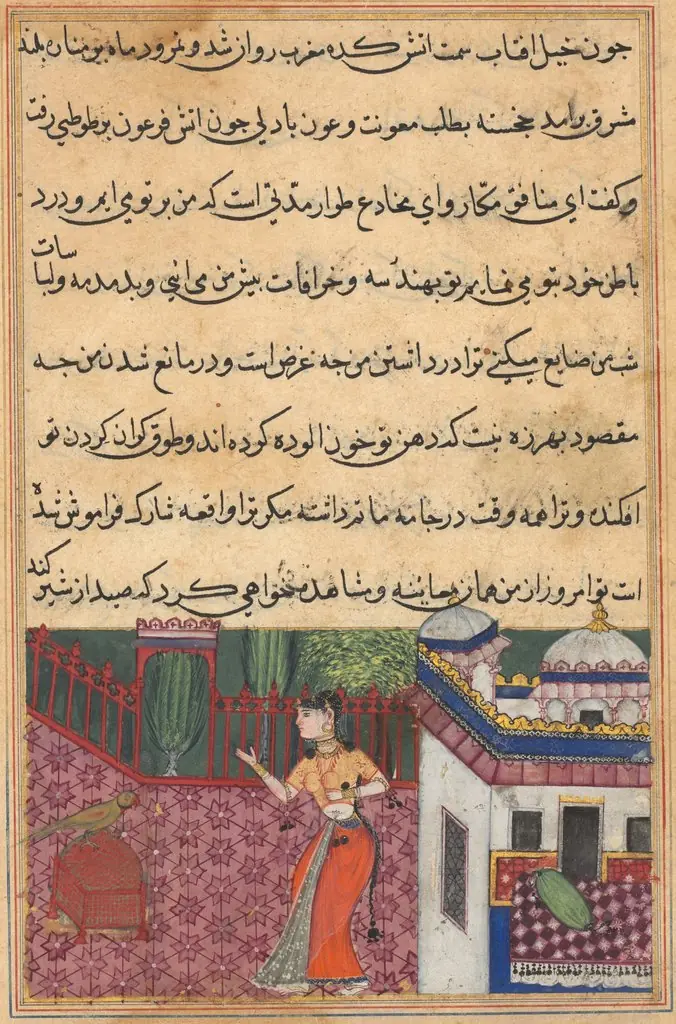 The parrot addresses Khujasta at the beginning of the thirty-third night, from a Tuti-nama (Tales of a Parrot)
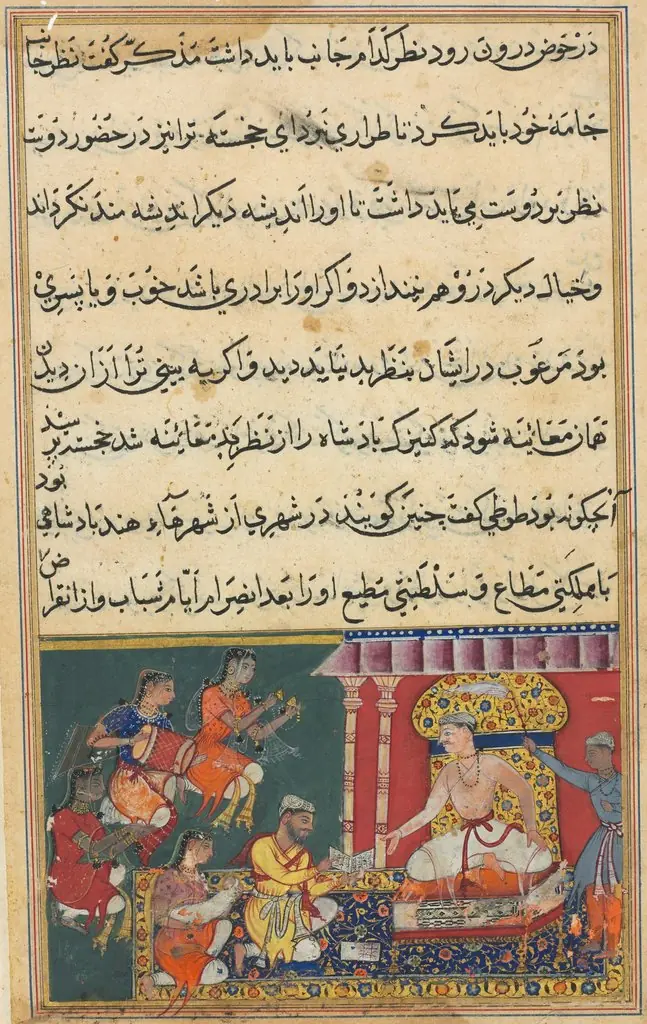 The astrologer predicts a calamity for the newly born prince in his thirteenth year, but one which he would be able to overcome, from a Tuti-nama (Tales of a Parrot): Eighth Night
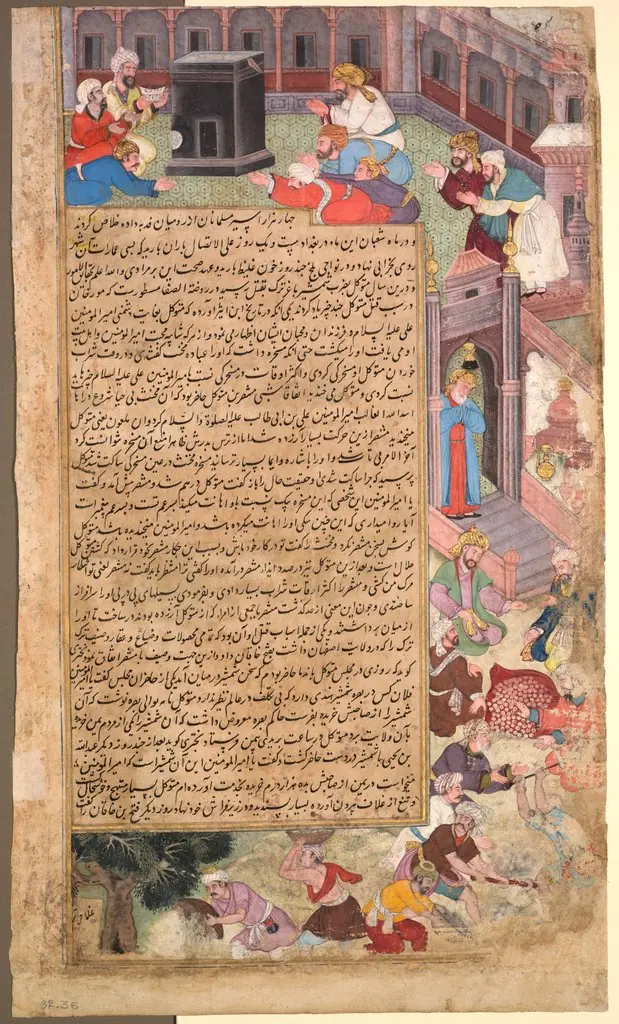 Page of disasters, from the Tarikh-i Alfi (History of a Thousand Years)
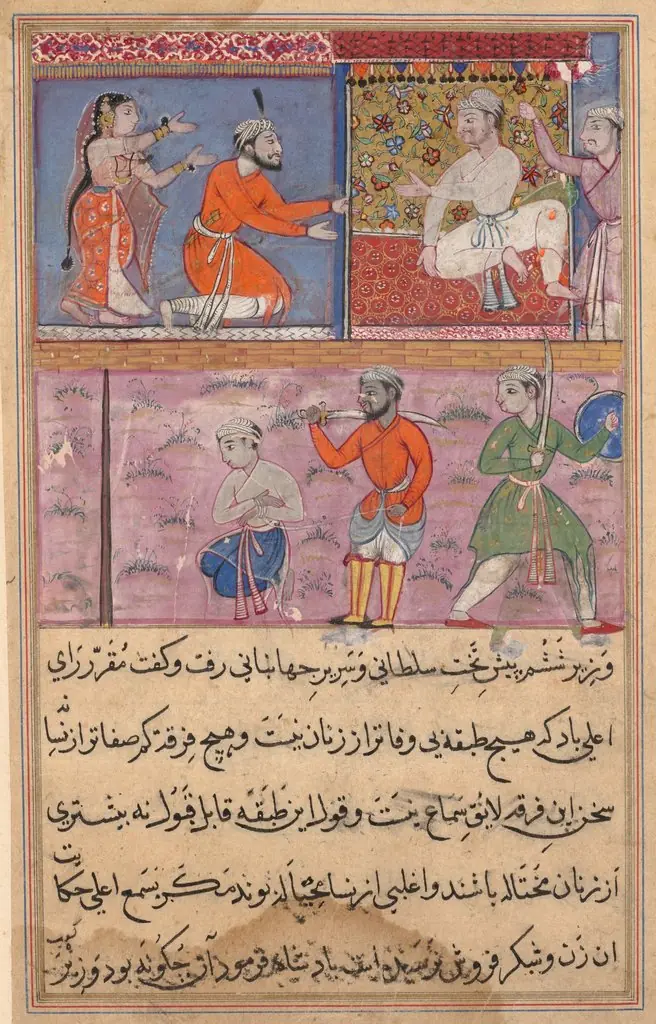 Page from Tales of a Parrot (Tuti-nama): text page
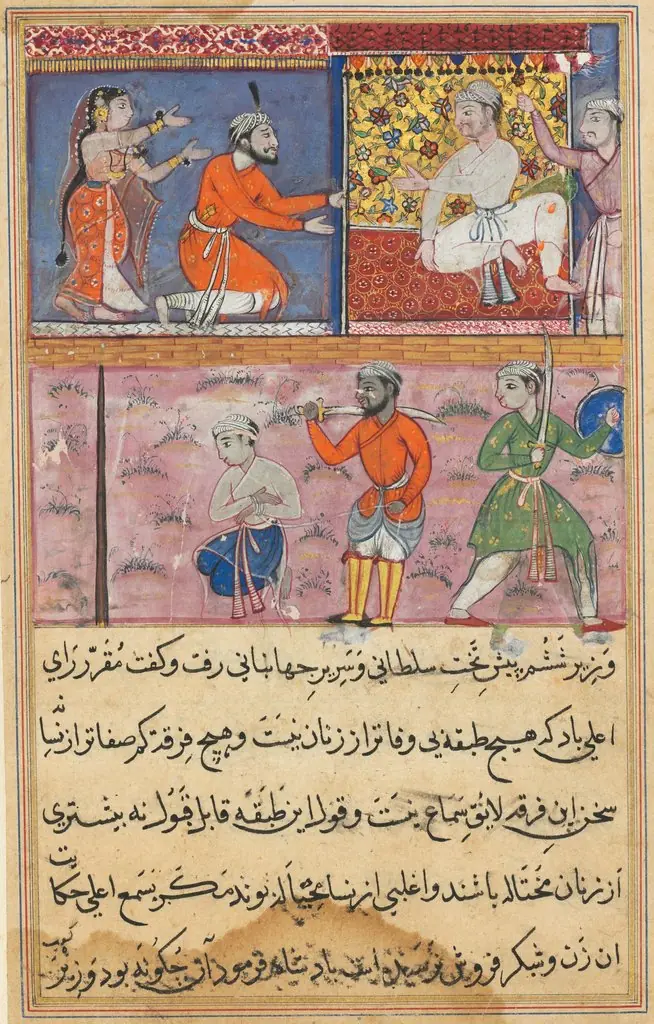 The prince sent back to the place of execution for the sixth time, from a Tuti-nama (Tales of a Parrot): Eighth Night
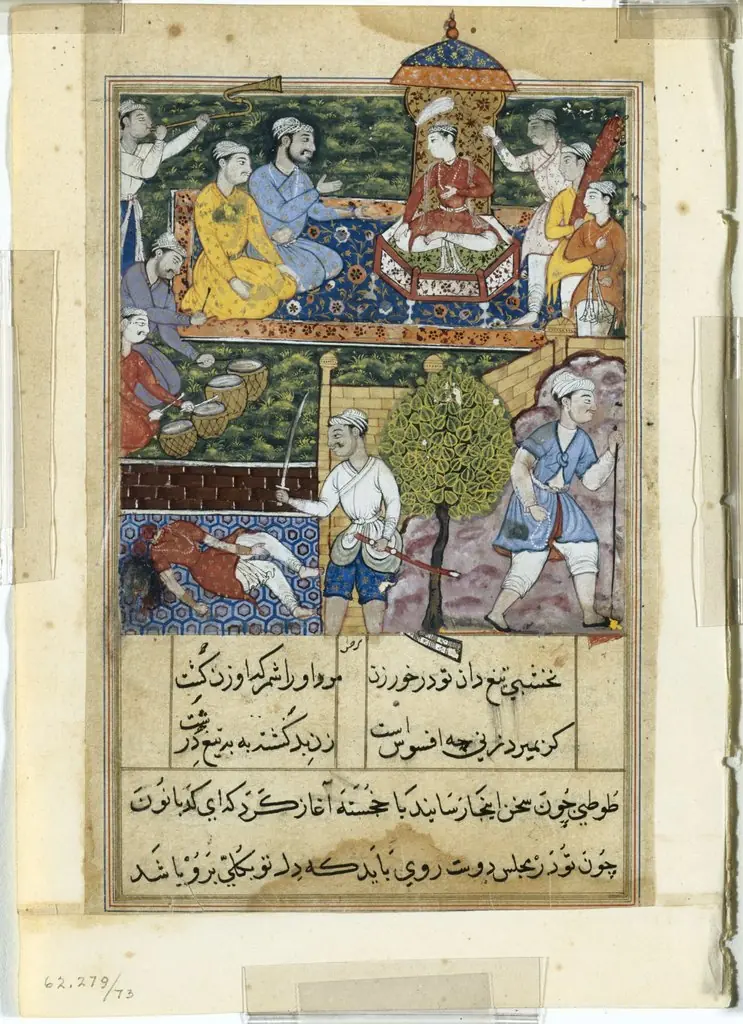 The young prince is crowned and the wicked handmaiden is executed, from a Tuti-nama (Tales of a Parrot): Eighth Night
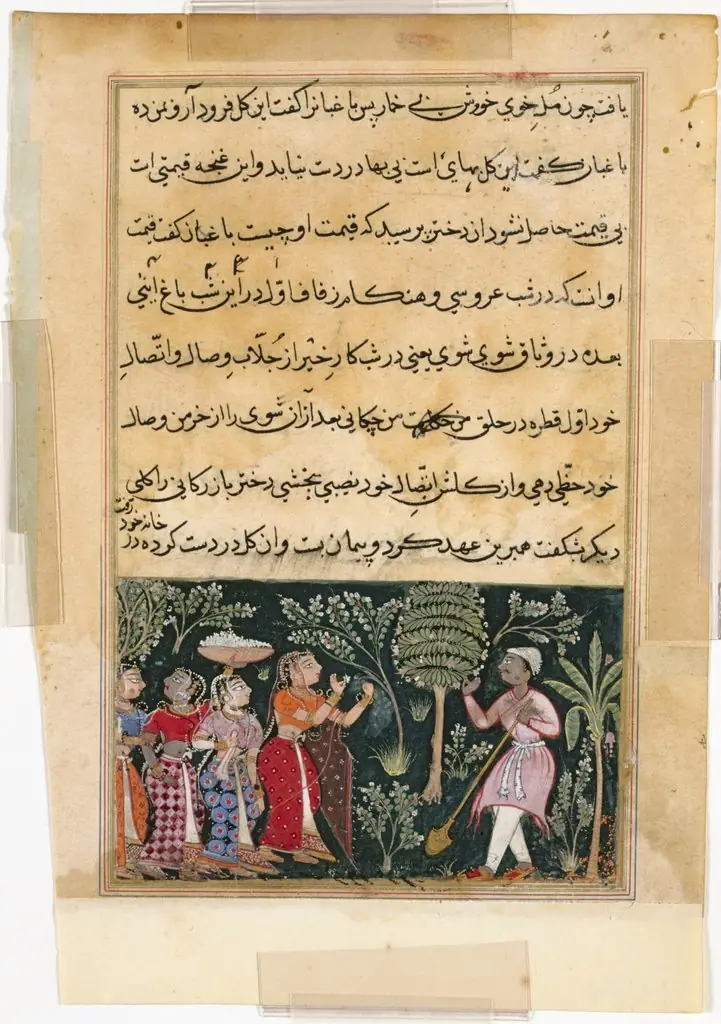 The daughter of the merchant of Mazanderan asks the gardener for the rose, from a Tuti-nama (Tales of a Parrot): Twelfth Night
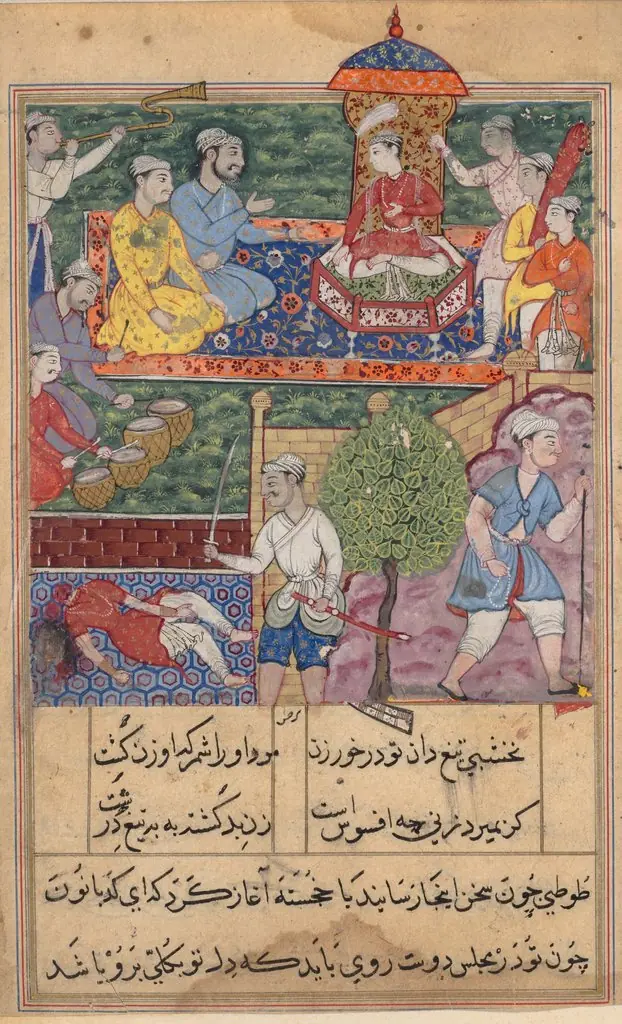 Page from Tales of a Parrot (Tuti-nama): text page