Artwork
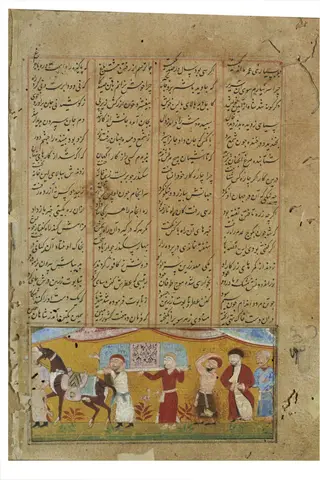
Page of disasters, from the Tarikh-i Alfi (History of a Thousand Years)
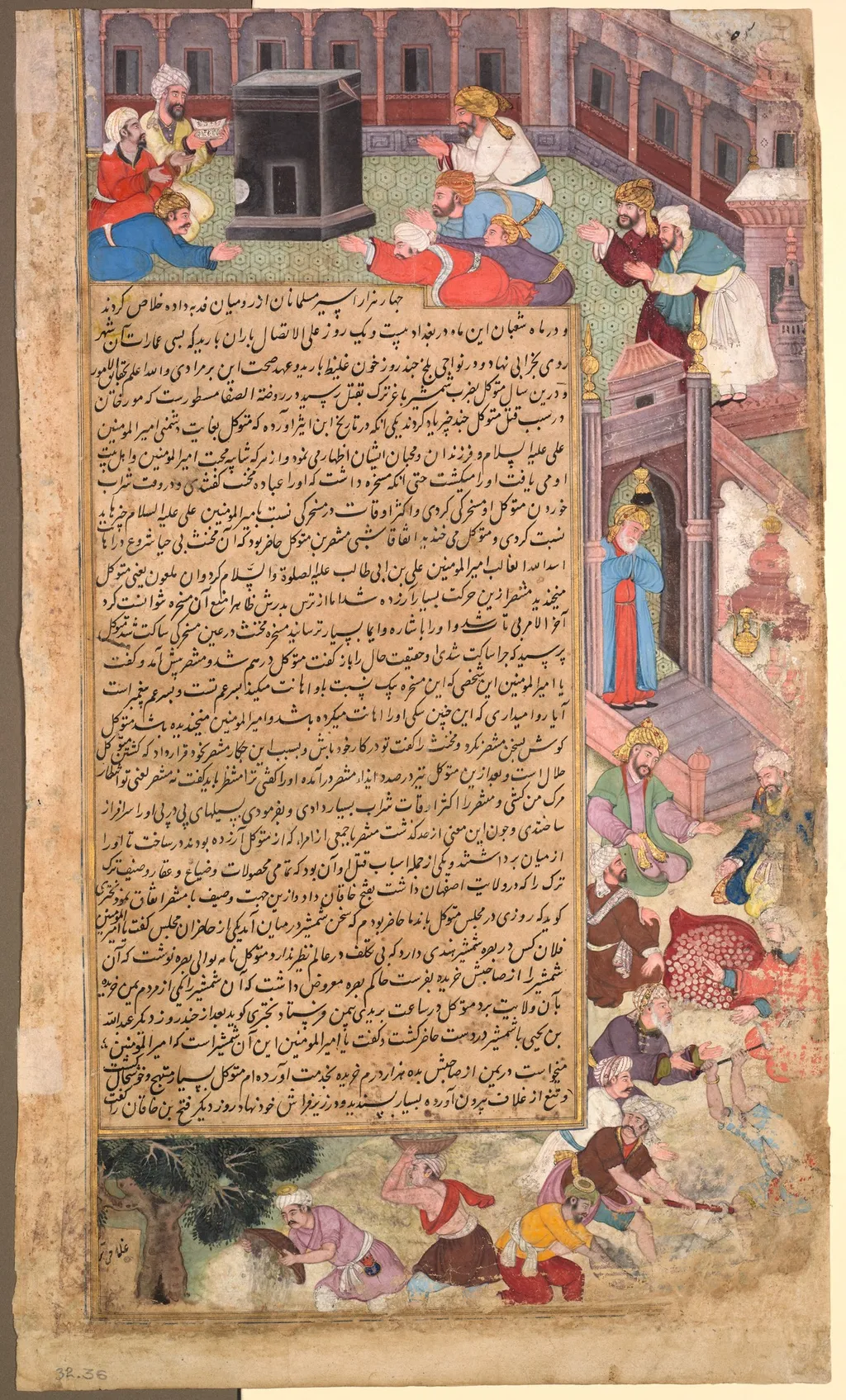
Page of disasters, from the Tarikh-i Alfi (History of a Thousand Years) is an unspecified painting. It dates from 1598 and is held in the collection of the Cleveland Museum of Art.
About this work
History & Provenance
The museum’s records indicate this inventory number, but the provided sources do not record any exhibition history or public display of the piece.
The Page of disasters from the Tarikh-i Alfi (History of a Thousand Years) is dated to 1595, aligning with the manuscript’s historical scope and the Safavid period in Persia. Its creation history remains unattributed, reflecting the customary anonymity of many works from this tradition.
The provenance is documented through its inclusion in the Cleveland Museum of Art’s collection, where it is recorded as accession number 1932.36.b. The museum acquired the page as part of a broader acquisition, though specific acquisition details are not specified in the available records.
The Page of disasters from the Tarikh-i Alfi is held by the Cleveland Museum of Art, where it is accessioned as 1932.36.b. The work is a history painting dated to 1595, created by an unknown artist, and is classified as a page from the Tarikh-i Alfi manuscript. The museum’s records indicate this inventory number, but the provided sources do not record any exhibition history or public display of the piece.
Overview
The illuminated page, taken from the Persian chronicle Tarikh-i Alfi (History of a Thousand Years), presents a densely populated tableau of miniature scenes rendered in vivid pigments. Arranged in a horizontal sequence, the composition juxtaposes solemn rituals, architectural interiors, and violent clashes, all set against a background of saturated reds, blues and gold leaf. The accompanying text, written in an unfamiliar script, runs down the left margin, linking the images to the narrative of the manuscript.
Subject & Meaning
The leftmost vignette depicts a funeral gathering, with mourners surrounding a coffin, some arguing, others kneeling in prayer, suggesting the social tensions surrounding death. Central to the page is an interior space with arched windows and a solitary figure, perhaps indicating a court or religious setting. To the right, a chaotic melee unfolds near a tower, capped by a horse and rider tumbling amid the fray, illustrating the unpredictability of conflict and the fragility of authority.
Technique & Style
Executed in the Persian miniature tradition, the page employs fine brushwork to delineate intricate details within a compact format. The palette relies on mineral and organic pigments, enhanced by gold leaf that catches light and emphasizes key elements. Narrative sequencing resembles early comic-strip layouts, with each vignette framed by subtle borders that guide the viewer’s eye across the continuous story.
Context
The work belongs to a period when Persian courts commissioned lavishly illustrated histories to legitimize dynastic narratives and to educate elite audiences. Miniature painting served both decorative and didactic purposes, embedding moral and political commentary within visually engaging scenes.
Artist & collection

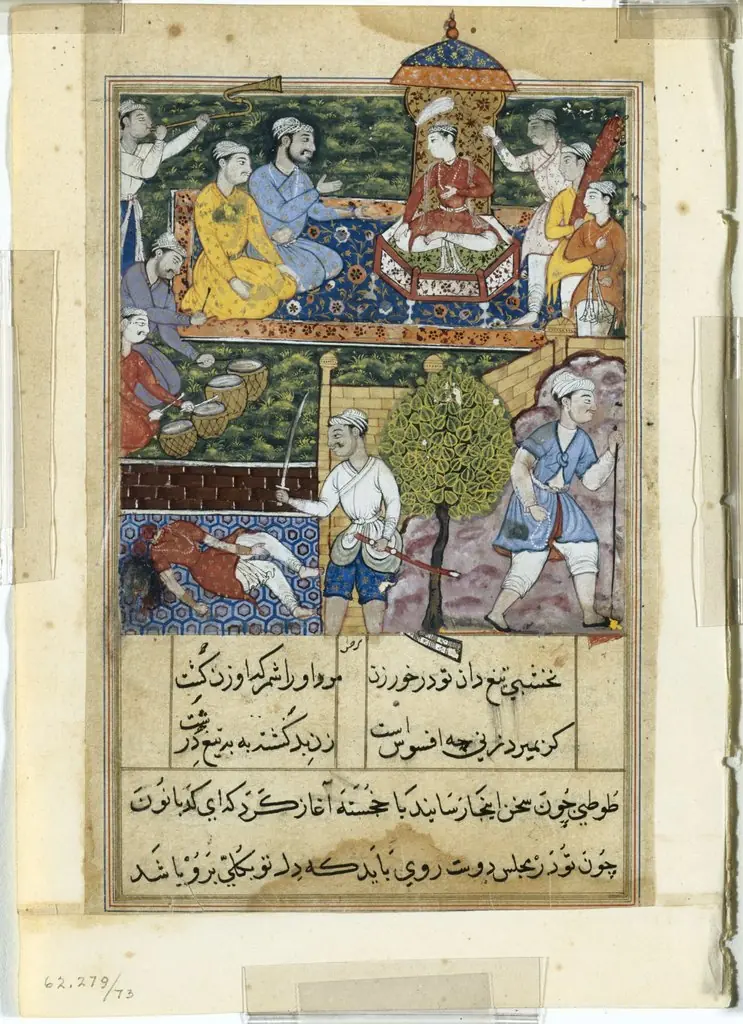 The young prince is crowned and the wicked handmaiden is executed, from a Tuti-nama (Tales of a Parrot): Eighth Night
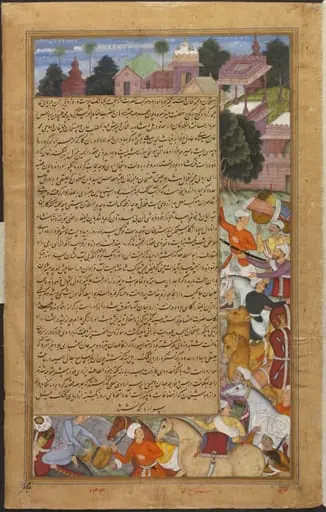 Akbar
Akbar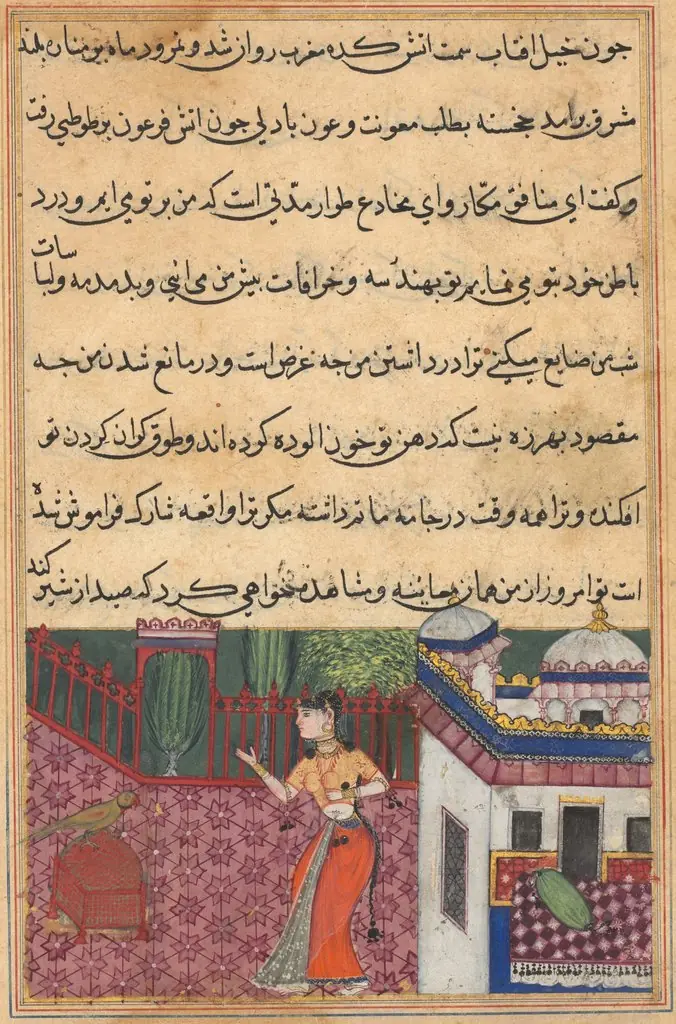 The parrot addresses Khujasta at the beginning of the thirty-third night, from a Tuti-nama (Tales of a Parrot)
 Untitled
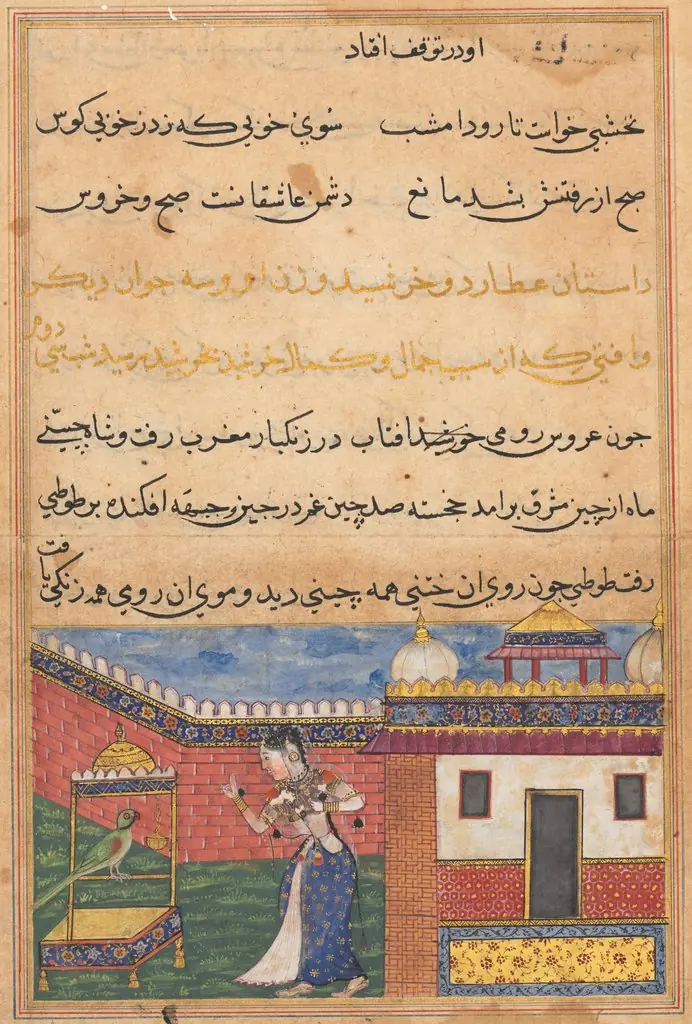 The parrot addresses Khujasta at the beginning of the thirty-second night, from a Tuti-nama (Tales of a Parrot)
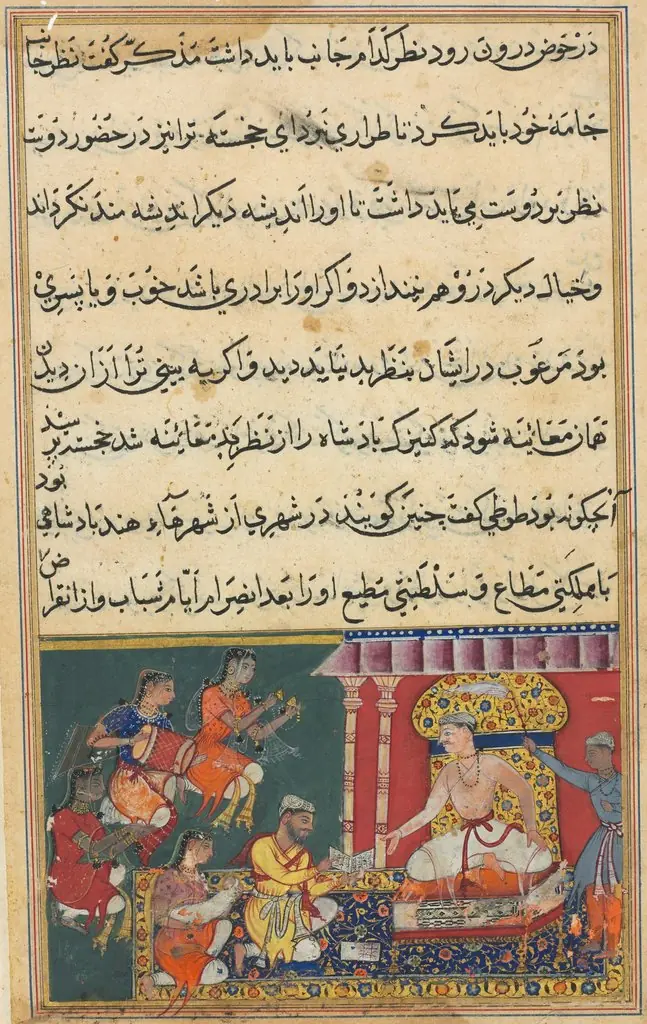 The astrologer predicts a calamity for the newly born prince in his thirteenth year, but one which he would be able to overcome, from a Tuti-nama (Tales of a Parrot): Eighth Night
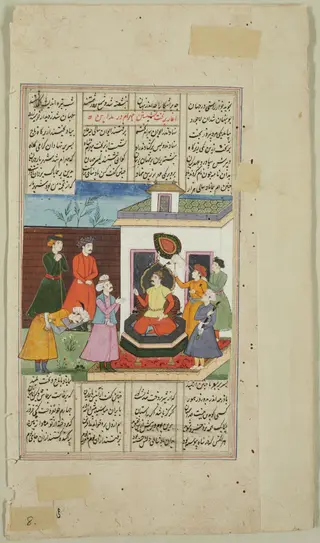 King Enthroned Outside and Standing Retainers
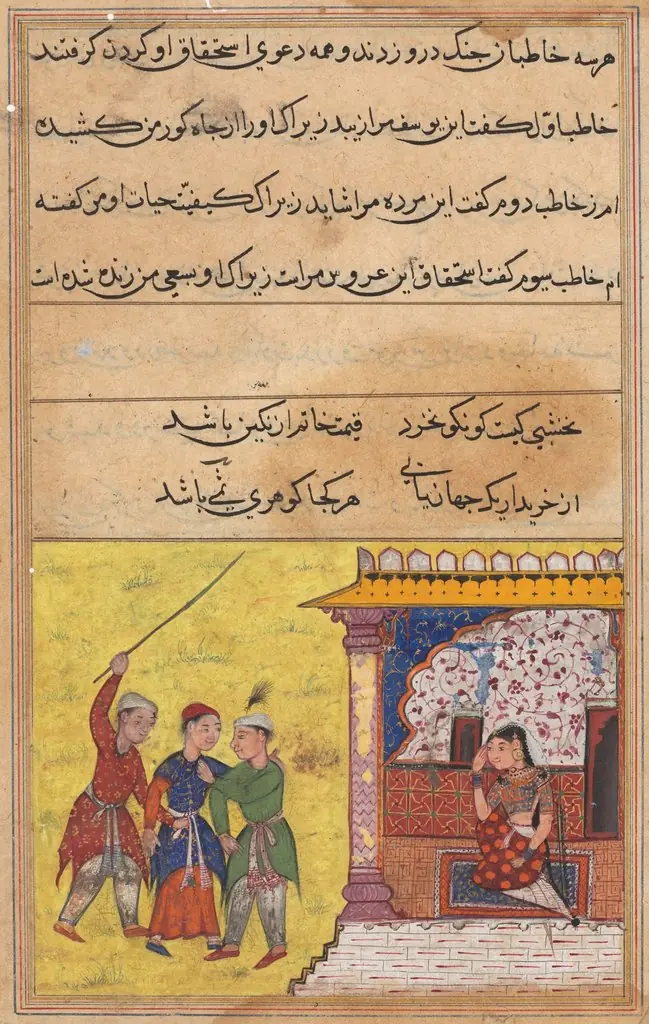 The three suitors again begin to quarrel among themselves for the hand of the devotee’s daughter, from a Tuti-nama (Tales of a Parrot): Twentieth Night
![Page of disasters, from the Tarikh-i Alfi (History of the Thousand [Years])](https://artifactworldgallery.com/img/page-of-disasters-from-the-tarikh-i-alfi-history-of-the-thou--16c8b92206fa51ff-w320.webp)
![Page of disasters, from the Tarikh-i Alfi (History of the Thousand [Years])](https://artifactworldgallery.com/img/page-of-disasters-from-the-tarikh-i-alfi-history-of-the-thou--d7c92582cb287b90-w320.webp)
![Page of disasters, from the Tarikh-i Alfi (History of the Thousand [Years])](https://artifactworldgallery.com/img/page-of-disasters-from-the-tarikh-i-alfi-history-of-the-thou--404ecc0ac902d18b-w320.webp)