Artwork
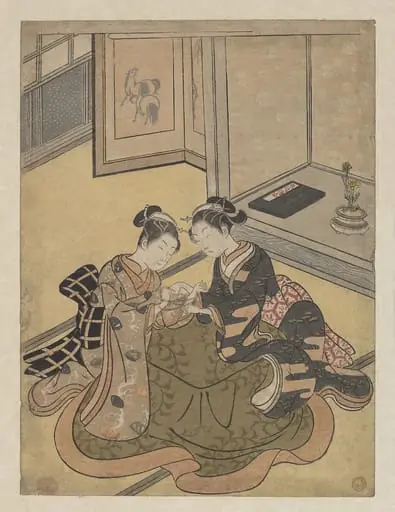
風流江戸八景 真乳山の暮雪|Evening Snow on Matsuchi Hilll, from the series Eight Fashionable Views of Edo (Furyu Edo hakkei)
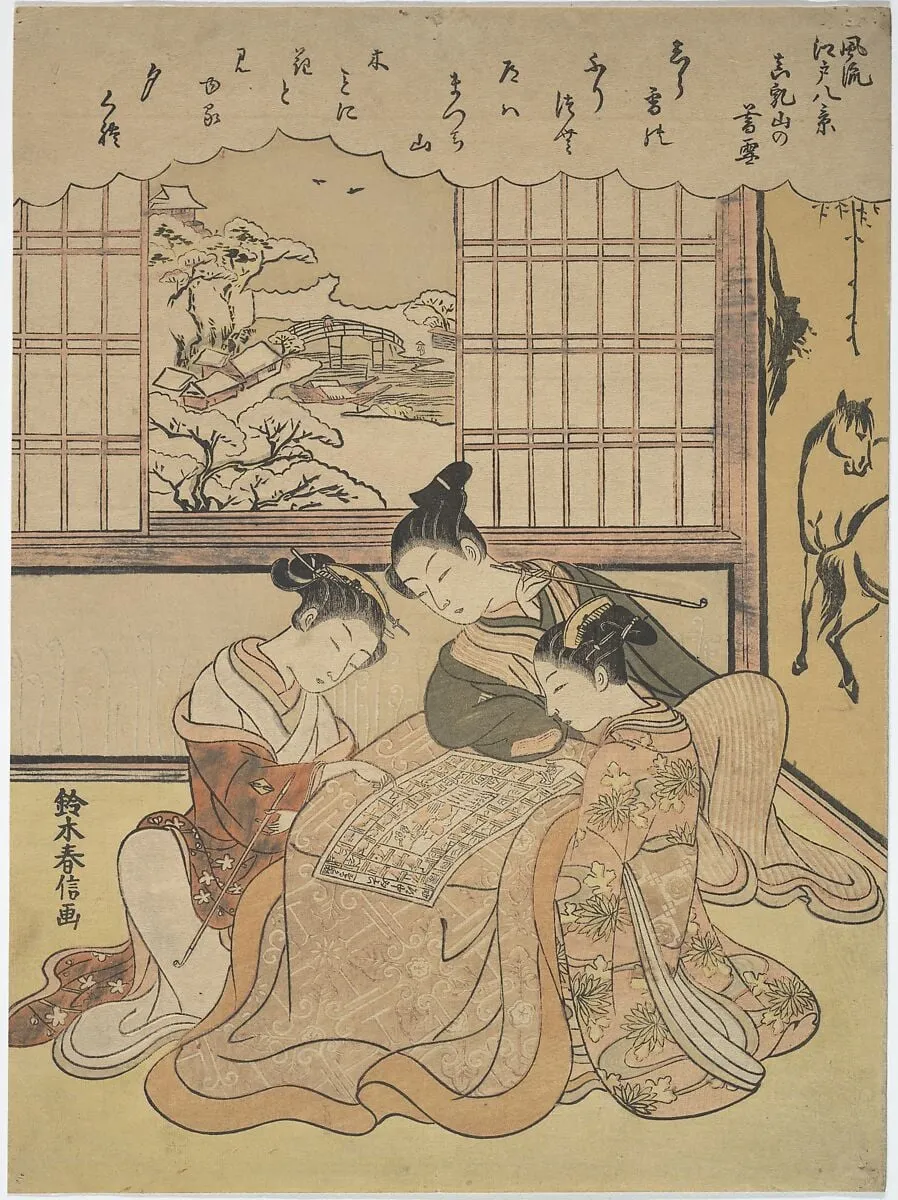
風流江戸八景 真乳山の暮雪|Evening Snow on Matsuchi Hilll, from the series Eight Fashionable Views of Edo (Furyu Edo hakkei) is an ink print by the Romanticist artist Suzuki Harunobu. It dates from 1768 and is held in the collection of the Metropolitan Museum of Art.
About this work
Subject & Meaning
This woodblock print by Suzuki Harunobu illustrates a winter scene at Matsuchi Hill, characterized by falling snow that defines the atmosphere.
This woodblock print by Suzuki Harunobu illustrates a winter scene at Matsuchi Hill, characterized by falling snow that defines the atmosphere. The composition features a couple as the central figures, engaging in a game of Sugoroku, a traditional Japanese board game.
By integrating this leisure activity into a specific landscape setting, the work functions as a meisho-e, or famous place picture, while simultaneously capturing a moment of fashionable urban life. The depiction of the pair playing indoors or in a sheltered space amidst the snow highlights themes of intimacy and seasonal recreation typical of the ukiyo-e genre.
Technique & Style
Evening Snow on Matsuchi Hill is a woodblock print executed in ink and colored pigments on paper, exemplifying the nishiki‑e (multi‑color) technique of ukiyo‑e. Harunobu carved separate blocks for each hue, allowing subtle gradations that render the falling snow and the muted tones of the landscape. The composition balances delicate line work with soft washes, depicting a couple engaged in a game of Sugoroku beneath a snow‑covered hill.
As a meisho‑e (famous place) view within the Eight Fashionable Views of Edo series, the print reflects the refined, lyrical style characteristic of Harunobu’s mature period.
History & Provenance
The woodblock print Evening Snow on Matsuchi Hill was created by the Japanese artist Suzuki Harunobu in 1750. It belongs to the series Eight Fashionable Views of Edo (Furyu Edo hakkei), which is classified as a nishiki-e and meisho-e genre work. The piece depicts a snowy landscape featuring a couple and a sugoroku board. Currently, the work is held in the collection of the Metropolitan Museum of Art.
Legacy
The series Eight Fashionable Views of Edo, exemplified by Evening Snow on Matsuchi Hill, played a pivotal role in shaping ukiyo-e landscape imagery, particularly in its integration of recreational activities such as sugoroku within serene winter scenes. Its innovative composition and thematic focus on fashionable urban pastimes influenced subsequent artists who adopted similar genre scenes and seasonal motifs, contributing to the evolution of narrative-driven prints in the late Edo period. The work's presence in major collections, including the Metropolitan Museum of Art, underscores its enduring recognition as a representative example of Harunobu's synthesis of poetic and visual storytelling in nishiki-e.
Overview
Suzuki Harunobu’s woodblock print, dated around 1768, belongs to his series Eight Fashionable Views of Edo. Executed in ink and color on paper, the image captures a winter scene on Matsuchi Hill, where a woman in a vivid kimono leans against a snow‑laden railing while companions shelter beneath an umbrella. A distant lantern adds a faint glow to the chilly atmosphere.
Context
During the mid‑Edo period, artists often borrowed compositional ideas from Chinese scenery, yet Harunobu’s series replaces temples and mountains with recognizable streets, games, and seasonal activities. This shift mirrors a broader cultural trend that celebrated the pleasures of daily urban existence, aligning with the rise of a consumer‑oriented, pleasure‑seeking society.
Artist & collection

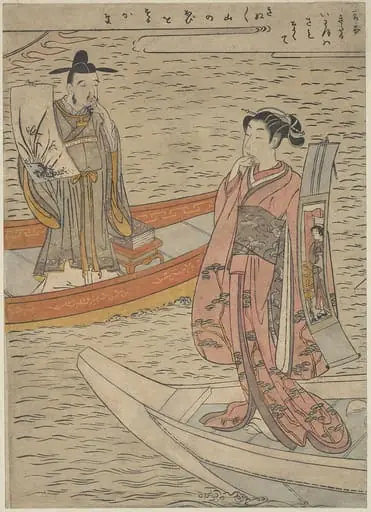
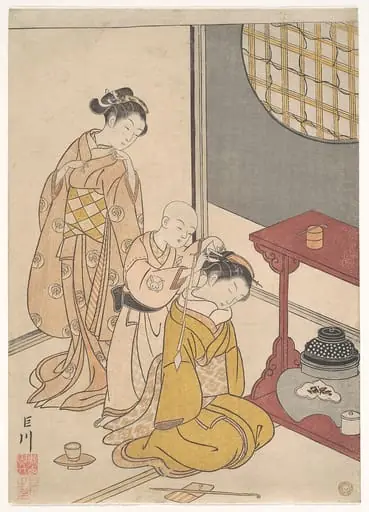
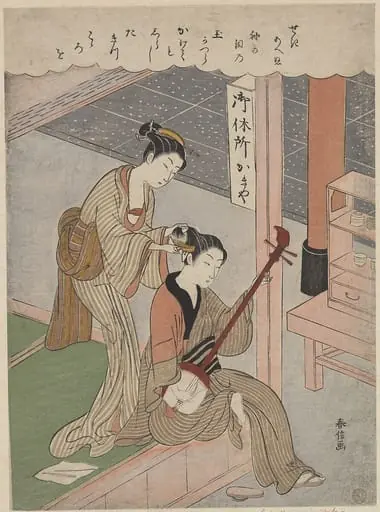
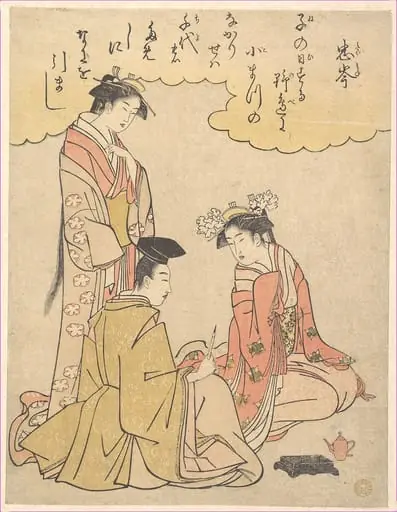
- 礫川亭永理 (鳥橋斎栄里)画 壬生忠岑の見立絵|Courtier and Two Ladies of the Court, with a Poem by Mibu no Tadamine
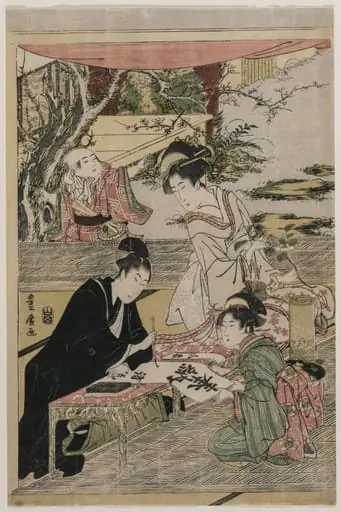 Young Man Writing at a Table
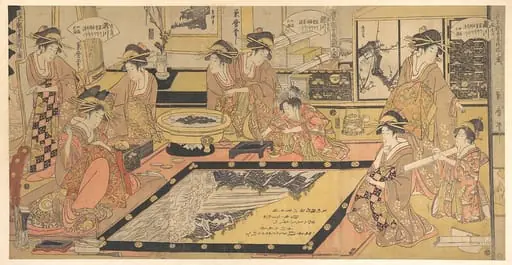 『浅草観音奉掛額之 図』 「扇屋内滝川 富川、粂川、玉川、津川、歌川、清川 め浪、お浪」|A Votive Picture to Be Donated to the Kannon of Asakusa (Asakusa Kannon hō kakegaku no zu), by Takigawa of the Ōgiya, Kamuro Menami and Onami, with Tomikawa, Kumegawa, Tamagawa, Tsugawa, Utagawa, and Kiyokawa
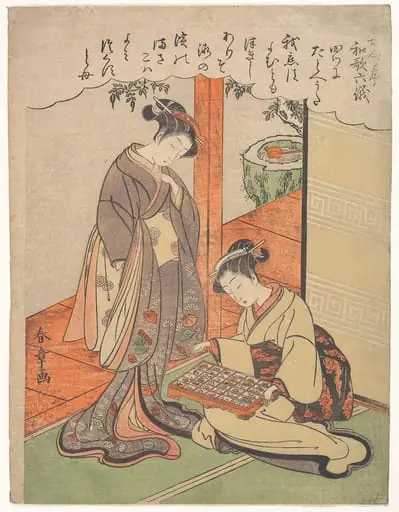 Tatohe uta|Analogy
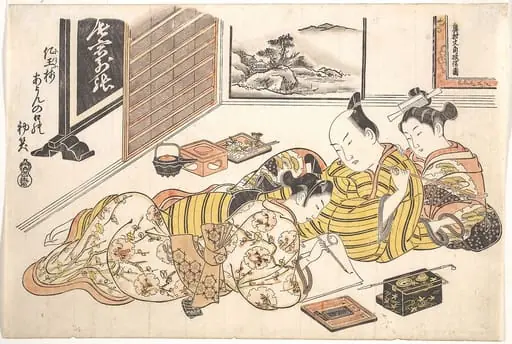 『閨の雛形』 正月|Plate from the Erotic Book Mounds of Dyed Colors: A Pattern Book for the Boudoir (Someiro no yama neya no hinagata), First Month
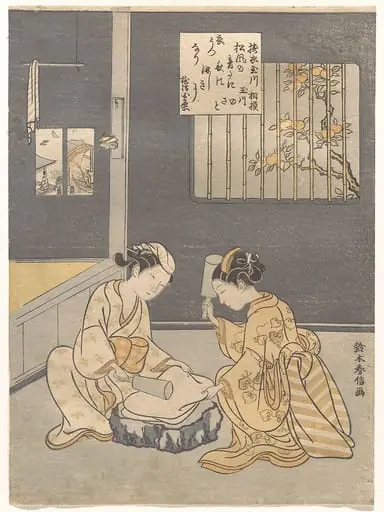 鈴木春信画 六玉川 「壔衣の玉川 摂津の名所」|Kōromō Uchi Tamagawa|The Cloth-Fulling Jewel River, a Famous Place in Settsu Province (Tōi no Tamagawa, Settsu no meisho), from an untitled series of Six Jewel Rivers (Mu Tamagawa)
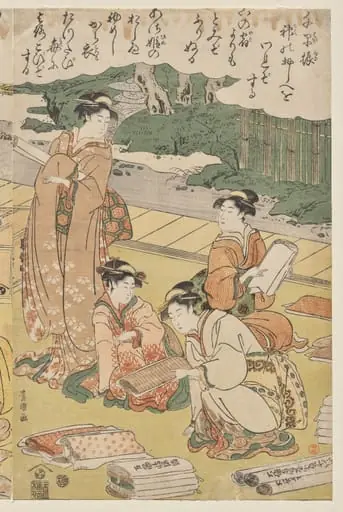 Women Making Clothing
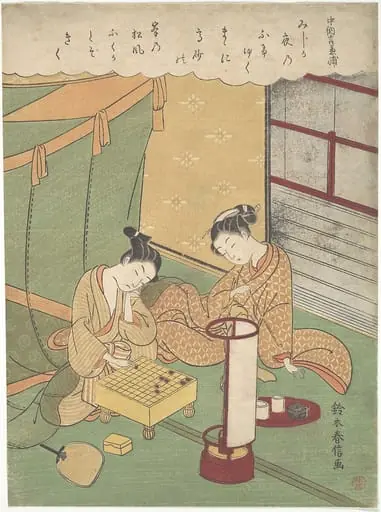 鈴木春信画 将棋・三十六歌仙 「中納言兼輔」|A Young Woman and Man Playing Shōgi (Japanese Chess); Chūnagon Kanesuke, from a series alluding to the Thirty-Six Poetic Immortals (Sanjūrokkasen)
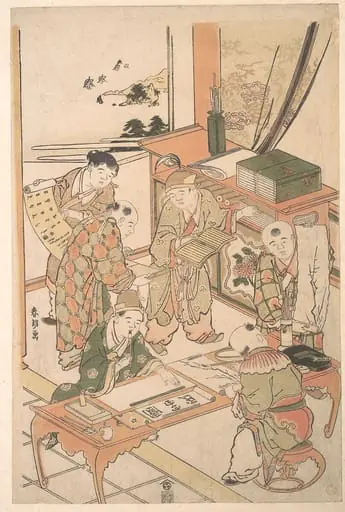 唐子書画図|Chinese Boys Learning to Write and Paint
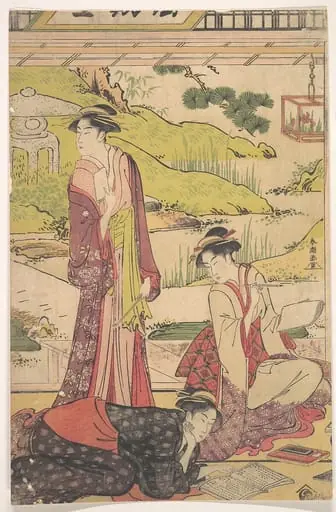 あやめ燈籠図|Three Women Enjoying Literary Pursuits
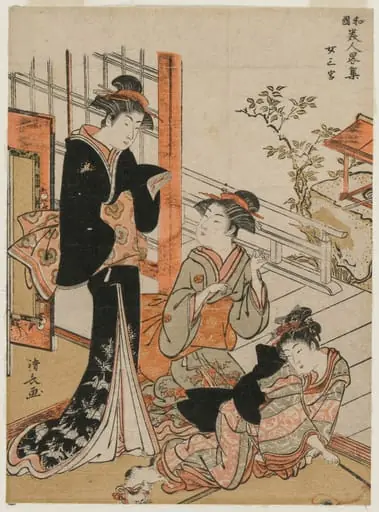 Three Women (from the series A Brief Collection of Japanese Beauties)
 鈴木春信画 あやとり|Young Women Playing Cat’s Cradle (Ayatori)