Artwork
萩|The Bush Clover (Hagi)
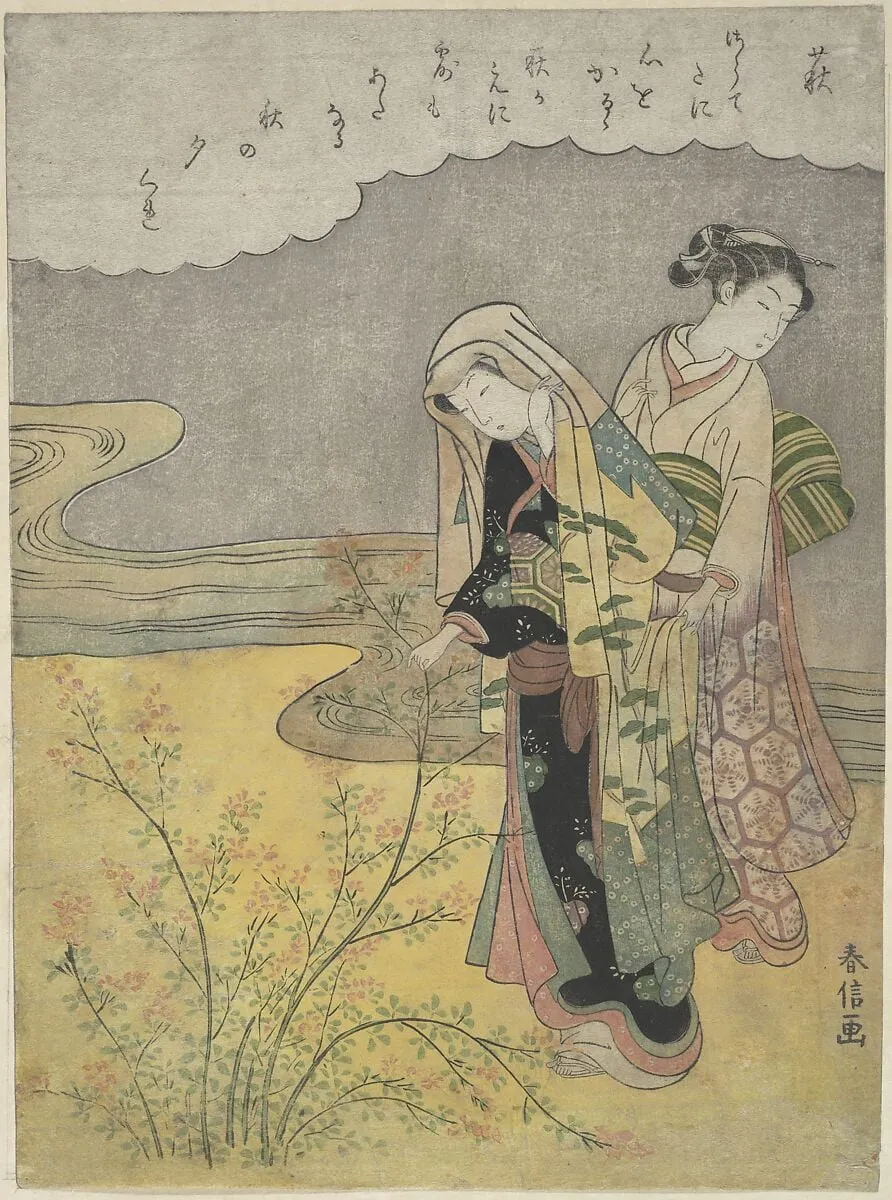
萩|The Bush Clover (Hagi) is an ink print by the Romanticist artist Suzuki Harunobu. It dates from 1766 and is held in the collection of the Metropolitan Museum of Art.
About this work
Subject & Meaning
The depiction of a single elegant woman amid a recognizable plant embodies the bijin-ga ideal of harmonizing human beauty with the rhythms of the natural world.
The Bush Clover (Hagi) by Suzuki Harunobu is a bijin-ga, a genre of ukiyo-e print portraying idealized beautiful women. The composition centers on a female figure rendered alongside the bush clover plant (Lespedeza bicolor), the species that lends the work its title. In Japanese poetic and visual tradition, hagi has long carried symbolic weight, associated with the arrival of autumn and frequently invoked in classical poetry as a seasonal motif.
By pairing a graceful woman with the flowering shrub, Harunobu fuses the conventions of the feminine portrait with a celebrated seasonal reference, a hallmark approach of his nishiki-e designs. The depiction of a single elegant woman amid a recognizable plant embodies the bijin-ga ideal of harmonizing human beauty with the rhythms of the natural world.
Technique & Style
The work is a nishiki-e woodblock print produced in 1766 using ink and color on paper. The print depicts a woman amid flowering Lespedeza bicolor (bush clover), aligning with bijin-ga conventions of the period. The medium combines carved blocks for line and tone with multiple color impressions to achieve delicate gradations and a refined palette typical of Harunobu’s early experiments in full-color printing.
History & Provenance
The Bush Clover (Hagi) is a woodblock print created by Suzuki Harunobu in 1766. Executed in the nishiki-e style, the work depicts a woman standing among Lespedeza bicolor plants. While the specific commission details and the original ownership chain prior to current holdings are not detailed in the provided records, the work is firmly dated to 1766 based on the artist's established timeline for this piece. The print is currently held in the collection of the Metropolitan Museum of Art.
Overview
The Bush Clover is a woodblock print by Suzuki Harunobu, created around 1766. It is a small, intricately detailed image featuring a woman and a flowering plant.
Context
As part of the ukiyo-e tradition, this print reflects a genre where artists transformed natural motifs into decorative patterns. Such prints were designed to be affordable and accessible for domestic enjoyment.
Artist & collection

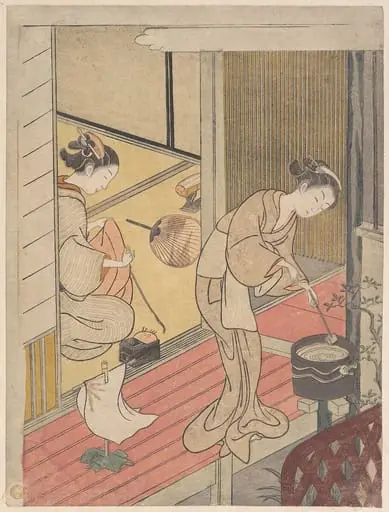
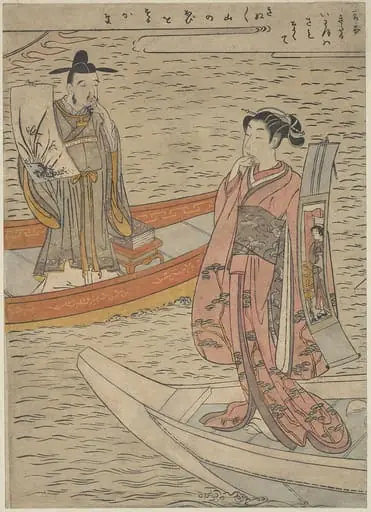
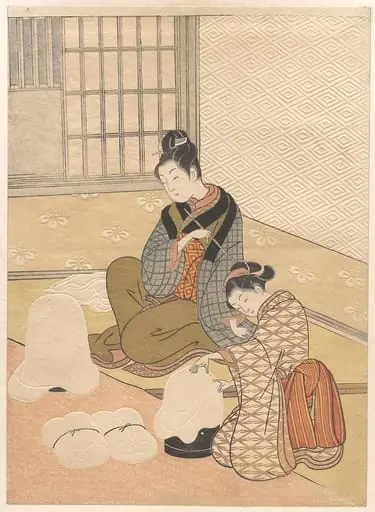
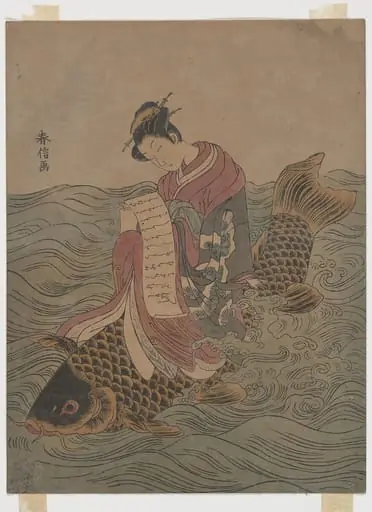
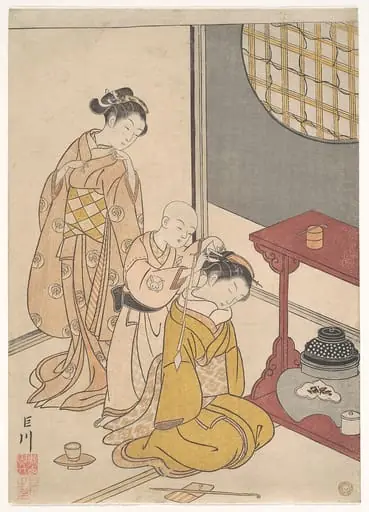
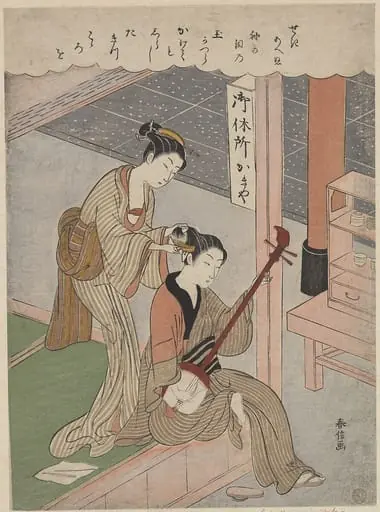
- The Chofu Tama River in Musashi Province (from the series The Six Tama Rivers of the Floating World)
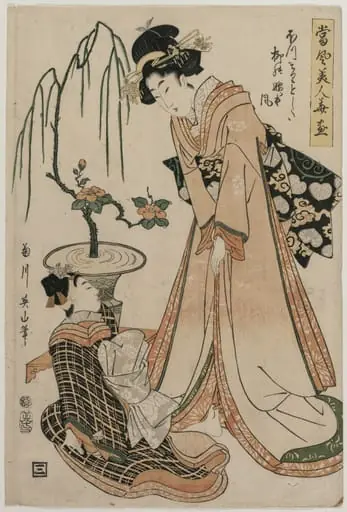 A Lady-in-Waiting with Waist as Slender as a Willow from the series Flowers and Modern Beauties
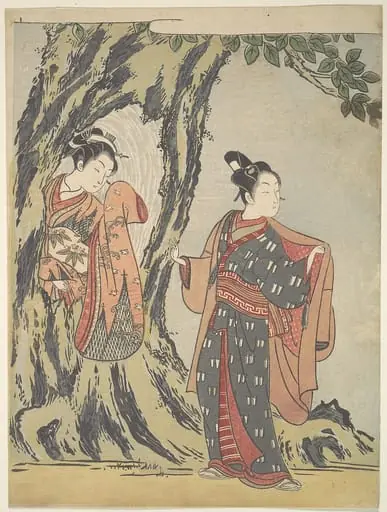 Untitled
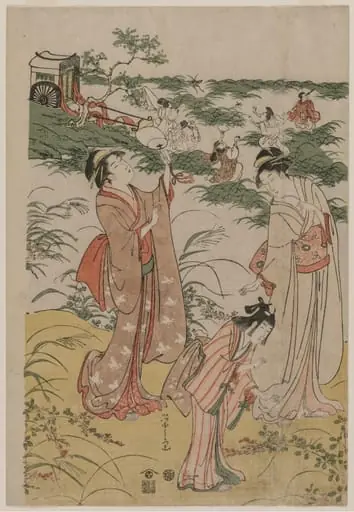 Women Chasing Crickets on an Autumn Moor
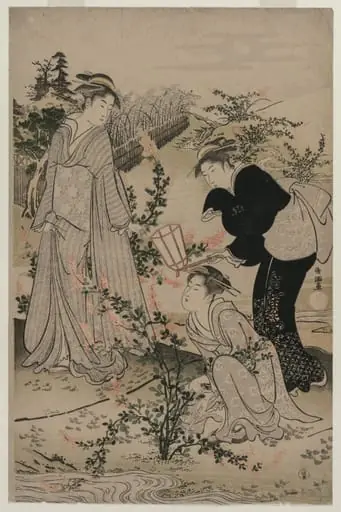 Women Cutting Branches of Bush Clover; The Noji Tama River in Omi Province, from an untitled series of the Six Tama Rivers
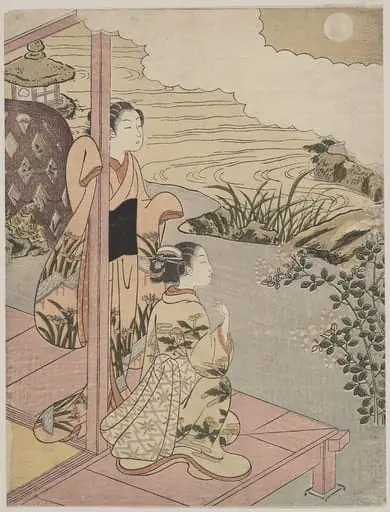 Untitled
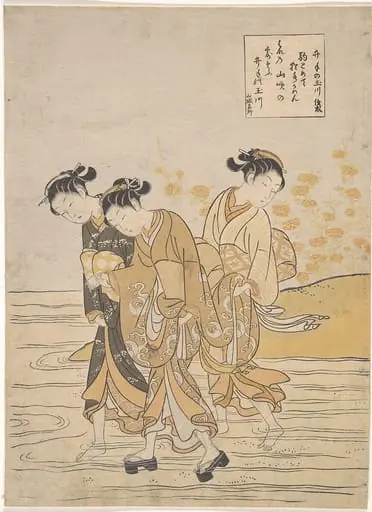 井手の玉川|Jewel River at Ide (Ide no Tamagawa)
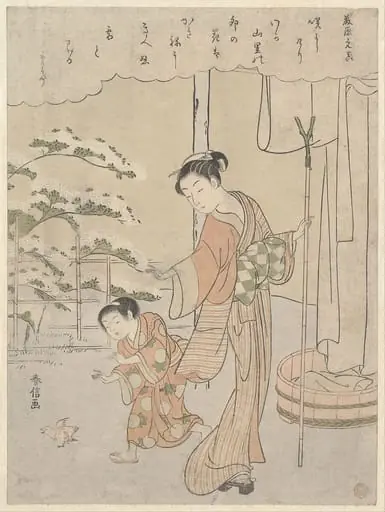 百人一首 藤原元真|Poem by Fujiwara no Motozane (ca. 860) from the Series Thirty-Six Poets
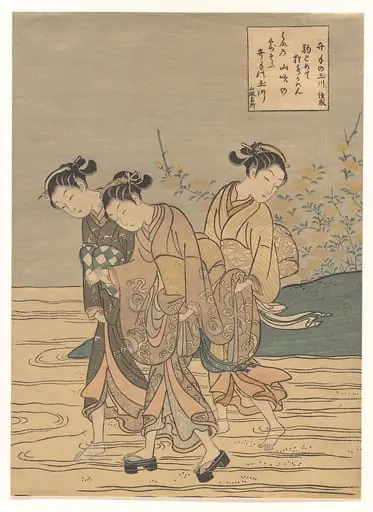 井手の玉川|The Tama River at Ide, Yamashiro Province
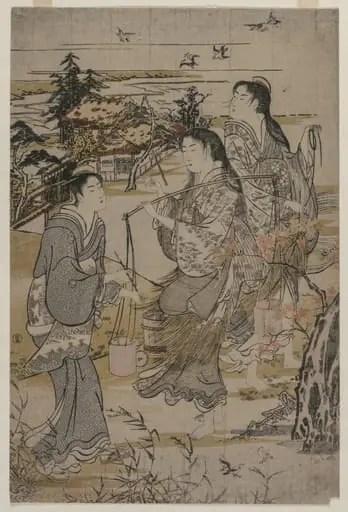 Women with Salt Pails; The Noda Tama River in Mutsu Province, from an untitled series of the Six Tama Rivers
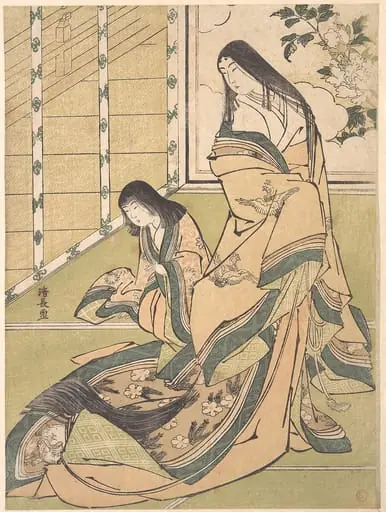 Untitled
 Untitled