Artwork
百人一首 藤原元真|Poem by Fujiwara no Motozane (ca. 860) from the Series Thirty-Six Poets
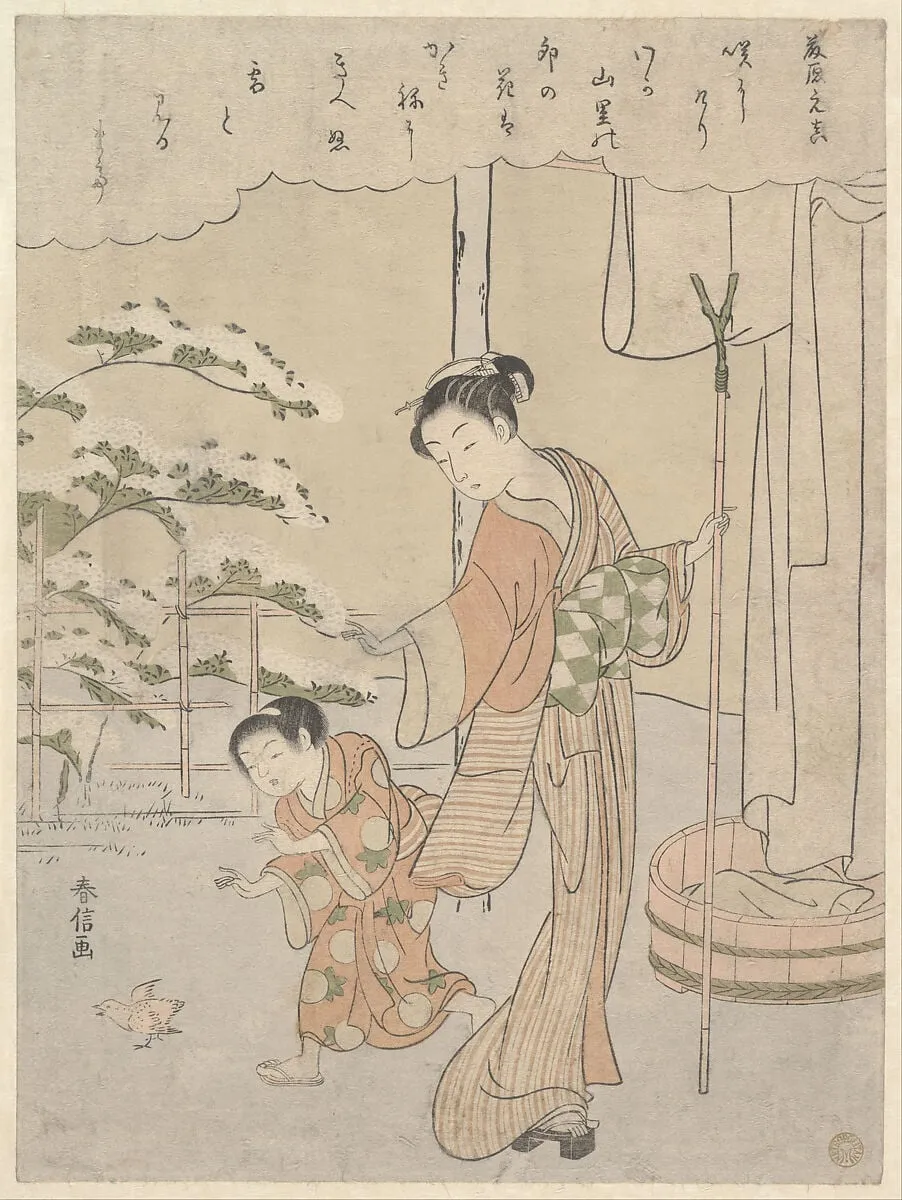
百人一首 藤原元真|Poem by Fujiwara no Motozane (ca. 860) from the Series Thirty-Six Poets is an ink print by the Romanticist artist Suzuki Harunobu. It dates from 1768 and is held in the collection of the Metropolitan Museum of Art.
- Accession no.
- JP873
- Credit line
- Gift of Estate of Samuel Isham, 1914
About this work
Overview
This work exemplifies the artist's mastery of nishiki-e (full-color printing) and his innovative use of subtle techniques to convey atmosphere and narrative.
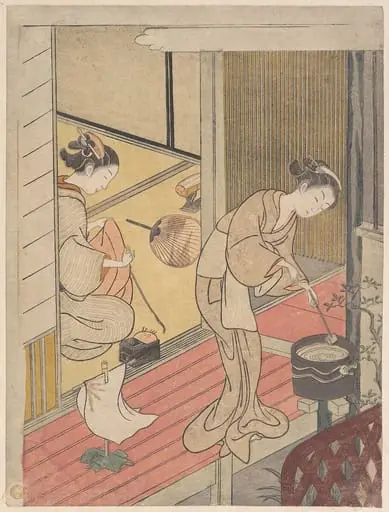
Created in 1768, this woodblock print by Suzuki Harunobu depicts a scene from the 'Thirty-Six Poets' series, illustrating a poem by Fujiwara no Motozane. The composition features a woman in a striped robe and a kneeling child engaged in a winter activity, likely drawing water from a frozen well or pond. The woman holds a fan in one hand and a long pole with a bucket in the other, while a small bird rests on the ground nearby.
A bare tree and a fence define the background, emphasizing the cold season. Harunobu employs karazuri (blind embossing) to create raised textures on the snow and clothing, adding a tactile dimension to the ink and color on paper. This work exemplifies the artist's mastery of nishiki-e (full-color printing) and his innovative use of subtle techniques to convey atmosphere and narrative.
As a leading figure of the mid-Edo period ukiyo-e movement, Harunobu revolutionized printmaking by expanding the color palette and integrating poetic themes into everyday domestic scenes, marking a significant evolution in the genre.
Subject & Meaning
The image presents a woman in a striped kimono, holding a fan in one hand and a pole topped with a bucket in the other, while a child kneels beside her. A leafless tree and a low fence frame the figures, and a small bird rests on the ground to the left. The composition evokes the gentle domestic atmosphere suggested by Motozane’s poem, though the exact text is not reproduced on the print.
Technique & Style
Harunobu employed the karazuri method, embossing raised lines into the paper to suggest shading without additional ink. This tactile technique, combined with delicate ink outlines and subtle color washes, creates a soft, atmospheric effect characteristic of his later ukiyo‑e prints. The use of cross‑hatching within the raised areas further refines the sense of depth and texture.
History & Provenance
The print was produced in the late 1760s, a period when Harunobu was pioneering multicolor woodblock processes. It later entered the collection of the Metropolitan Museum of Art, where it is catalogued as part of the museum’s Japanese prints holdings. The work has been documented in the museum’s records since its acquisition, though the exact date of purchase is not publicly noted.
Context
The Thirty‑Six Poets series celebrated the canonical anthology of classical Japanese poetry, linking Edo‑period visual culture with Heian‑era literary tradition. Harunobu’s interpretation reflects the period’s fascination with refined courtly themes, rendered in a style that appealed to the emerging urban middle class.
Artist & collection

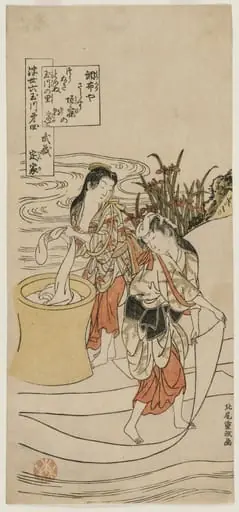 The Chofu Tama River in Musashi Province (from the series The Six Tama Rivers of the Floating World)
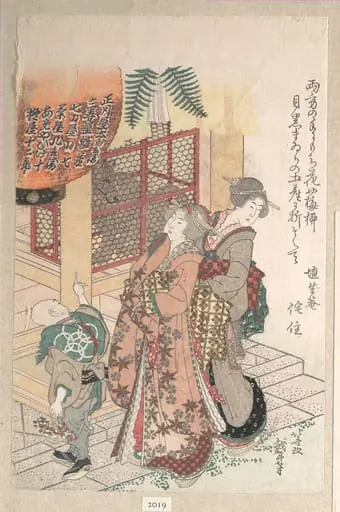 初詣|Young Women Visiting a Shinto Shrine
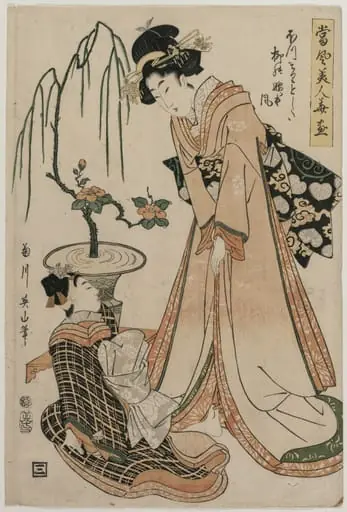 A Lady-in-Waiting with Waist as Slender as a Willow from the series Flowers and Modern Beauties
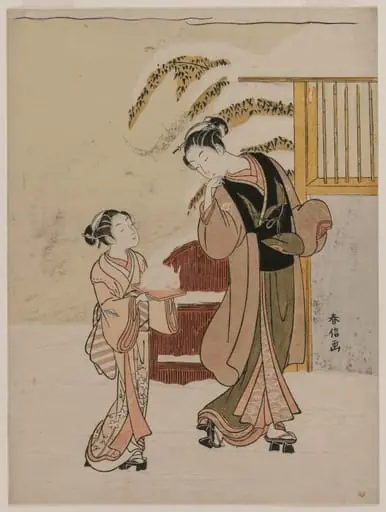 Young Woman Admiring a Snow Rabbit
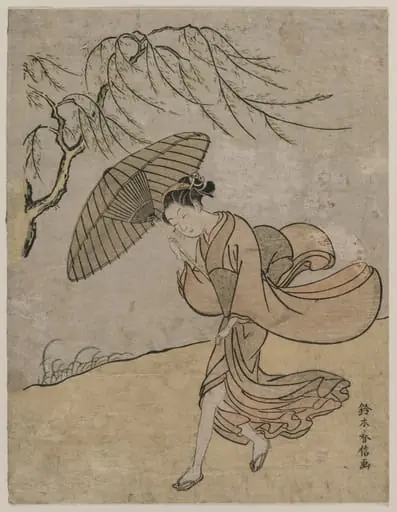 Woman Running Past a Willow Tree in a Breeze
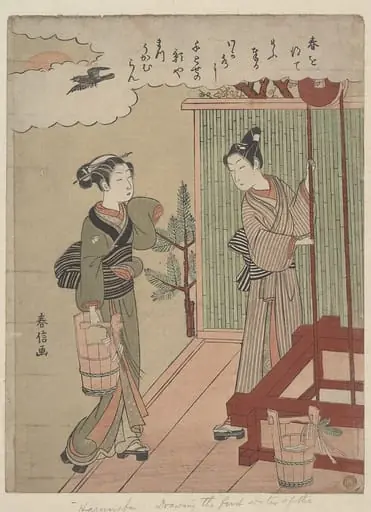 鈴木春信画 若水を汲む男女|Drawing the First Water of the New Year
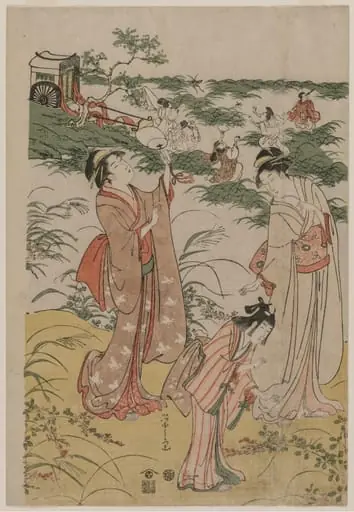 Women Chasing Crickets on an Autumn Moor
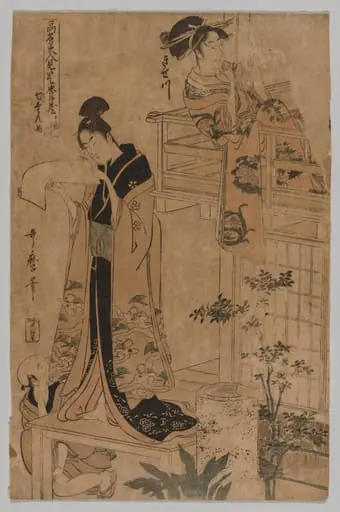 Act VII from the series The Storehouse of Loyal Retainers As Portrayed by Famous Beauties in Twelve Leaves
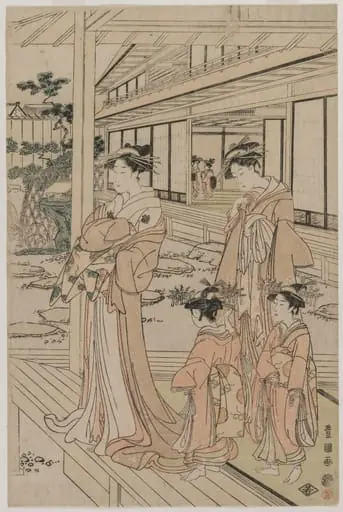 Courtesan Standing on a Veranda
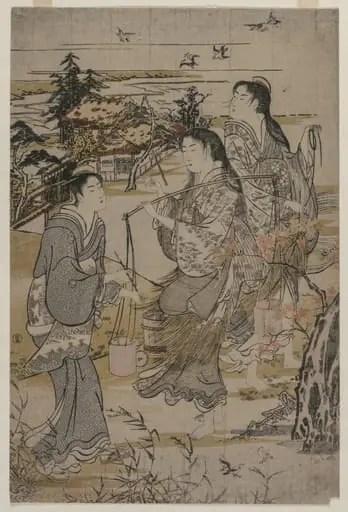 Women with Salt Pails; The Noda Tama River in Mutsu Province, from an untitled series of the Six Tama Rivers