Artwork
Untitled
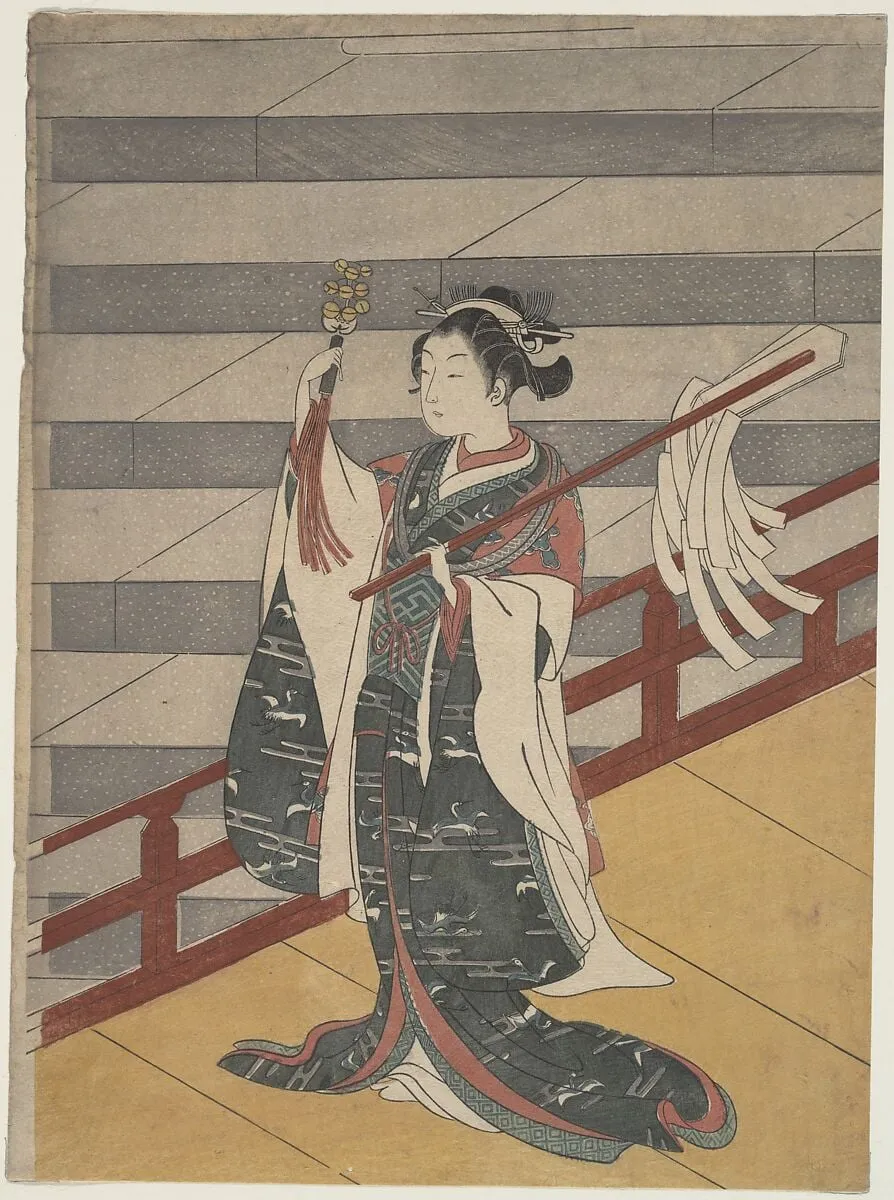
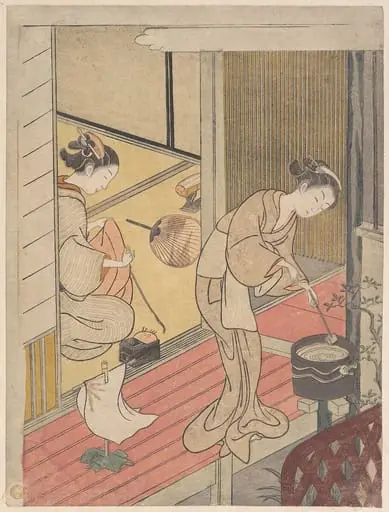
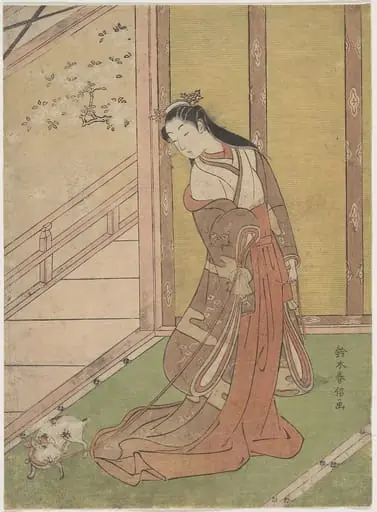
Untitled is an ink print by the Romanticist artist Suzuki Harunobu. It dates from 1768 and is held in the collection of the Metropolitan Museum of Art.
About this work
Subject & Meaning
The stone steps and balcony situate the figure within a shrine setting, reinforcing the ritual context of the dance and the implements she carries.
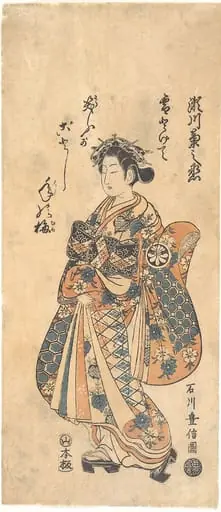
The print portrays a Shinto shrine maiden, or miko, engaged in kagura, a sacred ritual dance performed for the deities. She stands on stone steps beside a balcony, holding ritual implements associated with Shinto worship: a gohei, a wand with paper streamers used in purification rites, and a suzu, a bell-shaped rattle shaken to summon and please the spirits.
Classified as a bijin-ga, or "picture of a beautiful person," the work uses the refined vocabulary of ukiyo-e and nishiki-e to elevate a religious subject into an idealized portrait. By depicting the miko in the act of kagura, Harunobu fuses devotional symbolism with the aesthetic of feminine beauty, presenting the shrine maiden as both a sacred performer and an object of contemplative visual pleasure.
The stone steps and balcony situate the figure within a shrine setting, reinforcing the ritual context of the dance and the implements she carries.
Technique & Style
The work is a woodblock print created with ink and color on paper, measuring 27.9 cm in height and 20.6 cm in width. It portrays a miko figure on a balcony accompanied by a gohei, suzu, and stone steps. Executed in 1768, the piece exemplifies ukiyo‑e style and belongs to the bijin‑ga genre, reflecting the formal qualities of line, composition, and color typical of Suzuki Harunobu’s nishiki‑e production.
History & Provenance
Untitled is a 1768 woodblock print by Suzuki Harunobu depicting a miko on a balcony with gohei, suzu, stone steps, and a shrine. It was created as part of a series of portraits and belongs to the ukiyo-e genre. The work entered the collection of the Metropolitan Museum of Art, where it remains.
Provenance records indicate the piece was produced in 1768 and later acquired by the museum, establishing a clear chain of ownership from the artist to institutional custody. Its dimensions measure 27.9 cm in height and 20.6 cm in width.
The artwork’s creation history is documented through its inclusion in the museum’s catalog and scholarly references to Harunobu’s bijin-ga series, confirming its attribution and dating.
Legacy
The print has been recognized as a seminal example of bijin-ga within the ukiyo-e tradition, shaping later depictions of female figures in Japanese popular art. Its composition of a miko on a balcony with gohei and suzu appears in numerous 19th-century reproductions and modern scholarly analyses of nishiki-e technique. The work is held in the Metropolitan Museum of Art collection, where it is cited as influencing subsequent generations of printmakers through its stylized portrayal of ritual elements.
Overview
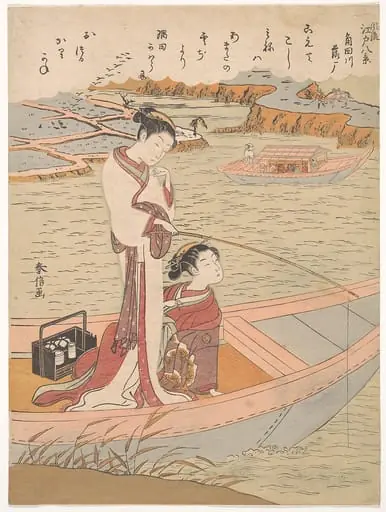
Created around 1768, this woodblock print by Suzuki Harunobu portrays a quiet domestic scene. A girl in a vivid red robe leans over a wooden balcony, ringing a small brass bell, while another girl in white watches from below with clasped hands. The composition captures a fleeting moment of interaction between the two figures.
Context
During the late Edo period, woodblock prints increasingly depicted scenes of daily life and religious observance. This image reflects contemporary interest in portraying women’s roles in ritual contexts, aligning with broader trends in ukiyo‑e that emphasized intimate, narrative moments.
Artist & collection

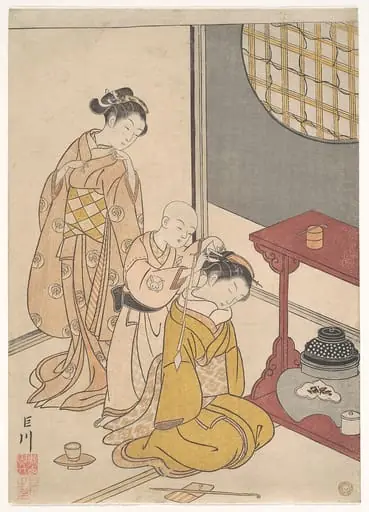
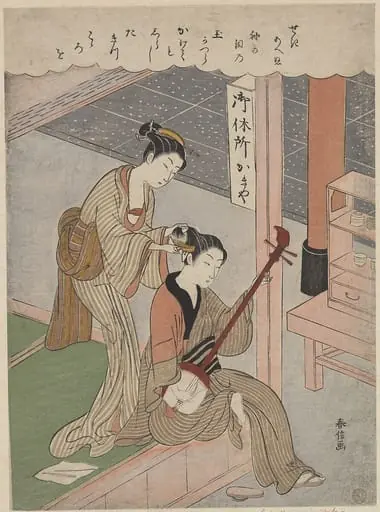
- Untitled
 Untitled
 青楼美人合|The Courtesans, from the Series, "Seiro Bijin Awase Carver End Shigoro" (sic.)
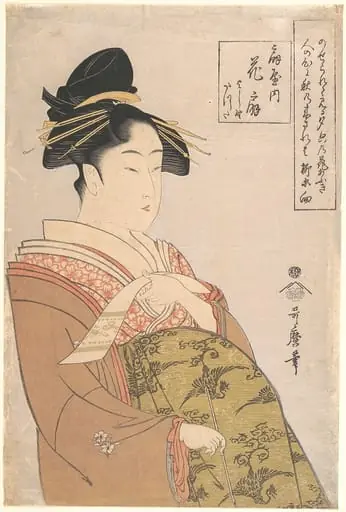 「扇屋内花扇図」|The Courtesan Hanaōgi of the Ōgiya Brothel in Yoshiwara (Ōgiya uchi Hanaōgi, Yoshino, Tatsuta)
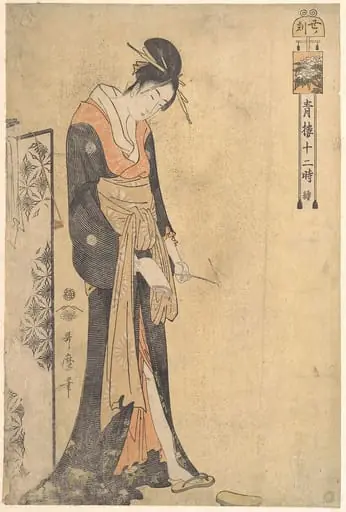 Ushi no Koku|青楼十二時 続 丑の刻|The Hour of the Ox (1 A.M.–3 A.M.)
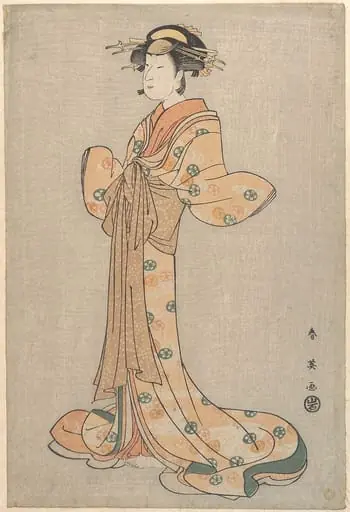 二代目中村二代目中村野塩のお軽|The Actor Nakamura Noshio II as the Courtesan Okaru
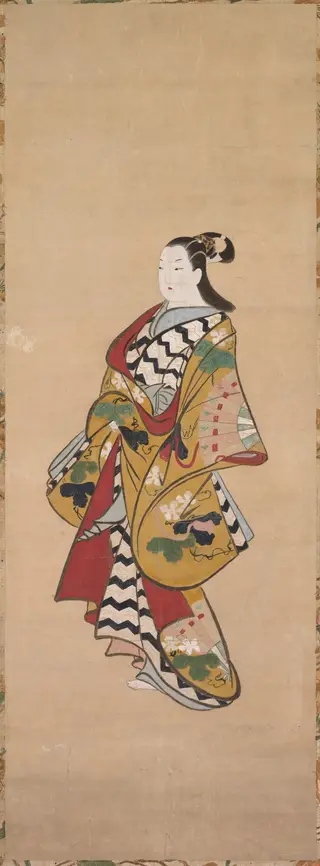 Courtesan
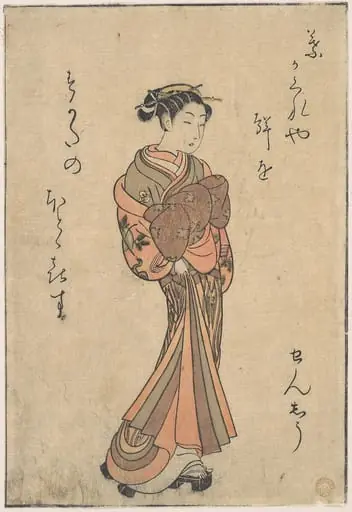
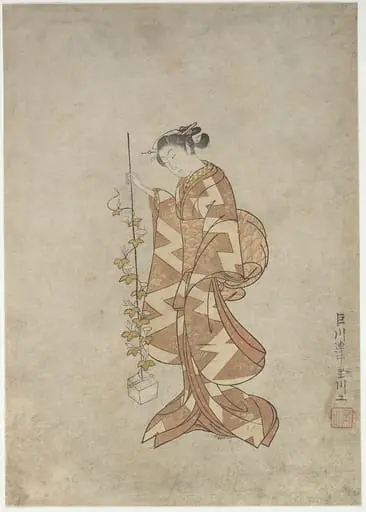 Untitled
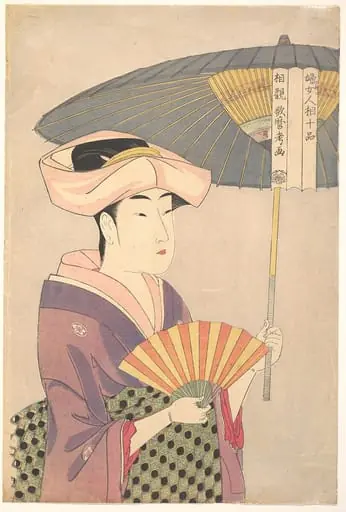 喜多川歌麿画 「婦女人相十品」 日傘を差す女|“Woman Holding Up a Parasol” from the series Ten Classes of Women’s Physiognomy (Fujo ninsō juppen: Higasa o sasu onna)
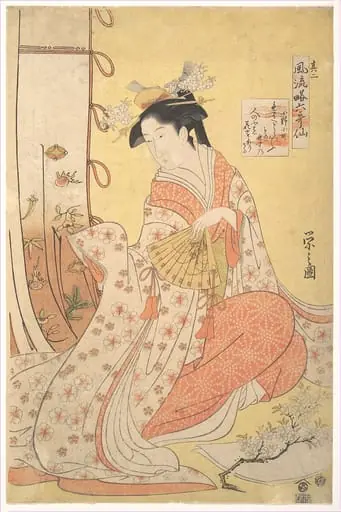 鳥文斎栄之画 「風流略六哥仙 其の二」小野小町|Ono no Komachi: Number Two (Sono ni), from the series Stylish Parodies of the Six Poetic Immortals (Fūryū yatsushi rokkasen)
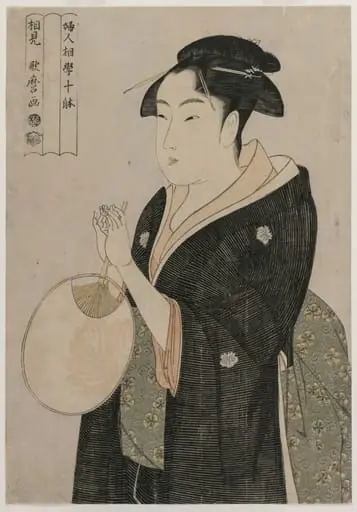 Woman Holding a Fan (from the series Ten Aspects of the Physiognomy of Women)
 Untitled