Artwork
Untitled

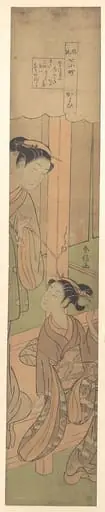
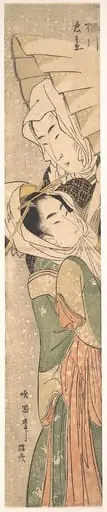
Untitled is an ink print by the Romanticist artist Suzuki Harunobu. It dates from 1750 and is held in the collection of the Metropolitan Museum of Art.
About this work
Subject & Meaning
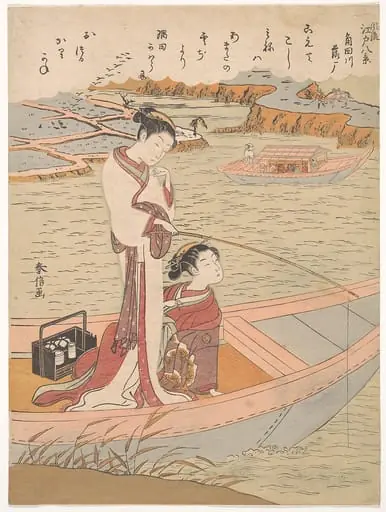
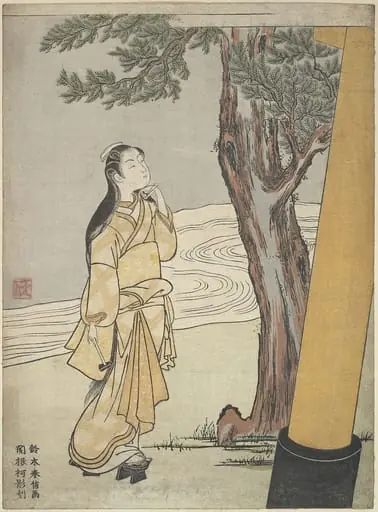
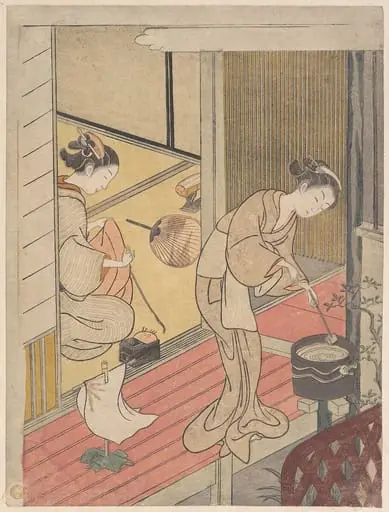
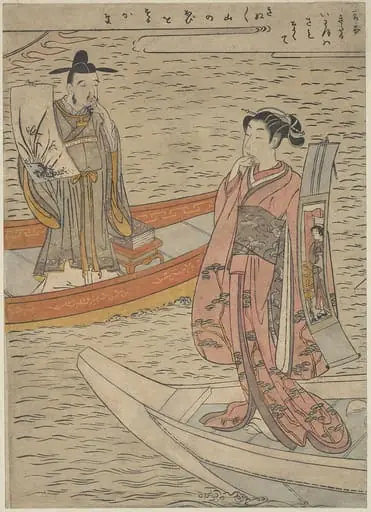
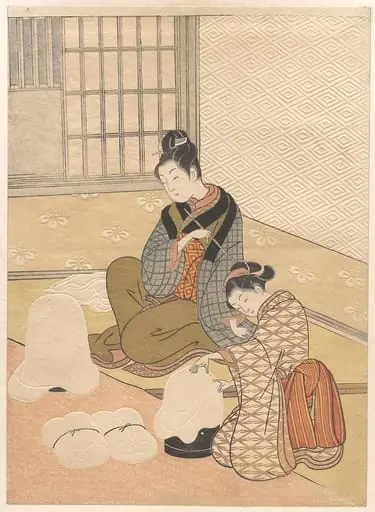
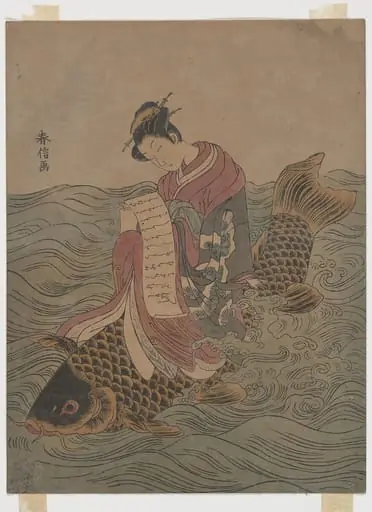
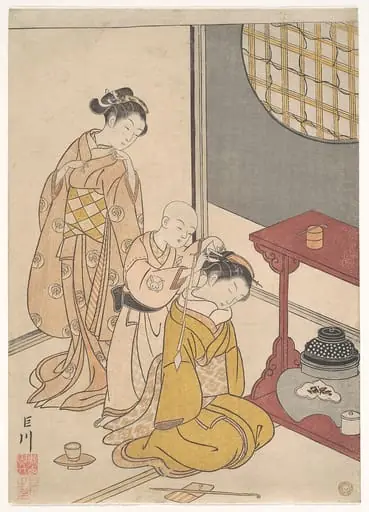
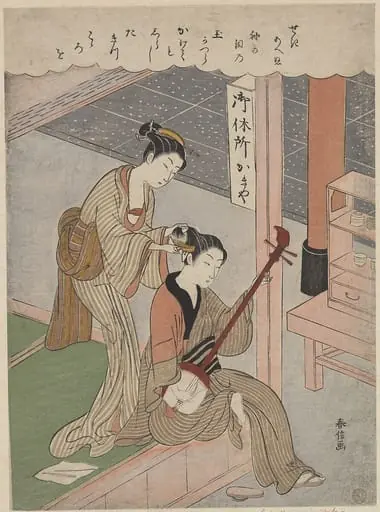
The work shows a bijin standing on a cliff while laundry hangs below, representing the Daoist hermit Kume no sennin in a mitate-e composition. This pairing of a beautiful figure with a hermit figure is a traditional motif in ukiyo-e that symbolizes spiritual aspiration amid everyday life.
Technique & Style
Visually, the composition depicts a bijin (beautiful woman) alongside the figure Kume no sennin, set against a landscape featuring a cliff and laundry.
Created in 1750, this work is a woodblock print executed in ink and color on paper. It follows the hashira-e format, a narrow pillar print style characteristic of the ukiyo-e tradition. The piece employs the nishiki-e technique, utilizing multiple blocks to achieve full-color imagery, and incorporates abuna-e and mitate-e genres to present its subject matter through allusive and playful means.
Visually, the composition depicts a bijin (beautiful woman) alongside the figure Kume no sennin, set against a landscape featuring a cliff and laundry. These elements combine to form a specific narrative scene typical of Suzuki Harunobu's output during this period.
History & Provenance
Suzuki Harunobu's untitled hashira-e woodblock print dates to 1750, executed in ink and color on paper as part of his pioneering work in full-color ukiyo-e printing. The work entered the collection of the Metropolitan Museum of Art, where it is held today. No further details of commission, intermediate ownership, or acquisition history are documented in the available sources.
Untitled is a woodblock print by Suzuki Harunobu, created in 1750 and held in the collection of the Metropolitan Museum of Art under inventory number 2002.357. The work has been featured in exhibitions at the Metropolitan Museum of Art, including 'The Art of Edo: Japanese Print Masters' (2004) and 'Japan’s Floating World' (2010).
Context
Suzuki Harunobu's Untitled (c. 1750) occupies a pivotal position within the ukiyo-e movement's evolution, particularly in the development of hashira-e (pillar prints) and bijin-ga (portraitures of beautiful women). The work exemplifies the genre's characteristic synthesis of bijin-ga and mitate-e through its depiction of Kume no sennin amidst laundry on a cliff, reflecting contemporary merchant-class aesthetics and Edo-period visual culture. Scholarship emphasizes its role in establishing narrative complexity within single-frame compositions, while its presence in major collections like the Metropolitan Museum of Art underscores its significance in contextualizing the artist's innovative approach to multi-panel storytelling within the broader framework of Japanese printmaking.
Legacy
The work continues to be cited in studies of ukiyo-e as a representative example of hashira-e compositions from the mid-Edo period, influencing later collectors and curators who view it as emblematic of Suzuki Harunobu's synthesis of bijin-ga and narrative print traditions. Its presence in the Metropolitan Museum of Art's collection has reinforced scholarly attention to its technical innovation and thematic recurrence of laundering motifs, ensuring its recurring reference in exhibitions on Japanese woodblock printmaking.
Overview
Created around 1750 by the Edo‑period artist Suzuki Harunobu, this woodblock print belongs to the hashira‑e format, a tall, narrow composition intended for display on a pillar. Executed with ink and color on paper, the image presents a whimsical scene involving a celestial woman, a hermit figure, and a mischievous demon.
Artist & collection