Artwork
Untitled
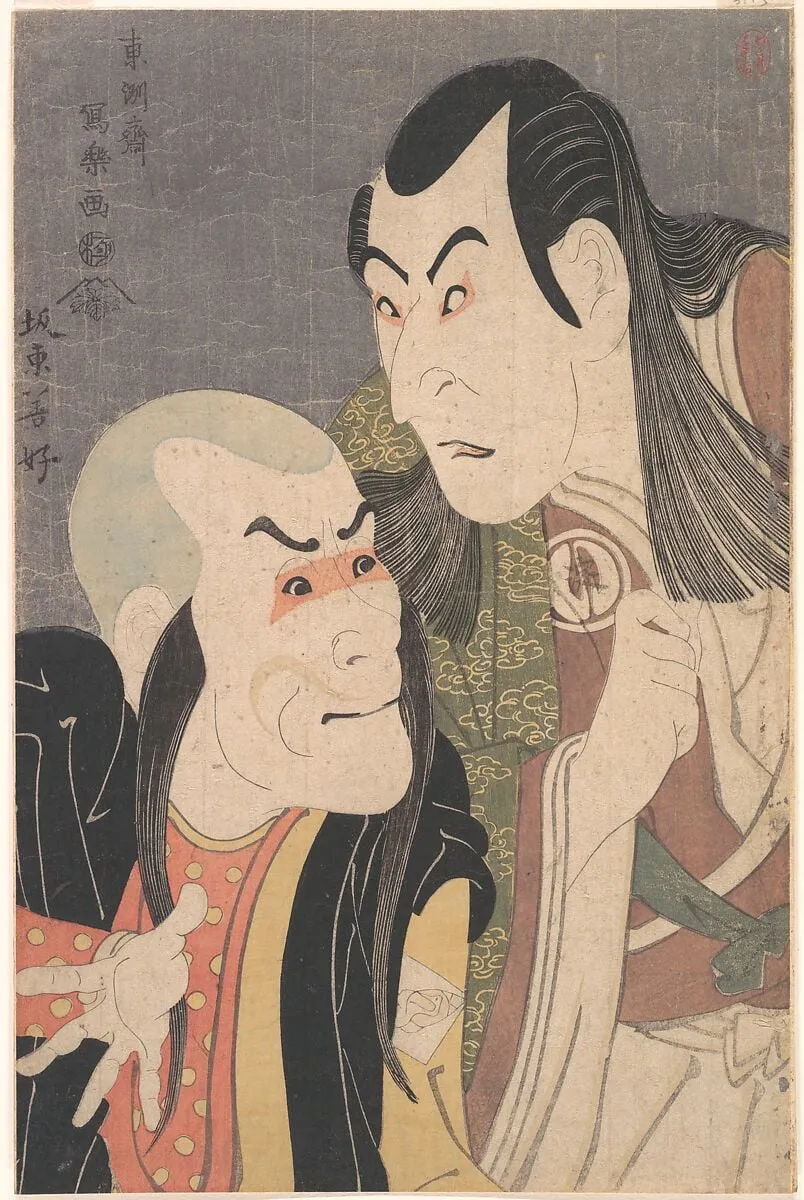
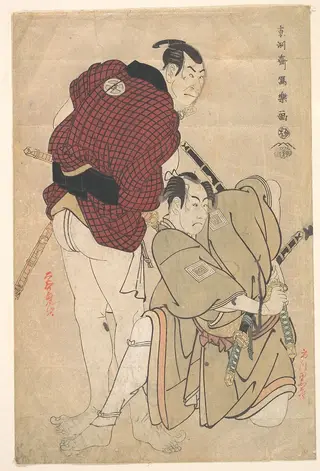
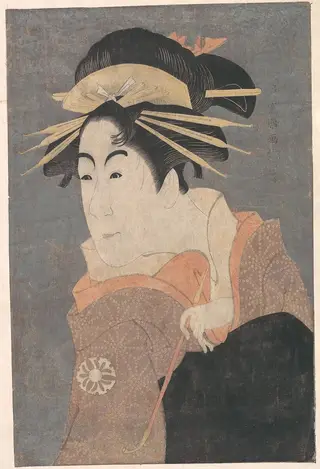
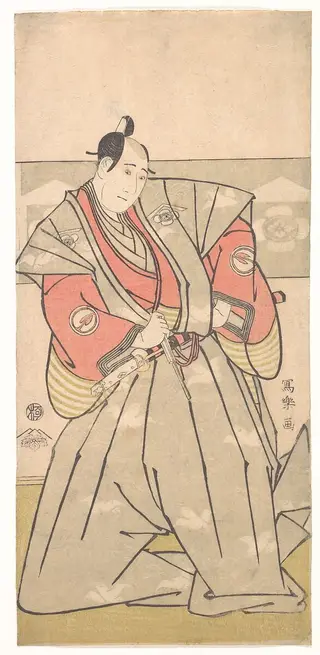
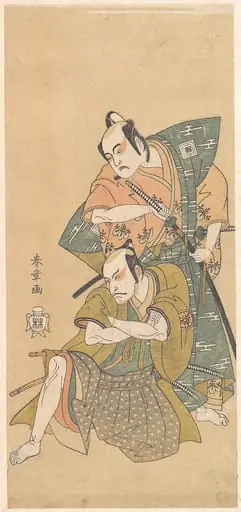
Untitled is an ink print by the Romanticist artist Tōshūsai Sharaku. It dates from 1794 and is held in the collection of the Metropolitan Museum of Art.
About this work
If you like how the ink builds emotion in bold lines, look up ukiyo-e, the style of Japanese woodblock prints.
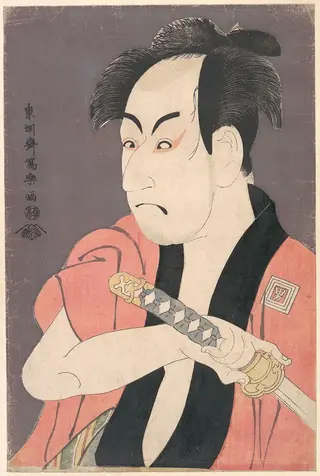
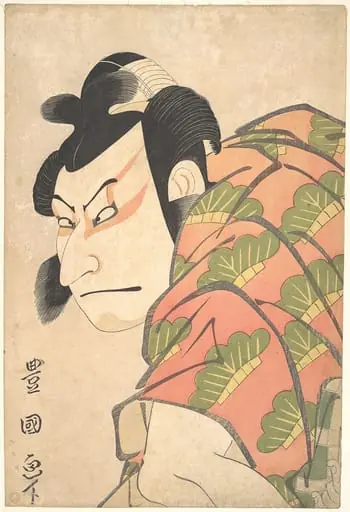
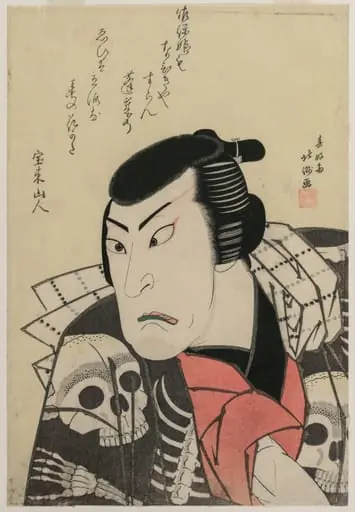
This print shows an actor mid-scene, his face twisted in an exaggerated scowl. His white makeup cracks with sweat, and his black wig looks almost alive.
Sharaku made these actor portraits for just ten months in 1794, then vanished. No one knows why he stopped or who he really was. The prints were cheap souvenirs, not meant to last, yet here they are, 200 years later.
If you like how the ink builds emotion in bold lines, look up ukiyo-e, the style of Japanese woodblock prints.
Subject & Meaning
Untitled is a yakusha-e (actor portrait) that depicts the kabuki actor Bando Zenji. Sharaku’s ōkubi-e style emphasizes the actor’s facial features and expression, capturing a moment of theatrical presence. As a nishiki-e woodblock print, the work uses ink, color, and white mica to highlight the actor’s likeness and the visual impact of his role, reflecting the genre’s focus on celebrity performers of the Edo period.
Technique & Style
The print is executed as a polychrome ōkubi-e (large-headed actor) portrait in the nishiki-e technique, using ink and color on paper with the addition of white mica for a lustrous ground. Sharaku’s handling emphasizes the sitter’s dramatic facial features through sharply modeled contours and abrupt contrasts between light and shadow, capturing the actor’s intense expression with minimal background detail. The sheet’s crisp impression and unobstructed focus on the head reflect the genre’s conventions for immediacy and psychological intensity.
History & Provenance
Created in 1794, this woodblock print is attributed to the artist Tōshūsai Sharaku. The work, an ōkubi-e portrait depicting the actor Bando Zenji, was produced using ink, color, and white mica on paper. Historical records and collection data indicate that examples of this specific print are held in the collections of the Metropolitan Museum of Art and the Library of Congress.
No specific details regarding the original commission or a detailed chain of ownership prior to these institutional holdings are provided in the available documentation.
Context
The 1794 woodblock print by Tōshūsai Sharaku portrays the actor Bando Zenji, exemplifying the ōkubi-e (large-head) yakusha-e genre of ukiyo-e portraiture. Its dramatic composition and expressive detail contributed to Sharaku's brief but influential career, drawing both contemporary fascination and later scholarly attention to his role in shaping kabuki imagery.
Modern scholarship situates this work within the broader discourse on Japanese print culture, emphasizing its technical innovation and the artist's impact on the visual representation of theatrical figures.
Legacy
The print of Bando Zenji by Tōshūsai Sharaku has been cited by scholars as a pivotal work in the development of yakusha-e portraiture, influencing later ukiyo-e artists who emphasized dramatic character studies over idealized beauty. Its stark composition and use of mica to highlight facial features have been referenced in studies of late-Edo print culture and continue to inform museum displays of Japanese woodblock prints. The work is part of the permanent collections of the Metropolitan Museum of Art and the Library of Congress, underscoring its enduring institutional recognition.
Overview
Untitled is a woodblock print created by Tōshūsai Sharaku in 1794, featuring a portrait of the actor Bando Zenji.
Artist & collection

 Untitled
 Untitled
 Untitled
 Untitled
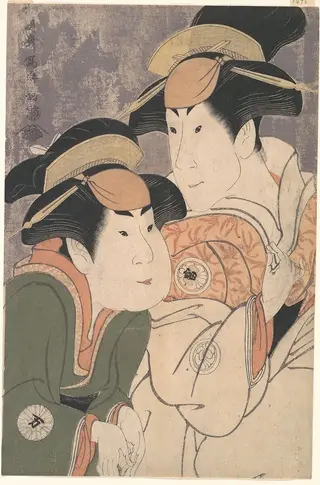
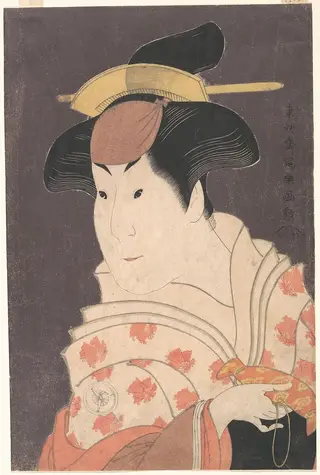 東洲斎写楽画 四代岩井半四郎の重の井 『恋女房染分手綱』|Iwai Hanshirō IV as Shigenoi in the Play "Koinyōbō Somewake Tazuna"
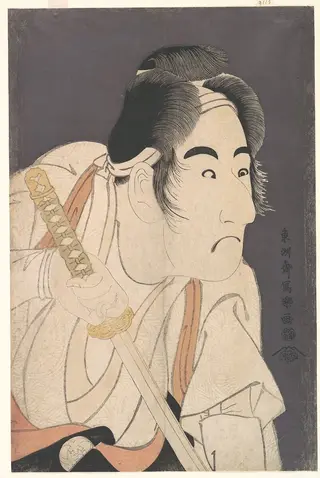
 東洲斎写楽画 初代市川男女蔵の奴一平 『恋女房染分手綱』|Ichikawa Omezō I in the Role of Yakko Ippei from the Play "Koinyōbō somewake tazuna"
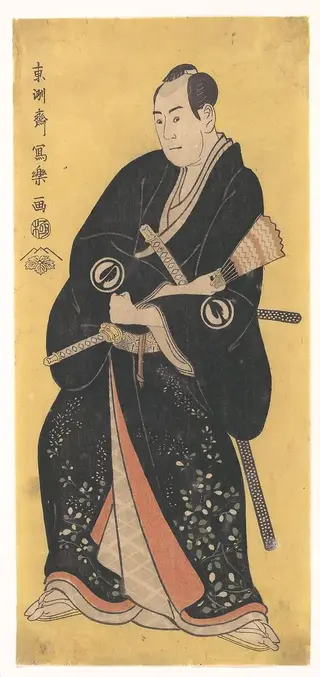
 東洲斎写楽画 二世坂東三津五郎の石井源蔵 『花菖蒲文禄曽我』|Bandō Mitsugorō II as Ishii Genzō in the Play "Hana-ayame Bunroku Soga"
 Untitled
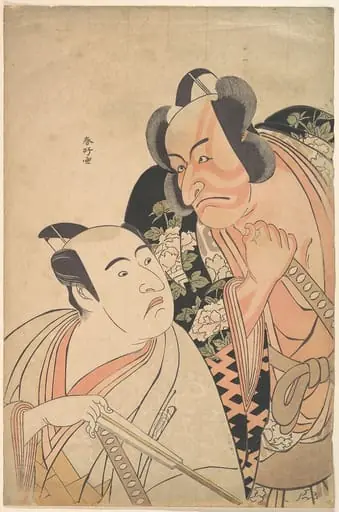
- 東洲斎写楽画 初世中島和田右衛門のぼうだら長左衛門と初世中村此蔵の船宿かな川やの権 『敵討乗合話』|Nakajima Wadaemon and Nakamura Konozō as Bōdara no Chōzaemon and Kanagawaya no Gon in the Play "Katakiuchi noriyaibanashi"
 Untitled
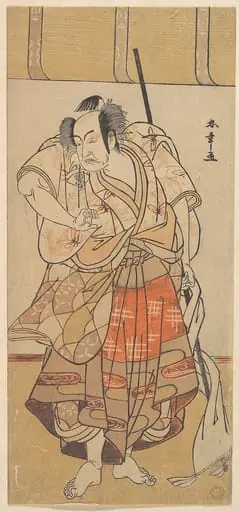
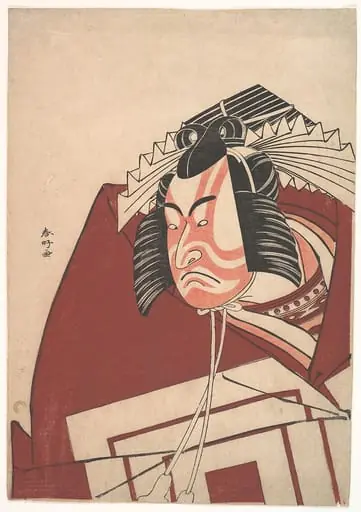 勝川春好画 二代目市川門之助|Ichikawa Monnosuke II in a Shibaraku Performance
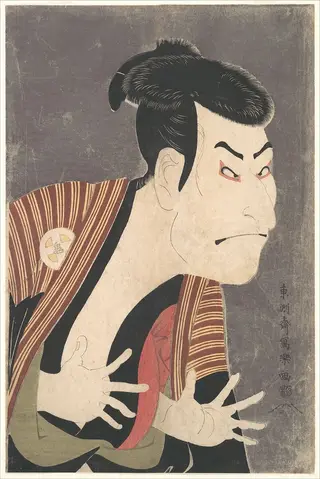 東洲斎写楽画 三代目大谷鬼次の奴江戸兵衛|Kabuki Actor Ōtani Oniji III as Yakko Edobei
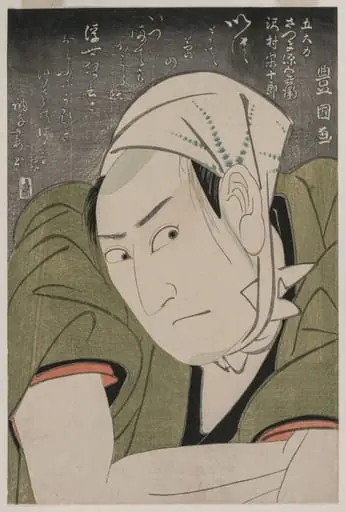 Memorial Portrait of Sawamura Sojuro III as Satsuma Gengobei
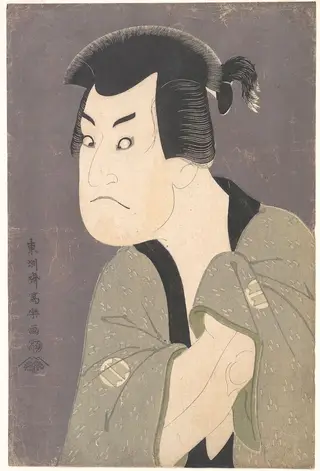 東洲斎写楽画 三世坂田半五郎の藤川水右衛門 『花菖蒲文禄曽我』|Sakata Hangorō III as Fujikawa Mizuemon in the Play "Hana Ayame Bunroku Soga"
 Untitled
 Untitled
 Untitled
 Untitled
 Untitled
 Actor Ichikawa Ebijūrō I as Tōken (China Dog) Jūbei, in the play Red and Purple, Rich Dyes of Osaka (Benimurasaki ai de someage)