Artwork
元 唐棣 滕王閣圖 卷|The Pavilion of Prince Teng
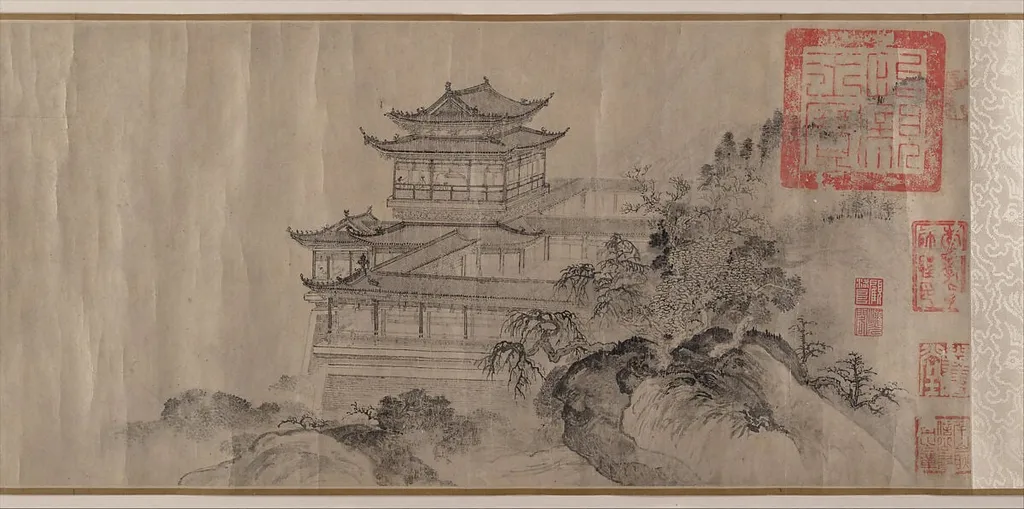
元 唐棣 滕王閣圖 卷|The Pavilion of Prince Teng is an ink painting by the Song dynasty painting artist Tang Di. It dates from 1352 and is held in the collection of the Metropolitan Museum of Art.
- Accession no.
- 1989.363.36
- Credit line
- Bequest of John M. Crawford Jr., 1988
About this work
This is one of the oldest surviving paintings of the Pavilion of Prince Teng, built in the 7th century and later destroyed.
You see a long, narrow scroll of a tall wooden tower rising above misty riverbanks and tiny boats.
This is one of the oldest surviving paintings of the Pavilion of Prince Teng, built in the 7th century and later destroyed. Tang Di worked 700 years after the pavilion was first built, so he painted from old poems and stories, not memory. The tower looks almost weightless, floating above the water.
If you like how ink can make a building feel like a dream, look up cross-hatching.
Subject & Meaning
The handscroll by Tang Di, dated 1352, illustrates the Pavilion of Prince Teng, a celebrated Chinese pavilion that has featured in poetry and historical narratives. The painting’s subject is the architectural structure itself, rendered in ink on paper with a landscape genre approach. By depicting the pavilion within a broader scenery, the work connects the built environment to the cultural imagination of the era, emphasizing the site’s symbolic role as a locus of scholarly reflection and poetic inspiration.
The piece is part of the Metropolitan Museum of Art’s collection, underscoring its significance as a representative example of Yuan‑era landscape painting.
Technique & Style
Created in 1352 by the Yuan dynasty artist Tang Di, this work is executed as a handscroll using ink on paper. The piece functions as a landscape painting, with the architectural structure of a pavilion serving as its central subject. The composition utilizes the horizontal format typical of the handscroll medium to depict the scene.
History & Provenance
The work known as The Pavilion of Prince Teng was produced by the Yuan‑period painter Tang Di in 1352. It is executed as a handscroll in ink on paper and belongs to the landscape genre, depicting a pavilion. The painting was created in China and, according to the Metropolitan Museum of Art’s catalog, entered the museum’s collection, where it remains on view.
No earlier owners or commissioning patron are recorded in the available documentation. The dating of 1352 is taken directly from the work’s internal catalogue entry, while the handscroll format and medium are confirmed by both the internal record and the Wikidata entry.
The handscroll titled 'The Pavilion of Prince Teng' (元 唐棣 滕王閣圖 卷) is housed in the Metropolitan Museum of Art in New York. The museum’s collection records identify it as part of their holdings, though a specific accession or inventory number is not disclosed in the available documentation. No exhibition history for this piece is documented in the sources consulted. The work was created in 1352 in China and is classified as a landscape painting on paper.
Overview
The handscroll The Pavilion of Prince Teng was painted by Tang Di in 1352 during the Yuan dynasty. Executed in ink on paper, the work measures a long, narrow format typical of Chinese scrolls and portrays a towering wooden pavilion perched above mist‑shrouded riverbanks, with diminutive boats drifting below.
Artist & collection

Artist
Tang Di (Chinese: 唐棣; pinyin: Táng Dì; Wade–Giles: T'ang Ti; (c. 1287 – 1355)), style name as Zihua (子華), pseudonym as Dunzhai, was a Chinese landscape painter during the Yuan Dynasty (1279–1368). Tang Di was born in…

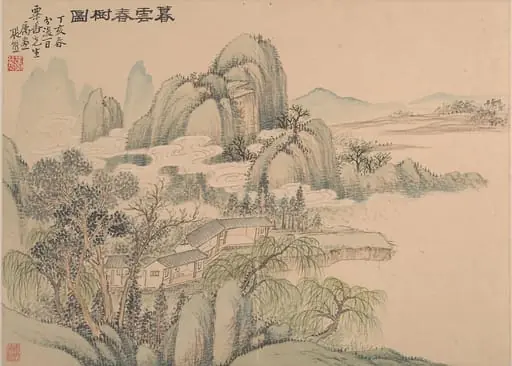 清 張熊 山水 冊頁|Landscape
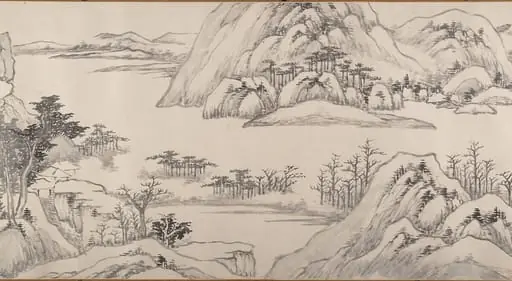 Untitled
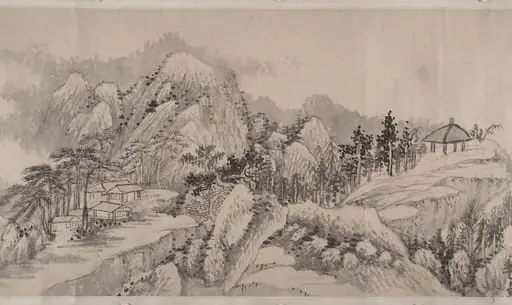 清 柳堉 幽谷深林圖 卷|Remote Valleys and Deep Forests
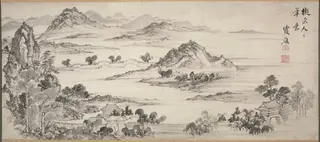 West Lake
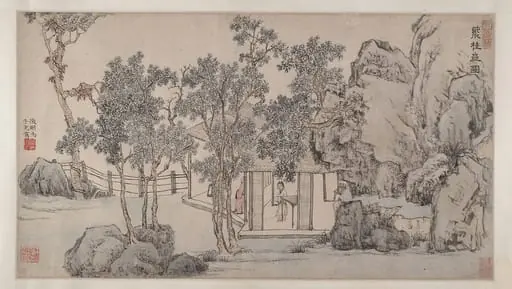 明 文徵明 叢桂齋圖 卷|The Cassia Grove Studio
 Plum Viewing at Tsukigase
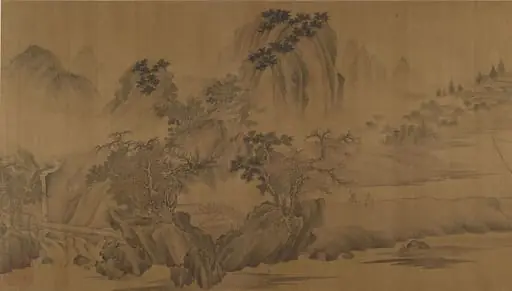 Untitled
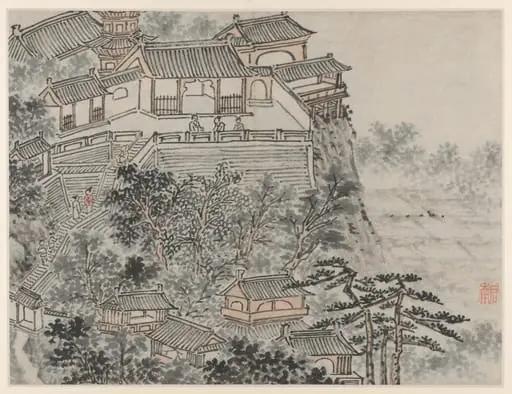 The Five Sages Terrace, from Twelve Views of Tiger Hill, Suzhou
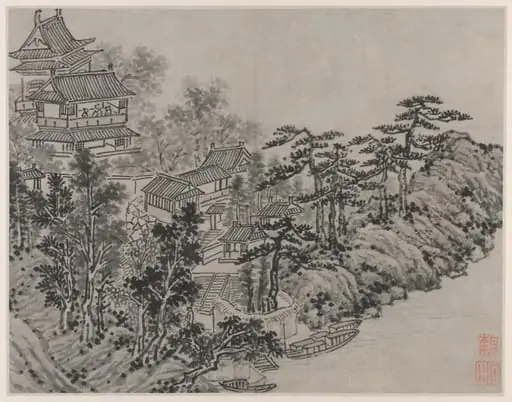 Cloud-Climbing Pavilion, from Twelve Views of Tiger Hill, Suzhou
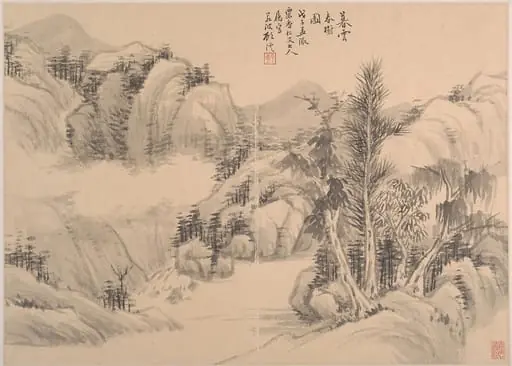 清 顧澐 冊頁|Clouds and Spring Trees at Dusk