Artwork
Untitled
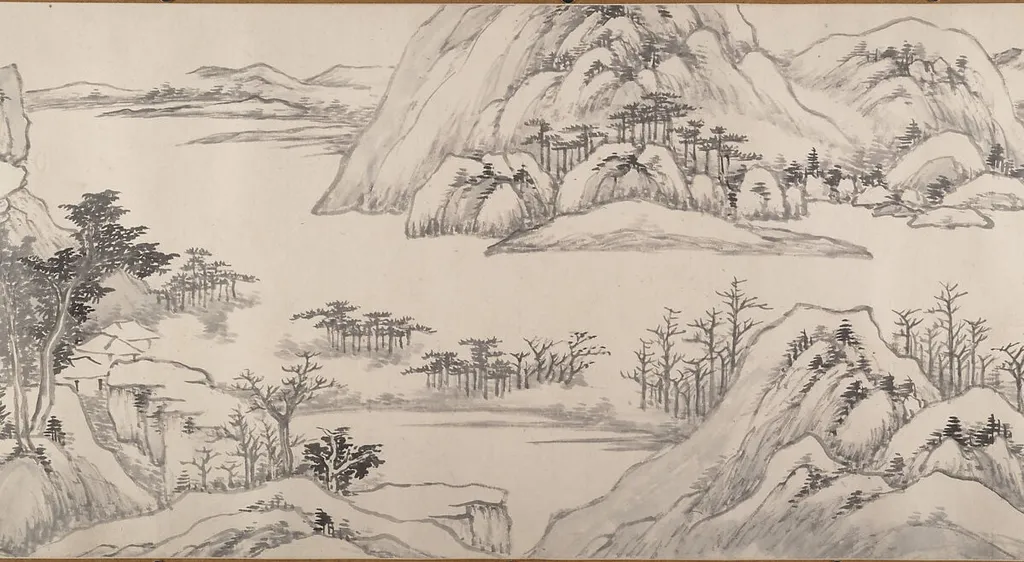
Untitled is an ink painting by the Baroque artist Luo Mu. It dates from 1661 and is held in the collection of the Metropolitan Museum of Art.
About this work
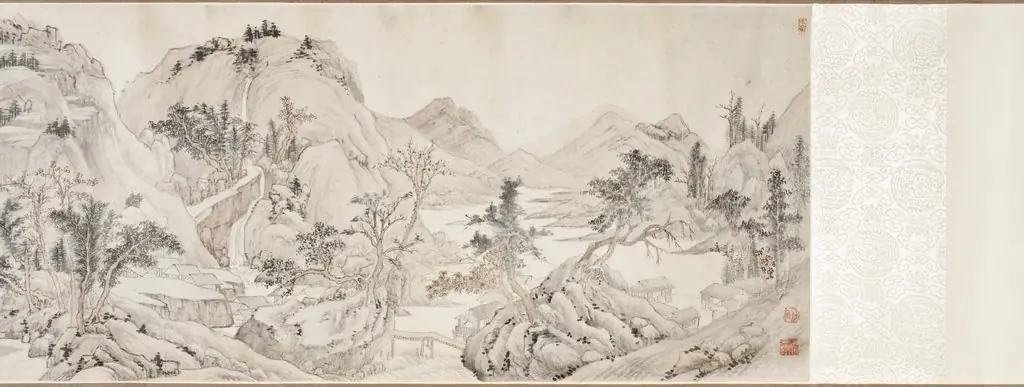
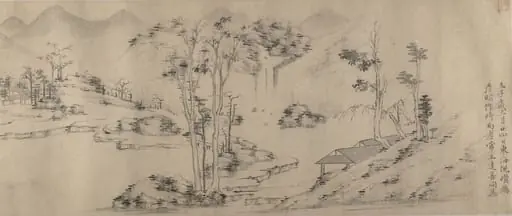
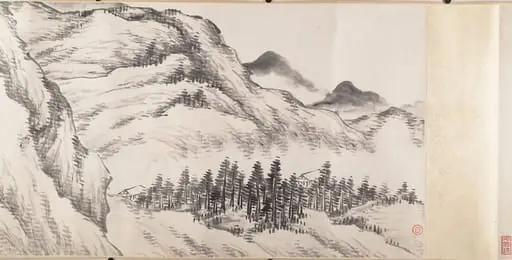
A handscroll unrolls like a slow river: ink-black mountains, misty valleys, a tiny boat drifting near the lower edge. Luo Mu painted it in 1661, just after the Ming dynasty fell, and the wide empty passages read as quiet refusal, leaving the eye to rest where the old world once stood.
Subject & Meaning
Executed in ink on paper, the work adheres to the landscape genre, focusing entirely on natural topography rather than human figures or narrative events.
Created in 1661 by Luo Mu, this handscroll presents a traditional Chinese landscape composed of mountains and rivers. Executed in ink on paper, the work adheres to the landscape genre, focusing entirely on natural topography rather than human figures or narrative events. The iconography relies on the elemental depiction of rugged peaks and flowing waterways, which are central motifs in East Asian artistic traditions.
While the specific symbolic intent of this particular scroll is not explicitly detailed in available records, the subject matter represents a contemplation of the natural world, a common thematic pursuit for scholars and artists of the period. The composition utilizes the horizontal handscroll format to guide the viewer through an unfolding sequence of geological forms, emphasizing the vastness and continuity of the environment.
Technique & Style
Executed in 1661, the handscroll employs ink on paper, characteristic of literati practice. The narrow, horizontal format (32.7 cm × 665.5 cm) unfolds a continuous landscape of layered mountains and meandering rivers, rendered through modulated ink tones and controlled brushwork. Dry brush and diluted washes articulate texture and recession, while sparse compositional elements, distant peaks, mist-laden valleys, convey depth and stillness.
The handling favors understatement, aligning with Ming-Qing scholarly aesthetics. No overt color or heavy outlines appear, underscoring the medium’s monochrome refinement. Condition details are not specified in the cited records.
History & Provenance
Untitled is a 1661 handscroll painted in ink on paper by the Chinese artist Luo Mu. The work belongs to the landscape genre and portrays a mountain and river scene. It was produced in China and later entered the collection of the Metropolitan Museum of Art, where it is catalogued as part of their holdings.
The painting measures 32.7 cm in height and 665.5 cm in width. No records indicate a specific commissioning patron; the circumstances of its creation remain documented only through the artist’s dated output. The piece is classified within the museum’s paintings department and is accessible to the public as part of the Met’s landscape painting collection.
The 1661 handscroll Untitled by Luo Mu is held in the collection of the Metropolitan Museum of Art in New York. While the work is identified within the museum's holdings as a landscape painting executed in ink on paper, the provided records do not specify a distinct accession or inventory number for this piece. Furthermore, although the artwork's physical dimensions and creation details are documented, there is no information available in the current sources regarding its exhibition history or specific public showings.
Overview
Luo Mu's Untitled is an ink-on-paper handscroll created in 1661. This painting presents a vast landscape on a long strip of paper, featuring towering ink-black mountains, expansive misty valleys, and a small boat navigating the lower section. The composition invites a contemplative viewing experience, characteristic of traditional Chinese landscape painting, unfolding like a slow river.
Context
Luo Mu painted this work in 1661, a period of profound political upheaval following the fall of the Ming dynasty and the establishment of the Qing dynasty. This turbulent transition deeply impacted artists and intellectuals. The artwork's subdued mood and the symbolic use of empty space can be understood as a response to this historical moment, reflecting a sense of displacement and a longing for the past.
Artist & collection

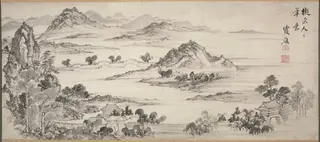
- West Lake
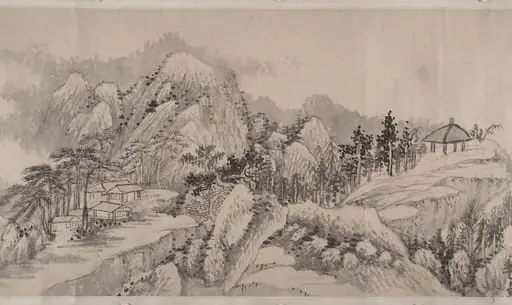 清 柳堉 幽谷深林圖 卷|Remote Valleys and Deep Forests
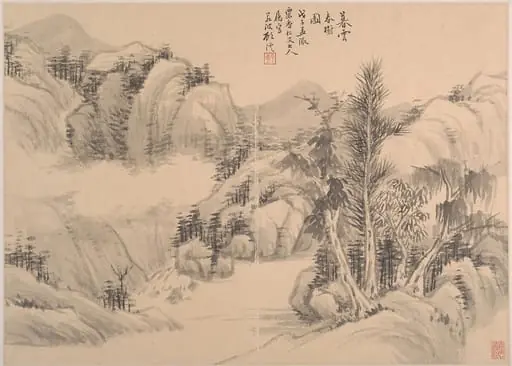 清 顧澐 冊頁|Clouds and Spring Trees at Dusk
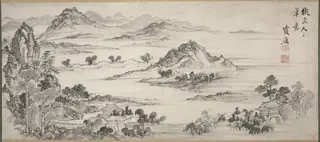 West Lake
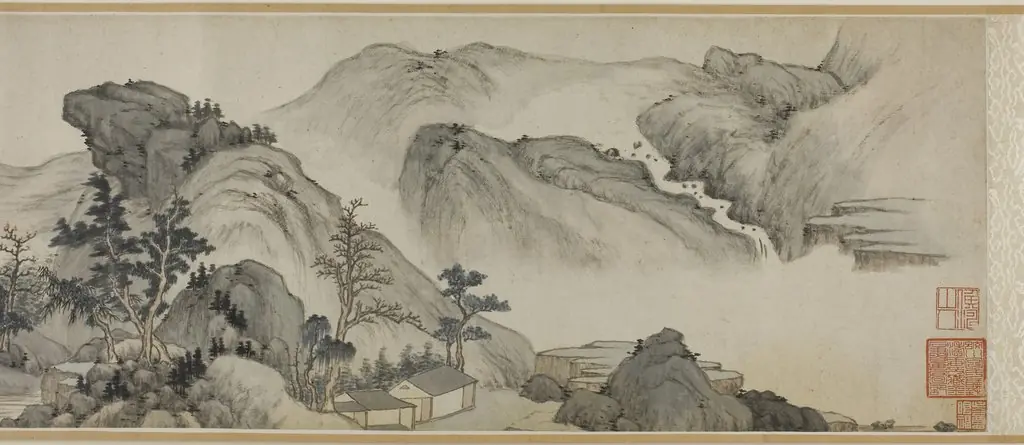 Recluse Dwellings in the Autumn Mountains
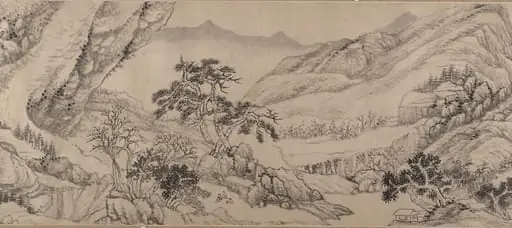 清 柳堉 山水圖 卷|Traveling Amid Streams and Mountains
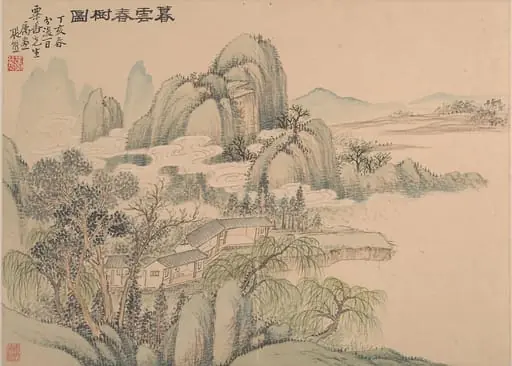 清 張熊 山水 冊頁|Landscape
 Dream Journey among Rivers and Mountains, Number 150
 清 戴熙 山水圖 冊|Landscapes
 Untitled
 明 傳項元汴 秋江圖 卷|River Landscape
 清 松年 山水 手卷|Landscape