Artwork
Sf. Evanghelist Luca
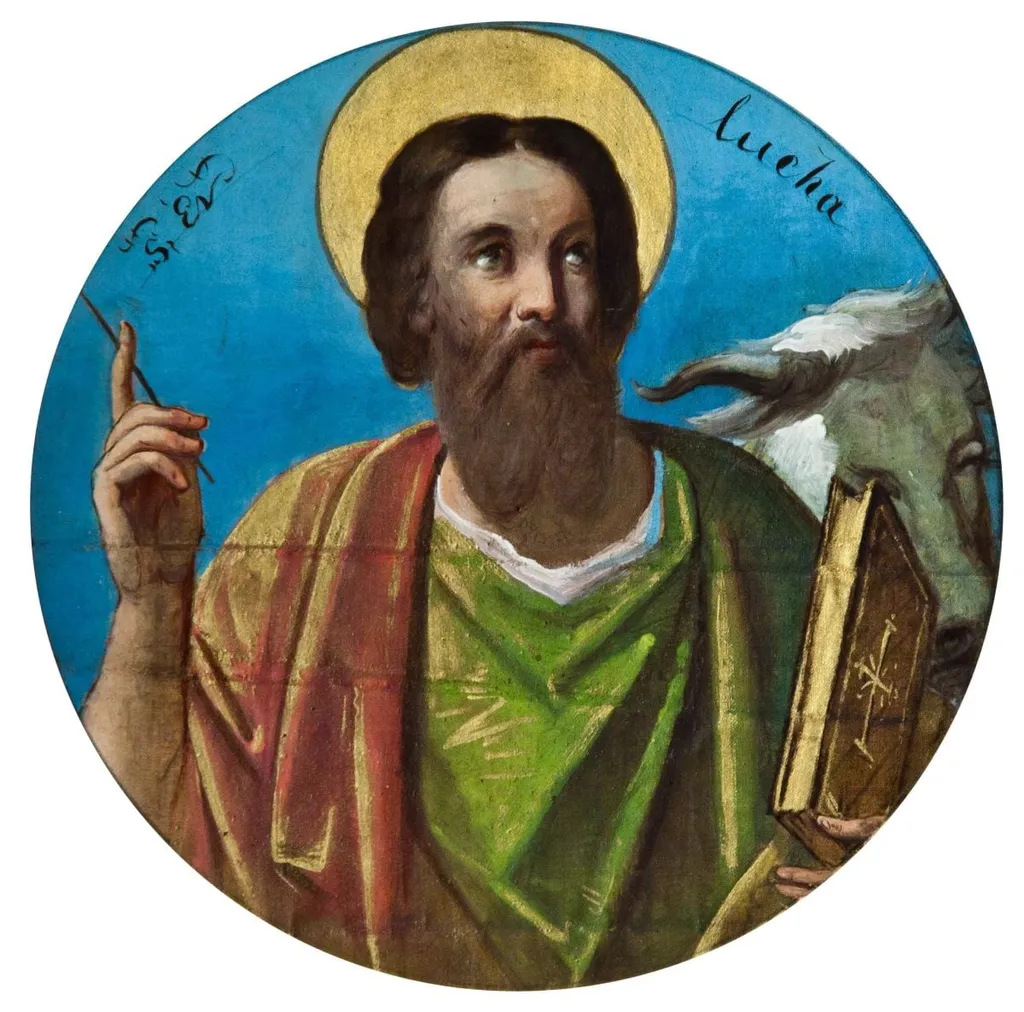
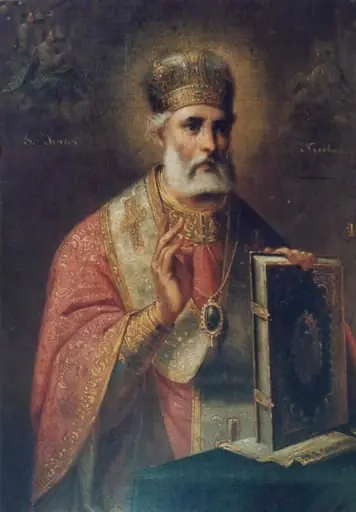
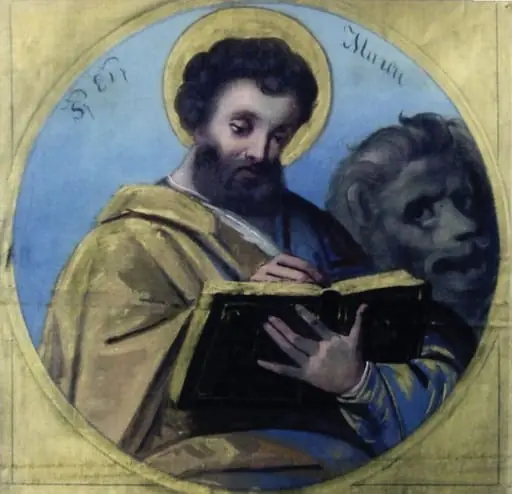
Sf. Evanghelist Luca is an unspecified painting by the Romanesque artist Gheorghe Tattarescu. It dates from 1867 and is held in the collection of the Bucharest Municipality Museum. Sf.
About this work
Overview
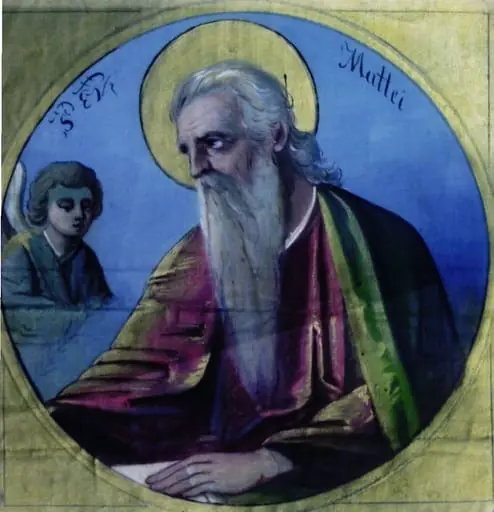
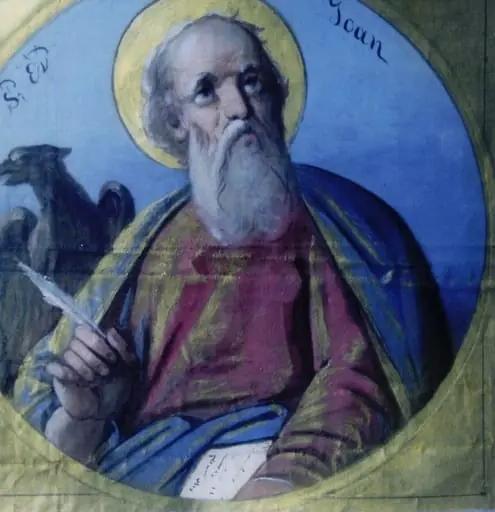
Sf. Evanghelist Luca, created circa 1867 by Romanian neoclassicist Gheorghe Tattarescu, is a religious painting housed at the Museum of Ethnography. Executed in a Romanesque style, it portrays Saint Luke, one of the four Evangelists.
Subject & Meaning
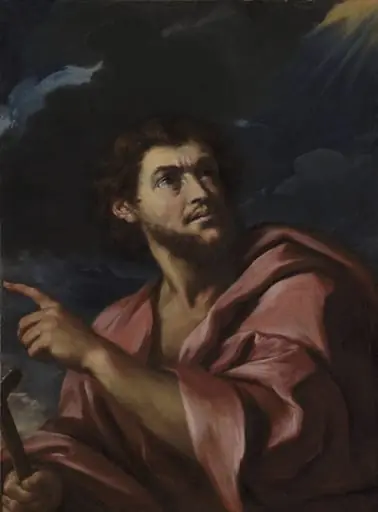
The painting depicts Saint Luke, identifiable by the ox's head in the background, a traditional attribute of the saint. Luke is shown in a contemplative gesture, pointing upward while holding a wooden board with a cross, symbolizing his role as an Evangelist.
Technique & Style
Tattarescu employs strong chiaroscuro, juxtaposing a bright yellow halo and deep blue background to create a dramatic light-and-shadow effect. The composition adheres to neoclassical principles, with meticulous attention to detail in the rendering of Luke's attire and attributes.
History & Provenance
Created around 1867, the work is part of the Museum of Ethnography's collection. The artist's faint signature is visible on the left side, while 'Luca' is inscribed at the top right, reinforcing the subject's identity.
Artist & collection
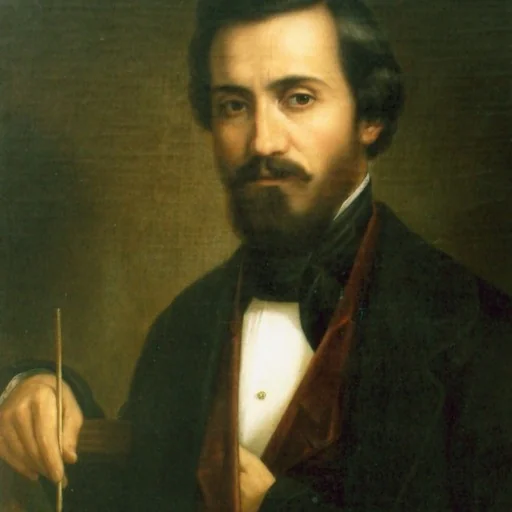
Artist
Gheorghe Tattarescu (Romanian pronunciation:; October 1818 – October 24, 1894) was a Romanian painter and a pioneer of neoclassicism in his country's modern painting.