Artwork
The Giaour
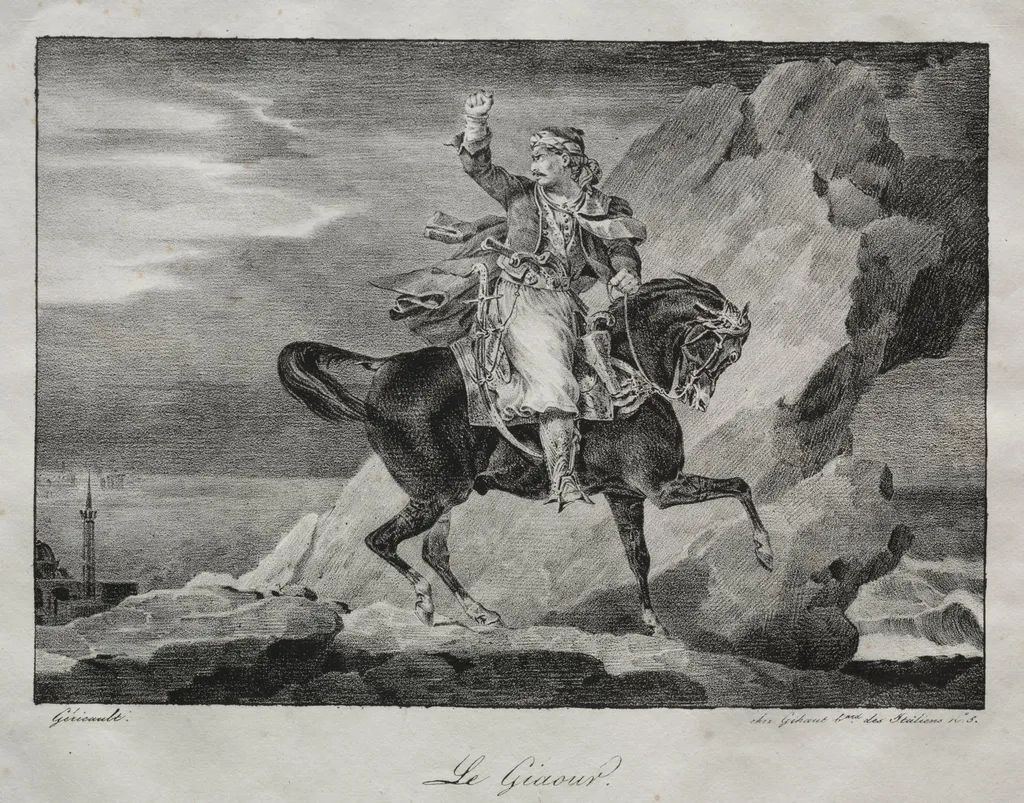
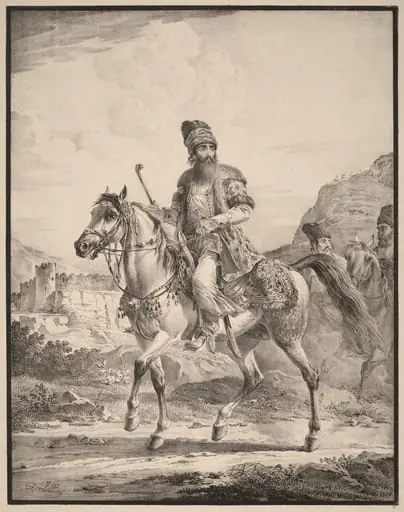
The Giaour is a print by the Romanticist artist Théodore Géricault. It dates from 1820 and is held in the collection of the Cleveland Museum of Art.
- Accession no.
- 1941.235
About this work
Overview
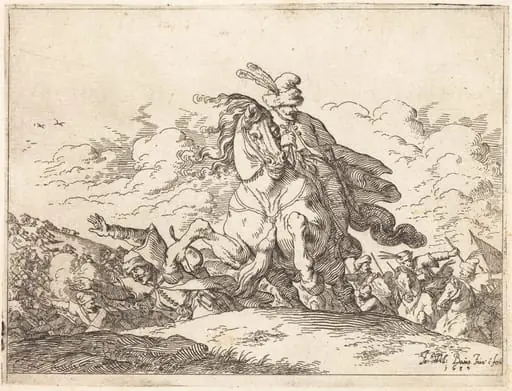
Created in 1820 by French artist Théodore Géricault, The Giaour is a lithographic print that translates a scene from Lord Byron’s poem of the same name. The work exemplifies Géricault’s early involvement with Romanticism, a movement that prized intense emotion and dramatic narrative.
Subject & Meaning
The image captures a mounted rider poised on a rearing horse, his arm lifted as if in a cry of defiance. Behind him a billowing cloak follows the animal’s motion, while a distant ship battles choppy seas beneath a craggy cliff. The composition suggests a moment of heightened tension drawn from the poem’s tale of exile and vengeance.
Technique & Style
Géricault employs stark chiaroscuro, juxtaposing deep shadows with illuminated forms to accentuate the horse’s leap and the rider’s gesture. The lithographic medium allows for fine line work and tonal variation, reinforcing the sense of movement and the Romantic emphasis on dramatic contrast.
History & Provenance
The print was produced during Géricault’s formative years, shortly before his celebrated canvas The Raft of the Medusa (1818‑1819). Though less widely reproduced, The Giaour reflects the artist’s engagement with contemporary literary sources and his contribution to the visual vocabulary of early 19th‑century Romantic art.
Own this work as a print
Artist & collection
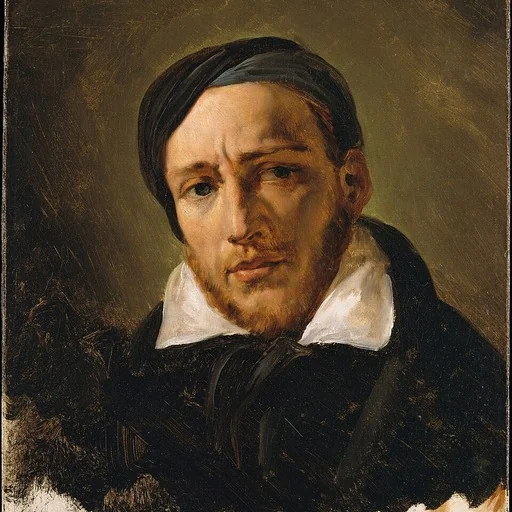
Artist
Jean-Louis André Théodore Géricault (French:; 26 September 1791 – 26 January 1824) was a French painter and lithographer.