Artwork
Le Giaour (The Infidel)
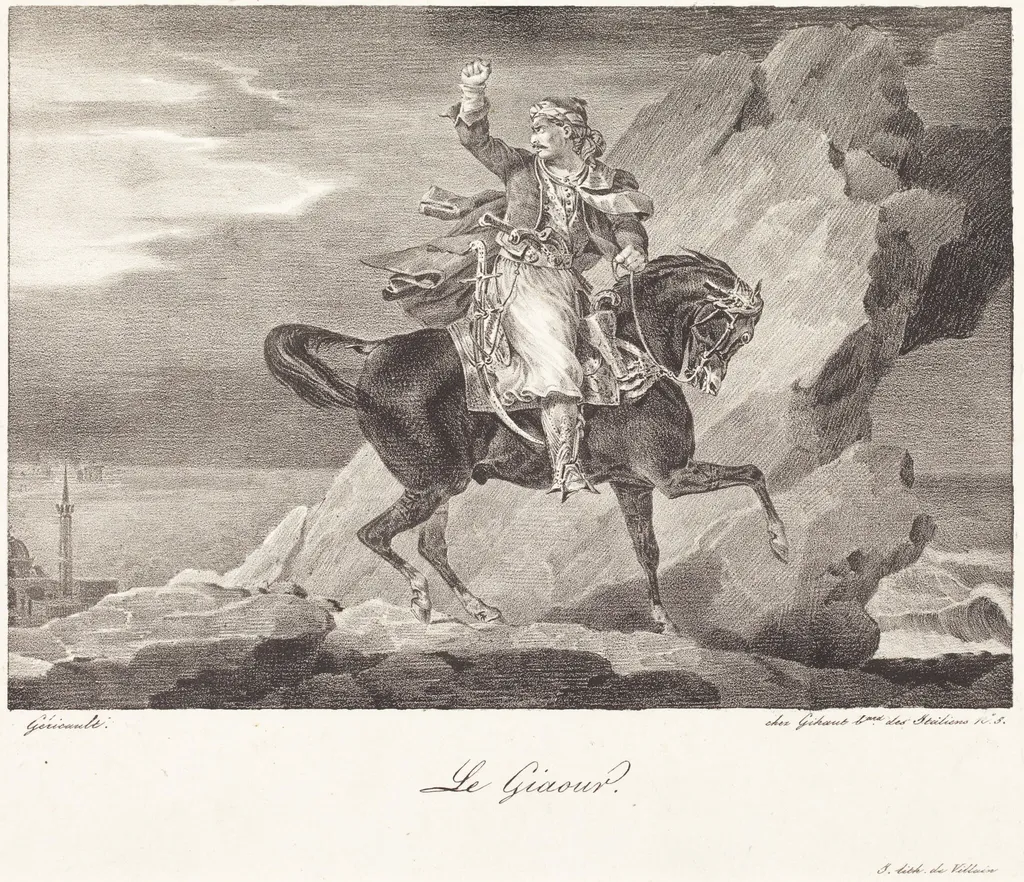
Le Giaour (The Infidel) is an ink print by the Romanticist artist Théodore Géricault. It dates from 1820 and is held in the collection of the National Gallery of Art.
- Inscription
- Inscribed:lower left in plate: Géricault.; lower right in plate: chez Gihaut b.ard des Italiens No. 5; lower center in plate: Le Giaour; lower right in plate: I. lith. de Villain
About this work
Overview
Géricault, already known for The Raft of the Medusa, turned to printmaking to explore emotional intensity and exotic themes.
Théodore Géricault produced this lithograph in 1820, shortly before his death at age 32. Created on wove paper, the work is part of a series inspired by Lord Byron’s narrative poem The Giaour. Géricault, already known for The Raft of the Medusa, turned to printmaking to explore emotional intensity and exotic themes. Lithography allowed him to capture movement and atmosphere with a spontaneity suited to Romantic sensibilities.
Subject & Meaning
The image illustrates a moment from Byron’s poem, in which the titular Giaour, a Christian outlaw in Ottoman lands, flees pursuit. The rider’s raised arm and rearing horse convey urgency, while the rugged terrain and overcast sky amplify the sense of isolation and peril. Géricault’s choice of subject reflects 19th-century European fascination with Eastern settings and tragic, defiant individuals, framing the figure as both hero and outcast.
Technique & Style
Using lithography, Géricault exploited the medium’s capacity for tonal gradation and expressive line. The rough texture of the wove paper enhances the gritty atmosphere of the landscape, while bold contrasts define the rider’s form against the darkened mountains. The horse’s dynamic pose and the swirling clouds suggest motion through ink wash and hatching, avoiding rigid outlines in favor of visceral, atmospheric rendering.
History & Provenance
Created in Paris during Géricault’s final years, this lithograph was likely made for private circulation rather than public sale. Few impressions survive, and its early ownership remains undocumented. It was produced after his return from England, where he studied equestrian subjects and encountered Byron’s poetry, both influences that shaped this work’s emotional and visual language.
Context
In early 19th-century Europe, Romanticism embraced themes of rebellion, exoticism, and emotional extremes. Byron’s The Giaour, published in 1813, became a touchstone for artists seeking to depict psychological depth and cultural conflict. Géricault’s lithograph aligns with this trend, translating literary drama into visual tension, while reflecting broader interest in the Ottoman world as a symbol of mystery and danger.
Legacy
Though less known than his large-scale paintings, this lithograph exemplifies Géricault’s versatility and his commitment to capturing human struggle through intimate formats. It influenced later printmakers who sought to merge literary narrative with expressive graphic techniques. The work remains a key example of how Romantic ideals were adapted to the emerging medium of lithography in France.
Own this work as a print
Artist & collection
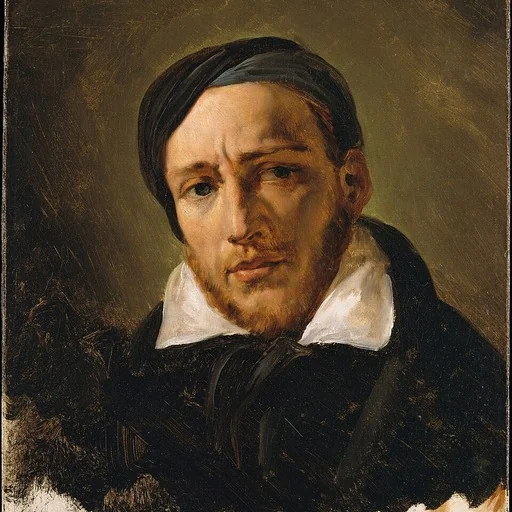
Artist
Jean-Louis André Théodore Géricault (French:; 26 September 1791 – 26 January 1824) was a French painter and lithographer.